This post contains affiliate links.
Planning a Montessori nursery on a budget and need the best tips on how to do it? I’ve got the details on how to put together an adorable and high-quality Montessori nursery without breaking the bank!
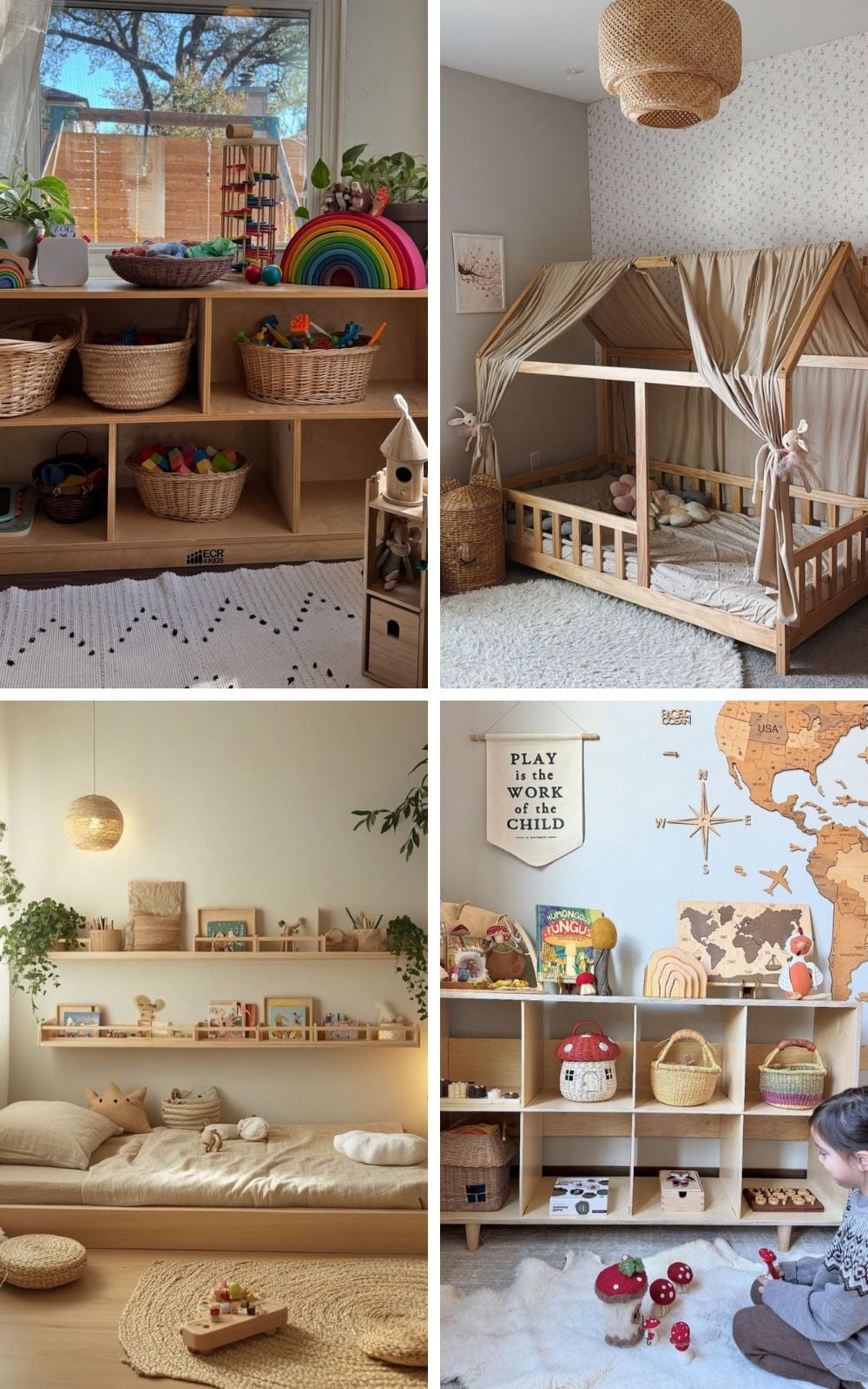
The Montessori nursery trend has exploded—and with it, the price tags. Suddenly, a “simple” Montessori-inspired setup means $500 floor beds and $80 wooden rattles.
But here’s the thing: Montessori philosophy isn’t about expensive furniture. It’s about creating an environment where your child can explore independently, at their own pace. And that doesn’t require a Pinterest-perfect budget.
If you’ve been dreaming of creating the perfect Montessori nursery for your baby but need inspiration and budget-friendly tips, I’ve got your back! Ahead, I’ve laid out the how-to for creating a real Montessori nursery without breaking the bank.
What Makes a Nursery “Montessori”?
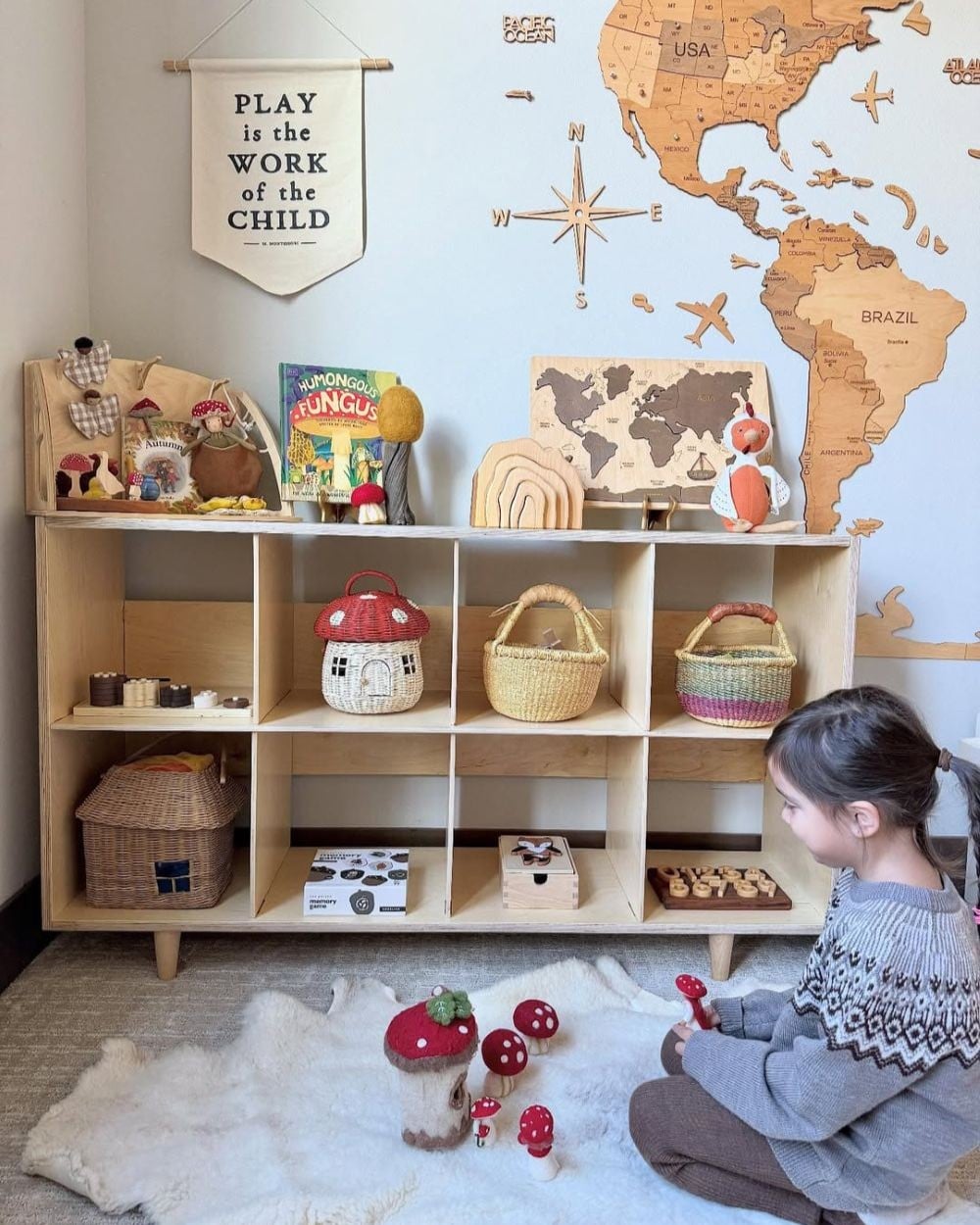
The Core Principles
1. Child-Sized and Accessible Everything is designed for the child to use independently—not for adult convenience.
2. Simple and Uncluttered Less is more. A few carefully chosen items rather than overwhelming options.
3. Natural Materials Wood, cotton, wool, and other natural textures should be used when possible.
4. Freedom of Movement Baby can move freely and safely explore their environment.
5. Beauty and Order The space is aesthetically pleasing and peaceful, with a place for everything.
What It’s NOT
- Having to buy specific brands
- Spending thousands of dollars
- Abandoning safety for aesthetics
- Perfection
Truly, you can embrace Montessori principles at any budget. So, let’s dive into the specifics.
The Floor Bed: Options at Every Price
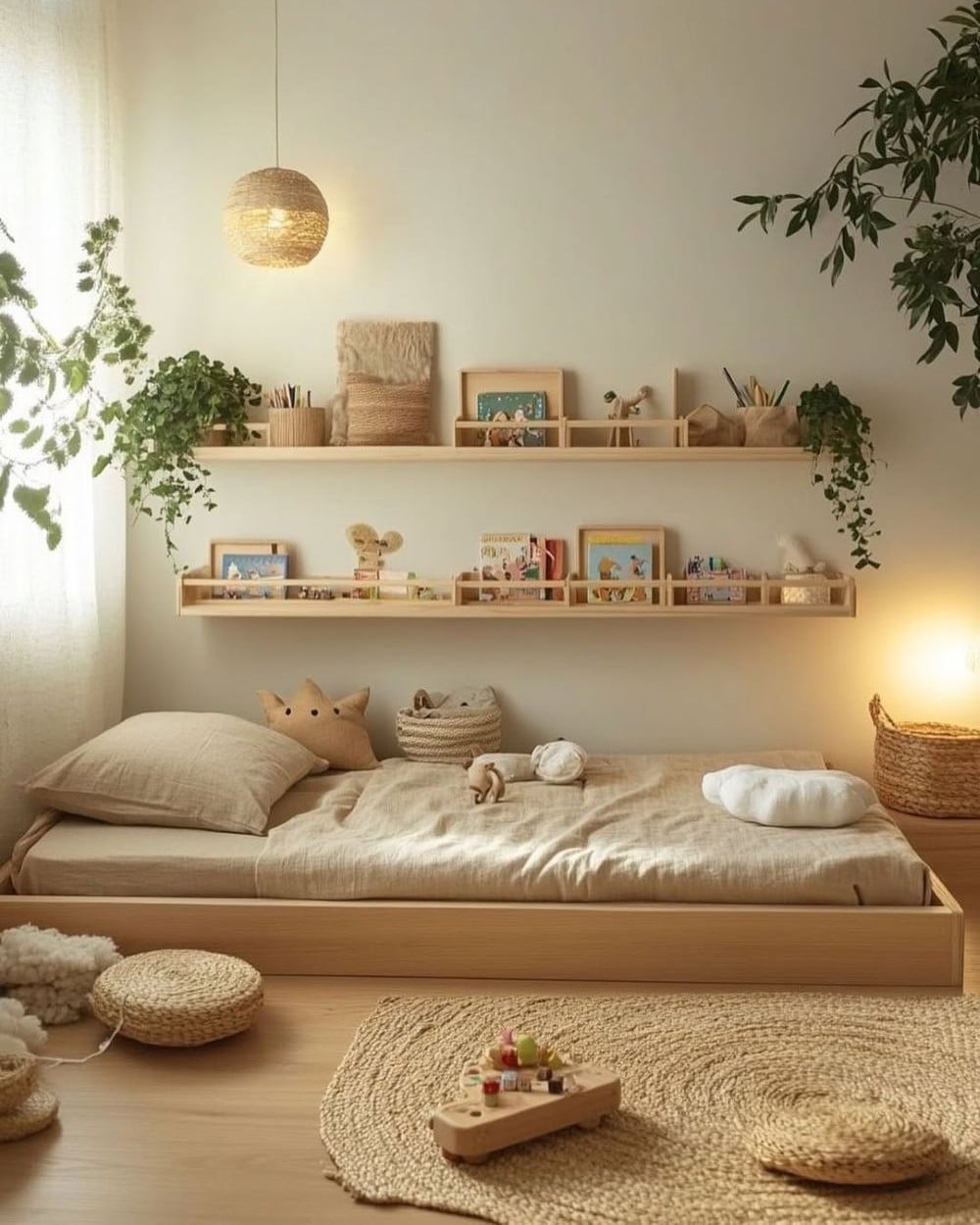
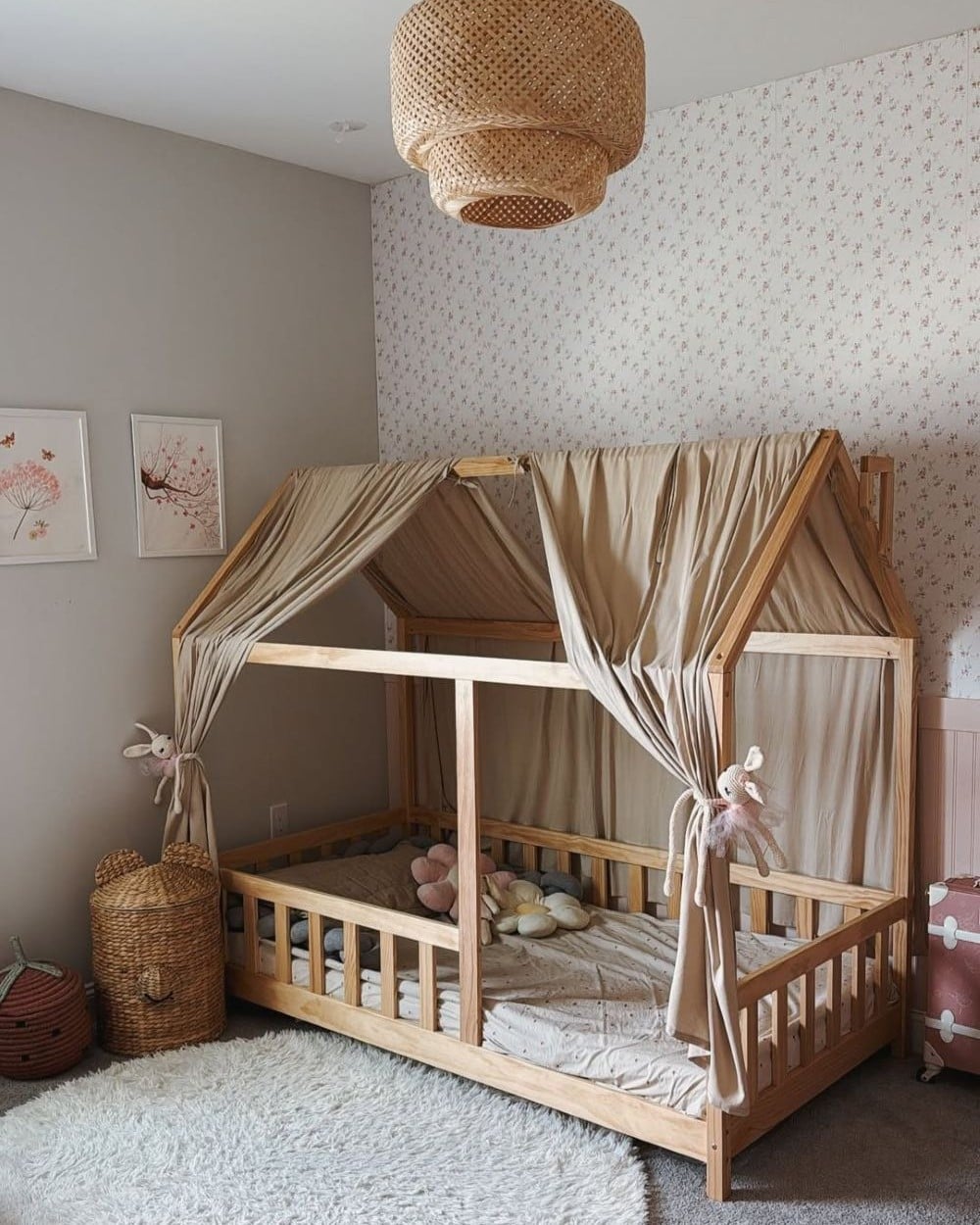
The floor bed is the signature Montessori element. But you don’t need to spend $400+ on a trendy house-frame bed.
Wait—Is a Floor Bed Actually Safe?
Important Note: The AAP recommends a crib for safe infant sleep for the first year. Many families use a standard crib initially and transition to a floor bed between 12 and 18 months, or even later.
If you choose to use a floor bed from birth, here are the best tips for maintaining a safe sleep environment:
- Use a firm mattress on the floor
- No bedding, pillows, or soft items until age 1
- Baby-proof the entire room
Alternatively, you can use a floor bed for supervised play or exploration and use a traditional crib for sleep.
Budget Floor Bed Options
Option 1: Mattress on the Floor ($50-150) The most minimalist approach. A firm twin or full mattress directly on the floor. Don’t forget to add a waterproof mattress protector!
Budget Pick: IKEA MALFORS foam mattress ($99) or Zinus Memory Foam ($90-120)
Option 2: DIY Frame ($30-80) Build a simple wooden frame from 2x4s. There are tons of free plans available online.
Materials Needed: – 2×4 lumber – Wood screws – Sandpaper – Optional: Wood stain or paint
Option 3: Budget House Frame ($150-250) If you want the trendy look, I recommend:
- IKEA KURA bed (which can be used as a floor bed)
- Amazon house beds (search “Montessori floor bed”)
- Walmart house beds
- Searching Facebook Marketplace or Craigslist for secondhand options
Option 4: Convertible Crib to Toddler Bed Many cribs convert to toddler beds that sit low to the ground. This isn’t a “true” floor bed, but it embraces the same principles and is definitely a budget-friendly option.
The Crib-to-Floor-Bed Transition
As far as transitioning from the crib to a floor bed, many Montessori families use this method:
- Use a standard crib for the first 12-18 months (to ensure safe sleep)
- Transition to a floor bed when your baby is mobile and ready (you can always consult with your pediatrician for this)
- Start with naps on the floor bed before fully transitioning to the floor bed overnight
This approach balances safety with Montessori philosophy—and saves money if you already have a crib.
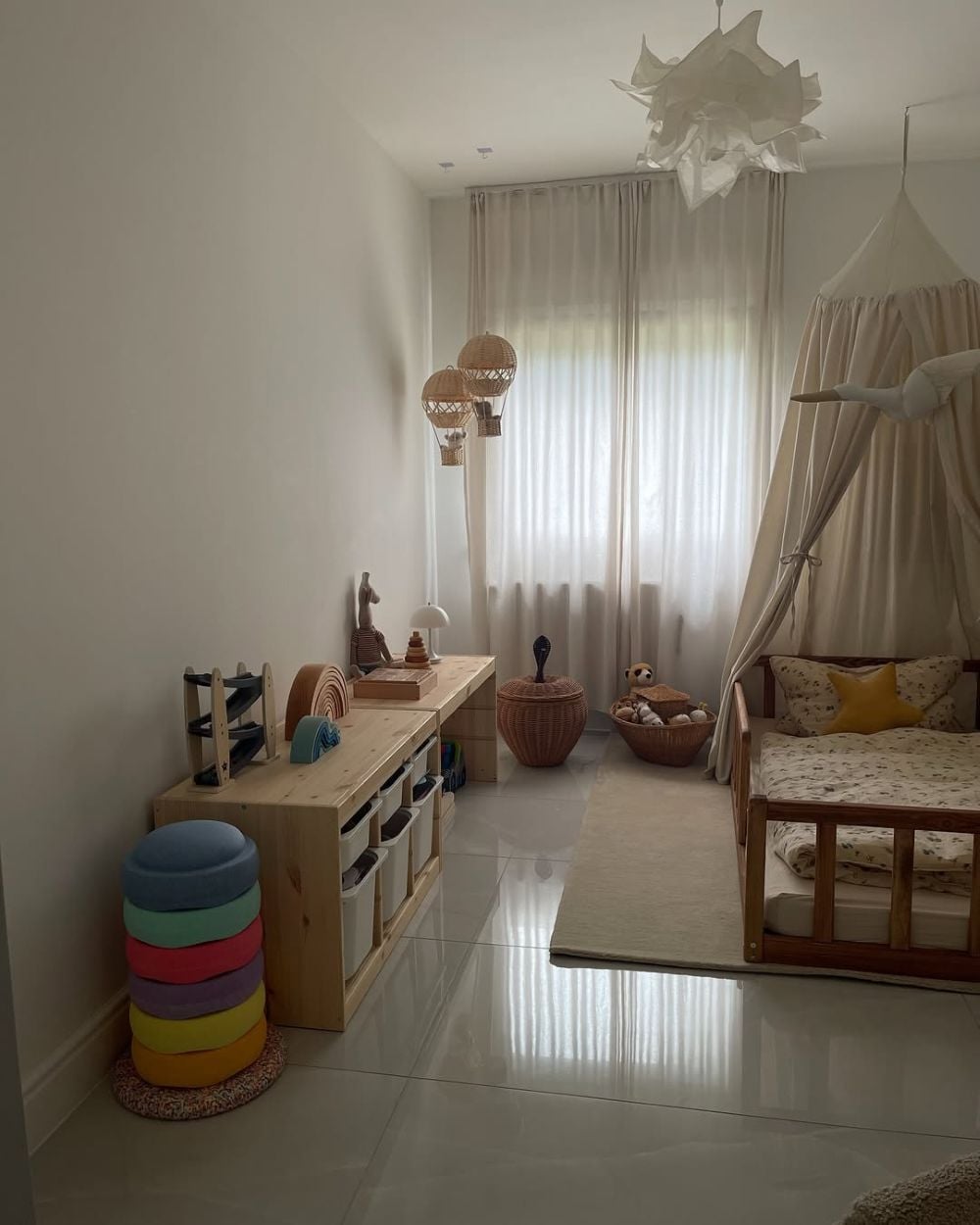
Room Layout: Zones and Flow
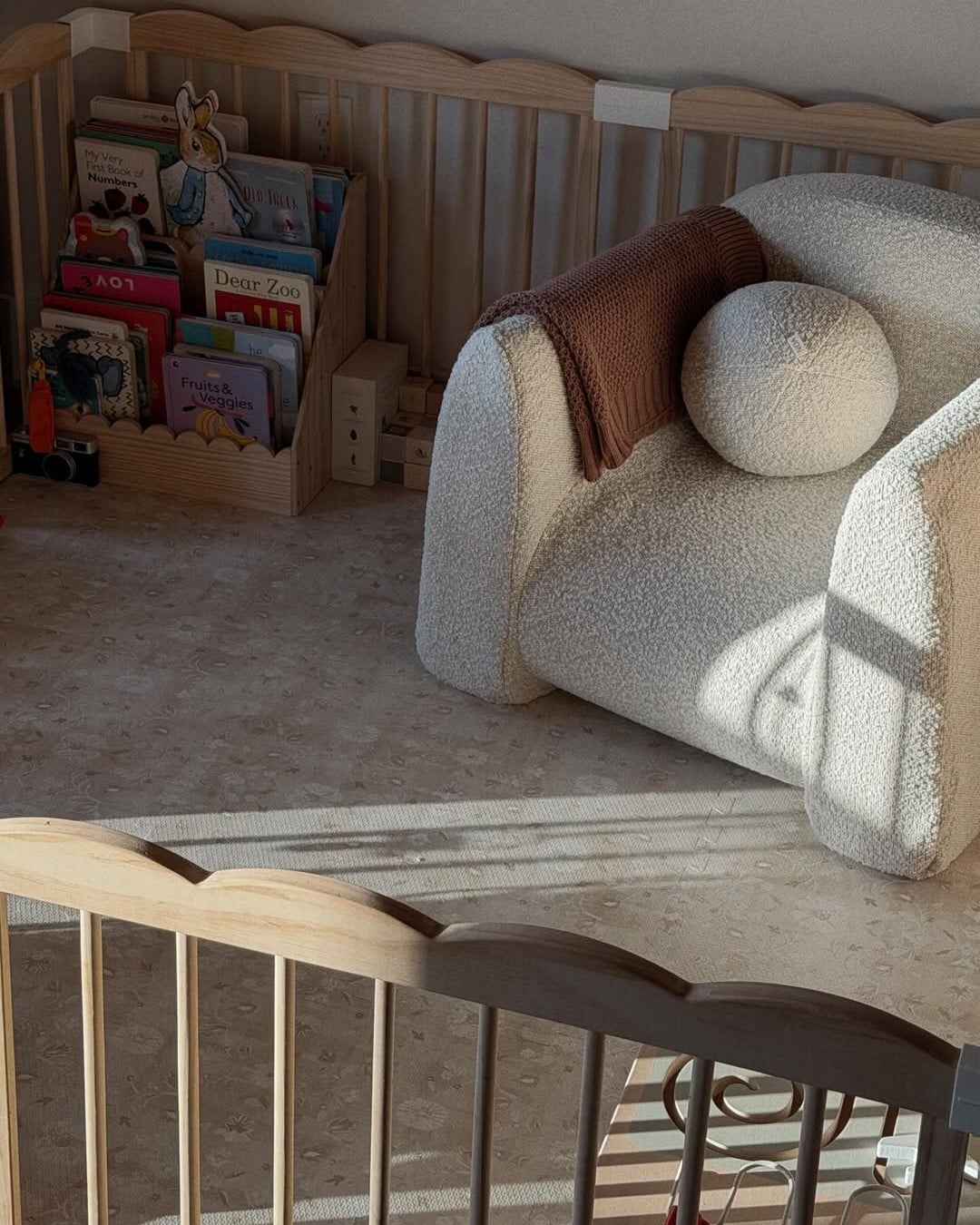
A Montessori room is organized into activity areas, all easily accessible to the child for free play and exploration.
The Essential Zones
1. Sleep Zone: This would be the floor bed or crib. This area should be simple and calm with minimal stimulation. You can use blackout curtains to help create a peaceful space during naps or bedtime, if needed.
2. Movement Zone: Focus on having open floor space for rolling, crawling, and cruising. Other things to include in this area would be a low mirror (for self-discovery) and a pull-up bar for when your baby is ready.
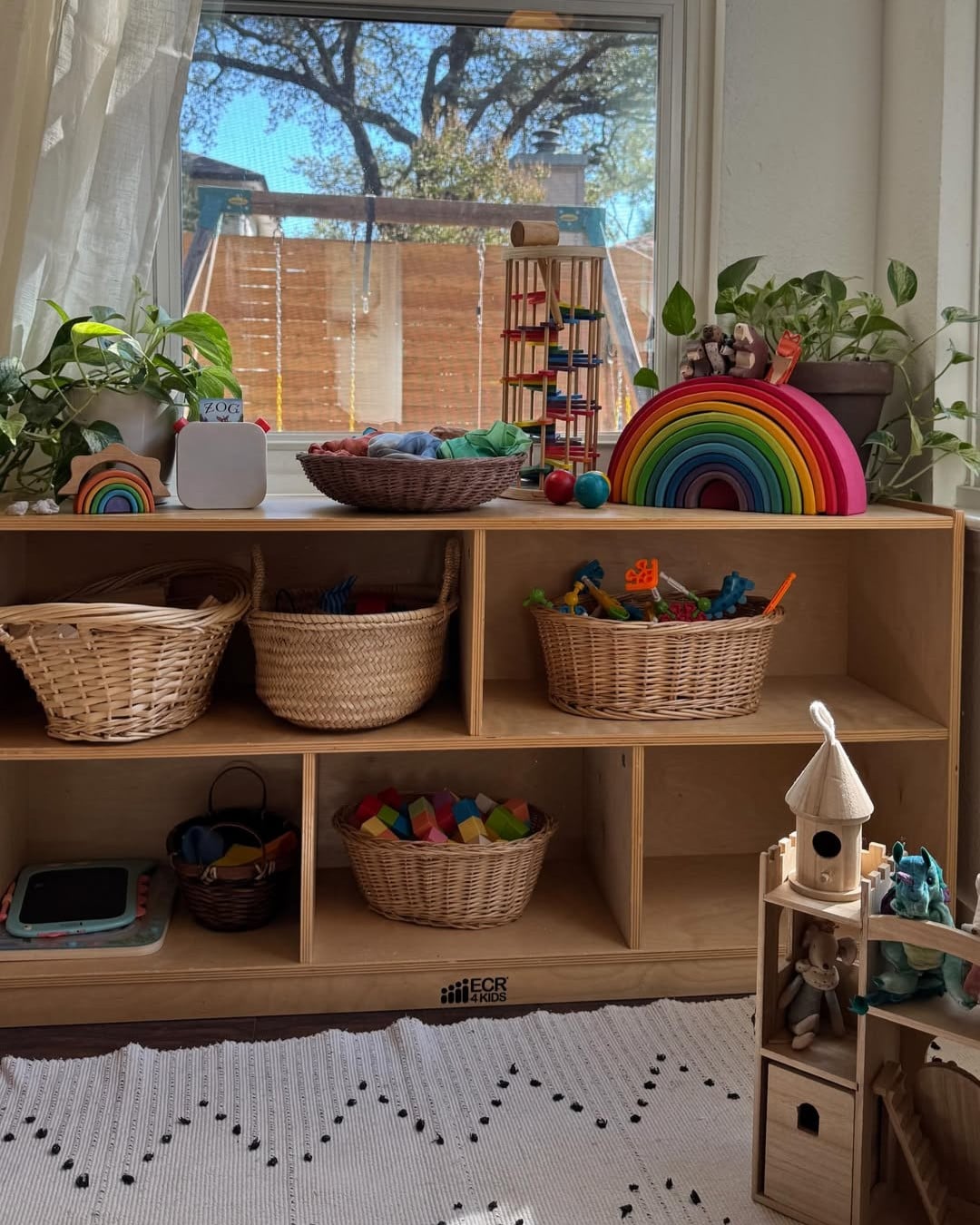
3. Activity/Play Zone: Here, you’ll want to add a low shelf (one tier for babies and two tiers for toddlers) with a few intentionally selected toys. Rotate these toys regularly and ensure each item has a specific place.
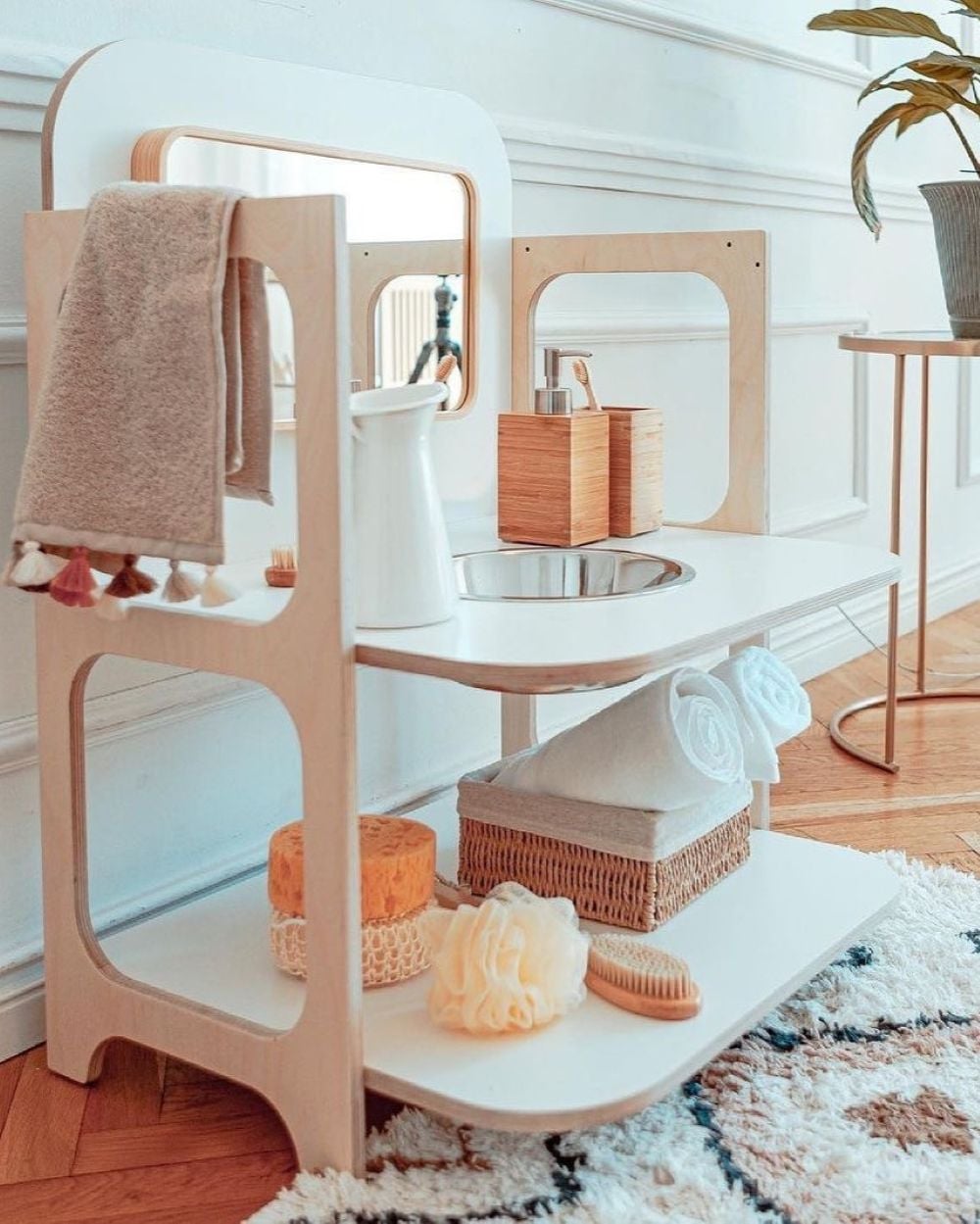
4. Care Zone: This can be a low shelf with a comb or hairbrush, baby wipes or handcloths, and other self-care items. Include a step stool for toddlers, and this zone can be in the nursery or the bathroom.
Budget Layout Tips
- Use what you already have (like a regular dresser instead of a “Montessori” shelf)
- Keep the center of the room clear for movement
- Remember, you don’t need every zone set up right away
Montessori Furniture: Budget Alternatives
Low Shelf
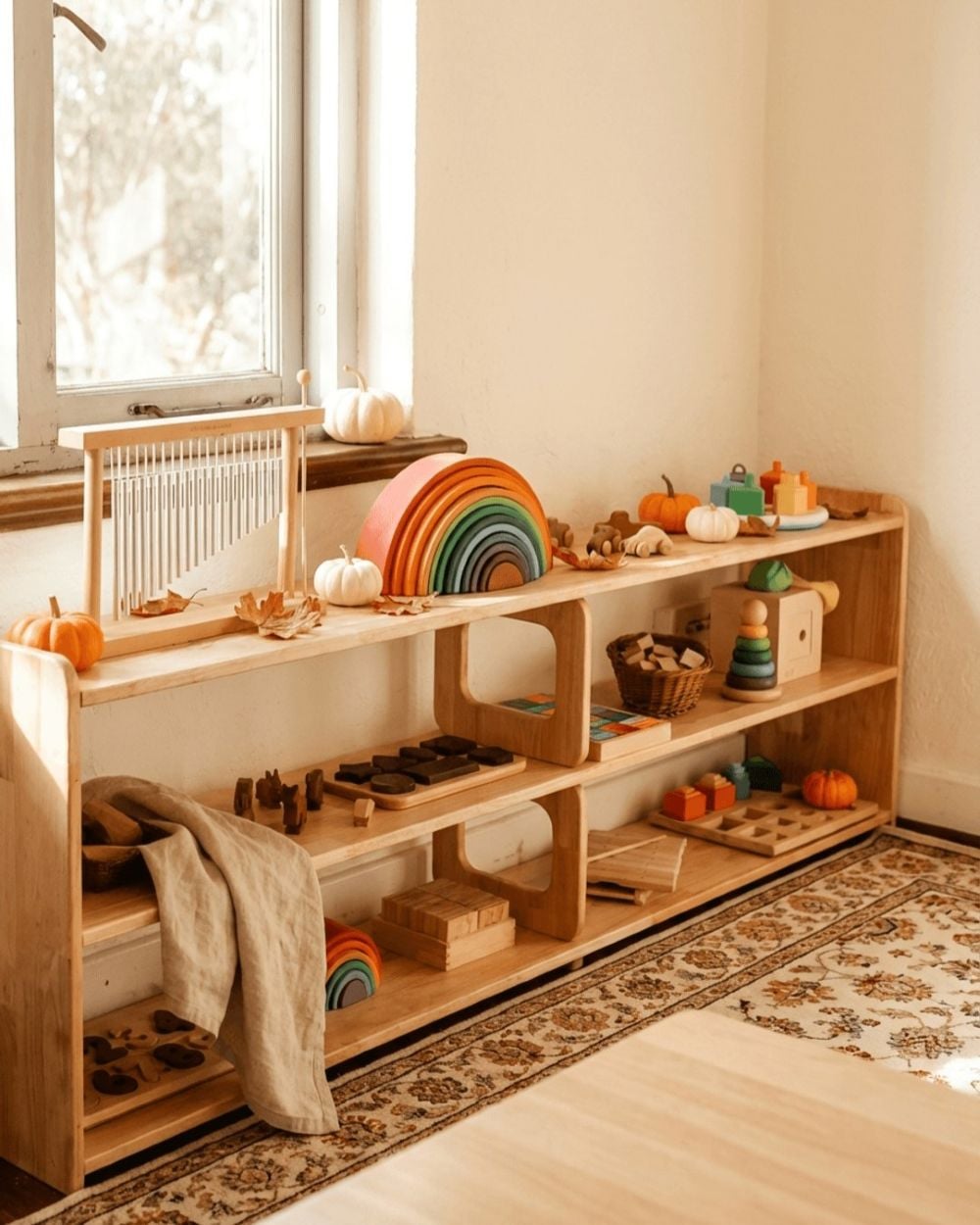
Expensive Option: Custom Montessori shelf ($200-400)
Budget Options:
- IKEA KALLAX laid on its side ($40-70)
- IKEA LACK floating shelves ($10-20 each)
- Thrifted bookshelf cut down to size (free-$20)
- Wooden crates from craft store ($10-15 each)
- IKEA TROFAST low storage ($50)
DIY Option: Two wooden crates + a board on top = instant low shelf
Low Mirror
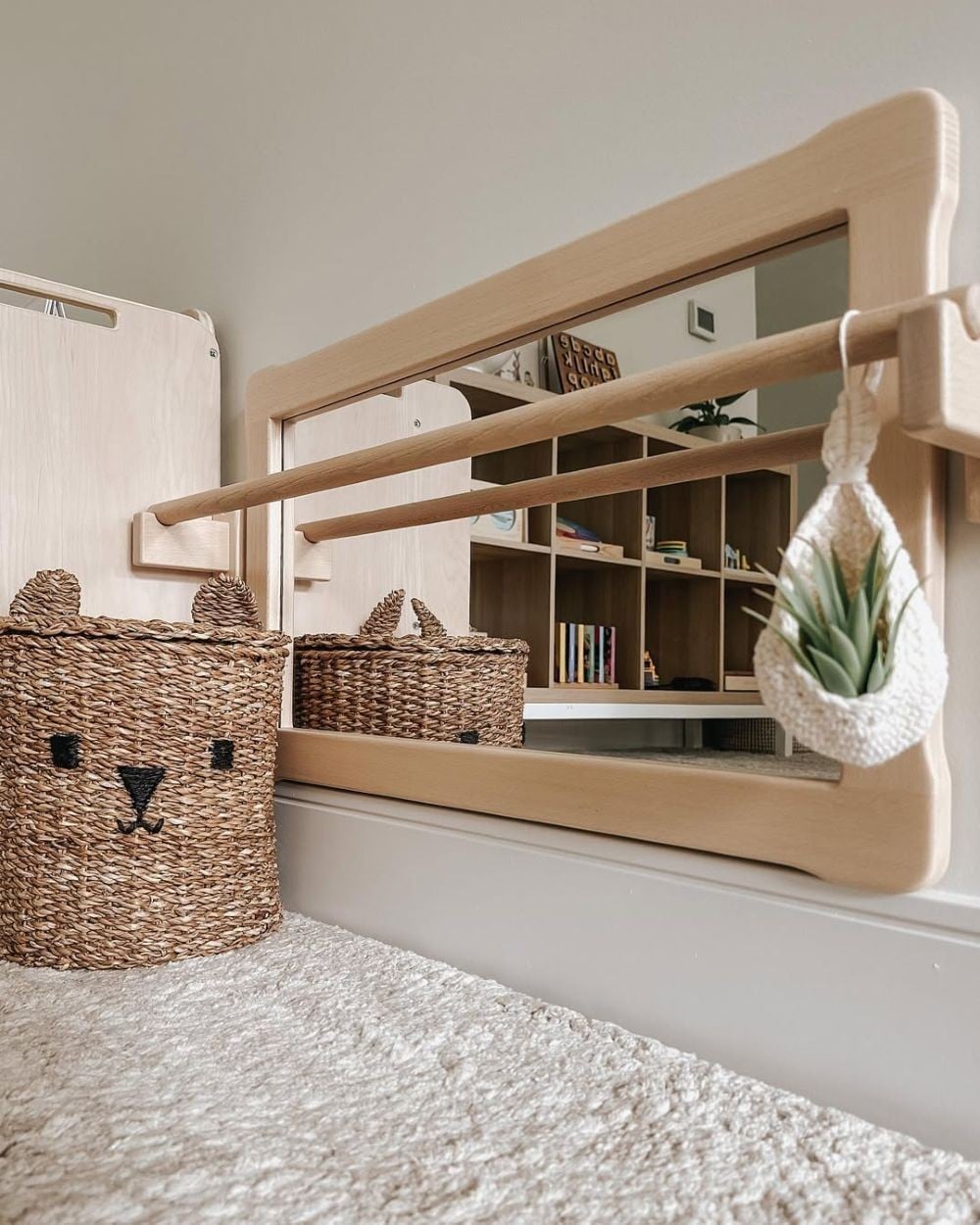
Expensive Option: Acrylic Montessori mirror ($100-200)
Budget Options:
- IKEA HOVET mirror laid horizontally ($50)
- Acrylic mirror sheets from Amazon ($20-40)
- Mirrored closet door panel (often free from remodels)
- IKEA LOTS mirrors in a row ($10 for 4)
Safety Note: Always secure mirrors to the wall. And keep in mind that an acrylic mirror is safer than glass.
Weaning Table and Chair
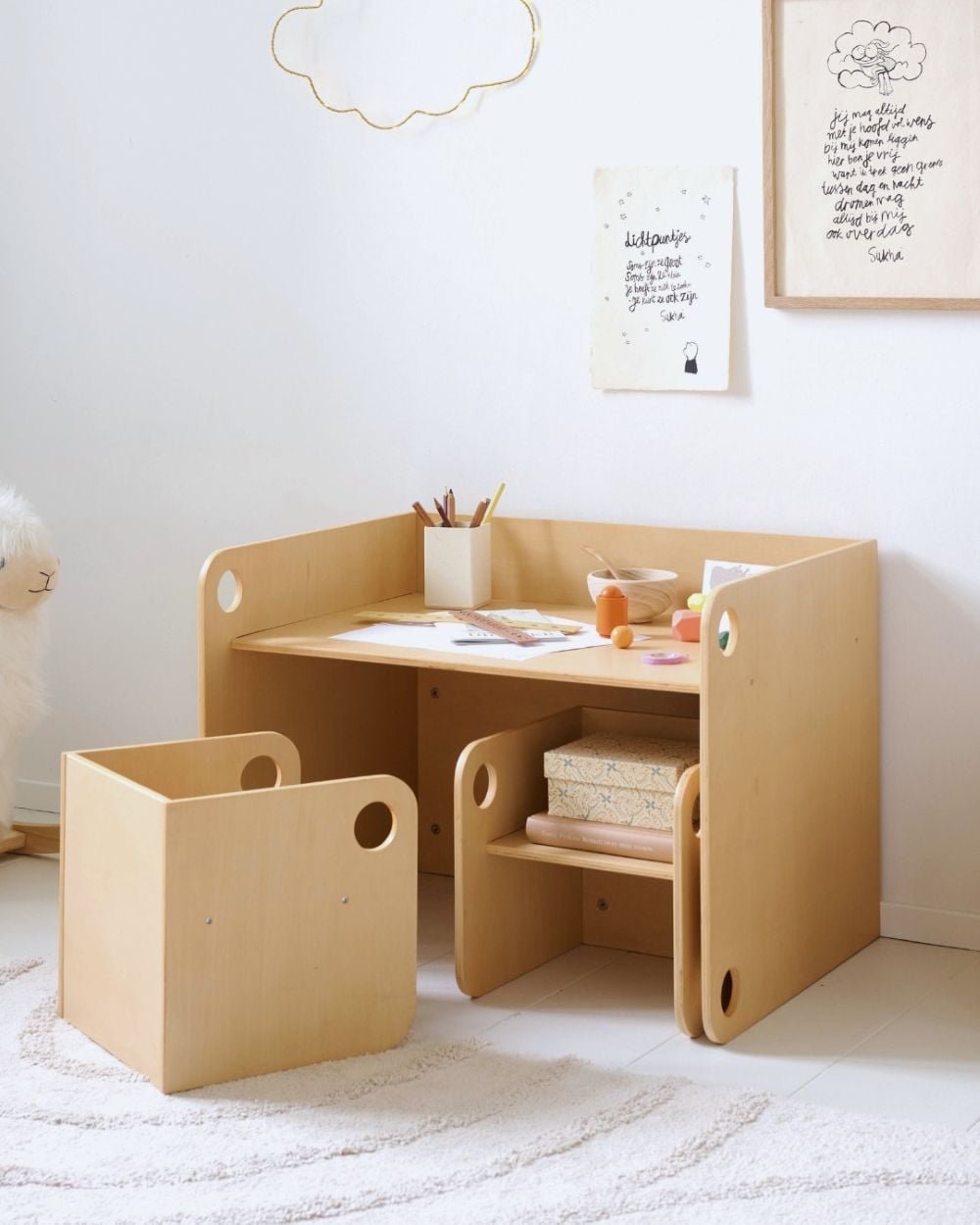
Expensive Option: Montessori weaning set ($150-300)
Budget Options:
- IKEA LÄTT table and chairs ($30)
- IKEA FLISAT children’s table ($40)
- Thrift store kids’ table (refinished, if needed)
- Small step stool as a first table
- DIY from a wooden crate or a small bench
Clothing Access
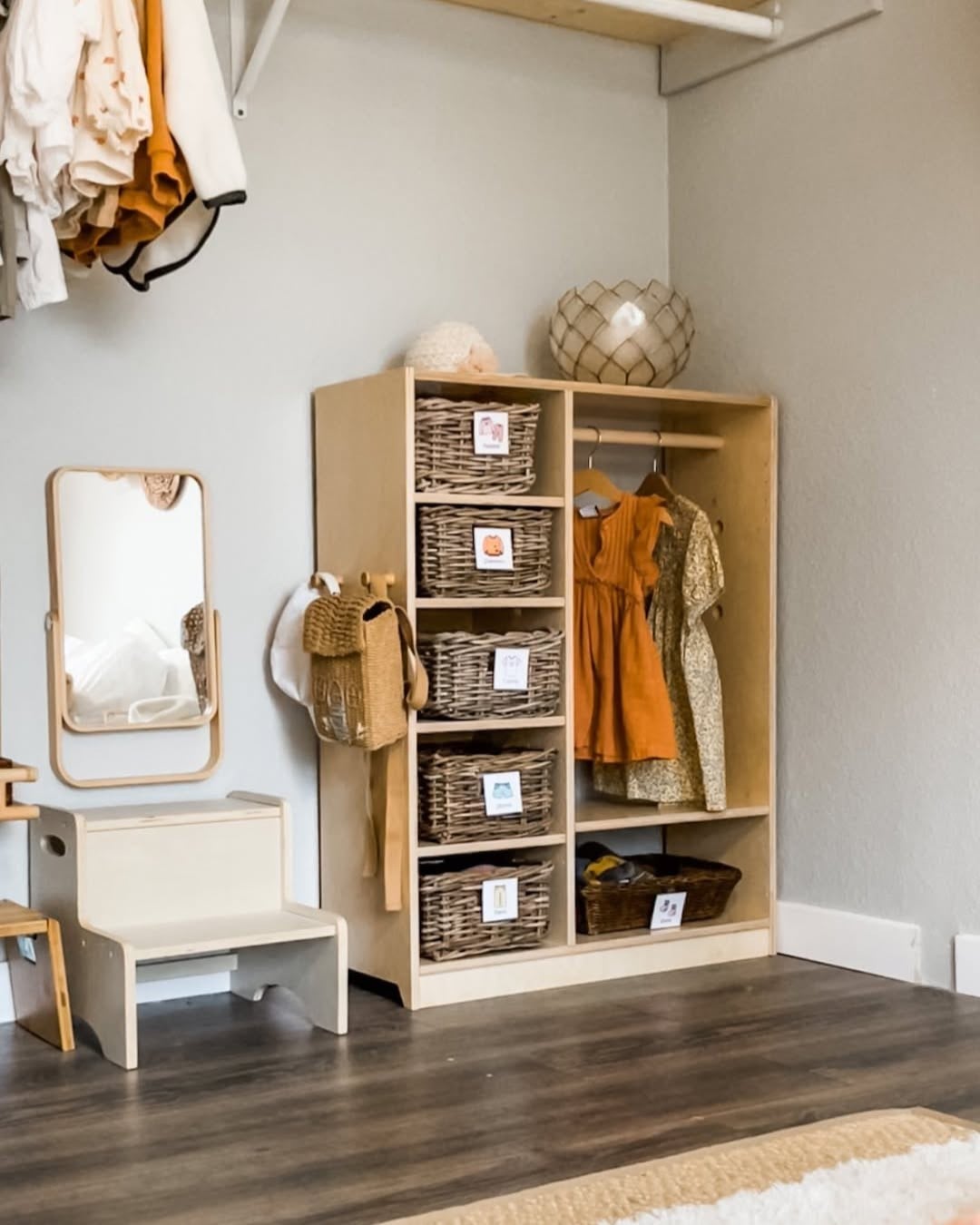
Expensive Option: Montessori wardrobe ($200-500)
Budget Options:
- Low dresser (make sure the top two drawers are accessible to your child)
- IKEA KALLAX with baskets for folded clothes
- Low-hanging rod in the closet
- Simple coat rack at child height ($15-30)
- Hooks on the wall at child level
Book Display
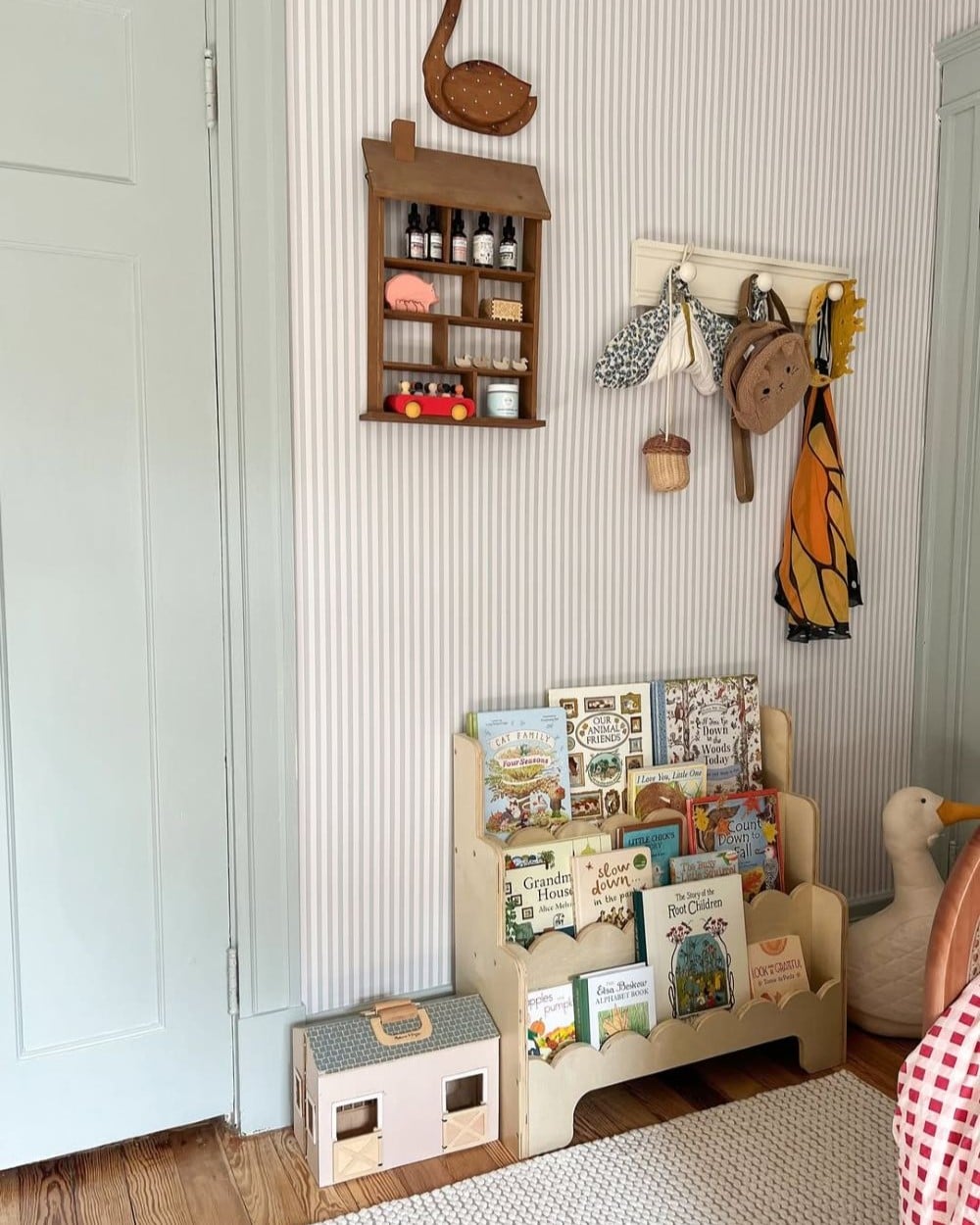
Expensive Option: Front-facing bookshelf ($100-200)
Budget Options:
- IKEA FLISAT book display ($25)
- IKEA MOSSLANDA picture ledges as book rails ($15 each)
- Rain gutter shelves (DIY for $10-20)
- Thrifted spice rack for board books
- Basket on the floor (easy and accessible)
Montessori Toys: Simple and Inexpensive
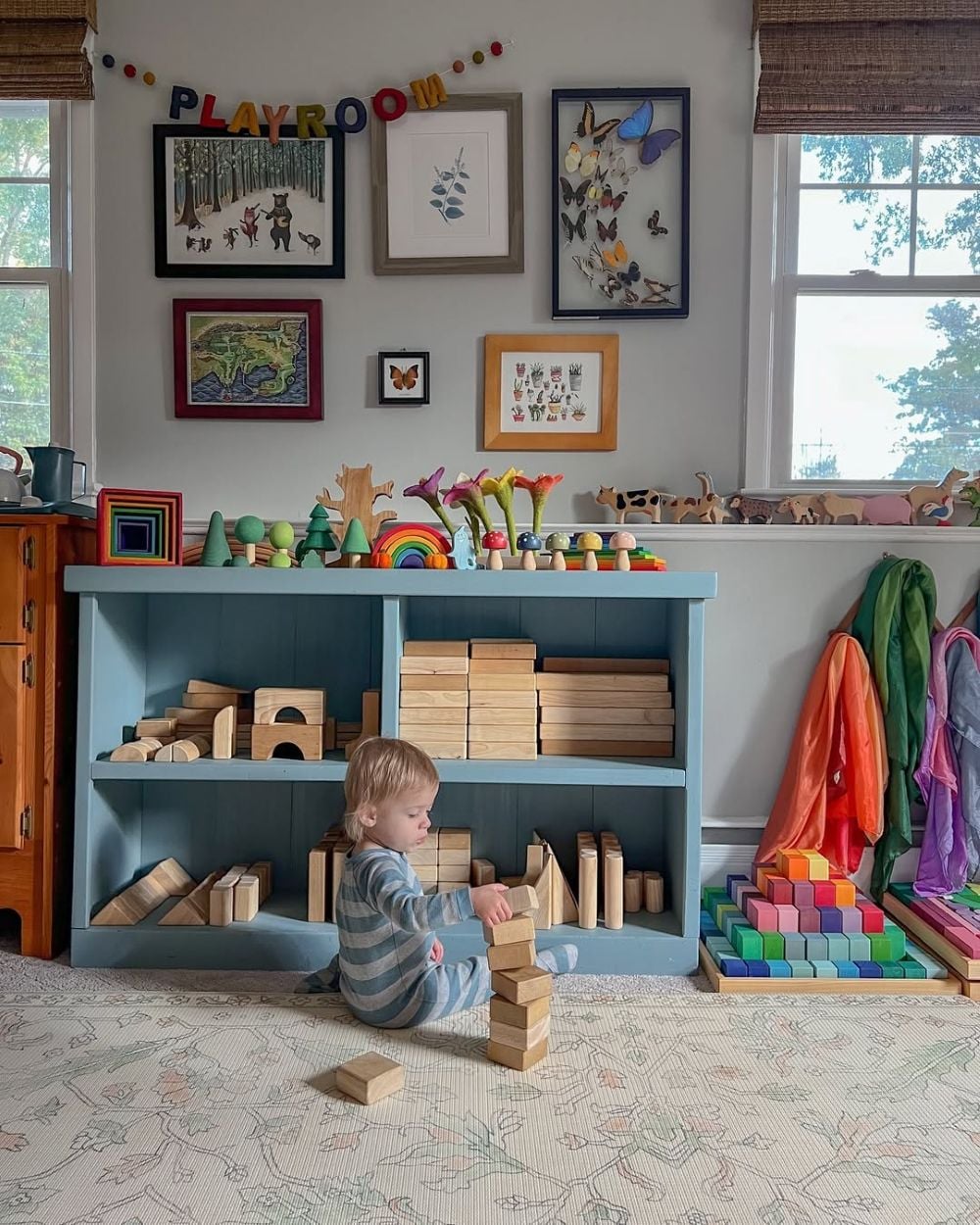
Montessori philosophy favors simple, open-ended toys made from natural materials. The good news? These are often cheaper than the plastic battery-operated alternatives.
Infant Toys (0-6 months)
What They Need:
- High contrast cards (for visual development)
- Wooden rattles
- Silk scarves (texture exploration)
- Your face and voice (free and definitely your baby’s favorite!)
Budget Sources:
- DIY high contrast cards (use printables from Pinterest or Etsy and laminate for durability)
- Wooden rattles from Target, IKEA, or Amazon ($5-15)
- Fabric scraps from the craft store
Infant Toys (6-12 months)
What They Need:
- Object permanence box
- Nesting/stacking toys
- Simple puzzles (single shape)
- Balls of different sizes
- Basket of treasure items
Budget Sources:
- Object permanence box: DIY from a shoebox + ball
- Stacking cups: any brand ($5-10)
- Treasure basket: household items (wooden spoon, fabric, brush, etc.)
- Balls: various from the dollar store
Toddler Toys (12+ months)
What They Need:
- Shape sorters
- Simple puzzles
- Practical life materials (for pouring and transferring)
- Art supplies (chunky crayons, paper, and taste-safe paint)
- Blocks
Budget Sources:
- IKEA MULA toys line (affordable classics)
- Melissa & Doug puzzles (often at TJ Maxx or consignment shops)
- Practical life items: a real small pitcher, small bowls, or measuring cups
- Blocks: any wooden set or a DIY from wood scraps
The Toy Rotation System
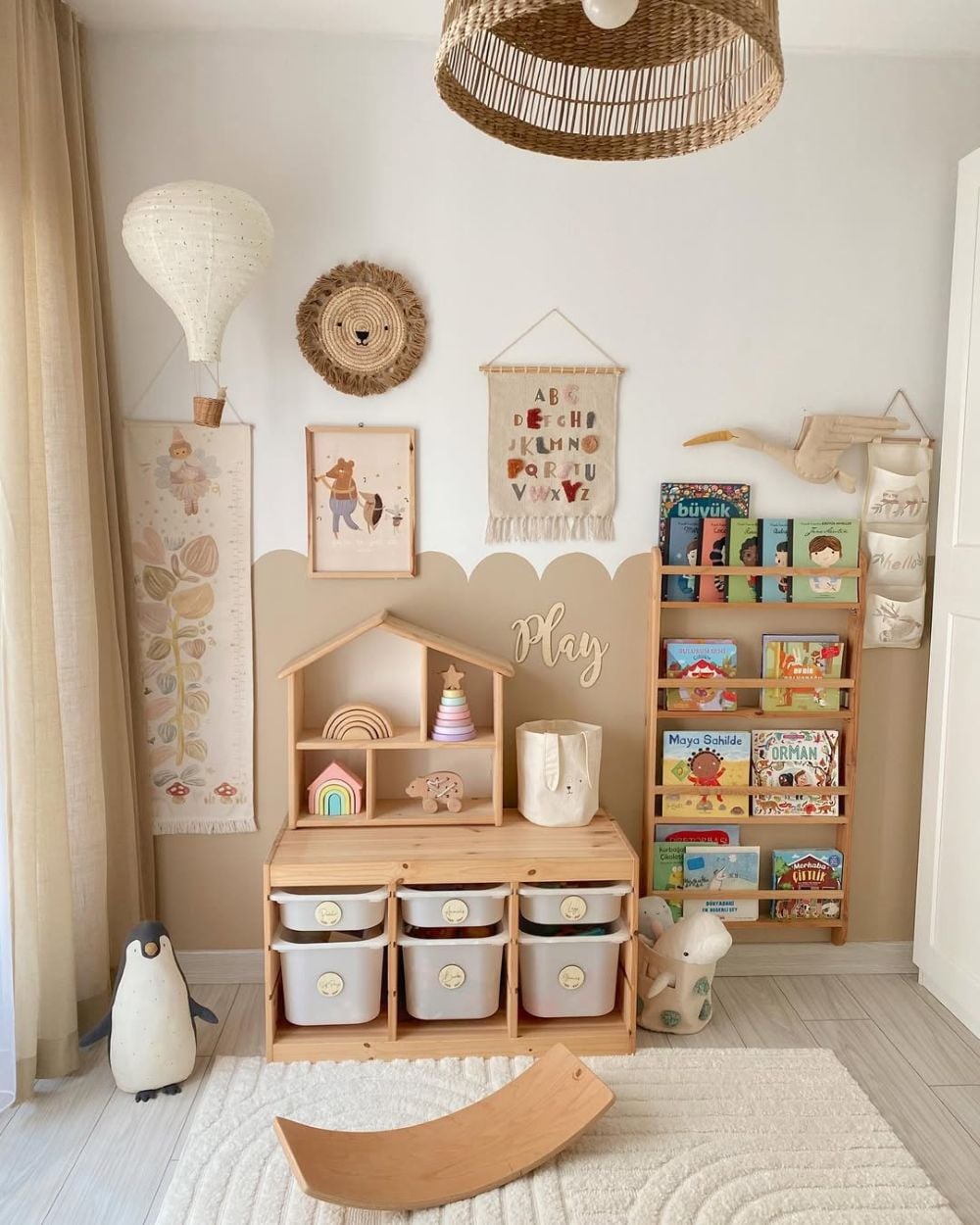
Instead of keeping all toys available at all times, Maria Montessori suggested rotating toys. This allows your little one to focus on a few select toys at a time and engage in focused, high-quality play time.
For toy rotation:
- Keep 4-6 toys/activities on the shelf (include toys from different categories, such as sensory, stacking, matching, etc.)
- Store the rest of your toys out of sight
- Rotate every 1-2 weeks
This method will keep things fresh and reduce overwhelm. Plus, you’ll need fewer toys overall!
DIY Montessori Elements
Pull-Up Bar
When the baby is ready to cruise, a pull-up bar will promote muscle building and gross motor development. My favorite ways to add a pull-up bar in your nursery include:
- A wooden dowel + brackets from hardware store ($15-20)
- A wall-mounted ballet barre (used in dance studios)
- Sturdy low furniture, like an ottoman or bench (you can also mount this piece to the wall for added security)
Art Display
Child’s artwork at their eye level is great for development. Use:
- A clothesline + mini clothespins across the wall ($5)
- Magnetic strip ($10)
- Simple frames at low height (varies)
Practical Life Station
This Montessori station is best for toddlers. Set one up using:
- A small pitcher and cups from the thrift store
- A child-sized broom (IKEA or dollar store)
- A step stool at the sink
- Low hooks for their bag/coat
The Budget Montessori Checklist
Essentials (Start Here)
- [ ] Safe sleep space (crib or floor bed)
- [ ] Open floor space for movement
- [ ] Low mirror (secured to wall)
- [ ] Low shelf with 4-6 items
- [ ] Simple toys (can be household items)
- [ ] Books at the child’s level
Add When Ready
- [ ] Pull-up bar or cruising furniture
- [ ] Weaning table and chair
- [ ] Child-accessible clothing storage
- [ ] Art display at child’s height
- [ ] Practical life materials
You Don’t Need
- [ ] Expensive “Montessori” labeled items
- [ ] Instagram-perfect aesthetic
- [ ] Every element from day one
- [ ] Matching furniture sets
Common Budget Mistakes to Avoid
Buying Everything at Once
Start with what you need now. You baby won’t need a weaning table for at least 6+ months. Add that and other items as your child grows and reaches different milestones.
Falling for the “Montessori” Label
A toy or piece of furniture isn’t automatically better just because it says “Montessori”. Focus on the principles, not the branding.
Overcomplicating It
Montessori is about simplicity. A clean, safe space with a few thoughtful items IS Montessori. You don’t need Instagram perfection.
Ignoring What You Have
That IKEA bookshelf, those wooden blocks from your childhood, that basket of kitchen items—these are Montessori materials. Use them.
Total Budget Breakdown
Ultra-Budget Montessori Nursery: Under $200
- Floor mattress: $100
- IKEA KALLAX shelf: $40
- IKEA mirror squares: $10
- DIY toys and household items: $20
- Thrifted baskets/containers: $20
- Total: ~$190
Moderate Budget: $400-600
- Budget floor bed frame: $150
- Twin mattress: $100
- Low shelf: $50
- Mirror: $40
- Basic toys: $50
- Book display: $25
- Rug: $50
- Total: ~$465
Comfortable Budget: $800-1,200
- House frame bed: $200
- Quality mattress: $150
- Nice low shelf: $100
- Acrylic mirror: $50
- Curated toy collection: $100
- Book display: $50
- Weaning table set: $50
- Rug and textiles: $100
- Total: ~$800
Final Thoughts
Maria Montessori developed her philosophy while working with children who had very little. The heart of Montessori is not beautiful furniture—it’s respect for the child.
A Montessori nursery on a budget is still a Montessori nursery. It’s a space where your child can move freely, explore safely, and learn at their own pace. That doesn’t require one single expensive purchase.
Start simple. Add as you go. And trust that your child doesn’t care about Instagram aesthetics—they care about the freedom to explore.
Related Posts: – Nursery Ideas for Small Spaces – Gender Neutral Nursery Ideas – Minimalist Baby Registry Checklist (2026)
Save this to Pinterest for your Montessori nursery inspiration!
Related Posts You’ll Love
- 14+ Charming Baby Boy Nursery Ideas For 2026
- 17+ Stunning Baby Girl Nursery Ideas To Copy In 2026
- Minimalist Baby Registry: My 45+ Must-Have Baby Items
Frequently Asked Questions
What is the most important thing to buy first for a Montessori nursery?
Start with a floor mattress or low-profile floor bed — it’s the foundation of Montessori sleep philosophy and lets baby move freely and safely. A basic twin mattress on the floor works perfectly. Everything else, like mobiles and baskets, can be added gradually and inexpensively as your baby grows.
How much does it actually cost to set up a budget Montessori nursery?
A functional Montessori nursery can come together for $150 to $300 using a floor mattress, a low dresser for a changing area, a few wooden toys, and natural fiber baskets from thrift stores or Amazon. You do not need designer furniture or specialty brands — the principles matter far more than the price tags.
Can I use IKEA furniture for a Montessori nursery?
Absolutely. IKEA is one of the best budget-friendly options for Montessori setups. The TROFAST storage, KNAGGLIG crates, and SUNDVIK crib converted to a toddler bed are all popular choices. Low bookshelves like the KALLAX laid on its side work great for accessible toy display at baby’s eye level.
Are Montessori toys worth buying new or should I buy secondhand?
Secondhand is completely fine and actually encouraged — wooden toys hold up beautifully and can be sanitized easily. Check Facebook Marketplace, thrift stores, and toy libraries for rattles, stacking rings, and object permanence boxes. Focus on open-ended, simple items rather than battery-operated toys, and you can build a great collection for under $50.
📱 Baby Prep: the calm way to get ready
The registry narrowed down, the hospital bag, and the checklists that actually matter — free on iPhone and Android. See all our apps →