This post contains affiliate links.
Not everyone has a Pinterest-perfect 200 square foot nursery. And you know what? You don’t need one.
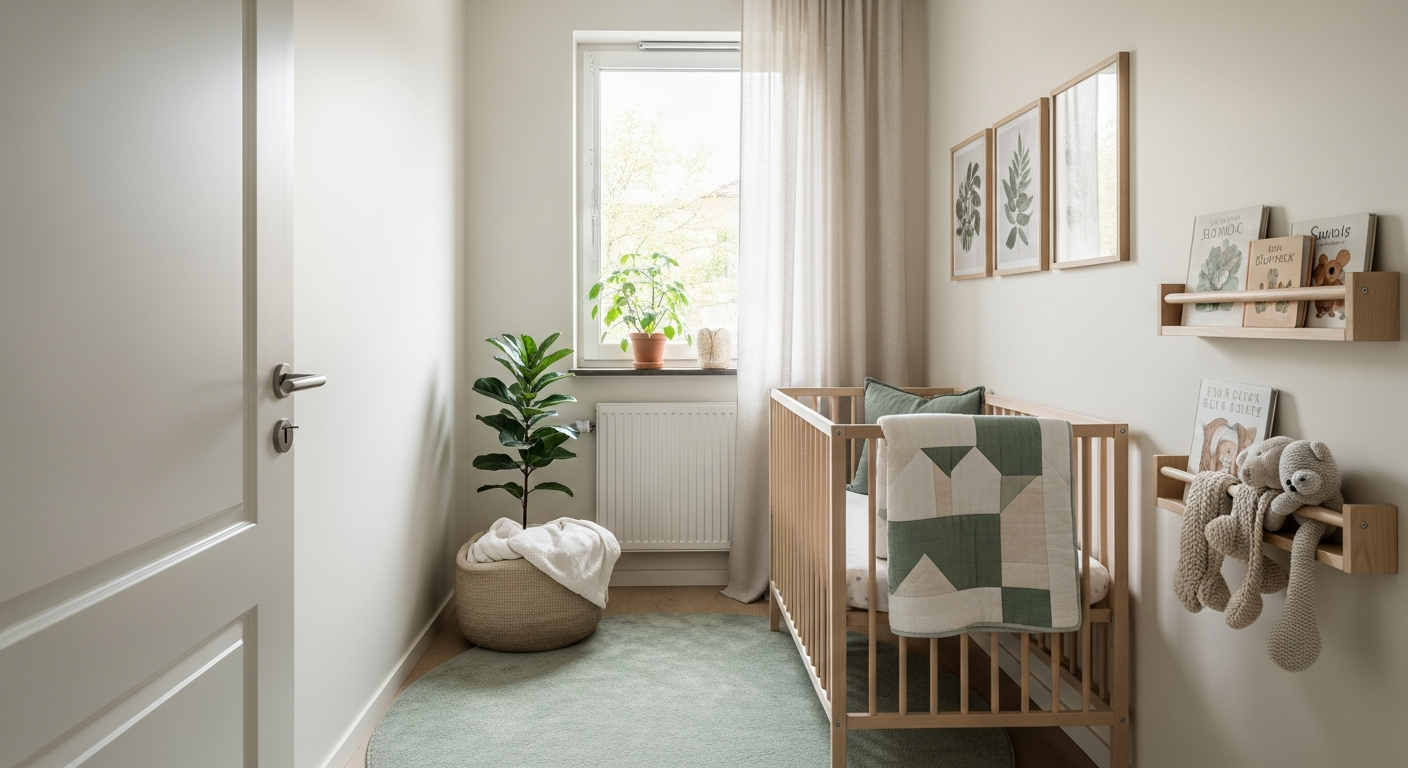
Some of the coziest, most functional nurseries I’ve seen are in tiny apartments, shared bedrooms, and awkward corner spaces. With the right planning, a small nursery isn’t a limitation—it’s an opportunity to be intentional about every single item.
Here’s how to create a beautiful, functional nursery in a small space.
The Small Nursery Mindset
Less Room = Less Stuff = Less Overwhelm
A small nursery forces you to ask: "Do I really need this?" The answer is often no. Babies need very little in those first months:
- A safe place to sleep
- A spot for diaper changes
- Somewhere to feed
- Storage for essentials
That’s it. Everything else is optional.
Measure Everything First
Before buying anything: 1. Measure your space exactly 2. Note where doors, windows, outlets, and closets are 3. Create a rough floor plan 4. Measure furniture before purchasing
This saves returns, frustration, and money.
Space-Saving Furniture
Mini Cribs
Standard cribs are 28" x 52". If that’s too big, consider a mini crib at about 24" x 38"—roughly 25% smaller.

Best Mini Cribs: – Babyletto Origami Mini Crib — Folds flat when not in use – Dream On Me Aden Mini Crib — Budget-friendly and convertible – Stokke Sleepi — Oval shape, grows with baby
When a Mini Crib Works: – Room is under 100 square feet – Baby will transition to a toddler bed (not a converted crib) later – You need the crib to fold or move frequently
Bassinets First
Starting with a bassinet buys you time. Baby sleeps in the bassinet for 4-6 months while you figure out your longer-term setup.
Space-Saving Bassinets: – Halo BassiNest — Swivels over the bed, minimal floor space – Snoo — Rental option, auto-soothes (worth the splurge for sleep) – IKEA Solgul — Budget-friendly, compact
Dresser as Changing Table
Skip the dedicated changing table. They’re single-purpose furniture that quickly becomes useless.
Instead: Dresser + Changing Pad
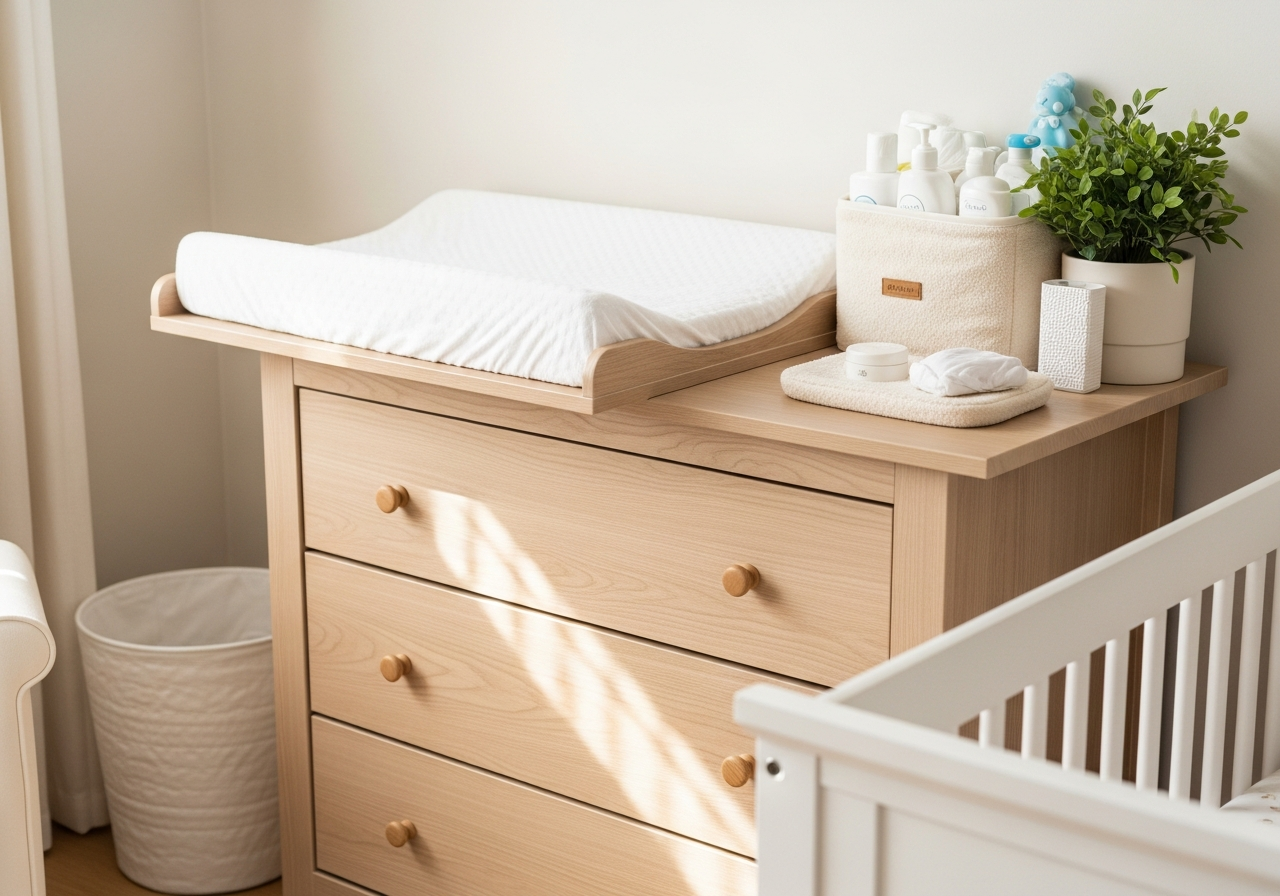
This gives you: – Diaper changing surface on top – Clothing storage in drawers – Long-term functionality (remove the pad when baby outgrows it)
Best Compact Dressers: – IKEA Hemnes 3-Drawer — 42.5" wide, great value – IKEA Malm 3-Drawer — 31.5" wide, ultra-compact – Delta Children 3-Drawer — 34" wide, nursery-specific
The Multi-Function Furniture Hack
Every piece of furniture should serve at least two purposes:
- Instead of changing table + dresser → Get a dresser with changing pad on top
- Instead of crib + playpen → Get a pack ‘n play with bassinet insert
- Instead of glider + reading chair → Get a glider (use for everything)
- Instead of toy bins + decor → Get baskets that look nice AND hold toys
- Instead of nightstand + lamp → Get a wall-mounted light + floating shelf
Small Nursery Layouts
The Basics: What Goes Where
Zone Your Space: 1. Sleep Zone — Crib/bassinet in the quietest, dimmest corner 2. Change Zone — Dresser with pad near (but not above) storage 3. Feed Zone — Chair with side table/caddy for night feeds

Layout A: The Corner Nursery (Under 50 sq ft)
For a nursery in the corner of your bedroom or a tiny nook:
Key Elements: – Mini crib against one wall – Compact 3-drawer dresser with changing pad – Small nursery glider or rocker – Vertical storage (shelves above dresser)
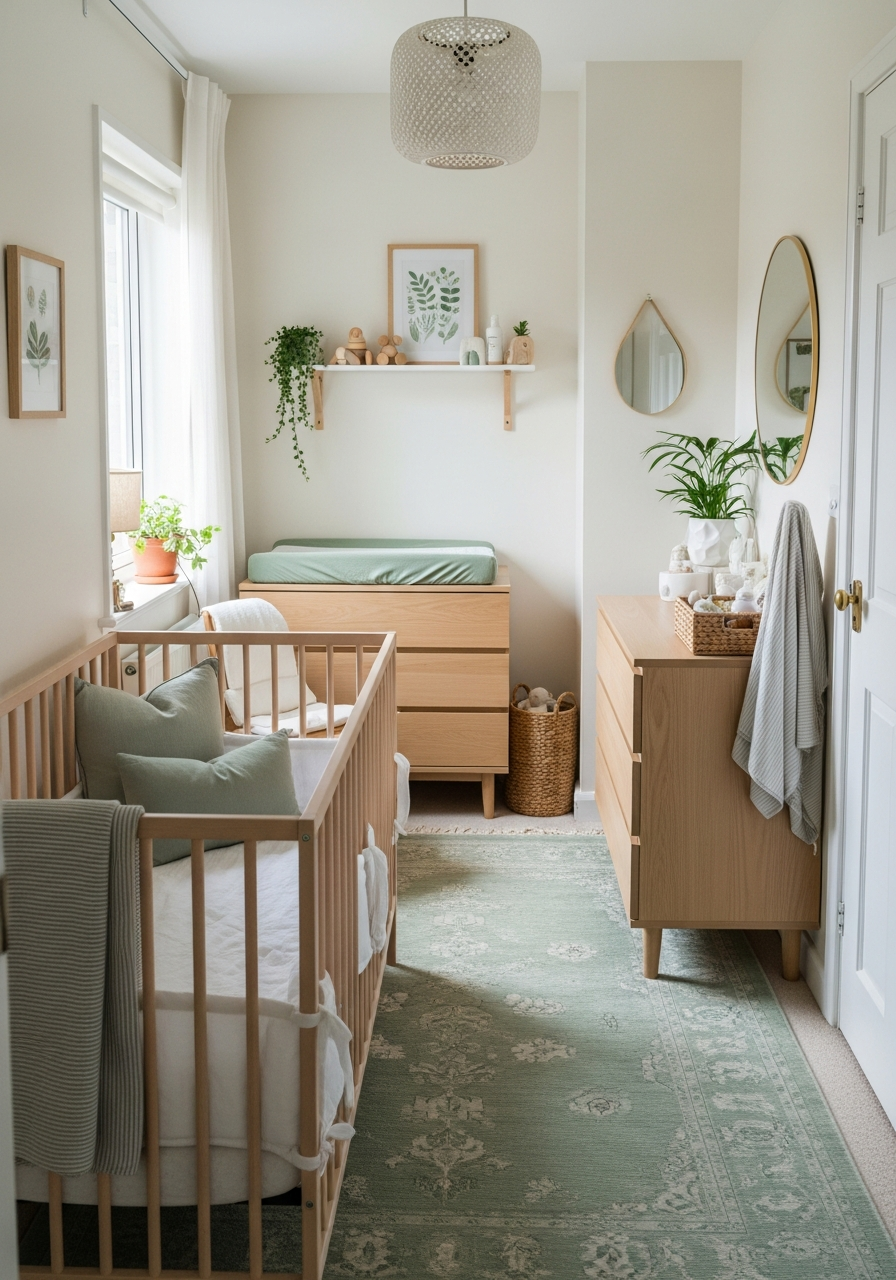
Layout B: The Narrow Room (6′ x 10′)
Long and skinny? Work with it:
Key Elements: – Furniture along the longer walls – Keep the center clear for movement – Mirror on the short wall to create depth – Under-crib storage for extra supplies
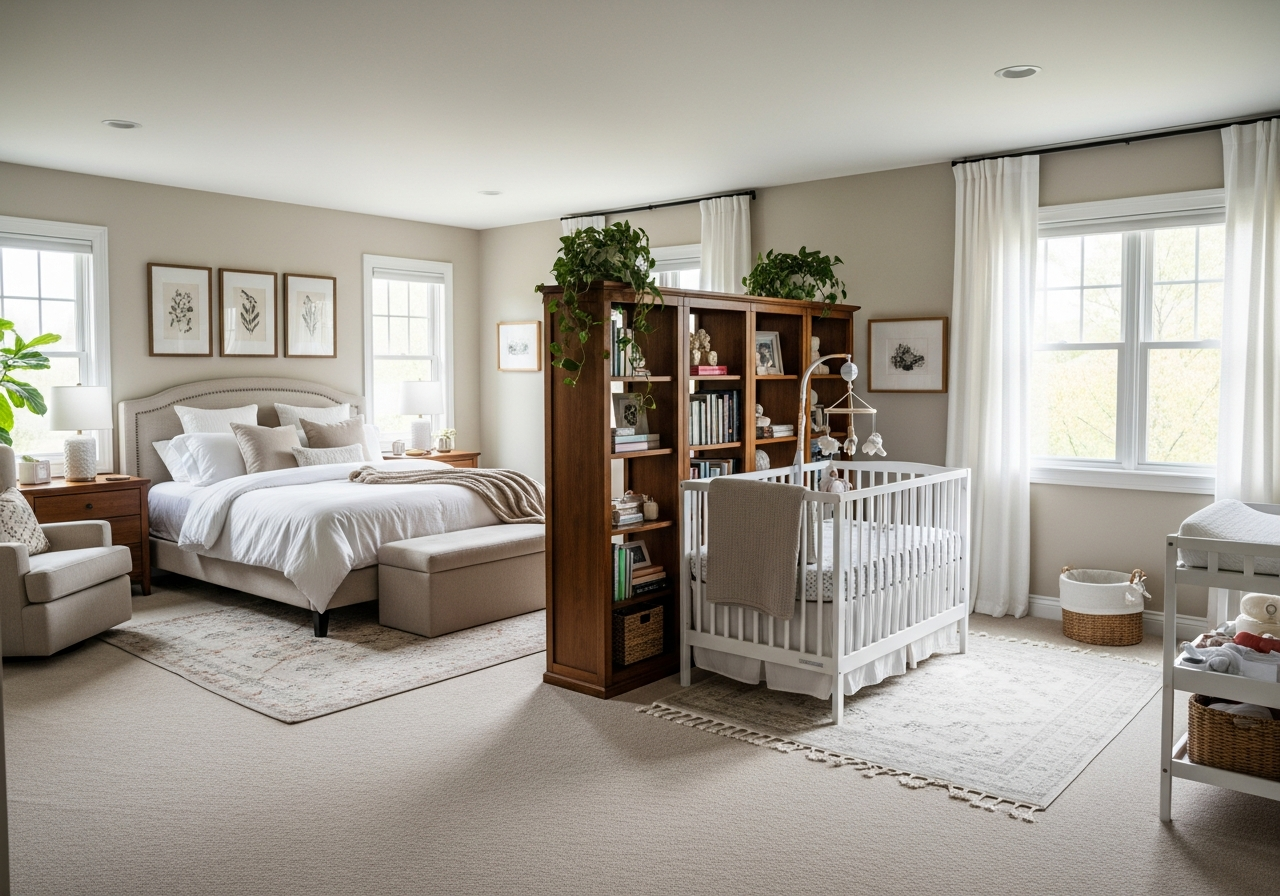
Layout C: The Shared Room
Baby sharing with a sibling or in your master bedroom:
Creating Separation: – Use a bookshelf as a room divider – Hang a curtain to separate zones – Use a different rug to define baby’s area – Position the crib facing away from distractions
Keeping It Functional: – Shared dresser with baby’s items in top drawers – Portable diaper caddy instead of fixed changing station – White noise machine to buffer sounds
Vertical Storage Solutions
When floor space is limited, go up.
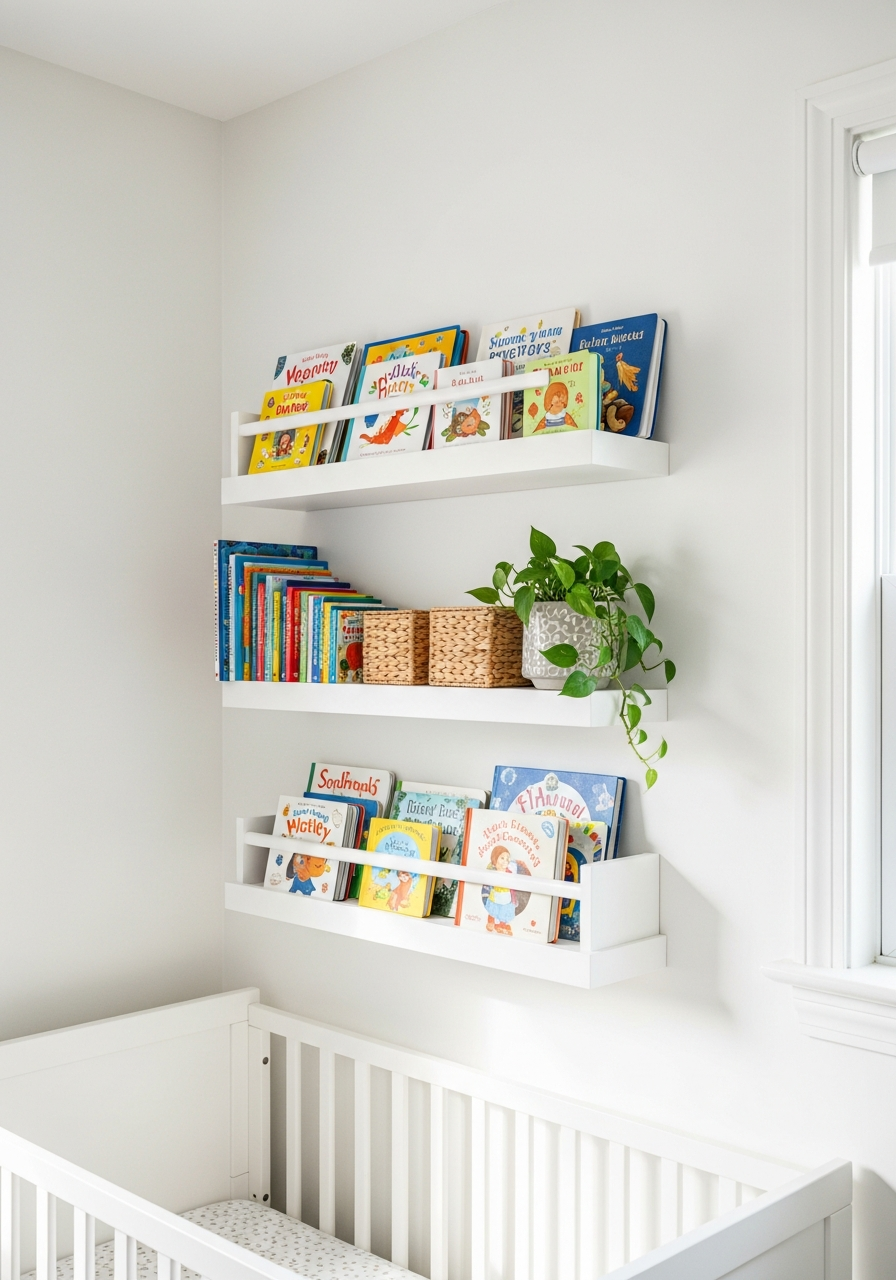
Wall-Mounted Shelves
- Install shelves above the dresser/changing area
- Store diapers, wipes, creams within arm’s reach
- Display books, decor, and keepsakes
- Floating shelves keep the look clean
IKEA Favorites: – LACK floating shelves – BERGSHULT/EKBY brackets + shelf – MOSSLANDA picture ledges (for books)
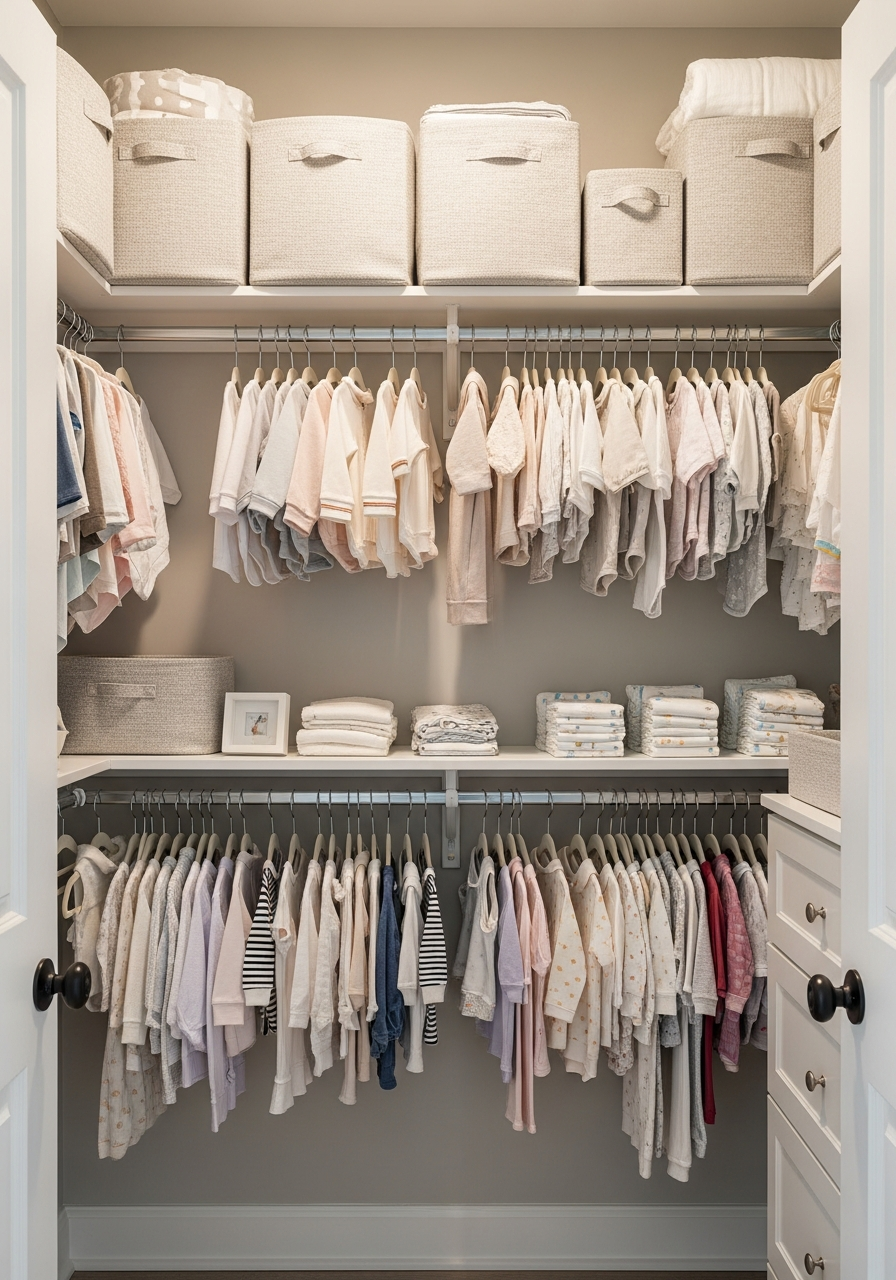
Closet Optimization
A well-organized closet can eliminate the need for additional furniture:
Top Rod: – Hang rarely used items, out-of-season clothes
Lower Rod: – Hang current-size baby clothes at adult-reaching height – Use baby-sized hangers to maximize space
Shelves: – Folded items: onesies, pants, pajamas – Bins for accessories: socks, hats, mittens – Diapers and wipes in bulk
Floor: – Baskets for toys – Laundry hamper – Diaper pail
Door: – Over-door organizer for small items – Hooks for bags, jackets
Pegboard Systems
A pegboard on the wall by the changing area creates flexible, customizable storage:
- Hooks for hanging items
- Small shelves for supplies
- Bins for diapers and wipes
- Easy to reconfigure as needs change
Color and Light Tricks
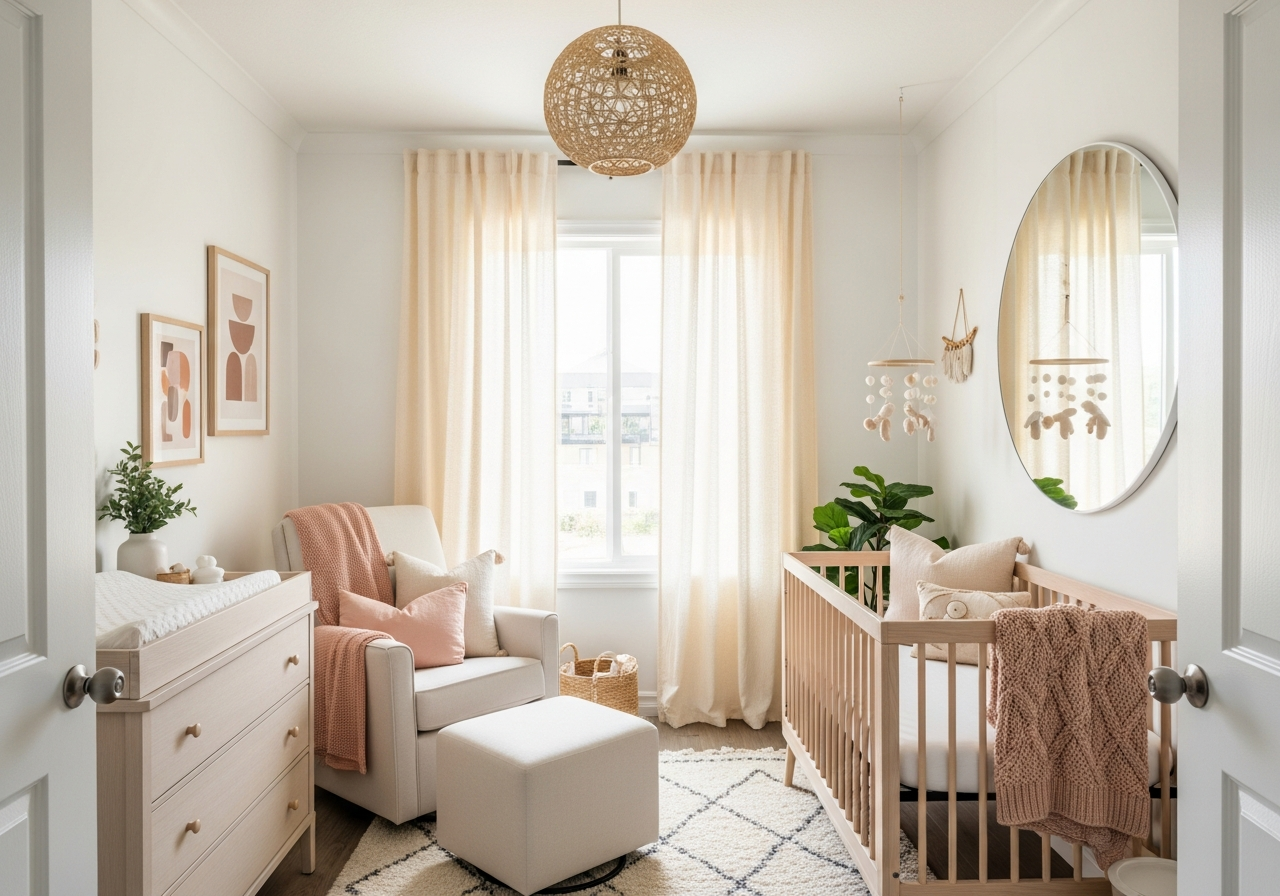
Make It Feel Bigger
Light Colors: – White, cream, soft gray, pale blush – Light walls make spaces feel larger – Save bold colors for accents
Mirrors: – One large mirror reflects light and creates depth – Position opposite a window if possible
Consistent Palette: – Stick to 2-3 colors – Matching furniture creates cohesion – Too many colors fragment the space
Natural Light: – Keep windows unobstructed – Use sheer curtains plus blackout shades – No heavy drapes eating up visual space
Smart Lighting
- Overhead: Simple flush-mount or pendant
- Task: Wall-mounted sconce above the glider
- Night: Dimmable night light or smart bulb
Skip the floor lamp—it takes up precious square footage.
Real Small Nursery Setups
The 8×8 Nursery
What Fit: – Mini crib – 3-drawer dresser with changing pad – Small rocker (not a glider—smaller footprint) – Wall shelves – Over-door hooks
What Didn’t: – Full-size crib – Separate changing table – Bookshelf – Storage ottoman
The Closet Nursery
Some families convert a walk-in closet into a nursery. It works if: – The closet is at least 6′ x 6′ – There’s ventilation (add a fan or vent) – You can install a smoke detector – You don’t need the closet for other storage
Closet Nursery Setup: – Mini crib or bassinet against the back wall – Shelves on side walls for storage – Remove closet doors or replace with curtains – Small stool for sitting during night feeds
The Master Bedroom Corner
Creating a Nursery Zone: – Position crib in the corner farthest from the door – Use a small bookshelf or curtain as a visual divider – Add a dedicated rug to define the space – Keep baby’s items in one section of your closet
Budget-Friendly Small Nursery Tips
Buy Less, Buy Better
In a small space, every item is visible. Invest in a few quality pieces that look good and function well, rather than filling the room with cheap stuff.
IKEA Is Your Friend
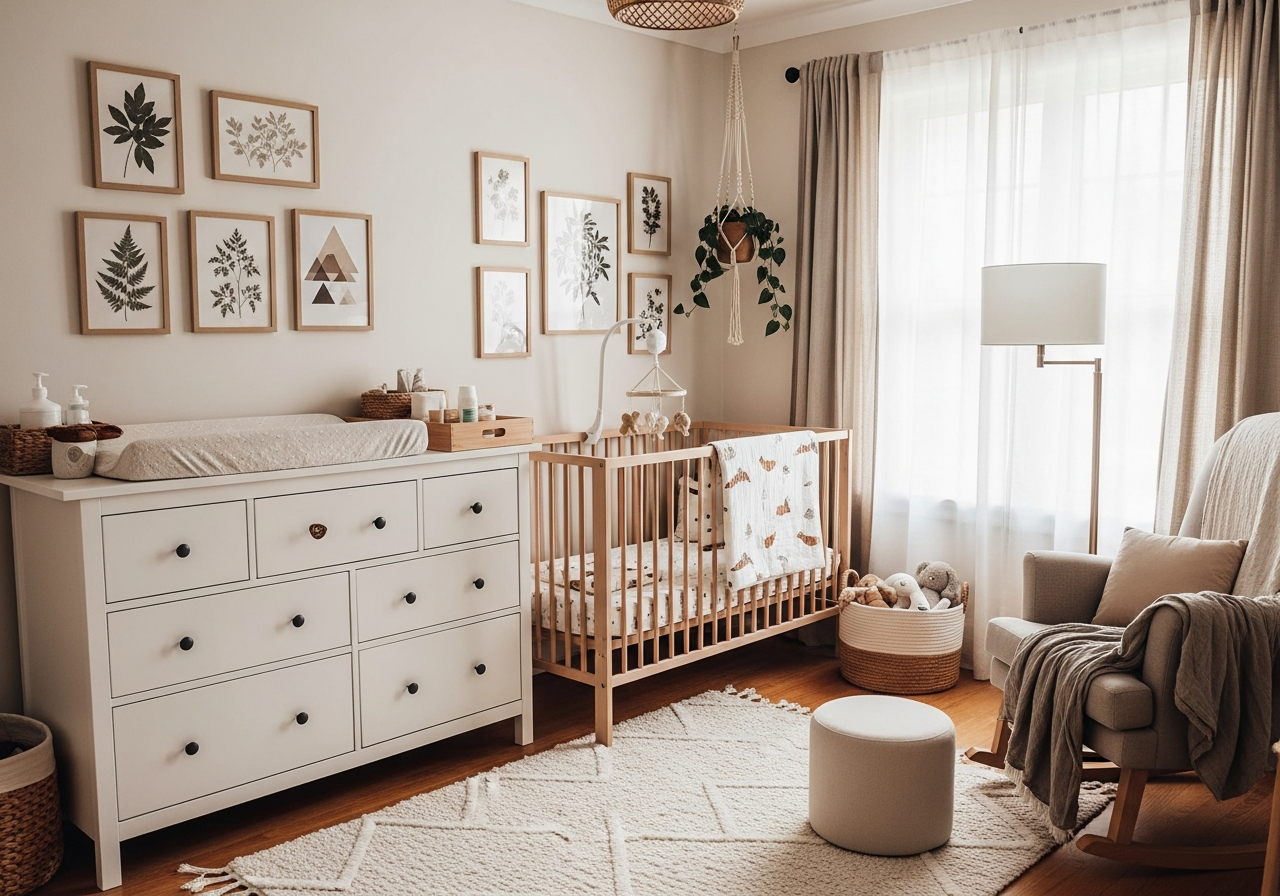
IKEA’s compact furniture lines are designed for small spaces: – SUNDVIK crib (smaller footprint than many brands) – MALM narrow dresser – KALLAX for customizable storage – LACK shelving
Secondhand Scores
Small nurseries are easier to furnish secondhand because you need less: – Facebook Marketplace for cribs and dressers – Consignment shops for decor – Hand-me-downs from friends
DIY Where Possible
- Paint old furniture to match your palette
- Install your own shelves
- Sew simple curtains
- Frame your own art prints
Common Small Nursery Mistakes
Mistake 1: Buying Full-Size Everything
Just because it’s standard doesn’t mean it’s right for your space. Consider mini and compact versions of everything.
Mistake 2: Too Much Decor
A small room gets cluttered fast. Choose a few meaningful pieces and leave empty wall space.
Mistake 3: Ignoring Vertical Space
When you can’t go out, go up. Shelves, wall hooks, and over-door storage are essential.
Mistake 4: Blocking the Closet
Keep closet doors fully functional. That’s valuable hidden storage you’ll need.
Mistake 5: Forgetting Traffic Flow
You need to move around the room, especially while holding a baby. Keep at least 24" between furniture pieces.
Final Thoughts
A small nursery isn’t a compromise—it’s an opportunity. With less space, you’re forced to prioritize, simplify, and create a room that’s truly functional.
Baby doesn’t know the square footage. They just know they’re loved, safe, and comfortable. And that doesn’t require a single extra square foot.
Related Posts: – Minimalist Baby Registry Checklist (2026) – Gender Neutral Nursery Ideas – Montessori Nursery on a Budget
Pin this post to your Nursery Ideas board for inspiration!
Related Posts You’ll Love
- 14+ Charming Baby Boy Nursery Ideas For 2026
- 17+ Stunning Baby Girl Nursery Ideas To Copy In 2026
- Minimalist Baby Registry: My 45+ Must-Have Baby Items
Frequently Asked Questions
What is the minimum room size for a baby nursery?
There’s no legal minimum, but even 50-60 square feet can work beautifully. A mini crib, a dresser with a changing pad on top, and good vertical storage fit into surprisingly tight spaces. Focus on the true essentials for the first six months — a safe sleep spot and a diaper station — then add only what actually fits.
Can I set up a nursery in a shared bedroom?
Yes, and plenty of parents do it successfully. A mini crib or bedside bassinet keeps the sleep area compact. A bookshelf or curtain panel creates a visual boundary without eating floor space. White noise helps everyone adjust once baby moves into the room with you. It’s more common than you think.
Is a mini crib worth buying or should I just get a standard crib?
If your room is under 100 square feet or you’re sharing a bedroom, a mini crib is genuinely worth it — you gain roughly 25% more floor space. Just know most mini cribs don’t convert to toddler beds, so you’ll replace it sooner. For rooms with more flexibility, a standard crib usually makes more sense long-term.
How do I add storage to a nursery with no closet?
Go vertical immediately. Floating shelves, a tall narrow dresser, and an over-door organizer all maximize wall space without shrinking your floor area. Flat storage bins slide easily under most cribs. A dresser with a waterproof changing pad on top pulls double duty and eliminates an entire piece of furniture from your list.
📱 Baby Prep: the calm way to get ready
The registry narrowed down, the hospital bag, and the checklists that actually matter — free on iPhone and Android. See all our apps →