This post contains affiliate links.
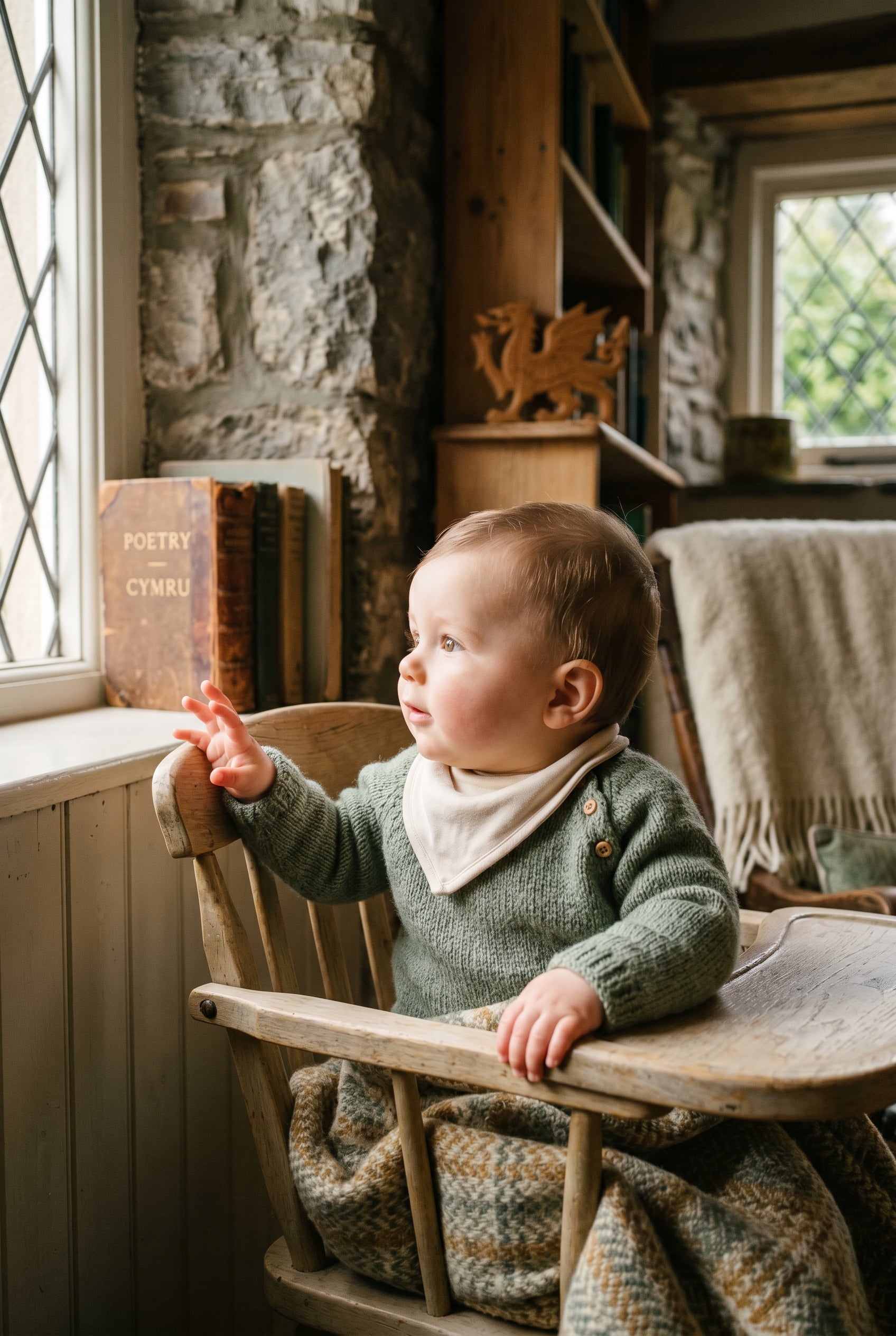
This list leans hard into Wales’s bardic tradition — the medieval poets and storytellers who put these names into verse centuries before anyone thought to rank them by popularity. You’ll find names pulled from the work of court poets like Taliesin, from the elegy Y Gododdin, and from the Mabinogion’s tangle of myth and legend. Say a few aloud and you’ll notice they were built for chanting around a fire, not for a nursery name tag — and that’s exactly the appeal.
🔍 Curious how popular a name is?
Check any name's popularity trend since 1880 with our free Baby Name Popularity Checker.
Popularity below is calculated from Social Security Administration data through 2024, the most recent year on record.
Here’s what’s in store –
Names From Arthurian Legend and the Mabinogion
Names of the Welsh Bards and Saints
Princely and Royal Welsh Names
Welsh Names From Nature and Landscape
Compound Welsh Names With Layered Meaning
Welsh Names Beginning With Gwyn (Fair, Blessed, White)
If you’re drawn to a name with real depth — something a child can grow into and a librarian will still be able to pronounce in eighty years — Welsh is a remarkable place to look. The sound system is genuinely different from English: that double-L (Ll) is a soft airy hiss rather than a hard consonant, “w” often functions as a vowel (“Llew” rhymes loosely with “Hugh”), and “f” is pronounced like a v. Don’t let the spellings intimidate you. Once you hear them said aloud, they tend to settle in.
A note before the list. Wales has a long tradition of giving names that mean something specific about a person — “fair-browed,” “great king,” “blessed chief” — rather than abstract virtues. So the meanings here are often quite concrete. I’ve kept the origin notes honest: where a name comes through Brythonic Celtic, I’ve said so; where it’s a borrowing the Welsh made distinctly their own (like Steffan for Stephen), I’ve noted that too.
The names below are organized by feeling, not alphabet — Arthurian heroes together, bardic and poetic names together, nature names together — so you can browse the mood you’re already in.
Names From Arthurian Legend and the Mabinogion
These are the deep cuts: kings, knights, sorcerers, and shepherds from the oldest surviving British stories. Many predate the French Arthurian romances by centuries and feel more rooted because of it.
- Origin: Celtic (Welsh), disputed — possibly a Latinized Romano-British name
- Pronunciation: AR-thur · ˈɑːrθər
- Meaning: possibly ‘bear’ (etymology disputed)
- Popularity: #105 and rising (#130 → #105, 2024)
The once and future king; surprisingly wearable as a soft modern classic.
- Origin: Welsh (mythological)
- Pronunciation: AH-rown · ˈaːraʊn
- Meaning: uncertain meaning; traced to the Hebrew name Aaron via Latin and Old Welsh
- Popularity: Not in the U.S. Social Security rankings
That describes the mythological king of Annwn, not a literal translation of the name — linguistically the name derives from the Hebrew name Aaron via Latin and Old Welsh.
- Origin: Welsh (Arthurian legend)
- Pronunciation: BED-weer · ˈbɛdwɪr
- Meaning: sometimes explained as ‘birch’ plus a heroic element, though this isn’t certain
- Popularity: Not in the U.S. Social Security rankings
The original Sir Bedivere, Arthur’s one-handed companion who returned Excalibur to the lake.
- Origin: English (surname)
- Pronunciation: BRAN · bræn
- Meaning: raven
- Popularity: #11,099 and falling (#9,880 → #11,099, 2024)
The giant king whose head was buried under the Tower of London to protect Britain.
- Origin: Welsh (traditionally linked to Latin Gaius)
- Pronunciation: KY · ˈkaɪ
- Meaning: traditionally said to mean ‘rejoice’ (as a Welsh form of Gaius), though the ultimate origin of Gaius itself is uncertain
- Popularity: #1,902 and falling (#1,849 → #1,902, 2024)
The original Sir Kay; brash, loyal, and one of Arthur’s earliest companions.
- Origin: Welsh
- Pronunciation: KUN-on · ˈkənɔn
- Meaning: chief or warrior hound
- Popularity: Not in the U.S. Social Security rankings
A warrior-poet mourned in the sixth-century elegy Y Gododdin.
- Origin: Welsh (from Pictish/Brittonic)
- Pronunciation: DRIS-tən · ˈdrɪstən
- Meaning: tumult, commotion
- Popularity: Not in the U.S. Social Security rankings
The Welsh original of Tristan, the doomed lover of Iseult.
- Origin: Welsh (mythological)
- Pronunciation: ev-NUH-see-en
- Meaning: the unpeaceful/hostile one
- Popularity: Not in the U.S. Social Security rankings
The volatile half-brother whose temper destroys two kingdoms in the Mabinogion.
- Origin: Welsh
- Pronunciation: GAIR-int · ˈɡɛraɪnt
- Meaning: old man, elderly
- Popularity: Not in the U.S. Social Security rankings
A knight of Arthur’s court and the subject of Tennyson’s poem.
- Origin: Welsh
- Pronunciation: GWALK-my · ˈɡwalχmaɪ
- Meaning: hawk of May (gwalch “hawk” + Mai “May”)
- Popularity: Not in the U.S. Social Security rankings
- Origin: Welsh (mythological)
- Pronunciation: GWID-ee-on · ˈɡwɪdi.ɒn
- Meaning: Possibly “born of trees”
- Popularity: Not in the U.S. Social Security rankings
The trickster-magician of the Fourth Branch who shapes a wife out of flowers.
- Origin: Welsh (mythological)
- Pronunciation: HLAY · ɬeɪ
- Meaning: linked to light or brightness, and to the older Celtic god Lugus
- Popularity: Not in the U.S. Social Security rankings
The doomed solar hero of the Mabinogion, killed only by an impossible combination of weapons.
- Origin: Welsh (mythological, ultimately Brittonic)
- Pronunciation: MAB-on · ˈmæbɒn
- Meaning: son / divine son (from Brittonic Maponos)
- Popularity: Not in the U.S. Social Security rankings
The divine youth stolen from his mother three nights after birth.
- Origin: Welsh (mythological)
- Pronunciation: mah-nuh-WID-an · mænəˈwɪdən
- Meaning: Of pre-Welsh origin
- Popularity: Not in the U.S. Social Security rankings
A patient, craftsman-king from the Third Branch — Welsh cousin to the Irish Manannán.
- Origin: Welsh (mythological)
- Pronunciation: MAHTH · mɑːθ
- Meaning: bear (proposed Celtic root)
- Popularity: Not in the U.S. Social Security rankings
The wise old magician-king of Gwynedd, teacher of Gwydion.
- Origin: Welsh (from Latin)
- Pronunciation: MED-rowd · ˈmɛdraud
- Meaning: restrained, moderate
- Popularity: Not in the U.S. Social Security rankings
Arthur’s nephew and killer; a darker, harder name than its modern counterpart.
- Origin: Welsh (from a place name)
- Pronunciation: MUR-thin · ˈmərðɪn
- Meaning: tied to the place name Carmarthen, whose root meant ‘sea fort’
- Popularity: Not in the U.S. Social Security rankings
The original Merlin, before French scribes softened the spelling.
- Origin: Welsh (Brittonic)
- Pronunciation: OH-wine · ˈoʊaɪn
- Meaning: traditionally glossed ‘well-born,’ via a historical link to the Greek-derived name Eugene; a ‘warrior’ sense isn’t well attested
- Popularity: #13,536 as of 2020 — not currently in the U.S. Social Security rankings
A historical king and Arthurian knight; one of the most enduringly used Welsh names.
- Origin: Welsh (Arthurian legend)
- Pronunciation: peh-RED-ir · pɛˈrɛdɪr
- Meaning: hard/steel spears
- Popularity: Not in the U.S. Social Security rankings
The Welsh Percival, a forest-raised innocent who finds the Grail castle.
- Origin: Welsh
- Pronunciation: prih-DEH-ree · prɪˈdɛri
- Meaning: care, or worry
- Popularity: Not in the U.S. Social Security rankings
Named for his mother’s worry; the only character to appear in all four Branches of the Mabinogion.
- Origin: Welsh
- Pronunciation: PWIL · pʊiɬ
- Meaning: calm judgment, or wisdom
- Popularity: Not in the U.S. Social Security rankings
The Lord of Dyfed who trades places with the king of the Otherworld for a year.
- Origin: Welsh (literary personal name)
- Pronunciation: hron-AH-bwee · rɒnˈɑːbwi
- Meaning: Of obscure origin
- Popularity: Not in the U.S. Social Security rankings
A dreamer who falls asleep on an ox-hide and meets Arthur in the past.
- Origin: Welsh
- Pronunciation: TAL-ee-ES-in · ˌtæliˈɛsɪn
- Meaning: shining/radiant brow (tal ‘brow’ + iesin ‘radiant, shining’)
- Popularity: #10,750 and falling (#9,629 → #10,750, 2024)
The semi-mythical 6th-century bard; arguably the most poetic name on this entire list.
- Origin: Welsh (from Latin Tacitus)
- Pronunciation: TEG-id · ˈtɛɡɪd
- Meaning: silent, via the Roman name Tacitus
- Popularity: Not in the U.S. Social Security rankings
Husband of the enchantress Ceridwen; also the Welsh name for Bala Lake.
- Origin: Welsh (Brythonic)
- Pronunciation: YOOR-ee-ən
- Meaning: Privileged birth
- Popularity: Not in the U.S. Social Security rankings
A historical 6th-century king of Rheged absorbed into Arthurian legend.
Names of the Welsh Bards and Saints
Wales held onto its native poetic tradition longer than almost anywhere else in Europe, and many of these names belonged to real poets and missionaries whose work survives.
- Origin: Welsh
- Pronunciation: ah-NAY-rin
- Meaning: possibly ‘honorable,’ from a Welsh form of the Latin name Honorius
- Popularity: Not in the U.S. Social Security rankings
The 6th-century bard who composed Y Gododdin, one of the oldest poems in Britain.
- Origin: Hebrew
- Pronunciation: AY-saff · ˈeɪsæf
- Meaning: gatherer
- Popularity: #3,687 and rising (#3,886 → #3,687, 2024)
A 6th-century North Welsh saint; gave his name to the cathedral city of St Asaph.
- Origin: Welsh
- Pronunciation: BAY-noh · ˈbeɪnoʊ
- Meaning: Possibly “ox-like”
- Popularity: Not in the U.S. Social Security rankings
A 7th-century saint famous for raising the dead, including his niece Winifred.
- Origin: Welsh
- Pronunciation: KAD-fyle · ˈkædfaɪl
- Meaning: a Welsh compound of ‘battle’ and ‘prince,’ i.e. a war-leader
- Popularity: Not in the U.S. Social Security rankings
- Origin: Welsh (Brittonic)
- Pronunciation: KAD-og · ˈkæd.ɒɡ
- Meaning: built from the Welsh/Brittonic element ‘cad’ (battle) plus a common adjectival ending — roughly ‘battle-associated’ rather than a standalone word for battle
- Popularity: Not in the U.S. Social Security rankings
A 6th-century abbot of Llancarfan and one of the founder saints of South Wales.
- Origin: Welsh
- Pronunciation: kun-THEL-oo · kənˈðɛlʊ
- Meaning: foremost likeness or image
- Popularity: Not in the U.S. Social Security rankings
A 12th-century court poet known as Cynddelw Brydydd Mawr — “Cynddelw the Great Poet.”
- Origin: Hebrew (Welsh form of David)
- Pronunciation: DAV-ith · ˈdævɪð
- Meaning: beloved
- Popularity: Not in the U.S. Social Security rankings
- Origin: Welsh (from Hebrew via Daniel)
- Pronunciation: DAYN-yol · ˈdeɪnjɔl
- Meaning: God is my judge
- Popularity: Not in the U.S. Social Security rankings
The 6th-century founder of the monastery at Bangor.
- Origin: Welsh (form of David)
- Pronunciation: DEH-wee · ˈdɛwi
- Meaning: beloved (Welsh form of David)
- Popularity: Not in the U.S. Social Security rankings
The patron saint of Wales; pronounced “DEW-ee.”
- Origin: Welsh
- Pronunciation: DUH-vrig · ˈdəvrɪɡ
- Meaning: of the water, waterman
- Popularity: Not in the U.S. Social Security rankings
A 5th-century bishop said to have crowned Arthur king.
- Origin: Welsh
- Pronunciation: EL-ved · ˈɛlvɛd
- Meaning: “Autumn”
- Popularity: Not in the U.S. Social Security rankings
Pen-name of the beloved Nonconformist minister and poet Howell Elvet Lewis.
- Origin: Welsh (mythological, root uncertain)
- Pronunciation: gor-ON-wee · ɡɔˈrɒnwi
- Meaning: Of uncertain ancient origin
- Popularity: Not in the U.S. Social Security rankings
The 18th-century poet Goronwy Owen revived classical Welsh meter.
- Origin: Welsh (form of William)
- Pronunciation: GWIL-im · ˈɡwɪlɪm
- Meaning: ‘will/desire’ + ‘helmet’ — traditionally read as ‘resolute protector’
- Popularity: Not in the U.S. Social Security rankings
The everyday Welsh William, worn by countless poets and farmers alike.
- Origin: Welsh
- Pronunciation: HETH · hɛð
- Meaning: peace
- Popularity: Not in the U.S. Social Security rankings
Short and quiet; carried by the WWI poet Hedd Wyn, killed at Passchendaele.
- Origin: Welsh
- Pronunciation: IHL-tid · ˈɪltɪd
- Meaning: multitude of people
- Popularity: Not in the U.S. Social Security rankings
- Origin: Welsh
- Pronunciation: YOL-oh · ˈjɔlɔ
- Meaning: a pet form of Iorwerth (traditionally rendered ‘worthy/handsome lord’)
- Popularity: Not in the U.S. Social Security rankings
Famously borne by Iolo Morganwg, the 18th-century antiquarian and inventor of the modern Gorsedd.
- Origin: Welsh
- Pronunciation: YOR-werth · ˈjɔrwɛrθ
- Meaning: handsome lord
- Popularity: Not in the U.S. Social Security rankings
A medieval royal name; the source of the diminutive Iolo.
- Origin: Welsh (form of Lewis)
- Pronunciation: LEW-iss · ˈluːɪs
- Meaning: famous warrior
- Popularity: Not in the U.S. Social Security rankings
- Origin: Welsh
- Pronunciation: PAH-darn · ˈpadarn
- Meaning: fatherly
- Popularity: Not in the U.S. Social Security rankings
A 6th-century saint and one of the founders of Welsh monasticism.
- Origin: Welsh (from Latin)
- Pronunciation: PAH-drig · ˈpadrɪɡ
- Meaning: of noble birth
- Popularity: Not in the U.S. Social Security rankings
Yes, the great Apostle of Ireland was Welsh; this is his hometown form.
- Origin: Welsh
- Pronunciation: REES · ˈriːs
- Meaning: enthusiasm, ardor
- Popularity: #354 and falling (#353 → #354, 2024)
One of the most enduring Welsh boy names, worn by the medieval prince Rhys ap Gruffydd.
- Origin: Welsh (from Greek via Stephen)
- Meaning: crown, wreath
- Popularity: #10,652 as of 2023 — not currently in the U.S. Social Security rankings
Soft and intentional; pronounced “STEFF-an.”
- Origin: Welsh (Brythonic)
- Pronunciation: TEE-dir · ˈtiːdɪr
- Meaning: ruler of the people (touto- ‘people/tribe’ + rīx ‘ruler’)
- Popularity: Not in the U.S. Social Security rankings
Yes, this is where the Tudor dynasty got its name.
- Origin: Welsh
- Pronunciation: tuh-SIL-yoh · təˈsɪljoʊ
- Meaning: Of obscure Welsh origin
- Popularity: Not in the U.S. Social Security rankings
A 7th-century prince-turned-monk; the legendary author of an early Welsh chronicle.
Princely and Royal Welsh Names
Wales had real kings and princes well into the 13th century, and these names belonged to them — or to the historical kings the bards remembered.
- Origin: Welsh (Proto-Celtic)
- Pronunciation: kad-WAH-lah-dur · kædˈwɑːlɑːdr̩
- Meaning: battle leader
- Popularity: Not in the U.S. Social Security rankings
A 7th-century king of Gwynedd, later mythologized as a returning Welsh messiah.
- Origin: Welsh (Brittonic)
- Pronunciation: kad-WAHL-on · kædˈwɒlən
- Meaning: battle ruler / battle prince
- Popularity: Not in the U.S. Social Security rankings
A 7th-century king of Gwynedd who briefly broke Northumbrian power.
- Origin: Welsh
- Pronunciation: KAD-el · ˈkædɛl
- Meaning: battle (Welsh cad ‘battle’ + diminutive -ell)
- Popularity: Not in the U.S. Social Security rankings
A 9th-century king of Powys; the diminutive feels accessible now.
- Origin: Welsh (from Brittonic Caratacos)
- Pronunciation: kuh-RAH-dog · kəˈrɑːdɒɡ
- Meaning: beloved
- Popularity: Not in the U.S. Social Security rankings
Welsh form of the 1st-century chieftain Caratacus, who famously stood trial in Rome.
- Origin: Welsh (Brythonic)
- Pronunciation: kin-ETH-ah · kɪnˈɛða
- Meaning: good hound (a warrior/leader epithet)
- Popularity: Not in the U.S. Social Security rankings
The 5th-century founder of the royal house of Gwynedd.
- Origin: Welsh (Old Welsh/Middle Welsh)
- Pronunciation: KUN-an · ˈkənan
- Meaning: hound, little dog
- Popularity: Not in the U.S. Social Security rankings
A common name in early Welsh dynasties; modern and crisp.
- Origin: Welsh
- Pronunciation: KUN-gen · ˈkəŋɛn
- Meaning: Of uncertain Welsh origin
- Popularity: Not in the U.S. Social Security rankings
A 9th-century king of Powys whose pillar still stands in the Vale of Llangollen.
- Origin: Welsh (Old Welsh Gripiud)
- Pronunciation: GRIF-ith · ˈɡrɪfɪð
- Meaning: strong lord
- Popularity: Not in the U.S. Social Security rankings
- Origin: Welsh
- Pronunciation: HOW-el · ˈhaʊəl
- Meaning: prominent, eminent
- Popularity: Not in the U.S. Social Security rankings
- Origin: Welsh / Arabic (dual origin)
- Pronunciation: ID-ris · ˈɪdrɪs
- Meaning: Welsh: traditionally glossed ‘ardent/fiery lord’; Arabic: tied to a root meaning ‘to study’, associated with the prophet Idris (identified with Enoch)
- Popularity: #739 and rising (#790 → #739, 2024)
A legendary giant-astronomer whose seat is Cadair Idris in Snowdonia.
- Origin: Welsh (from Latin)
- Pronunciation: YES-tin · ˈjɛstɪn
- Meaning: just, righteous, fair
- Popularity: Not in the U.S. Social Security rankings
The last independent ruler of Glamorgan in the 11th century.
- Origin: Welsh (from Old Norse, via Ivor)
- Meaning: possibly ‘bow-army’ or ‘archer’ (tentative)
- Popularity: Not in the U.S. Social Security rankings
Pronounced “EE-vor”; the source of the anglicized name Ivor.
- Origin: Welsh
- Pronunciation: loo-EL-in · luˈɛlɪn
- Meaning: “Lion-like” or “leader”
- Popularity: #4,495 and rising (#6,746 → #4,495, 2024)
Llewelyn the Last was the final native Prince of Wales, killed in 1282.
- Origin: Welsh (Old Welsh, legendary/historical name, cf. Llywarch Hen)
- Pronunciation: HLOO-arkh · ˈɬəwɑːrx
- Meaning: “Praise-worthy lord”
- Popularity: Not in the U.S. Social Security rankings
A 6th-century prince to whom a famous cycle of elegies is attributed.
- Origin: Welsh
- Pronunciation: MAH-dog · ˈmɑːdɒɡ
- Meaning: fortunate, good
- Popularity: Not in the U.S. Social Security rankings
A legendary 12th-century prince said to have discovered America before Columbus.
- Origin: Welsh (Brittonic)
- Pronunciation: MILE-goon · ˈmaɪlɡʊn
- Meaning: hound prince, prince of hounds
- Popularity: Not in the U.S. Social Security rankings
A powerful 6th-century king of Gwynedd, scolded by Gildas for his sins.
- Origin: Welsh (Old Welsh)
- Pronunciation: MOR-gan · ˈmɔːrɡən
- Meaning: chief (a compound of uncertain ‘sea’ or ‘great’ plus a root meaning ‘circle, ‘ together read as ‘chief’)
- Popularity: #530 and rising (#551 → #530, 2024)
A unisex ancient name, originally exclusively male in Welsh tradition.
- Origin: Welsh/Irish (anglicization of Owain / Eoghan)
- Pronunciation: OH-en · ˈoʊən
- Meaning: Anglicized form of Owain
- Popularity: #26 and falling (#20 → #26, 2024)
The accessible spelling that travels easily outside Wales.
- Origin: Welsh
- Pronunciation: ROD-ree · ˈrɒdri
- Meaning: wheel-ruler, circle-ruler
- Popularity: Not in the U.S. Social Security rankings
Rhodri Mawr (“the Great”) unified much of Wales in the 9th century.
- Origin: Welsh (from Hebrew via Latin)
- Pronunciation: SOW-il
- Meaning: God has heard (via Samuel)
- Popularity: Not in the U.S. Social Security rankings
A legendary 6th-century king; an alternative to the more common Samuel.
- Origin: Welsh (from Latin)
- Pronunciation: SAY-sil · ˈseɪsɪɬ
- Meaning: sixth (via Latin Sextilius)
- Popularity: Not in the U.S. Social Security rankings
- Origin: Welsh/Brythonic (Proto-Celtic)
- Pronunciation: VOR-ti-gern · ˈvɔːrtɪɡɜːrn
- Meaning: over-lord, supreme ruler (uɸor- ‘over’ + tigernos ‘lord, ruler’)
- Popularity: Not in the U.S. Social Security rankings
The 5th-century king blamed by tradition for inviting the Saxons to Britain.
Welsh Names From Nature and Landscape
The Welsh have always named children after the country itself — its mountains, rivers, weather, and wildlife.
- Origin: Welsh
- Meaning: river
- Popularity: Not in the U.S. Social Security rankings
Simple, elemental, and unexpected; pronounced “AH-von.”
- Origin: Welsh
- Pronunciation: BRIN · ˈbrɪn
- Meaning: hill or mound
- Popularity: #6,497 and rising (#6,591 → #6,497, 2024)
Short, sturdy, and one of the few Welsh names that’s traveled easily.
- Origin: Welsh
- Pronunciation: KAR-win · ˈkɑːrwɪn
- Meaning: love paired with ‘fair/blessed’
- Popularity: Not in the U.S. Social Security rankings
Famously borne by rugby legend Carwyn James.
- Origin: Welsh (form of Irish Kevin)
- Pronunciation: KEV-in · ˈkɛvɪn
- Meaning: handsome, beloved
- Popularity: Not in the U.S. Social Security rankings
A naturalized form that feels at home in modern Wales.
- Origin: Welsh
- Pronunciation: KEL-in · ˈkɛlɪn
- Meaning: holly (the plant)
- Popularity: Not in the U.S. Social Security rankings
Used for boys and girls; evergreen, prickly, beautiful in winter.
- Origin: Old Irish
- Pronunciation: KEE-an · ˈkiːən
- Meaning: long-lasting, enduring
- Popularity: #1,525 and falling (#1,439 → #1,525, 2024)
Shared between the two languages; “KEE-an.”
- Origin: Welsh
- Pronunciation: KOYL · kɔɪl
- Meaning: credence, belief, or omen
- Popularity: Not in the U.S. Social Security rankings
- Origin: uncertain (Old English or Welsh)
- Pronunciation: DER-win · ˈdɜːrwɪn
- Meaning: either ‘dear/true friend’ (Old English deore + wine) or ‘fair oak’ (Welsh derw + gwyn)
- Popularity: Not in the U.S. Social Security rankings
Quietly handsome, leaning toward the tree-name reading.
- Origin: Welsh (Hebrew root)
- Pronunciation: DEH-with · ˈdɛwɪð
- Meaning: beloved
- Popularity: Not in the U.S. Social Security rankings
Archaic, very Welsh, very poet.
- Origin: Welsh
- Pronunciation: AY-ree-an · ˈeɪriən
- Meaning: bright, beautiful
- Popularity: Not in the U.S. Social Security rankings
Used for either gender; conjures snow and clear light.
- Origin: Welsh
- Pronunciation: AYR-win · ˈeɪrwɪn
- Meaning: white snow (compound of eira “snow” + gwyn “white”)
- Popularity: Not in the U.S. Social Security rankings
A winter name with crystalline edges.
- Origin: Welsh (from Latin Ambrosius, ultimately Ancient Greek)
- Pronunciation: EM-riss · ˈɛmrɪs
- Meaning: immortal, divine one
- Popularity: #1,138 and rising (#1,623 → #1,138, 2024)
Also the bardic name claimed by Merlin in early texts.
- Origin: Welsh
- Pronunciation: GLIN · ˈɡlɪn
- Meaning: valley
- Popularity: #13,128 as of 2009 — not currently in the U.S. Social Security rankings
Sounds like the place it means.
- Origin: Welsh
- Pronunciation: GWIN · ˈɡwɪn
- Meaning: white/fair (also ‘blessed, holy’)
- Popularity: #8,600 and falling (#8,203 → #8,600, 2024)
The root behind dozens of compound names; quietly luminous on its own.
- Origin: Welsh
- Pronunciation: HETH-win · ˈhɛðwɪn
- Meaning: peace joined with ‘fair/blessed’
- Popularity: Not in the U.S. Social Security rankings
A peaceful, gentle name with real Welsh heft.
- Origin: Welsh
- Pronunciation: HEH-vin · ˈhɛvɪn
- Meaning: summery, of summer
- Popularity: Not in the U.S. Social Security rankings
For a baby born in long-light days.
- Origin: Welsh
- Pronunciation: ID-wal · ˈɪdwɑːl
- Meaning: lord of the rampart, wall-lord
- Popularity: Not in the U.S. Social Security rankings
Cwm Idwal in Snowdonia is one of the most beautiful places in Britain.
- Origin: Welsh (from Hebrew, via Greek/Latin, cognate with Russian Ivan)
- Meaning: God is gracious
- Popularity: Not in the U.S. Social Security rankings
Pronounced “YOO-an”; soft and familiar.
- Origin: Welsh (mythological)
- Pronunciation: HLEER · ɬɪər
- Meaning: “Sea”
- Popularity: Not in the U.S. Social Security rankings
The Welsh sea-god and father of Bran; the ultimate ocean name.
- Origin: Welsh (place name)
- Pronunciation: MY-lor · ˈmaɪlɔːr
- Meaning: Of obscure Welsh origin, possibly “iron prince”
- Popularity: Not in the U.S. Social Security rankings
Also the name of a medieval cantref in northeast Wales.
- Origin: Welsh (short form)
- Pronunciation: MARL · mɑːrl
- Meaning: Welsh shortening of names like Marlais
- Popularity: #5,712 as of 1974 — not currently in the U.S. Social Security rankings
Crisp and modern-sounding.
- Origin: Welsh place name (surname), transferred to given-name use
- Pronunciation: MOSS-tin · ˈmɒstɪn
- Meaning: moss town/settlement
- Popularity: Not in the U.S. Social Security rankings
Aristocratic but unfussy.
- Origin: English (topographic surname)
- Pronunciation: NYE · naɪ
- Meaning: one who dwells by the island or river (English topographic surname)
- Popularity: Not in the U.S. Social Security rankings
Famously worn by Aneurin “Nye” Bevan, founder of the NHS.
- Origin: Welsh (from Proto-Celtic)
- Pronunciation: REEN
- Meaning: a road, path, or landmark
- Popularity: Not in the U.S. Social Security rankings
A 6th-century king of Gwynedd; one of the shortest, sharpest Welsh names.
- Origin: Welsh
- Pronunciation: TREH-vor · ˈtrɛvɔr
- Meaning: big/great village (tref ‘village, homestead’ + mawr ‘big, great’)
- Popularity: Not in the U.S. Social Security rankings
The native Welsh form of Trevor.
- Origin: Welsh
- Pronunciation: WIN · wɪn
- Meaning: white, fair, blessed
- Popularity: #8,255 and rising (#8,873 → #8,255, 2024)
Compound Welsh Names With Layered Meaning
The bards loved fusing two roots into one name — courage plus fairness, light plus peace. The result is names that read like miniature poems.
- Origin: Welsh (place name: a river and lake in Denbighshire)
- Pronunciation: AH-led · ˈɑːlɛd
- Meaning: From a river in northern Wales
- Popularity: Not in the U.S. Social Security rankings
- Origin: Welsh (Brythonic, alteration of Aneirin)
- Pronunciation: uh-NYE-rin · əˈnaɪrɪn
- Meaning: name of an early Welsh/Brythonic poet (Aneirin); deeper root disputed between ‘golden’ and ‘honorable’
- Popularity: Not in the U.S. Social Security rankings
Worn by Nye Bevan; warm and statesmanlike.
- Origin: Welsh
- Pronunciation: BER-win · ˈbɛrwɪn
- Meaning: white summit or fair head
- Popularity: Not in the U.S. Social Security rankings
Also the name of a mountain range in northeast Wales.
- Origin: Welsh
- Pronunciation: BRUKH-ahn · ˈbrəxɑːn
- Meaning: speckled, freckled
- Popularity: Not in the U.S. Social Security rankings
A legendary 5th-century king said to have fathered 24 saints.
- Origin: Welsh
- Pronunciation: KAD-vahn · ˈkædvæn
- Meaning: battle peak
- Popularity: Not in the U.S. Social Security rankings
A 6th-century king and saint; sharp and unusual.
- Origin: Welsh
- Meaning: “Glory in battle”
- Popularity: Not in the U.S. Social Security rankings
Substantial; pronounced roughly “ka-DOO-gan.”
- Origin: Welsh (historical personal name, Ceredigion is named for him)
- Pronunciation: kuh-RED-ig · kəˈrɛdɪɡ
- Meaning: “Beloved, kind”
- Popularity: Not in the U.S. Social Security rankings
The 5th-century king who gave his name to Ceredigion.
- Origin: Welsh
- Pronunciation: KUN-vyle · ˈkənvai̯l
- Meaning: leading prince or lord
- Popularity: Not in the U.S. Social Security rankings
Compact and royal.
- Origin: Welsh
- Pronunciation: KUN-vor · ˈkənvɔr
- Meaning: mighty chief
- Popularity: Not in the U.S. Social Security rankings
A 5th-century king of Gwent.
- Origin: Welsh
- Pronunciation: DEL-win · ˈdɛlwɪn
- Meaning: pretty/neat and fair or blessed
- Popularity: #8,973 as of 2014 — not currently in the U.S. Social Security rankings
Soft-edged and bardic.
- Origin: Welsh (possibly from Latin)
- Pronunciation: AY-lee-an · ˈəi̯ljan
- Meaning: Possibly from Latin Aelianus
- Popularity: Not in the U.S. Social Security rankings
A North Welsh saint with a holy well.
- Origin: Welsh
- Pronunciation: AY-leer · ˈeɪlɪr
- Meaning: spring (the season)
- Popularity: Not in the U.S. Social Security rankings
A graceful, lesser-known nature name.
- Origin: Welsh
- Pronunciation: AY-ros · ˈəirɔs
- Meaning: “Bright, shining”
- Popularity: Not in the U.S. Social Security rankings
Rare and luminous.
- Origin: Welsh
- Pronunciation: eh-LID-eer · ɛˈlɪd.ɪr
- Meaning: Possibly “many lords”
- Popularity: Not in the U.S. Social Security rankings
A semi-mythical Welsh prince; Llyn Idwal sits in his valley.
- Origin: Welsh (place name)
- Pronunciation: EM-lin · ˈɛmlɪn
- Meaning: around the valley (from Welsh am ‘around’ + glyn ‘valley’)
- Popularity: #11,362 and falling (#6,025 → #11,362, 2024)
Soft, handsome, increasingly used outside Wales.
- Origin: Welsh
- Pronunciation: AY-rig · ˈeɪrɪɡ
- Meaning: golden, of gold (from aur, “gold”)
- Popularity: Not in the U.S. Social Security rankings
- Origin: Welsh
- Pronunciation: AY-ros · ˈeɪrɒs
- Meaning: gold, golden
- Popularity: Not in the U.S. Social Security rankings
Rare and gleaming.
- Origin: Welsh
- Pronunciation: GAIR-uth · ˈɡɛrəθ
- Meaning: possibly ‘gentle’ (from Welsh gwaredd)
- Popularity: #2,637 and rising (#2,744 → #2,637, 2024)
The kind, doomed knight of Arthur’s court.
- Origin: Welsh
- Pronunciation: glin-DOOR · ɡlɪnˈduːr
- Meaning: water valley (glyn “valley” + dŵr “water”)
- Popularity: Not in the U.S. Social Security rankings
- Origin: Welsh
- Pronunciation: HAY-lin · ˈheɪlɪn
- Meaning: cupbearer, one who serves drink
- Popularity: #9,788 and falling (#8,211 → #9,788, 2024)
One of only seven survivors of the catastrophic war in the Second Branch.
- Origin: Welsh (uncertain formation, possibly related to Iolo/Iorwerth)
- Pronunciation: YOH-lin · ˈjɔlɪn
- Meaning: Diminutive of Iorwerth
- Popularity: Not in the U.S. Social Security rankings
Friendly and modern-sounding.
- Origin: Irish (Celtic, from Proto-Celtic *Lugus)
- Pronunciation: LOO · luː
- Meaning: disputed — popularly ‘light/shining’, though the root meaning of Proto-Celtic *Lugus isn’t settled
- Popularity: Not in the U.S. Social Security rankings
The pan-Celtic god of light, called Lleu in Welsh; the Lleu form is more authentically Welsh.
- Origin: Welsh (from Latin Maximus)
- Pronunciation: MAK-sen · ˈmæksɛn
- Meaning: greatest (Welsh form of the Latin name Maximus)
- Popularity: #3,560 and rising (#4,074 → #3,560, 2024)
Macsen Wledig — the historical Emperor Magnus Maximus — is a hero of Welsh tradition.
- Origin: Welsh (20th-century coinage); also Irish (surname/Tadhg-diminutive)
- Pronunciation: TEE-gan · ˈtiːgən
- Meaning: darling, pet
- Popularity: #2,513 and falling (#2,383 → #2,513, 2024)
Used for both genders in older Welsh tradition.
- Origin: Welsh
- Pronunciation: TEL-or · ˈtɛlɔr
- Meaning: singer, warbler (Welsh telor, ‘warbler/songbird’, from telori ‘to warble’)
- Popularity: Not in the U.S. Social Security rankings
A 20th-century coinage with bardic resonance.
- Origin: Welsh (via Aramaic, form of Thomas)
- Pronunciation: TOH-moss · ˈtɔmɔs
- Meaning: twin
- Popularity: Not in the U.S. Social Security rankings
The familiar Tom in Welsh dress.
Welsh Names Beginning With Gwyn (Fair, Blessed, White)
The root gwyn shows up in more Welsh boy names than almost any other — it carries the older meaning of “blessed” or “holy” as much as a literal color. These deserve their own section.
The root itself; clean and luminous.
- Origin: Welsh
- Meaning: From the kingdom in northwest Wales
- Popularity: Not in the U.S. Social Security rankings
Used for both genders; pronounced “GWIN-eth.”
- Origin: Welsh
- Pronunciation: GWIN-vor · ˈɡwɪnvɔːr
- Meaning: “Fair lord”
- Popularity: Not in the U.S. Social Security rankings
Gwynfor Evans was Plaid Cymru’s first MP in 1966.
- Origin: Welsh
- Pronunciation: GWIN-vrin · ˈɡwɪnvrɪn
- Meaning: white/blessed hill (gwyn “white, fair, blessed” + bryn “hill”)
- Popularity: Not in the U.S. Social Security rankings
Substantial and pastoral.
- Origin: Welsh
- Pronunciation: GWIN-hlyoo · ˈɡwɪnɬɪu
- Meaning: fair or blessed leader
- Popularity: Not in the U.S. Social Security rankings
A 5th-century king and saint, father of Cadog.
- Origin: Welsh
- Pronunciation: GWIN · ɡwɪn
- Meaning: white, fair, blessed
- Popularity: #8,087 and rising (#8,209 → #8,087, 2024)
The doubled n nods to Anglo-Welsh tradition.
- Origin: Welsh (from Old English)
- Pronunciation: ED-win · ˈɛdwɪn
- Meaning: wealthy or blessed friend
- Popularity: #5,091 and rising (#8,426 → #5,091, 2024)
Familiar but with a Welsh accent.
- Origin: Welsh
- Pronunciation: TEG-win · ˈtɛɡwɪn
- Meaning: fair and blessed (from teg ‘fair, pretty’ + gwyn ‘white, blessed’)
- Popularity: Not in the U.S. Social Security rankings
Soft, gentle, traditional.
- Origin: Welsh/Brythonic (Pictish)
- Pronunciation: TRIS-tuhn · ˈtrɪstən
- Meaning: tumult, noise
- Popularity: #4,853 and falling (#3,788 → #4,853, 2024)
The Welsh Tristan.
- Origin: Welsh (surname/place-name transferred to given-name use)
- Pronunciation: WIN-ferd · ˈwɪnfərd
- Meaning: white ford (a river crossing near pale/white ground)
- Popularity: Not in the U.S. Social Security rankings
A 20th-century coinage that wears well.
Modern Welsh Boy Names Worn Today
These are names you’d actually meet on a school register in Cardiff or Caernarfon right now — proof the tradition is fully alive.
Singer Aled Jones brought this one to wider attention.
- Origin: Welsh
- Pronunciation: AR-wel · ˈɑːrwɛl
- Meaning: uncertain; possibly related to a Welsh word for ‘prominent’
- Popularity: Not in the U.S. Social Security rankings
Composer Arwel Hughes; melodic and grounded.
- Origin: Welsh (uncertain)
- Pronunciation: BED-win · ˈbɛdwɪn
- Meaning: Variant of Bedwyr
- Popularity: Not in the U.S. Social Security rankings
Crisper and more contemporary-sounding.
- Origin: Portuguese (from Latin Gaius)
- Pronunciation: KY-oh · ˈkaɪoʊ
- Meaning: traditionally glossed as ‘rejoice’ (as a Portuguese form of Gaius), though the ultimate origin of Gaius is uncertain
- Popularity: #3,695 and falling (#3,063 → #3,695, 2024)
Surging in popularity among young Welsh parents.
- Origin: Welsh
- Pronunciation: KAL-an · ˈkæl.ən
- Meaning: first day of the month
- Popularity: #3,796 and falling (#3,123 → #3,796, 2024)
A name for new beginnings.
- Origin: Welsh (traditional, possibly related to Caratacus/Caradog)
- Pronunciation: kuh-RAD-ok · kəˈræd.ɒk
- Meaning: “Beloved”
- Popularity: Not in the U.S. Social Security rankings
- Origin: Welsh
- Pronunciation: DIL-un · ˈdɪlən
- Meaning: son of the sea
- Popularity: #28 and rising (#34 → #28, 2024)
The most internationally exported Welsh boy name, thanks to Dylan Thomas.
- Origin: Welsh
- Pronunciation: EL-vin · ˈɛlvɪn
- Meaning: “Elf” or “magical”
- Popularity: Not in the U.S. Social Security rankings
Rally driver Elfyn Evans put this one on the map again.
- Origin: Scandinavian/Welsh (variant of Ellis/Elias)
- Pronunciation: EL-iss · ˈɛl.ɪs
- Meaning: variant of Elias/Ellis, from the Hebrew name meaning “my God is Yahweh”
- Popularity: #5,966 and rising (#6,012 → #5,966, 2024)
The everyday Welsh Elias; very common, very wearable.
- Origin: Welsh
- Pronunciation: EM-eer · ˈɛmɪər
- Meaning: “King, ruler”
- Popularity: #4,734 and rising (#5,519 → #4,734, 2024)
Compact and stately.
- Origin: Welsh
- Pronunciation: GETH-in · ˈɡɛθɪn
- Meaning: dark or swarthy complexion
- Popularity: Not in the U.S. Social Security rankings
- Origin: Welsh
- Pronunciation: GEE-toh · ˈɡiːtɔ
- Meaning: traditional pet form of Gruffudd
- Popularity: Not in the U.S. Social Security rankings
Friendly and unmistakably Welsh.
- Origin: Welsh (from Germanic root, via Harry/Henry)
- Pronunciation: HAR-ee · ˈhæri
- Meaning: home or estate ruler
- Popularity: Not in the U.S. Social Security rankings
The double-r is a small Welsh signature.
- Origin: Welsh (from Hebrew root, via Latin/Greek)
- Pronunciation: YAH-goh
- Meaning: heel (traditionally glossed ‘supplanter’)
- Popularity: Not in the U.S. Social Security rankings
Pre-dating Shakespeare’s villain by centuries.
- Origin: Welsh (from Hebrew root, via John)
- Pronunciation: YAHN-toh · ˈjæntoʊ
- Meaning: God is gracious
- Popularity: Not in the U.S. Social Security rankings
Affectionate and warm.
- Origin: Welsh (from Hebrew, via Latin/Greek)
- Pronunciation: EE-vahn · ˈiːvæn
- Meaning: God is gracious
- Popularity: Not in the U.S. Social Security rankings
The original behind Evan.
- Origin: Welsh
- Pronunciation: YOH-an · ˈjoʊən
- Meaning: Welsh form of John, meaning ‘God is gracious’ (from Hebrew Yochanan)
- Popularity: #10,255 and rising (#11,360 → #10,255, 2024)
Actor Ioan Gruffudd; “YO-an.”
- Origin: Welsh (variant of Jack)
- Pronunciation: JAK · dʒæk
- Meaning: God is gracious (via Jack’s root in John)
- Popularity: #7,416 and falling (#5,542 → #7,416, 2024)
Now the most popular boy name in Wales most years.
- Origin: Welsh
- Pronunciation: HLEW · ɬɛu
- Meaning: lion
- Popularity: Not in the U.S. Social Security rankings
Also short for Llewelyn; small, fierce, easily worn.
- Origin: Welsh (form of Irish Oisín)
- Pronunciation: OSH-an · ˈɒʃan
- Meaning: little deer, fawn
- Popularity: Not in the U.S. Social Security rankings
A bardic crossover name, popular with modern Welsh parents.
- Origin: Welsh
- Pronunciation: RID-ee-ən · ˈrɪdiən
- Meaning: “Reddish, ruddy”
- Popularity: #4,659 and rising (#4,708 → #4,659, 2024)
Singer Rhydian Roberts; a strong, distinctive choice.
- Origin: Welsh (from Hebrew via John)
- Meaning: Yahweh is gracious (via John)
- Popularity: #3,668 and falling (#2,936 → #3,668, 2024)
Pronounced “shon.”
- Origin: Welsh (from Greek via George)
- Pronunciation: SHOR · ʃoːr
- Meaning: farmer, earth-worker (via George)
- Popularity: Not in the U.S. Social Security rankings
Lesser-known but lovely.
Rare and Unexpected Welsh Names for the Adventurous
For parents who want something genuinely uncommon — names that won’t repeat in any classroom but that come from real Welsh tradition.
- Origin: Welsh (form of Adam, from Hebrew)
- Pronunciation: AH-thah
- Meaning: man (Welsh form of the name Adam, ultimately from the Hebrew root behind ‘adam’/’adom’)
- Popularity: #9,531 and rising (#13,476 → #9,531, 2024)
Soft and surprisingly fresh.
- Origin: Welsh
- Pronunciation: AHN-wil · ˈanwɪl
- Meaning: dear, beloved
- Popularity: Not in the U.S. Social Security rankings
A surname turned first name; affectionate and rare.
- Origin: Welsh
- Pronunciation: KAD-an · ˈkæd.ən
- Meaning: battle
- Popularity: #11,002 as of 2021 — not currently in the U.S. Social Security rankings
Crisp, modern, near-unknown.
- Origin: Welsh
- Pronunciation: KLED-win · klɛdwɪn
- Meaning: hardy or tough, combined with ‘fair/blessed’
- Popularity: Not in the U.S. Social Security rankings
Politician Cledwyn Hughes; substantial and grown-up.
- Origin: Welsh
- Pronunciation: KUN-wrik · ˈkənwrɪɡ
- Meaning: leading man, hero-chief
- Popularity: Not in the U.S. Social Security rankings
The origin of the surname Kendrick.
- Origin: Welsh (personal name); also, coincidentally, an English place-name of separate Old English origin
- Pronunciation: DIL-win · ˈdɪlwɪn
- Meaning: genuine, and fair or blessed
- Popularity: Not in the U.S. Social Security rankings
Quiet and dignified.
- Origin: Welsh
- Pronunciation: AY-dhon · ˈəiðɔn
- Meaning: “Pure” or “of God”
- Popularity: Not in the U.S. Social Security rankings
Rare even in Wales.
- Origin: Welsh
- Pronunciation: AYN-yon · ˈəinjɔn
- Meaning: “Anvil”
- Popularity: Not in the U.S. Social Security rankings
A medieval name with a craftsman’s solidity.
- Origin: Welsh (name of an early saint)
- Pronunciation: eh-NEYE-ris · ɛˈnaɪrɪs
- Meaning: From an early Welsh saint’s name
- Popularity: Not in the U.S. Social Security rankings
For parents who want something truly singular.
- Origin: Welsh (place name)
- Pronunciation: GAR-nant · ˈɡɑːrnænt
- Meaning: From a Welsh village name
- Popularity: Not in the U.S. Social Security rankings
Place-name-as-first-name in the modern fashion.
- Origin: Welsh
- Pronunciation: HUH-win · ˈhəwɪn
- Meaning: eminent, prominent
- Popularity: Not in the U.S. Social Security rankings
Soft and increasingly rare.
- Origin: Welsh (historical personal name, uncertain etymology)
- Pronunciation: ID-on · ˈɪdɔn
- Meaning: “Lord”
- Popularity: Not in the U.S. Social Security rankings
A 7th-century saint with a quiet name.
- Origin: Welsh
- Pronunciation: YES-tin · ˈjɛstɪn
- Meaning: just, righteous, fair
- Popularity: Not in the U.S. Social Security rankings
The minimalist spelling.
- Origin: Welsh (surname)
- Pronunciation: LOYD · lɔɪd
- Meaning: grey, or grey-haired
- Popularity: #1,766 and rising (#1,793 → #1,766, 2024)
Originally a nickname for grey-haired men; now classic.
- Origin: Welsh
- Pronunciation: MYLE-gwin · ˈmaɪlɡwɪn
- Meaning: fair prince, blessed prince
- Popularity: Not in the U.S. Social Security rankings
Long and lordly.
- Origin: Welsh
- Pronunciation: MAR-lice · ˈmɑːrlaɪs
- Meaning: From a Welsh river
- Popularity: Not in the U.S. Social Security rankings
Dylan Thomas’s middle name; bardic in the deepest sense.
- Origin: Welsh (Old Welsh)
- Pronunciation: MUR-vin · ˈmɜːrvɪn
- Meaning: eminent or renowned marrow (i.e. outstanding vital essence)
- Popularity: #13,538 as of 2016 — not currently in the U.S. Social Security rankings
A 9th-century king of Gwynedd.
- Origin: Welsh (from Latin Mauricius)
- Pronunciation: MAY-rig · ˈmeɪrɪɡ
- Meaning: Moor, dark-skinned
- Popularity: Not in the U.S. Social Security rankings
Bardic and uncommon.
- Origin: Welsh (Arthurian legend)
- Pronunciation: MOR-yen · ˈmɔːrjɛn
- Meaning: “Sea-born”
- Popularity: Not in the U.S. Social Security rankings
- Origin: Welsh (variant of Aneirin)
- Pronunciation: NAY-rin
- Meaning: Variant of Aneirin
- Popularity: Not in the U.S. Social Security rankings
Stripped down to its rarest form.
- Origin: Welsh (obscure/uncertain origin)
- Meaning: Of obscure Welsh origin
- Popularity: Not in the U.S. Social Security rankings
Genuinely vanishing; for the truly committed.
- Origin: Welsh (patronymic)
- Pronunciation: PEN-ree · ˈpɛnri
- Meaning: son of Henry
- Popularity: Not in the U.S. Social Security rankings
Welsh martyr John Penry; crisp and unusual.
- Origin: Welsh
- Pronunciation: SIL-yen · ˈsɪljɛn
- Meaning: sun-born
- Popularity: Not in the U.S. Social Security rankings
An 11th-century bishop and scholar; luminous.
- Origin: Welsh (compound: tal ‘end/front’ + bryn ‘hill’)
- Pronunciation: TAL-vrin · ˈtælvriːn
- Meaning: end (or brow) of the hill
- Popularity: Not in the U.S. Social Security rankings
For a baby born at the edge of something new.
- Origin: Welsh
- Pronunciation: TAH-log · ˈtælɒɡ
- Meaning: jaunty, brisk, perky (of gait or manner)
- Popularity: Not in the U.S. Social Security rankings
A confident, ancient sound.
- Origin: Welsh (place name)
- Pronunciation: TEG-rin · ˈtɛɡrɪn
- Meaning: From a Welsh village name
- Popularity: Not in the U.S. Social Security rankings
Place-name with hidden meaning.
- Origin: Welsh
- Meaning: gentle and kind
- Popularity: Not in the U.S. Social Security rankings
How These Names Are Trending
19 of these names rose in the U.S. Social Security rankings last year, and 15 are falling, per Social Security data through 2024.
How These Names Are Trending
19 of these names rose in the U.S. Social Security rankings last year, and 15 are falling, per Social Security data through 2024.
How These Names Are Trending
19 of these names rose in the U.S. Social Security rankings last year, and 15 are falling, per Social Security data through 2024.
How These Names Are Trending
19 of these names rose in the U.S. Social Security rankings last year, and 15 are falling, per Social Security data through 2024.
How These Names Are Trending
19 of these names rose in the U.S. Social Security rankings last year, and 15 are falling, per Social Security data through 2024.
Used for both genders; quietly tender.
How to Choose a Name From This List
Start by saying your favorites out loud, not just reading them. Welsh names live in the mouth. Some that look intimidating on paper (Gwilym, Iestyn, Llewelyn) feel completely natural once you’ve said them ten times. Others that look simple (Cai, Llyr, Bran) carry more weight than you’d expect when you actually call a person by them.
Think about how the name will travel. If you live outside Wales, names like Owen, Bryn, Dylan, Rhys, Morgan, and Idris have crossed the border long since and won’t need explaining. Names like Gruffudd, Cadwgan, or Llywarch will need a small pronunciation conversation every time, and that’s a real decision to make peacefully — not as a deterrent, but eyes open.
Consider pairing a Welsh first name with a non-Welsh middle, or vice versa. Many modern Welsh families do exactly this: Rhys Alexander, Theodore Bryn, Ifan Christopher. It honors heritage without making the name a constant introduction.
Finally, look up the story behind the name you’re drawn to. Welsh names tend to come attached to a person — a 6th-century saint, a Mabinogion shape-shifter, a bard who memorized the genealogy of every king for ten generations. Reading even one paragraph about your namesake usually clarifies whether the name truly fits. If the story makes you smile or feel quieted in a good way, that’s a strong signal.
Name Art for Your Favorite
Love a name from this list? MinimalistMama offers custom Name Art prints — personalized, minimalist nursery art with the name you choose, designed to match your aesthetic. A perfect gift for baby showers or to hang above the crib.
Frequently Asked Questions
How do I actually pronounce the Welsh double-L (Ll)?
Place your tongue where you’d start to say “L,” then blow air out the sides of your mouth instead of voicing it. It’s a soft hissing sound, not a hard consonant. Most non-Welsh speakers approximate it as a soft “kl” or “thl” — Llewelyn becomes “Kloo-EL-in” or “Thloo-EL-in.” Welsh speakers are generally very forgiving of close approximations.
Are Welsh and Irish names interchangeable?
No — they share Celtic roots but diverged around 1,500 years ago. Welsh (along with Cornish and Breton) is a Brythonic Celtic language; Irish (along with Scottish Gaelic and Manx) is Goidelic. The sound systems and spelling conventions are quite different. A name like Owain is unmistakably Welsh; Eoin is unmistakably Irish, even though both ultimately come from similar roots.
Will my child get teased for a Welsh name outside of Wales?
Names like Owen, Bryn, Dylan, Rhys, Morgan, and Idris are widely worn internationally now and rarely register as unusual. More distinctive names like Gwilym or Cadwgan will require a pronunciation conversation, but many families find that gives the name a story and a sense of intentionality. Kids tend to be teased far more about generic things than the origin of their name.
What’s the Mabinogion, and should I read it before naming my baby after a character?
The Mabinogion is a collection of eleven medieval Welsh tales written down in the 12th–13th centuries but rooted in much older oral tradition. Sioned Davies’s 2007 Oxford World’s Classics translation is the standard modern version. It’s worth at least skimming the Four Branches if you’re considering Pwyll, Pryderi, Rhiannon, Bran, Manawydan, Math, Gwydion, Lleu, or Branwen — the stories are short, strange, and unforgettable.
Are there Welsh names that work as a middle name only?
Wyn, Bryn, Llyr, Hedd, Glyn, and Rhys all make exceptional middle names because they’re single-syllable and pair cleanly with longer first names. Welsh middle names are also a popular way to honor heritage when a parent wants the first name to be from a different naming tradition — Henry Bryn, Sophia Wyn, James Rhys.
What’s the difference between Owain and Owen?
Owain is the Welsh-language spelling and is pronounced “OH-wine” (rhyming with “wine”). Owen is the anglicized spelling and is pronounced “OH-en” (two clear syllables). They share the same ultimate origin — the Latin name Eugenius, meaning “well-born” — but feel quite distinct in use. Welsh-speaking families overwhelmingly choose Owain; bilingual or English-speaking families more often pick Owen.
Are any of these names trending up right now?
Yes — within Wales itself, Jac, Harri, Tomos, Osian, Caio, Macsen, and Cai have climbed steadily through the 2020s. Internationally, Rhys, Owen, Dylan, Bryn, and Idris are the most exported. Names from the Mabinogion (Lleu, Pryderi, Bran, Gwydion) remain genuinely rare even in Wales, which is part of their appeal for parents looking for something distinctive.
📊 Curious how popular a name actually is? Look it up in our Baby Name Popularity Checker — pulls live SSA data to show ranking trends.
Final Thoughts
There’s something steadying about choosing a name that has been spoken for a thousand years, carried by bards and farmers and kings, pronounced exactly the same way in the same green valleys. You don’t have to be Welsh to love these names — you only have to be drawn to something that has weight and music and a story behind it. Whichever one you choose, you’re picking a name with deep roots and a clear voice. May the right one find you.
Read next;
👦 55+ *Best* Boy Names That Start With M
👦 22 *Best* Boy Names That Start with I
👦 43+ *Cute* Baby Boy Names That Start with J
📱 The Baby Names app is here
Swipe names, match with your partner the moment you both say yes, and claim a free Name Art print of your winner. Free to download. See all our apps →

✨ Love these names? Create free printable nursery art for any name →