This post contains affiliate links.
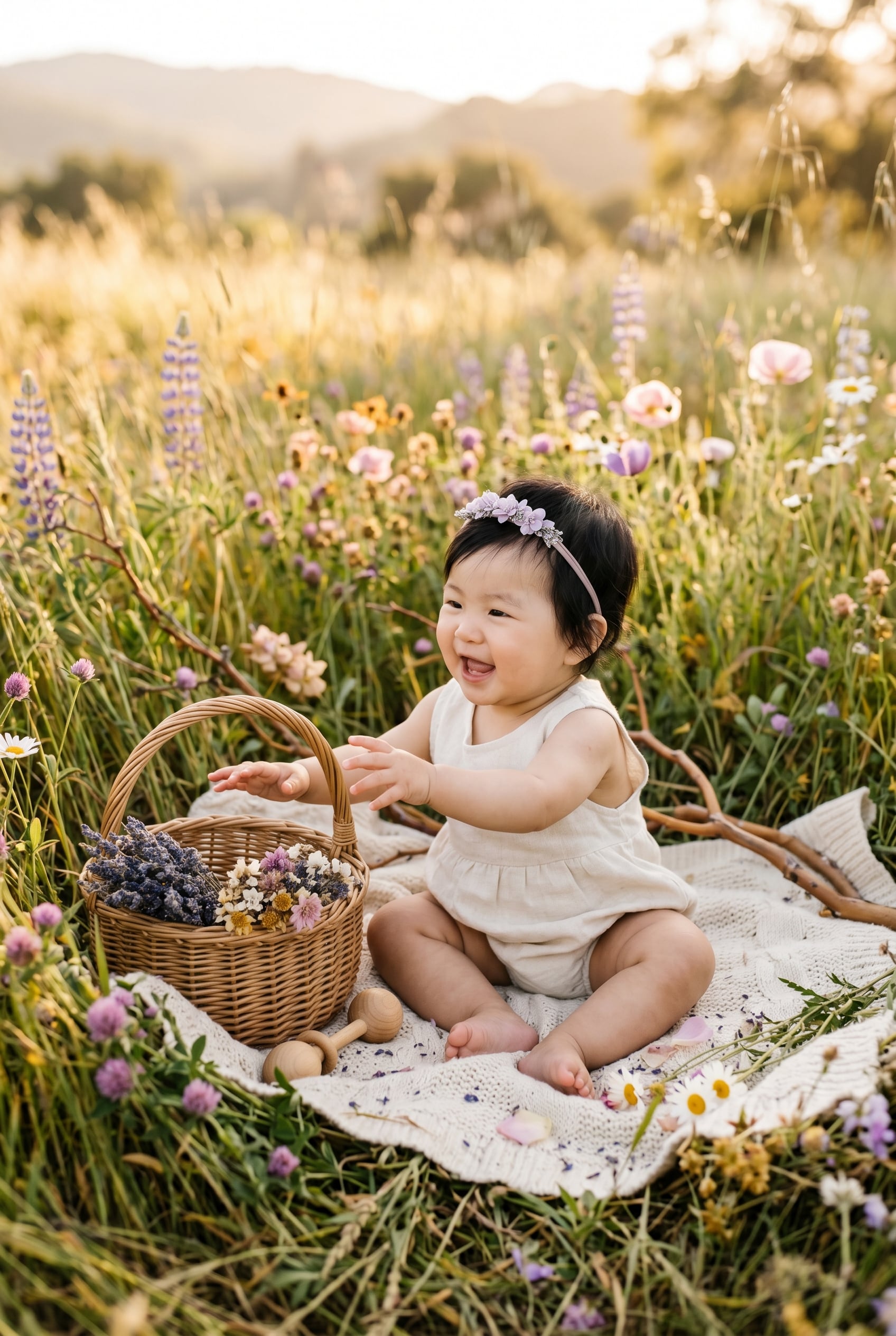
There is a particular kind of name that feels like it grew up barefoot. Not the hothouse roses or the manicured peonies of the name world, but the ones that bloom in roadside ditches and forgotten fields — the wild ones, the ones the wind planted. If you are drawn to those names, you are in good company. Wildflower names have a way of telling a small story about the person who chose them: someone who notices what most people walk past.
🔍 Curious how popular a name is?
Check any name's popularity trend since 1880 with our free Baby Name Popularity Checker.
When referencing popularity, I am referring to baby name data from Social Security Administration database in the United States for 2025, which is the most current year of data available.
Here’s what’s in store –

Meadow Names That Feel Like Sunlight
Woodland Names That Feel Like Shade and Moss
Prairie Names With Wide-Open Vowels
Names From the Old Herbalists’ Garden
Names With a British Hedgerow Hum
Names That Belong to American Wildflowers
This list is built around real meadow, prairie, and woodland flowers — the ones you might find in a field guide rather than a florist’s bouquet. You will not find Carnation or Begonia here. You will find Clover and Briar, Yarrow and Sorrel, names that smell like rain on warm soil. Some are familiar enough to wear to kindergarten. Others are rarer than the flowers they are named for, and that is part of their charm.
I have tried to give each name a true meaning and its real cultural origin, along with a quick note about how it feels in use — whether it skews vintage or modern, whether it travels well across borders, whether it has a famous bearer to anchor it. Take what you love. Skip what you don’t. There is no wrong way to fall in love with a name.
A small note before we begin: many of these names belong to flowers that bloom in specific places and seasons, which means some of them carry a regional accent. A Bluebell from the English woodlands sounds different from a Lupine from the California coast, and that is part of the fun. Let the names take you somewhere.
Meadow Names That Feel Like Sunlight
These are the names of flowers that grow in open, sunlit fields — the kind of bloom that turns its face to the warmth. They tend to sound bright, generous, and a little bit golden.
- Origin: Old English
- Meaning: Day’s eye
- Popularity: #76
A nickname-friendly classic with deep literary roots; think Daisy Buchanan and Daisy Miller, but also your grandmother’s garden.
- Origin: Old English
- Meaning: Meadow flower
- Popularity: #618
Hippie-leaning but grounded, with a built-in sense of luck baked into the leaves.
- Origin: English
- Meaning: Mary’s gold
- Popularity: #693
Vintage and a little bit witchy; Wes Anderson made it fashionable again.
- Origin: Latin via Old English
- Meaning: Red field flower
- Popularity: #338
Bright, brisk, and beloved in the UK; a remembrance flower with surprising depth.
- Origin: Swedish
- Meaning: Twinflower
- Popularity: #1608
The official flower of Sweden’s Linnaeus; soft, lyrical, and quietly nature-loving.
- Origin: Old English
- Meaning: Healer’s herb
- Popularity: #8922
A meadow staple with a folk-medicine past; underused and ready to be discovered.
- Origin: Greek
- Meaning: Order, world
- Popularity: Rare
A Mexican meadow flower with a name big enough to grow into.
- Origin: English
- Meaning: Golden one
- Popularity: #645
Evokes black-eyed Susans and yellow coneflowers; warm and grandma-cool.
- Origin: English
- Meaning: Of the sun
- Popularity: #372
Lives in the same field as sunflowers and dandelions; cheerful without trying too hard.
- Origin: Greek
- Meaning: Star
- Popularity: #2745
A late-summer wildflower whose name doubles as a poet’s word for star.
- Origin: Greek
- Meaning: Bug-like seed
- Popularity: Rare
Better as inspiration than a first name, but lovely as Cora for short.
- Origin: Greek
- Meaning: Maiden
- Popularity: #102
Hidden inside Coreopsis and a coneflower’s botanical cousin; vintage, soft, easy.
- Origin: Hebrew
- Meaning: Lily
- Popularity: #1136
Black-eyed Susan reclaims the name from its midcentury reputation.
- Origin: English
- Meaning: Hare’s bell
- Popularity: Rare
A delicate blue meadow bloom; the name has a folkloric, Brontë-sister feel.
- Origin: Greek
- Meaning: Immortality
- Popularity: #12007
A wild yellow button-flower; spunky, short, and not nearly as common as it should be.
- Origin: Old French
- Meaning: Sour
- Popularity: #14992
A wild meadow herb with reddish leaves; a soft alternative to Scarlett.
- Origin: English
- Meaning: Yellow cup-flower
- Popularity: Rare
Once a princess name in The Princess Bride; sweetly absurd in the best way.
- Origin: Latin
- Meaning: In honor of botanist Kamel
- Popularity: #1539
Bridges meadow and woodland; lyrical and a touch Southern.
- Origin: Greek
- Meaning: Soft
- Popularity: Rare
A wild pink-flowered cousin of hibiscus; gentle and uncommon.
- Origin: Latin
- Meaning: Climbing pea flower
- Popularity: Rare
Purple, prolific, and very much a meadow citizen; rare as a name and ready for a brave parent.
- Origin: English
- Meaning: Evening primrose
- Popularity: Rare
A poetic alternative to Sunny; feels invented but actually centuries old.
- Origin: Greek
- Meaning: Spiny
- Popularity: Rare
Probably not a first name, but a beautiful middle for purple-coneflower lovers.
- Origin: Latin
- Meaning: Sacred plant
- Popularity: Rare
A wild summer bloom; old-fashioned in a stained-glass way.
- Origin: Arabic
- Meaning: Yellow flower
- Popularity: #5564
A crocus name with global travel papers; warm and a little exotic.
- Origin: English
- Meaning: Yellow stalk
- Popularity: Rare
Too tall as a full name, but the nickname Goldie or Rod-free Wren works beautifully.
- Origin: English
- Meaning: Plant turning toward the sun
- Popularity: Rare
Big-hearted as a middle; Sunny as a daily.
- Origin: Old English
- Meaning: The insect, by association with pollinator flowers
- Popularity: #11226
Short, buzzy, and impossibly cute on a baby.
- Origin: Old English
- Meaning: Sweet substance
- Popularity: #935
Lives in the same meadow as the bees; very Southern, very loved.
- Origin: French
- Meaning: Lion’s tooth
- Popularity: Rare
Audacious as a full name but charming as Lion or Dani.
- Origin: Greek via Spanish
- Meaning: Blue dye from a wild plant
- Popularity: #923
Wild indigo blooms across American prairies; a name with bohemian gravity.
Woodland Names That Feel Like Shade and Moss
These names belong to the flowers that bloom under trees, along trails, and in the cool damp places. They tend to have a quieter, more old-soul quality.
- Origin: Old English
- Meaning: Thorny shrub
- Popularity: #522
Wild roses grow on briars; the name is brambly, brave, and rising fast.
- Origin: Old English
- Meaning: Leafy forest plant
- Popularity: #1261
Charlotte’s Web gave us the definitive Fern; quiet and unfussy.
- Origin: Old English
- Meaning: The hazel tree
- Popularity: #19
Brown-eyed and witch-hazel-adjacent; the friendliest of the old-lady-name revivals.
- Origin: Latin
- Meaning: Evergreen shrub
- Popularity: #111
Resinous and woodsy; Juno or June as nicknames make it daily-wearable.
- Origin: Old English
- Meaning: Slender tree by water
- Popularity: #41
Long, loose, and movement-filled; consistently among the top nature names.
- Origin: English
- Meaning: Blue bell-shaped flower
- Popularity: Rare
British woodland in name form; whimsical and fairy-tale.
- Origin: Old English
- Meaning: Evergreen with red berries
- Popularity: #419
Christmas-coded but not only that; vintage in a Hepburn way.
- Origin: Old English
- Meaning: Climbing evergreen vine
- Popularity: #36
Short, sharp, and quietly Gothic.
- Origin: Middle English
- Meaning: Flowering shrub of the moors
- Popularity: #1352
Eighties-coded but worth reclaiming; the actual plant is wild and gorgeous.
- Origin: Latin
- Meaning: Bay tree
- Popularity: #728
Greek victory wreath energy; smarter and softer than Lauren.
- Origin: Latin
- Meaning: Named for botanist Magnol
- Popularity: #138
Forest-edge tree with cathedral-sized blooms; Maggie for short.
- Origin: Latin
- Meaning: Wise herb
- Popularity: #146
Crosses meadow and woodland; calm, gender-flexible, increasingly popular.
- Origin: Latin
- Meaning: Dew of the sea
- Popularity: #301
Technically a shrub, but wild and woody; Rosie or Romy for short.
- Origin: Greek
- Meaning: Rainbow
- Popularity: #71
Wild iris grows in damp forests and stream-banks; a goddess name and a flower in one.
- Origin: Latin
- Meaning: Three
- Popularity: Rare
A three-petaled woodland wildflower; rare, lyrical, and Pacific Northwest-coded.
- Origin: Old English
- Meaning: Fairy thimble
- Popularity: Rare
Beautiful and a little dangerous; very fairy-tale.
- Origin: Latin
- Meaning: Wild creeping vine
- Popularity: Rare
Both a flower and a color; whimsical and full of charm.
- Origin: Latin
- Meaning: Purple flower
- Popularity: #15
A woodland classic; never trendy, never out.
- Origin: English
- Meaning: Named for Caspar Wistar
- Popularity: Rare
Climbs through the woods of the American South; cascading and dreamy.
- Origin: Greek
- Meaning: Evergreen tree
- Popularity: #1416
Tall, quiet, and increasingly used for girls; bayou-bohemian.
- Origin: Old English
- Meaning: Trembling tree
- Popularity: #265
Mountain wildflowers grow at its feet; brisk, alpine, modern.
- Origin: Greek
- Meaning: Aromatic tree
- Popularity: #1197
More often used for boys, lately gender-flexible; piney and clean.
- Origin: Old English
- Meaning: Lime tree
- Popularity: #1548
A European forest classic; soft, balanced, underused.
- Origin: Old English
- Meaning: Hedge-thorn
- Popularity: #5732
White spring blossom on a thorny tree; deeply folkloric.
- Origin: Gaelic
- Meaning: Little red one
- Popularity: #71
The rowan tree blooms in white wildflower clusters; widely used and earthy.
- Origin: Old English
- Meaning: White-barked tree
- Popularity: #9873
Cool and Scandinavian-bright; a brave one-syllable choice.
- Origin: Old English
- Meaning: Evergreen tree
- Popularity: Rare
Tiny, ancient, and quietly magical.
- Origin: Greek
- Meaning: Climbing forest vine
- Popularity: #9816
Underused British classic; sounds like a Brontë heroine.
- Origin: Greek
- Meaning: Christmas rose
- Popularity: Rare
A shade-loving winter bloomer; gorgeous as a literary middle name.
- Origin: Greek
- Meaning: Daughter of the wind
- Popularity: Rare
Wood anemones carpet spring forests; lyrical and Greek-mythical.
Prairie Names With Wide-Open Vowels
These names belong to the flowers of the great open spaces — the grasslands and high plains where the wind never quite stops. They tend to sound long, loose, and a little bit windswept.
- Origin: French
- Meaning: Meadow
- Popularity: #4434
A place-name with all the romance of a Willa Cather novel.
- Origin: Old English
- Meaning: Open grassland
- Popularity: #327
Soft, green, and consistently used since the Sopranos era.
Prairie sage covers the western grasslands; calm and grounded.
- Origin: Old Norse
- Meaning: The heavens
- Popularity: #828
Belongs as much to prairie as to mountain; light, airy.
- Origin: Latin
- Meaning: Flowing water
- Popularity: #112
Often runs through prairie country; gender-flexible and modern.
- Origin: Old English
- Meaning: Small bird
- Popularity: #213
Sings from the prairie grass; brisk and trim.
- Origin: Old English
- Meaning: Songbird
- Popularity: #3534
The prairie’s morning singer; punchy and underused.
- Origin: Latin
- Meaning: Wolf-flower
- Popularity: Rare
Tall blue-purple spikes that color prairie hillsides; bold and wolfish.
- Origin: Spanish
- Meaning: Form of Guadalupe
- Popularity: #3921
A warmer relative of Lupine, with star-power thanks to Lupita Nyong’o.
Wild indigo blooms across American prairies; deep and rich.
Belongs to every prairie sunflower; uncomplicatedly cheerful.
The color of late-summer prairie grass; warm and retro.
Born of prairie wildflower nectar; a soft, lived-in name.
- Origin: Latin
- Meaning: Sixth month
- Popularity: #152
The peak prairie-bloom month; short, vintage, beloved.
- Origin: Irish
- Meaning: Intoxicating
- Popularity: #75
Wild and willful like the prairie itself; an Irish queen’s name.
- Origin: Sioux
- Meaning: Friend, ally
- Popularity: #272
A prairie place-name with respectful Indigenous roots; use thoughtfully.
- Origin: Sioux
- Meaning: Red speakers
- Popularity: #867
Another place-name with Indigenous origins; consider with care.
- Origin: Latin via Spanish
- Meaning: Mountain
- Popularity: #1058
The prairie skies of Big Sky country; bold and Western.
- Origin: Spanish
- Meaning: Mountain range
- Popularity: #596
Edges into prairie country; soft and Western.
- Origin: Greek
- Meaning: Cinnamon-like plant
- Popularity: #2234
Senna and partridge pea bloom golden across prairies; Cassie for short.
- Origin: Spanish
- Meaning: Butterfly
- Popularity: #4830
Mariposa lilies dot western grasslands; lush and lilting.
- Origin: Greek
- Meaning: Beautiful
- Popularity: #1514
Wild calla lilies bloom in prairie wetlands; sleek and short.
- Origin: English
- Meaning: Cone-shaped bloom
- Popularity: Rare
Better as Cora or Echo for everyday wear.
- Origin: Greek
- Meaning: Sound returning
- Popularity: #1693
Echinacea’s hidden nickname; mythic and mountain-like.
- Origin: Greek
- Meaning: Flame
- Popularity: Rare
A prairie wildflower in pinks and purples; quirky and pronounceable.
- Origin: Greek
- Meaning: Starry
- Popularity: #4115
A long-form aster; ancient Greek and lyrical.
- Origin: Welsh
- Meaning: Joy
- Popularity: #1927
Sounds like the wind across the grass; brisk and lovely.
- Origin: Old English
- Meaning: Tempest
- Popularity: #1621
For the prairie thunderstorms that roll in low and slow; dramatic and modern.
- Origin: Old English
- Meaning: Heavenly body
- Popularity: #1904
Above every prairie at night; short and uncomplicated.
- Origin: English
- Meaning: Untamed
- Popularity: #392
The prairie itself; surname-style and increasingly used for girls.
Names From the Old Herbalists’ Garden
These names belong to flowers and herbs that have been growing wild — and being used by hand-healers — for centuries. They tend to sound timeless, slightly witchy, and a little bit holy.
- Origin: Greek
- Meaning: Regret, herb of grace
- Popularity: #1241
Tiny yellow-flowered herb; a name with literary heft from Shakespeare to The Hunger Games.
A wild yellow herb of folk medicine; cheeky and short.
Ancient battlefield medicine; soft and unusual.
- Origin: Latin
- Meaning: Angelic
- Popularity: #623
A tall white-flowered herb associated with healing; the most ethereal of the old herbs.
- Origin: Greek
- Meaning: Earth-apple
- Popularity: Rare
Tea-garden classic; gentle as a lullaby.
- Origin: Latin
- Meaning: Wash herb
- Popularity: #998
Wild on the Mediterranean hillsides; soft, sweet, slightly purple.
- Origin: Latin
- Meaning: Aromatic herb
- Popularity: Rare
Wild mint grows along streambanks everywhere; brisk and modern.
- Origin: Latin
- Meaning: Laurel tree
- Popularity: #6954
Healing and victorious; short and unisex.
Healing and increasingly common; gender-flexible.
- Origin: Hebrew
- Meaning: Holy herb
- Popularity: Rare
Biblical and rare; for the bold and word-loving.
- Origin: Old English
- Meaning: Ancient tree
- Popularity: #2396
Elderflowers and elderberries; wise-sounding.
- Origin: Old English
- Meaning: Midge plant
- Popularity: Rare
Better as middle or inspiration than a daily name.
- Origin: Latin
- Meaning: Courage herb
- Popularity: Rare
A blue star-shaped wildflower; possibly too brittle as a name.
- Origin: Latin
- Meaning: Knit-bone
- Popularity: Rare
A folk-healing wildflower; gentle and unfamiliar.
- Origin: Greek
- Meaning: Joy of the mountain
- Popularity: Rare
Wild oregano’s softer cousin; pretty as Mara or Jora.
- Origin: Latin
- Meaning: Little calendar
- Popularity: Rare
Pot marigold; sun-warmed and apothecary-toned.
Healing and dangerous both; one of the most beautiful long names.
- Origin: Latin
- Meaning: Sacred plant
- Popularity: Rare
Verbena’s witchier sister; a name for a quietly fierce daughter.
- Origin: Old English
- Meaning: Bitter herb
- Popularity: Rare
Probably not a name, but a setting; consider Artemisia instead.
- Origin: Greek
- Meaning: Of Artemis
- Popularity: #11179
Wormwood’s botanical name; goddess-tier and growing in popularity.
- Origin: Latin
- Meaning: Sole of the foot
- Popularity: Rare
A wild healing herb; better admired than named-for.
- Origin: Latin
- Meaning: Soft-leaved healer
- Popularity: Rare
A roadside herb with candle-like blooms; too unusual for most parents.
A wild meadow herb and a soft alternative to Scarlett.
- Origin: Latin
- Meaning: Hay
- Popularity: Rare
A wild yellow-flowered herb; sharp, fresh, and gender-flexible.
- Origin: Old English
- Meaning: To soothe
- Popularity: Rare
Wild dill blooms in yellow umbels; tiny and bright.
- Origin: Greek
- Meaning: Aromatic seed
- Popularity: #15431
Wild anise grows along Mediterranean roads; trim and sweet.
The flower behind the spice; warm and gold-tinged.
Both kitchen and woodland; rises easily through the popularity charts.
Healing, remembrance, and a sea-cliff plant; classic.
- Origin: Latin
- Meaning: Olive tree
- Popularity: #171
Mediterranean wildflower-adjacent; the queen of vintage revival names.
Names With a British Hedgerow Hum
These are the names of flowers and plants that grow in the lanes, hedgerows, and country gardens of the British Isles. They tend to feel a bit storybook, a bit Beatrix Potter.
- Origin: Latin
- Meaning: First rose
- Popularity: #2106
A pale yellow hedge-flower; sweet, vintage, slightly Hunger-Games-cool now.
- Origin: French
- Meaning: Thought
- Popularity: #15193
A wild violet cousin; old-fashioned in a brave-to-bring-back way.
- Origin: Old English — yes, really
- Meaning: Cow droppings
- Popularity: Rare
Best as a poetic reference, not a name.
- Origin: English
- Meaning: Drop of snow
- Popularity: Rare
The first wildflower of spring; very Brontë.
British woodlands in May; magical.
- Origin: Old English
- Meaning: Sucking honey
- Popularity: Rare
The hedgerow scent of summer evenings; long but lovely.
- Origin: Old English
- Meaning: Travel well
- Popularity: Rare
A tiny blue meadow flower with a beautiful name-meaning.
A cottage-garden escapee gone wild; tall and witchy.
Old-fashioned British; ready for a comeback.
- Origin: Greek
- Meaning: Flower leaf
- Popularity: Rare
Light and slightly nicknamed-sounding; sweet.
- Origin: English
- Meaning: Small bouquet
- Popularity: #14813
A friendly nickname-as-name; very The Hunger Games.
Hedgerow classic; vintage and bright.
Wild on every English wall; short and crisp.
The English hedge-meadow name par excellence.
Cottagey and warm; Maggie or Goldie short.
- Origin: Spanish
- Meaning: Pretty rose
- Popularity: #1475
Shakespearean and wild-rose-coded.
- Origin: Germanic
- Meaning: Horse protector, or pure rose
- Popularity: #7858
Vintage and richly literary.
- Origin: Latin
- Meaning: Bringer of joy
- Popularity: #1379
Beatrix Potter herself; the patron saint of hedgerow names.
- Origin: Greek
- Meaning: Sweet-spoken
- Popularity: #2693
A St. Eulalia’s-fair kind of name; English vintage with hidden depth.
- Origin: Latin
- Meaning: Heart, or daughter of the sea
- Popularity: #1065
Pulled from the hedgerow-walking heroines of English novels.
- Origin: Celtic
- Meaning: Beloved maiden
- Popularity: #1126
Wild-hedgerow Britain in a name; soft and increasingly known.
- Origin: Latin
- Meaning: Flourishing
- Popularity: #435
The patron flower-saint of girls’ names; nicknamed Flossie or Flo.
- Origin: Latin
- Meaning: Flower
- Popularity: #648
The Roman goddess of all of these wild flowers; clean and pretty.
- Origin: Greek
- Meaning: Bright, shining
- Popularity: #183
Hedgerow-bright; long-beloved.
- Origin: English
- Meaning: Harvester
- Popularity: #1784
Hardy’s Tess of the d’Urbervilles wandered every English meadow; soft and grounded.
- Origin: Greek
- Meaning: Well-spoken
- Popularity: #2507
A pet name with the warmth of a cottage door.
- Origin: Scottish
- Meaning: Pearl
- Popularity: #255
Wildflower-bright; sweet and Scottish.
- Origin: English
- Meaning: Bright
- Popularity: #1460
A short, hedgerow-walking grandmother name.
Adorable and vintage.
- Origin: Old English
- Meaning: Wild blackberry bush
- Popularity: Rare
Brave and uncommon; for a daughter who scrambles over walls.
Names That Belong to American Wildflowers
These names come from the wildflowers of the American prairies, deserts, coasts, and mountains — the ones in your Audubon field guide.
Rocky Mountain meadows are stitched with aspen wildflowers; modern and brisk.
Western and warm.
Western brushland is full of it; gender-flexible.
The mariposa lily blooms across the western U.S.; lyrical.
- Origin: Cherokee
- Meaning: Cherokee leader’s name
- Popularity: #2450
Use with respect; a name with redwood weight.
- Origin: Choctaw
- Meaning: Leaping water
- Popularity: #815
Wild-orchid-coded; cinematic.
Wild across the American South; the queen of Southern girls’ names.
Louisiana bayou wildflowers grow under its branches; modern and clean.
Wild indigo spans American grasslands; bohemian.
- Origin: Nez Perce
- Meaning: Sweet bulb
- Popularity: Rare
A wild blue prairie lily of the Pacific Northwest; rare and beautiful.
- Origin: Carib
- Meaning: Sharp-leaved desert plant
- Popularity: Rare
White wild-bloomed and Southwestern; bold.
- Origin: Spanish
- Meaning: Little pine
- Popularity: Rare
A desert wildflower; better as a place than a name.
- Origin: Spanish
- Meaning: Little apple
- Popularity: Rare
California chaparral wildflower-bush; lush.
Wild iris carpets American wetlands; a classic with depth.
Texas bluebonnets are lupines; tall and Western.
- Origin: English
- Meaning: Blue cap-flower
- Popularity: Rare
Texas state flower; too place-locked for some, perfect for Texans.
For every prairie goldenrod and black-eyed Susan.
Purple coneflower; lovely as Echo or Cora.
A three-petaled woodland flower of the Pacific Northwest; uncommon and graceful.
- Origin: Greek
- Meaning: Five stamens
- Popularity: Rare
Wild beard-tongue flowers of the West; more inspiration than name.
- Origin: English
- Meaning: Lark’s claw
- Popularity: Rare
A spurred blue prairie flower; possibly too unusual as a daily name but lovely as a middle.
A meadow bird’s name; punchy.
Prairie singer; brisk and increasingly popular.
- Origin: Latin
- Meaning: Mild, gentle
- Popularity: #477
Citrus-blossom-coded; a Western frontier classic.
- Origin: Dakota
- Meaning: Firstborn daughter
- Popularity: #738
A Dakota name from prairie country; use with respect.
A Plains name; consider with cultural care.
A Plains name; consider with cultural care.
A native pink-purple prairie wildflower; short and zippy.
Native across American meadows; old and soft.
Partridge pea blooms gold across American prairies; warm and short.
Names With a Soft, Storybook Sound
These are the wildflower names that feel pulled from a chapter book — names that would belong to a girl in a long dress on a cottage doorstep, holding a basket of just-picked stems.
A meadow name with a single perfect syllable.
A nosegay of names in one little word.
Sweet and slightly improbable, in the best way.
For a Sleeping Beauty kind of daughter.
Wild and a little bit fairy-tale.
- Origin: English
- Meaning: Seed
- Popularity: Rare
A storybook nickname-as-name; tiny and dear.
- Origin: Latin
- Meaning: The fruit
- Popularity: Rare
Wild-plum-coded; small and round and lovely.
Bright and clean.
- Origin: Latin
- Meaning: Bird
- Popularity: #396
A meadow-edge bird; gender-flexible.
- Origin: Germanic
- Meaning: Bright bird
- Popularity: #799
The first bird of spring meadows; vintage and gentle.
- Origin: Old French
- Meaning: Young deer
- Popularity: #5656
Belongs in the woods with the wildflowers.
- Origin: English
- Meaning: Friend
- Popularity: #1097
Peter Pan made it eternal; warm and grandmotherly now.
- Origin: Old English
- Meaning: Small bird
- Popularity: #3554
A field-and-hedge bird; light.
- Origin: Latin
- Meaning: The flower
- Popularity: #24
Wild day-lilies and meadow lilies abound; never out of style.
Soft and Scandinavian.
Wild and goddess-named.
Bramble’s neat little sister.
- Origin: Old English
- Meaning: Sugar tree
- Popularity: #1188
Wildflowers grow at its feet; modern and sugar-bright.
Friendly and warm.
- Origin: Latin
- Meaning: Young
- Popularity: #1382
A goddess name and short for Juniper.
The peak month of wildflowers; vintage and clean.
- Origin: Latin
- Meaning: Bringer of joy
- Popularity: #2150
The smallest, sweetest name; a meadow-bee echo.
Wild-grove-coded and beloved.
Like the wind in tall grass.
- Origin: Cornish
- Meaning: Elm tree
- Popularity: #898
Cornish wildflowers, Cornish elms; lovely and rare.
- Origin: Germanic
- Meaning: Prosperous in battle
- Popularity: #2315
Wildflower-bouquet vintage; pronounced OT-til-ee.
- Origin: Germanic
- Meaning: Home-ruler
- Popularity: #382
A meadow-walking granny name; cozy.
Short and storybook.
- Origin: Germanic
- Meaning: Estate-ruler
- Popularity: #973
A jazz-age wildflower name; small and strong.
- Origin: Latin
- Meaning: Lovable
- Popularity: #222
Hugely vintage; meadow-bright.
Earthier Names With Mossy, Mineral Roots
These names lean into the rougher edges of nature — the bark, the roots, the moss, the stones the wildflowers grow between. For parents who want the wild without the wilt.
- Origin: Old English
- Meaning: Soft plant of damp places
- Popularity: #6065
Short, soft, and growing in popularity for girls.
- Origin: Old English
- Meaning: Rock
- Popularity: #1048
Bold; usually a surname but increasingly a first.
Gender-flexible and graceful.
- Origin: Old English
- Meaning: Small stream
- Popularity: #5634
A meadow boundary; soft.
- Origin: Latin
- Meaning: Body of water
- Popularity: #1632
Clean and modern.
Punchy and woodland.
- Origin: Old English
- Meaning: Bird of prey
- Popularity: #3343
Field-and-prairie circling; bold.
- Origin: Latin
- Meaning: Gemstone
- Popularity: #802
Wild oysters; iridescent and vintage.
- Origin: Greek
- Meaning: Sea organism
- Popularity: #1893
Coral roots are a real wild orchid; warm and dusty pink.
- Origin: Arabic
- Meaning: Fossil resin
- Popularity: #541
Belongs in pine forests; warm and gold.
- Origin: English
- Meaning: Little bird
- Popularity: #754
For a small wild thing; vintage with bite.
- Origin: English
- Meaning: Feather
- Popularity: #3136
Crisp and woodsy.
- Origin: Hebrew
- Meaning: Variant of Talia
- Popularity: #10976
Talia means morning dew; brightness on grass.
- Origin: Old English
- Meaning: Riverside grass
- Popularity: #421
Tall and slim; gender-flexible.
- Origin: Old English
- Meaning: Marsh plant
- Popularity: #1493
Soft and watery.
- Origin: English
- Meaning: Marsh plant
- Popularity: Rare
More an inspiration than a name; consider Cat for short.
- Origin: Old English
- Meaning: Wading bird
- Popularity: #4341
A wetland bird; rare and graceful.
- Origin: Old English
- Meaning: Wetland
- Popularity: #8083
Surname-y but possible.
Short and sea-and-tree.
Quiet and classic.
Calm and modern.
- Origin: Latin
- Meaning: Evergreen tree
- Popularity: Rare
Brisk and resinous.
- Origin: Latin
- Meaning: Evening
- Popularity: #2789
The hour when wildflowers close; mysterious.
- Origin: Latin
- Meaning: Dawn
- Popularity: #16
The hour they open; lush and long.
- Origin: Greek
- Meaning: Star
- Popularity: #16067
Old Puritan wildflower-name; ready for revival.
- Origin: Cornish
- Meaning: Twin
- Popularity: #13291
Wild Cornish and lyrical.
For a wild Irish-meadow daughter.
- Origin: Irish
- Meaning: Freedom
- Popularity: #1036
Pronounced SUR-shuh; perfectly free-spirited.
- Origin: Irish
- Meaning: Bright
- Popularity: #3148
Pronounced NEEV; mossy and bright.
- Origin: Welsh
- Meaning: Blessed raven
- Popularity: Rare
Welsh hedgerow lore; lovely and uncommon.
How to Choose a Name From This List
Start with sound. Wildflower names range from one-syllable arrows (Wren, Sage, Briar) to four-syllable melodies (Magnolia, Anemone, Calendula). Say your favorites out loud with your last name. Listen for whether they land softly or with a thump. There is no right answer — only what feels right to your ear.
Then sit with the meaning. Some of these names are pretty for their sound alone, but the meanings often add a quiet layer of intention. Yarrow means healer. Saoirse means freedom. Linnea is the twinflower of a great Swedish botanist. The meaning is the secret pocket of the name — it does not have to show, but it can mean something to you.
Consider the wear-test. Imagine the name at a doctor’s office, on a job application, shouted across a soccer field at age ten, whispered at a wedding rehearsal at age twenty-eight. The wildflower names that work best are ones that bend across a life. Briar and Wren grow up well. Buttercup and Bramble might lean nickname.
Think about nicknames in advance. Magnolia gives you Maggie or Nola. Juniper gives you June, Junie, or Juno. Marigold gives you Goldie, Mara, or Mari. The full name is the formal version; the nickname is what your daughter will actually live in for most of her life.
Finally, give yourself permission to change your mind. Many parents land on a name they love during pregnancy and then meet their baby and discover the name does not fit her face. That is okay. Wildflowers reseed themselves. You can always pick again.
Name Art for Your Favorite
Love a name from this list? MinimalistMama offers custom Name Art prints — personalized, minimalist nursery art with the name you choose, designed to match your aesthetic. A perfect gift for baby showers or to hang above the crib.
Frequently Asked Questions
What counts as a “wildflower name” versus a regular flower name?
Wildflower names come from flowers that grow naturally in fields, woods, prairies, and roadsides — not the cultivated varieties you’d buy at a florist. Think Clover, Briar, Yarrow, and Linnea rather than Rose, Lily, or Daisy (although Daisy bridges both worlds beautifully). They tend to feel a little earthier and more bohemian.
Are wildflower names popular right now?
Yes — nature names overall are at an all-time high. Willow, Hazel, Ivy, Iris, and Magnolia all sit comfortably in the U.S. top 200. The rarer wildflower names like Briar, Wren, Juniper, and Linnea are climbing fast but still feel fresh and uncommon.
Can wildflower names work as middle names too?
Absolutely. Wildflower middle names are a wonderful way to honor nature without committing to a rarer name as a first. Combinations like Charlotte Wren, Eleanor Briar, or Sophia Linnea give you the best of both worlds — a classic first name with a wild, poetic flourish in the middle.
Are any of these names culturally sensitive to use?
A few. Names like Dakota, Cheyenne, Sequoia, Tallulah, Winona, and Camas come from Indigenous languages and tribes. They are beautiful and meaningful, but worth using with awareness — read about the cultures they come from, and consider whether the name honors or appropriates. When in doubt, choose a botanical name that carries less cultural weight.
Will my daughter be teased for a wildflower name?
Modern kids grow up around plenty of nature names — Willow, Ivy, Hazel, and Wren are mainstream now. The bolder wildflower names like Bramble or Buttercup may invite more comments, but they also tend to attract the kind of friends who think bold names are wonderful. A confident, well-loved kid wears almost any name beautifully.
What if I love a wildflower name but my partner doesn’t?
Try moving it to the middle name slot — that often softens the conversation. Or try a more classic version with the wildflower as a hidden meaning: Cora for Coreopsis, Echo for Echinacea, Maggie for Magnolia. Compromise names that nod to the wildflower without being it tend to win both partners over.
Do wildflower names age well into adulthood?
The best ones do. Names like Iris, Violet, Hazel, Willow, Magnolia, and Juniper have been worn by grown women for generations. Quirkier choices like Buttercup or Bramble may feel more nickname-ish at forty, but you can always pair them with a more formal middle name as a backup.
📊 Curious how popular a name actually is? Look it up in our Baby Name Popularity Checker — pulls live SSA data to show ranking trends.
Final Thoughts
Wildflower names carry a quiet kind of magic. They suggest a girl who notices the world — who looks down at the cracks in the sidewalk for what’s blooming there, who collects seed-heads in her pockets, who would rather be outside than in. Whatever name you choose, may it grow with her and root her deeply. May she be as resilient and as unbothered as the wild things she’s named for. And may you, somewhere in this long list, find the one that makes your whole chest feel warm.
Read next;
👦 100 Spring Baby Names for Girls and Boys
🎀 85+ *Beautiful* Rare Baby Names for Girls
🎀 65+ *Beautiful* Baby Girls Names That Start with A
📱 The Baby Names app is here
Swipe names, match with your partner the moment you both say yes, and claim a free Name Art print of your winner. Free to download. See all our apps →

✨ Love these names? Create free printable nursery art for any name →