This post contains affiliate links.
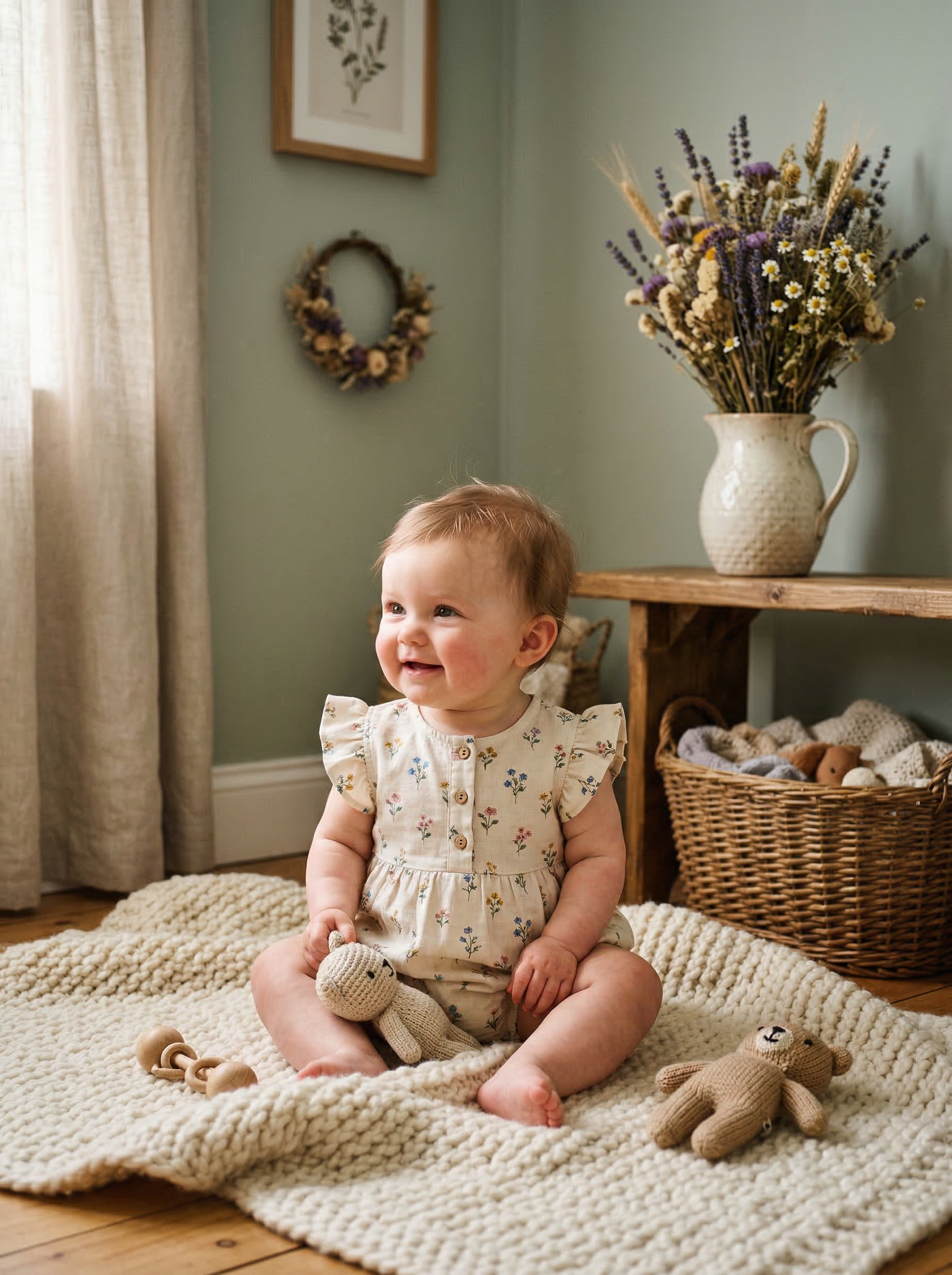
Cottagecore as a naming style grew out of an aesthetic built on slow mornings, garden work, and homes that feel handmade rather than store-bought — and that same sensibility runs through the more than 200 names below. Many are borrowed from wildflowers, old recipes, and English countryside tradition, with roots that still have a little dirt on them. Scroll through and you’ll find names that sound like they wandered out of a fairy tale right alongside ones plucked straight from the kitchen garden.
🔍 Curious how popular a name is?
Check any name's popularity trend since 1880 with our free Baby Name Popularity Checker.
Popularity below is calculated from Social Security Administration data through 2024, the most recent year on record.
Here’s what’s in store –

Old English & Anglo-Saxon Pastoral Names
Celtic Fairy Tale & Folklore Names
Romantic Victorian & Literary Names
Cottagecore names tend to come from a handful of rich wells: Old English and Anglo-Saxon pastoral tradition, Celtic mythology and fairy tale, Victorian literature, the herb and kitchen garden, and the deep lexicon of wildflowers, trees, and seasons. They share a quality that’s hard to pin down but instantly recognizable — a kind of rootedness, as if the name has been worn smooth by generations of use or carries some old green knowledge in its syllables. They’re not trendy in the fast-fashion sense. They’re the opposite, actually.
This list covers more than 200 real names — their meanings, origins, and the specific vibe each one carries. They’re organized into themed sections so you can move through them the way you’d move through different rooms of a very old and very beloved house: wildflowers and meadows, herb gardens, dark-edged woodland, Anglo-Saxon pastoral, Celtic folklore, Victorian literary heroines, gentle names for boys, and finally the celestial and seasonal names that feel like they were borrowed from the sky.
Whether you’re drawn to the botanical directness of a name like Fern or the fairytale grandeur of Guinevere, there’s something in here that will catch. Read slowly. Some names take a second or third pass before they land.
Wildflower & Meadow Names
The original cottagecore names. These come straight from the British and European wildflower tradition — names plucked from hedgerows, meadow edges, and the embroidered margins of old herbals. They work because they’re both literal and lyrical: you’re naming a child after something that actually grows, something that chooses where it takes root.
- Origin: French
- Pronunciation: FLUR · ˈflɜːr
- Meaning: The French word for “flower,” used directly as a feminine given name.
- Popularity: #8,592 and rising (#10,581 → #8,592, 2024)
The most effortlessly cottagecore name there is — clean, French, no-nickname-needed.
- Origin: Cornish
- Pronunciation: EL-oh-wen · ˈɛloʊwɛn
- Meaning: elm tree
- Popularity: #898 and rising (#1,060 → #898, 2024)
A rare gem of the Cornish language that sounds like a clearing in old-growth forest.
- Origin: Germanic
- Pronunciation: RAH-zuh-lind · ˈrɑːzəlɪnd
- Meaning: from elements meaning roughly ‘horse’ and ‘soft/tender’ — something like ‘gentle horse’
- Popularity: #1,475 and falling (#1,440 → #1,475, 2024)
Shakespeare gave this name to his most spirited heroine in As You Like It.
- Origin: English
- Pronunciation: KLOH-ver · ˈkloʊvər
- Meaning: the clover plant (Old English clafre), popularly linked to luck
- Popularity: #618 and rising (#672 → #618, 2024)
Three-leafed, lucky, and slightly wild at the edges.
- Origin: English (Middle English)
- Pronunciation: BRY-er · ˈbraɪər
- Meaning: thorny shrub or bramble
- Popularity: #522 and rising (#549 → #522, 2024)
The name of Sleeping Beauty in the original fairy tale — and sharper for it.
- Origin: English (flower name)
- Pronunciation: MAIR-ih-gold · ˈmɛrɪɡoʊld
- Meaning: the marigold flower; the flower’s name is traditionally explained as ‘Mary’s gold’ (honoring the Virgin Mary), not literally ‘golden flower’
- Popularity: #693 and rising (#713 → #693, 2024)
Sun-drenched and warm; the Victorians planted it to keep pests away and bring luck.
- Origin: English (vocabulary word)
- Pronunciation: MED-oh · ˈmɛdoʊ
- Meaning: a field of grass (grassland)
- Popularity: #327 and rising (#351 → #327, 2024)
Direct and dreamy in equal measure; an underused nature name.
- Origin: Old English
- Pronunciation: BLAH-som · ˈblɑːsəm
- Meaning: flower or blossoming — from Old English blōstm (‘flower’), a Victorian-era botanical name
- Popularity: #1,952 and rising (#2,090 → #1,952, 2024)
Soft and seasonal — a name ripe with spring energy.
- Origin: English (19th-century flower name, ultimately from Latin viola via French violette)
- Pronunciation: VY-oh-let · ˈvaɪəlɪt
- Meaning: the violet flower (purple-blue)
- Popularity: #15 and rising (#16 → #15, 2024)
Classic, grounded, and perpetually in style for very good reason.
- Origin: English (Middle English)
- Pronunciation: REN · ˈrɛn
- Meaning: the small songbird
- Popularity: #213 and falling (#195 → #213, 2024)
Short, clear, and quietly wild — one of the most beloved British birds.
- Origin: Greek
- Pronunciation: EYE-ris · ˈaɪrɪs
- Meaning: rainbow; also the name of the Greek goddess/messenger of the rainbow, and the flower named after her
- Popularity: #71 and rising (#78 → #71, 2024)
Named for the goddess of rainbows and a beloved cottage garden bloom with bearded varieties in a dozen colors.
- Origin: English (from the flower name)
- Pronunciation: ZIN-ee-ah · ˈzɪniə
- Meaning: named for the zinnia flower
- Popularity: #1,349 and falling (#1,296 → #1,349, 2024)
Bright and a little unusual — deeply cottagecore in its reference to the plant world.
- Origin: English
- Pronunciation: ROO · ruː
- Meaning: the rue plant, ‘herb of grace’; also English ‘rue’, meaning regret
- Popularity: #1,241 and rising (#1,259 → #1,241, 2024)
Poetic and bittersweet — Ophelia scattered it in Hamlet as a token of repentance.
- Origin: English (nature name)
- Pronunciation: FURN · ˈfɜːrn
- Meaning: the fern plant
- Popularity: #1,261 and rising (#1,428 → #1,261, 2024)
Quietly beautiful and forest-floor steady; the name of thousands of Victorian ferneries.
- Origin: Swedish (via surname Dahl)
- Pronunciation: DAHL-yah · ˈdɑːljə
- Meaning: named for botanist Anders Dahl
- Popularity: #240 and rising (#253 → #240, 2024)
Named for botanist Anders Dahl; a bold, velvety late-summer bloom.
- Origin: Old French
- Pronunciation: EG-luhn-tyne · ˈɛɡləntaɪn
- Meaning: sweetbriar, a wild thorny rose
- Popularity: Not in the U.S. Social Security rankings
Medieval and utterly romantic — the Queen in A Midsummer Night’s Dream presides over a bower of it.
- Origin: English (from the plant name, ultimately Greek via Latin)
- Pronunciation: BRY-uh-nee · ˈbraɪəni
- Meaning: named after the bryony plant, a flowering climbing vine
- Popularity: #9,816 as of 2022 — not currently in the U.S. Social Security rankings
Unusual, British-countryside specific, and instantly evocative of hedgerow walks in October.
- Origin: English (plant name)
- Pronunciation: LARK-sper · ˈlɑːrkspɜːr
- Meaning: named for the flower’s spur-shaped petal, thought to resemble a lark’s claw or spur
- Popularity: Not in the U.S. Social Security rankings
The name itself sounds like a spell — and the flower spikes of blue and purple in a cottage border are unforgettable.
- Origin: English (flower name, ultimately Greek)
- Pronunciation: TAN-zee · ˈtænzi
- Meaning: the tansy flower; the plant name traces to Greek ‘athanasia,’ meaning immortality
- Popularity: #12,007 and rising (#14,984 → #12,007, 2024)
- Origin: French (from Latin Clemens)
- Pronunciation: KLEM-en-teen · ˈklɛmənˌtiːn
- Meaning: merciful, mild
- Popularity: #477 and rising (#542 → #477, 2024)
- Origin: English (Victorian flower name, from Latin prima rosa)
- Pronunciation: PRIM-rohz · ˈprɪmroʊz
- Meaning: named for the primrose flower (‘first rose’)
- Popularity: #2,106 and rising (#2,118 → #2,106, 2024)
- Origin: English (from Middle English poesy, ‘verse’)
- Pronunciation: POH-zee · ˈpoʊzi
- Meaning: a small bunch of flowers
- Popularity: #14,813 and falling (#7,955 → #14,813, 2024)
Small, sweet, and carrying the scent of a cottage garden in one syllable.
- Origin: Greek
- Pronunciation: AM-uh-ranth · ˈæmərænθ
- Meaning: unfading (an everlasting, never-wilting flower)
- Popularity: Not in the U.S. Social Security rankings
Deeply poetic — the amaranth symbolized immortality in ancient Greek writing.
- Origin: English (flower/spice name)
- Pronunciation: SAF-run · ˈsæfrən
- Meaning: named for the saffron crocus flower and its golden spice
- Popularity: #5,564 and falling (#4,718 → #5,564, 2024)
Warm-toned and rare — a name that carries the color of autumn light.
- Origin: Celtic (river name) / English (plant name)
- Pronunciation: YAR-oh · ˈjæɹ.oʊ
- Meaning: rough (Celtic river name); also the yarrow herb
- Popularity: #8,922 and rising (#9,712 → #8,922, 2024)
A meadow wildflower used in folk medicine for centuries; a name with quiet strength.
- Origin: Greek
- Pronunciation: uh-KAY-shuh · əˈkeɪʃə
- Meaning: a thorny flowering tree
- Popularity: #2,711 and rising (#2,850 → #2,711, 2024)
Symbolizes friendship and new life — and the yellow blooms against blue sky are stunning.
- Origin: English (plant name)
- Pronunciation: MER-tul · ˈmɜːrtəl
- Meaning: named after the myrtle plant, an evergreen shrub associated with love and marriage
- Popularity: #14,617 as of 2023 — not currently in the U.S. Social Security rankings
A Victorian name due for revival; it symbolizes love and immortality and was carried in royal wedding bouquets.
- Origin: Old French (via the plant name)
- Pronunciation: SOR-uhl · ˈsɔːrəl
- Meaning: the sorrel plant (a tart, sour-leaved herb); also a reddish-brown color
- Popularity: #14,992 and falling (#11,050 → #14,992, 2024)
Used for both the tangy-leafed herb and the warm reddish color — quietly unusual as a name.
- Origin: Latin
- Pronunciation: SEL-es-teen · ˈsɛləstiːn
- Meaning: heavenly, of the sky
- Popularity: #3,968 and rising (#4,896 → #3,968, 2024)
Also a pale blue mineral found in geodes — quietly mystical and mineral-solid at the same time.
- Origin: English (Old English compound)
- Pronunciation: DAY-zee · ˈdeɪzi
- Meaning: flower name meaning “day’s eye”; also historically used as a nickname for Margaret
- Popularity: #76 and rising (#110 → #76, 2024)
Cottage Herb Garden Names
These names come from the kitchen garden and the herbalist’s shelf — the names of plants that were once grown not just for beauty but for purpose: healing, cooking, ritual. There’s something deeply grounded about naming a child after something useful and aromatic that has quietly served human life for thousands of years.
- Origin: English (from Old French/Latin)
- Pronunciation: SAYJ · ˈseɪdʒ
- Meaning: a wise person; also linked to the sage herb plant
- Popularity: #146 and falling (#143 → #146, 2024)
- Origin: English (blend of Rose and Mary)
- Pronunciation: ROHZ-mair-ee · ˈroʊzˌmɛri
- Meaning: a blend of the names Rose and Mary; later also linked to the herb rosemary (from Latin ‘dew of the sea’)
- Popularity: #301 and rising (#310 → #301, 2024)
The herb of remembrance, used at funerals and weddings alike, and one of the most enduring English names.
- Origin: Old French / Latin
- Pronunciation: LAV-en-der · ˈlævəndər
- Meaning: the lavender plant
- Popularity: #998 and rising (#1,179 → #998, 2024)
The scent on every cottagecore mood board; a name that’s warm and slightly unusual.
- Origin: Old English
- Pronunciation: HAY-zel · ˈheɪzəl
- Meaning: the hazel tree, and by extension its light-brown color
- Popularity: #19 and falling (#18 → #19, 2024)
Traditionally used to make divining rods and witch’s wands; warm, earthy, and brilliantly revival-ready.
- Origin: Greek (via Latin/Old French)
- Pronunciation: TYME · taɪm
- Meaning: The aromatic herb; traces to a Greek root associated with burning as a sacred offering (the herb was burned as incense), related to but distinct from ‘thymos’ (spirit/courage).
- Popularity: Not in the U.S. Social Security rankings
The small-flowered herb that grows between flagstones — a name with fragrant brevity.
- Origin: Greek (via Latin Basilius)
- Pronunciation: BAY-zul · ˈbeɪzəl
- Meaning: royal, kingly
- Popularity: #2,009 and rising (#2,030 → #2,009, 2024)
The herb and a dignified, underused boy’s name that needs more champions.
- Origin: Old English (from Latin)
- Pronunciation: FEN-əl · ˈfɛnəl
- Meaning: The aromatic fennel herb, ultimately from Latin ‘faenum’ (hay), likely referencing its hay-like scent when dried.
- Popularity: Not in the U.S. Social Security rankings
Feathery and aromatic — Ophelia called it the herb of flattery; a name with layered literary weight.
- Origin: English (variant of Klara, possibly a French surname)
- Pronunciation: KLAIR-ee · klɛəɹi
- Meaning: traces to Latin ‘clarus’ (clear/bright) via the name Klara, not directly from the sage plant
- Popularity: #7,648 and rising (#15,687 → #7,648, 2024)
The name isn’t derived from the clary sage plant; it’s a 19th-century variant of Klara (and possibly the French surname Clary), though both ultimately relate to the Latin root ‘clarus’ (clear).
- Origin: Medieval Latin (ultimate root uncertain)
- Pronunciation: MAHR-jer-um · ˈmɑːrdʒərəm
- Meaning: The marjoram herb (Origanum majorana); its ultimate root is uncertain and pre-Latin, not a straightforward derivation from Latin ‘maior’ (greater) despite the resemblance.
- Popularity: Not in the U.S. Social Security rankings
A gentle, old-fashioned scented herb with roots in Roman wedding garlands.
- Origin: Latin (variant of Cecily/Cecilia)
- Pronunciation: SIS-eh-lee · ˈsɪsəli
- Meaning: blind
- Popularity: #12,396 and falling (#11,393 → #12,396, 2024)
Both the aromatic woodland plant and a classic English name meaning “blind” — the two meanings give it unusual depth.
- Origin: Greek
- Pronunciation: KOR-ee-an-der · ˈkɒriændər
- Meaning: Name of the coriander plant/spice
- Popularity: Not in the U.S. Social Security rankings
A bold botanical choice — rare as a name but instantly recognizable as both plant and poetry.
- Origin: Greek (via Latin anisum)
- Pronunciation: AN-iss · ˈæn.ɪs
- Meaning: the licorice-scented anise plant/spice
- Popularity: #15,431 and falling (#11,261 → #15,431, 2024)
Delicate and sweet-scented; an ancient Mediterranean herb with a quietly musical name.
- Origin: Latin (ultimate origin uncertain, possibly Iberian)
- Pronunciation: BET-uh-nee · ˈbɛtəni
- Meaning: Name of the wood betony herb (Betonica/Stachys officinalis), historically used in medicine; no independent lexical meaning beyond the plant
- Popularity: Not in the U.S. Social Security rankings
A traditional cottage garden medicinal plant, used in old Anglo-Saxon herbals for everything from headaches to nightmares.
- Origin: Latin (via Old French)
- Pronunciation: VUR-vayn · ˈvɜːrveɪn
- Meaning: The vervain herb, from Latin ‘verbena,’ a term for the sacred foliage used in ancient religious rites.
- Popularity: Not in the U.S. Social Security rankings
Used in ancient Roman and Druidic ritual; a name with mystery and depth.
- Origin: Latin (adjective ‘of Florence’)
- Pronunciation: FLOR-en-teen · ˈflɒrəntiːn
- Meaning: flourishing (shares Florence’s root, via the adjective ‘of Florence’)
- Popularity: Not in the U.S. Social Security rankings
Evokes Renaissance herb gardens, old-world kitchens, and the warmth of Italian pastoral life.
- Origin: Arabic
- Pronunciation: SEN-uh · ˈsɛnə
- Meaning: Name of the medicinal senna plant
- Popularity: #2,002 and falling (#1,888 → #2,002, 2024)
Clean and simple — a cassia plant with a quietly herbal, softly international feel.
- Origin: English
- Pronunciation: JOO-nih-per · ˈdʒuːnɪpər
- Meaning: the juniper tree/shrub; occasionally a folk-etymology variant of Jennifer (from Welsh Guinevere)
- Popularity: #111 and rising (#113 → #111, 2024)
Crisp and forest-edged, with a berry that goes into gin and a name that feels both old and new.
- Origin: English
- Pronunciation: EYE-vee · ˈaɪvi
- Meaning: the climbing ivy plant, a traditional symbol of fidelity
- Popularity: #36 and rising (#38 → #36, 2024)
Steadfast and evergreen — an Austen-era name that never really went out of style.
- Origin: English (flower name, ultimately Greek)
- Pronunciation: SEL-un-dyne · ˈsɛləndaɪn
- Meaning: swallow (name of a flower, from Greek chelidon, ‘swallow’)
- Popularity: Not in the U.S. Social Security rankings
The tiny golden wildflower Wordsworth wrote about, blooming when swallows return — a name full of seasonal longing.
- Origin: Latin
- Pronunciation: FLOR-ah · ˈflɔːrə
- Meaning: Flower; from Latin flos/floris, and the name of the Roman goddess of flowers, blooming, and springtime.
- Popularity: #648 and rising (#682 → #648, 2024)
- Origin: Anglo-Norman/Latin
- Pronunciation: pen-ee-ROY-ul · ˌpɛniˈrɔɪəl
- Meaning: Name of a mint-family herb historically used to repel fleas
- Popularity: Not in the U.S. Social Security rankings
Unusually beautiful as a name — a low-growing, fragrant mint used in old cottage gardens to deter ants and fleas.
- Origin: Latin (Medieval)
- Pronunciation: el-ə-kam-PAYN · ˌɛlɪkæmˈpeɪn
- Meaning: Name of the elecampane herb, a medicinal plant featured in traditional herbals
- Popularity: Not in the U.S. Social Security rankings
A tall, sunflower-like healing plant of old herbals — distinctly unusual as a name for the genuinely adventurous.
- Origin: German (common noun)
- Pronunciation: NAH-muh · ˈnaːmə
- Meaning: Meaning
- Popularity: Not in the U.S. Social Security rankings
One-sentence vibe/usage note.
So the structure is: bolded name, em-dash, meaning in plain text, origin in parentheses, period, then the note.
title: “200+ Enchanting Cottagecore Baby Names for Your Little One“
slug: “cottagecore-baby-names”
category: “baby-names”
date: “2026-05-28”
There’s a particular feeling that draws people to the cottagecore aesthetic — the kind that lives in overgrown kitchen gardens, wood-handled rolling pins, and morning fog sitting low over a meadow before breakfast. It’s not nostalgia exactly. It’s more like longing for a texture of life that feels handmade and unhurried. Names carry that texture too. The right name can feel like linen hung out to dry, like the smell of something baking, like a path through tall grass leading somewhere good.
Cottagecore names tend to come from a handful of rich wells: Old English and Anglo-Saxon pastoral tradition, Celtic mythology and fairy tale, Victorian literature, the herb and kitchen garden, and the deep lexicon of wildflowers, trees, and seasons. They share a quality that’s hard to pin down but instantly recognizable — a kind of rootedness, as if the name has been worn smooth by generations of use or carries some old green knowledge in its syllables. These are not trend-chasing names. They are the opposite of that.
What you’ll find in this list is more than 200 real names with their accurate meanings, origins, and the specific vibe each one carries — organized by theme so you can move through them the way you’d move through different rooms of a very old and very beloved house. Wildflowers and meadows. Herb gardens. Dark-edged woodland. Anglo-Saxon pastoral fields. Celtic folklore and fairy tale. Victorian literary heroines. Gentle names for boys. And finally the celestial and seasonal names that feel like they were borrowed from the sky itself.
Read slowly. Some names take a second or third pass before they land.
Wildflower & Meadow Names
The original cottagecore names — plucked from hedgerows, meadow edges, and the embroidered margins of old herbals. These work because they are both literal and lyrical: you are naming a child after something that actually grows, something that chooses where it takes root.
Cottage Herb Garden Names
These names come from the kitchen garden and the herbalist’s shelf — plants grown not just for beauty but for purpose: healing, cooking, ritual. There’s something deeply grounded about naming a child after something useful and aromatic that has quietly served human life for thousands of years.
- Origin: English (from Middle English hather)
- Pronunciation: HETH-er · ˈhɛðər
- Meaning: the heather plant (a flowering heath shrub)
- Popularity: #1,352 and falling (#1,326 → #1,352, 2024)
The purple moorland bloom covering Scottish hillsides — a name that carries both the practical and the wildly romantic.
- Origin: Latin (English form of Juliana/Julian)
- Pronunciation: JIL-ee-un · ˈdʒɪliən
- Meaning: youthful (traditional gloss, uncertain)
- Popularity: #3,124 and rising (#3,193 → #3,124, 2024)
Connected to the gillyflower — the carnation of English cottage gardens — and a long-beloved English name in its own right.
- Origin: Old English
- Pronunciation: WUWD-ruf · ˈwʊdrʌf
- Meaning: Name of a fragrant woodland herb (Galium odoratum); second element of the Old English compound is of uncertain meaning
- Popularity: Not in the U.S. Social Security rankings
Sweet woodruff, the white-flowered ground cover of dappled woodland — a name as quiet and hidden as the plant itself.
- Origin: Old English
- Pronunciation: WOHD · woʊd
- Meaning: the woad plant (Isatis tinctoria), source of a deep blue dye
- Popularity: Not in the U.S. Social Security rankings
The ancient British plant used for warrior face paint and textile dyeing — bold, earthy, and entirely unexplored as a name.
Misty Forest & Woodland Names
The deep, dark-edged names — trees, forest spirits, roots, and the particular quality of light in old-growth wood. These names carry the feeling of a walk into somewhere older than roads.
- Origin: Irish
- Pronunciation: ROH-en · ˈroʊən
- Meaning: little red one
- Popularity: #71 and rising (#76 → #71, 2024)
The most magical tree in Celtic tradition, planted by cottage doors to ward off ill will; a name for both girls and boys.
- Origin: English (nature name/surname)
- Pronunciation: BURCH · ˈbɜːrtʃ
- Meaning: the birch tree
- Popularity: #9,873 as of 2023 — not currently in the U.S. Social Security rankings
Pale-barked and whispery — the tree of new beginnings in Celtic lore, its white skin luminous in winter light.
- Origin: Old English (word name/surname)
- Pronunciation: ASH · ˈæʃ
- Meaning: ash tree (one who lived near ash trees)
- Popularity: #1,147 and falling (#1,064 → #1,147, 2024)
Strong, minimal, and associated with Yggdrasil — the World Tree of Norse mythology.
- Origin: French (from Latin)
- Pronunciation: SIL-vee · ˈsɪlvi
- Meaning: of the forest
- Popularity: #360 and rising (#425 → #360, 2024)
- Origin: English (surname)
- Pronunciation: AWL-der · ˈɔːldər
- Meaning: originally a surname for someone who lived near alder trees
- Popularity: #1,421 and rising (#1,464 → #1,421, 2024)
The alder grows at water’s edge in boggy ground — a tree of balance between elements; an underused, beautiful name.
- Origin: New Latin
- Pronunciation: wis-TEER-ee-ah · wɪˈstɪriə
- Meaning: name of the flowering vine, itself coined to honor 19th-century American anatomist Caspar Wistar
- Popularity: Not in the U.S. Social Security rankings
Dreamy, cascading, and so closely tied to the cottagecore image it almost writes the mood board itself.
- Origin: Old English
- Pronunciation: HAW-thorn · ˈhɔːθɔːrn
- Meaning: the hawthorn tree, literally ‘hedge-thorn’
- Popularity: #5,732 and rising (#10,102 → #5,732, 2024)
The sacred tree of Beltane and ancient hedgerows — a fierce and beautiful name with deep folklore roots.
- Origin: English (topographic surname)
- Pronunciation: HOL-is · ˈhɑːlɪs
- Meaning: one who lived near holly trees
- Popularity: #1,053 and falling (#1,000 → #1,053, 2024)
A quietly Christmassy choice that reads as warm and grounded year-round.
- Origin: English
- Pronunciation: FOR-ist · ˈfɔːrɪst
- Meaning: One who lived or worked near a forest, originally a wooded area reserved for hunting; from the English surname.
- Popularity: #407 and rising (#424 → #407, 2024)
Thoreau went to the woods to live deliberately; this name knows exactly why.
- Origin: English
- Pronunciation: LIN-den · ˈlɪndən
- Meaning: the linden (lime) tree
- Popularity: #1,548 and rising (#1,739 → #1,548, 2024)
The linden is a beloved European cottage tree with powerfully fragrant flowers in June — a name that carries that scent.
- Origin: Dutch (short form of Hebrew Abraham)
- Pronunciation: BRAM · ˈbræm
- Meaning: father of multitudes (via Abraham)
- Popularity: #2,948 and rising (#3,062 → #2,948, 2024)
Short for Abraham or standalone — brambly, dark-edged, and quietly strong.
- Origin: Surname (multiple unrelated origins)
- Pronunciation: BRAK-in · ˈbrækən
- Meaning: fern (one of several surname origins)
- Popularity: #12,497 as of 2023 — not currently in the U.S. Social Security rankings
- Origin: Celtic (Brythonic place name)
- Pronunciation: AR-dun · ˈɑːrdən
- Meaning: high
- Popularity: #943 and rising (#1,019 → #943, 2024)
- Origin: Latin (via French Sylvain/Swedish Sylvan)
- Pronunciation: SIL-van · ˈsɪlvən
- Meaning: of the forest
- Popularity: #1,911 and rising (#2,026 → #1,911, 2024)
- Origin: Old French (via Vulgar Latin)
- Pronunciation: KAHP-is · ˈkɒpɪs
- Meaning: a small wood cut back periodically for regrowth
- Popularity: Not in the U.S. Social Security rankings
A coppice is a thicket of trees cut at the base to encourage regrowth — unconventional but earthy and genuinely beautiful.
- Origin: Old English/Old Norse (place name)
- Pronunciation: WIL-uh-bee · ˈwɪləbi
- Meaning: willow settlement or farm — a place where willow trees grew
- Popularity: #10,194 and rising (#13,378 → #10,194, 2024)
Austen gave this name to a charming but unreliable man; reclaim it for someone steadier.
- Origin: Old English (surname/place name)
- Pronunciation: THORN · θɔːrn
- Meaning: thorn bush
- Popularity: #13,992 and falling (#9,642 → #13,992, 2024)
Sharp, spare, and quietly menacing in the best possible way.
- Origin: Germanic (ald ‘old’ + ric ‘ruler, power’)
- Pronunciation: AL-drik · ˈældrɪk
- Meaning: old ruler
- Popularity: #3,781 and rising (#5,252 → #3,781, 2024)
Medieval, uncommon, deeply earthy — the Old German ald (wise/old) root gives it gravitas.
- Origin: Welsh (from Latin Ambrosius, ultimately Ancient Greek)
- Pronunciation: EM-riss · ˈɛmrɪs
- Meaning: immortal, divine one
- Popularity: #1,138 and rising (#1,623 → #1,138, 2024)
Merlin’s secret name in Welsh tradition — mystical, male, and magnificent.
- Origin: English (modern coinage / place name)
- Pronunciation: OHK-lin · ˈoʊklɪn
- Meaning: modern coinage blending ‘oak’ imagery with the trendy ‘-lyn’ suffix, echoing an oak-tree-linked place name (the NJ town of Oaklyn, formerly ‘Oakland the Beautiful, ‘ renamed in 1894) or serving as a variant of Oakley
- Popularity: #598 and falling (#578 → #598, 2024)
- Origin: Irish (Anglicized surname)
- Pronunciation: FAL-un · ˈfælən
- Meaning: descendant of a ruler/governor
- Popularity: #736 and falling (#688 → #736, 2024)
Falls like leaves — strong and graceful with an unmistakably autumnal quality.
- Origin: Romanian/Latin (short form of Corneliu/Cornelius)
- Pronunciation: kor-NEL · kɔːrˈnɛl
- Meaning: horn
- Popularity: #11,167 and rising (#12,500 → #11,167, 2024)
Rare and botanical — the cornelian cherry is an old cottage shrub with red berries and early spring flowers.
- Origin: Irish
- Pronunciation: KOL-um · ˈkɑːləm
- Meaning: dove
- Popularity: #6,216 and falling (#5,104 → #6,216, 2024)
The Irish monastic name — quiet, purposeful, ancient, and underused.
- Origin: Latin (via German ‘Lärche’)
- Pronunciation: LAHRCH · lɑːrtʃ
- Meaning: the larch tree (a coniferous tree)
- Popularity: Not in the U.S. Social Security rankings
One of the few deciduous conifers, the larch turns gold in autumn — a spare, beautiful name for a boy.
- Origin: disputed — Scottish folklore figure vs. Portuguese-derived place name
- Pronunciation: BAY-ruh · ˈbeɪrə
- Meaning: Queen of Winter
- Popularity: Not in the U.S. Social Security rankings
The Cailleach of Scottish mythology, the Winter goddess who shapes the landscape — ancient, female, and rarely used in the Anglophone world.
- Origin: Scottish (Cumbric river name)
- Pronunciation: KAWL-der · ˈkɔːldər
- Meaning: rough or hard-flowing water
- Popularity: #1,991 and falling (#1,549 → #1,991, 2024)
Old English & Anglo-Saxon Pastoral Names
These are the names that predate Norman conquest — names worn by farmers, abbesses, nobles, and healers in the centuries when Britain was still figuring out what it was. They’ve been waiting patiently in old records, and they age beautifully.
- Origin: Old English
- Pronunciation: EE-dith · ˈiːdɪθ
- Meaning: rich/blessed in war
- Popularity: #528 and falling (#503 → #528, 2024)
E. Nesbit, Edith Wharton, Edith Piaf — a name that attracts writers and rebels.
- Origin: Greek
- Pronunciation: AG-nes · ˈæɡnəs
- Meaning: pure or chaste
- Popularity: #1,063 and rising (#1,079 → #1,063, 2024)
Medieval, unfussy, and quietly magnificent — underrated in a sea of Avas.
- Origin: Old English / Welsh (conflated names)
- Pronunciation: WIN-ih-fred · ˈwɪnɪfrɪd
- Meaning: joy and peace (Old English), merged with the separate Welsh name Gwenfrewi
- Popularity: #1,031 and falling (#963 → #1,031, 2024)
Winnie for short — a warm farmhouse grandmother name that wears its years well.
- Origin: English (from Latin amabilis via Amabel)
- Pronunciation: MAY-bel · ˈmeɪbəl
- Meaning: lovable
- Popularity: #222 and rising (#278 → #222, 2024)
Short, sweet, and deeply Anglo-American vintage — it has the same energy as a worn quilt.
- Origin: Germanic (via Old French Melisende)
- Pronunciation: MIL-ih-sent · ˈmɪlɪsənt
- Meaning: strong worker
- Popularity: #1,639 and rising (#1,789 → #1,639, 2024)
Millie for short — an aristocratic cottage name that carries both softness and substance.
- Origin: Latin
- Pronunciation: BEE-uh-tris · ˈbiːətrɪs
- Meaning: one who brings happiness (also glossed “blessed one”)
- Popularity: #579 and rising (#588 → #579, 2024)
Dante’s divine guide; a name that has carried light through seven hundred years of literature.
- Origin: Latin (English medieval form of Cecilia)
- Pronunciation: SES-il-ee · ˈsɛsɪli
- Meaning: possibly ‘blind’ (inherited from Cecilia)
- Popularity: #1,595 and rising (#1,816 → #1,595, 2024)
That’s unsupported and appears to be a mistaken, unrelated addition — Cecily is simply the medieval English form of Cecilia, carrying the same hedged ‘possibly blind’ etymology.
- Origin: Greek
- Pronunciation: dor-uh-THEE-uh · ˌdɔːrəˈθiːə
- Meaning: gift of God
- Popularity: #2,066 and rising (#2,759 → #2,066, 2024)
Dorothy’s grander sister — George Eliot chose it for Middlemarch’s idealistic heroine for a reason.
- Origin: English (virtue name)
- Pronunciation: PAY-shents · ˈpeɪʃəns
- Meaning: The virtue of patience/endurance
- Popularity: #1,330 and falling (#1,209 → #1,330, 2024)
Puritan and poetic in equal measure — a name that wears the cottage life beautifully.
- Origin: Latin
- Pronunciation: PROO-duhns · ˈpruːdəns
- Meaning: having sound judgment and caution in one’s actions
- Popularity: #2,588 and falling (#2,328 → #2,588, 2024)
Suddenly fashionable again, especially in England, where it never quite left.
- Origin: Latin
- Pronunciation: VER-ih-tee · ˈvɛrəti
- Meaning: truth (a Puritan virtue name)
- Popularity: #1,875 and falling (#1,706 → #1,875, 2024)
Strong, clear, honest — and quietly English in the best way.
- Origin: Latin
- Pronunciation: KAHN-stanss · ˈkɑːnstəns
- Meaning: steadfast, constant
- Popularity: #1,645 and rising (#1,656 → #1,645, 2024)
Connie for short — an enduring name in every sense of the word.
- Origin: Germanic (Old High German, via French)
- Pronunciation: AD-el-ayd · ˈædəleɪd
- Meaning: of noble character
- Popularity: #271 and rising (#284 → #271, 2024)
Addie for short — royal, warm, and impossible to dislike.
- Origin: Scottish (variant of Elizabeth, ultimately Hebrew)
- Pronunciation: EL-speth · ˈɛlspəθ
- Meaning: God is my oath (via Elizabeth, from Hebrew Elisheva)
- Popularity: #6,215 and rising (#8,614 → #6,215, 2024)
The Scottish form of Elizabeth — it feels like heather moors and morning mist over gray stone.
- Origin: literary name (medieval pseudo-historical chronicle); root uncertain
- Pronunciation: roh-WEE-nuh · roʊˈiːnə
- Meaning: Fame and joy
- Popularity: #3,430 and rising (#4,028 → #3,430, 2024)
Ivanhoe’s beautiful heroine; ancient, romantic, and criminally underused.
- Origin: Old English
- Pronunciation: AWL-dus · ˈɔːldəs
- Meaning: old (short form of Old English compound names beginning with eald, ‘old’)
- Popularity: #9,905 and falling (#7,303 → #9,905, 2024)
- Origin: Old English
- Pronunciation: ED-mund · ˈɛdmənd
- Meaning: wealthy protector
- Popularity: #1,182 and falling (#1,098 → #1,182, 2024)
C.S. Lewis’s flawed, ultimately redeemed prince — the right kind of old English boy’s name.
- Origin: Old English
- Pronunciation: OZ-win · ˈɒzwɪn
- Meaning: ‘god’ + ‘friend’ — i.e., ‘God’s friend’
- Popularity: #3,948 and rising (#5,604 → #3,948, 2024)
A rare Anglo-Saxon gem that sounds gentle and strong in exactly the right proportions.
- Origin: Old English
- Pronunciation: MIL-drid · ˈmɪldrəd
- Meaning: gentle strength
- Popularity: #2,105 and falling (#1,840 → #2,105, 2024)
Millie for short — quietly making a comeback and deserving every bit of it.
- Origin: Old English
- Pronunciation: ETH-el · ˈɛθəl
- Meaning: noble
- Popularity: #4,915 and rising (#5,439 → #4,915, 2024)
Unfairly overlooked — clean, strong, and vowel-soft in a way that reads contemporary.
- Origin: Germanic
- Pronunciation: HIL-dah · ˈhɪldə
- Meaning: battle
- Popularity: #3,053 and falling (#2,989 → #3,053, 2024)
Abbess Hilda of Whitby was one of history’s great leaders — a powerful name for a girl who will run things.
- Origin: Old Norse (English place name/surname)
- Pronunciation: SEL-bee · ˈsɛlbi
- Meaning: willow farm
- Popularity: #14,943 and falling (#13,355 → #14,943, 2024)
Crisp, Yorkshire, and quietly beautiful — a surname-name with deep pastoral roots.
- Origin: Old English
- Pronunciation: LAY-oh-frik
- Meaning: beloved ruler (leof ‘dear, beloved’ + ric ‘ruler’)
- Popularity: Not in the U.S. Social Security rankings
Historical Anglo-Saxon — Lady Godiva’s husband — a reclamation project waiting to happen.
- Origin: Old English
- Pronunciation: WOOLF-rik · ˈwʊlfrɪk
- Meaning: wolf ruler / wolf-king
- Popularity: Not in the U.S. Social Security rankings
Uncommon and wild-edged — the wolf in the pastoral, always at the forest margin.
- Origin: Germanic
- Pronunciation: EM-uh-line · ˈɛməlaɪn
- Meaning: work
- Popularity: #939 and rising (#948 → #939, 2024)
The Suffragette name — Emmeline Pankhurst — powerful and soft at once, deserving revival.
- Origin: Old English
- Pronunciation: al-FREE-duh · ælˈfriːdə
- Meaning: elf counsel
- Popularity: #15,797 as of 2018 — not currently in the U.S. Social Security rankings
- Origin: Old English
- Pronunciation: GOD-win · ˈɡɒdwɪn
- Meaning: God’s friend (God + wine ‘friend’)
- Popularity: #6,257 and falling (#5,531 → #6,257, 2024)
- Origin: Old High German
- Pronunciation: BUR-thuh · ˈbɜːrθə
- Meaning: bright one; historically a short form of names like ‘bright gift’ or ‘bright joy’
- Popularity: #4,775 and falling (#4,765 → #4,775, 2024)
Unfairly burdened by association; its actual meaning is luminous and its vintage is impeccable.
Celtic Fairy Tale & Folklore Names
The richest seam for cottagecore names. Irish mythology, Welsh legend, Arthurian tradition, and the folklore of Scotland and Cornwall give us names that feel genuinely enchanted — not because they sound whimsical, but because they carry old stories in their sounds.
- Origin: Irish
- Pronunciation: NEEV · ˈniːv
- Meaning: bright, radiant
- Popularity: #3,148 and rising (#4,339 → #3,148, 2024)
The golden-haired fairy princess of Irish mythology who came to the mortal world on a white horse — pronounced “Neev.”
- Origin: Irish (Anglicized form of Medb/Meadhbh)
- Pronunciation: MAYV · ˈmeɪv
- Meaning: intoxicating / she who intoxicates
- Popularity: #75 and falling (#73 → #75, 2024)
The fierce and seductive Queen of Connacht — a name for someone who will be remembered.
- Origin: Welsh
- Pronunciation: ree-AN-un · riˈænən
- Meaning: traditionally reconstructed as ‘great queen’ or ‘divine queen’, name of a major figure in Welsh mythology
- Popularity: #1,310 and falling (#1,157 → #1,310, 2024)
The enchanting horsewoman of the Mabinogion, wrongly accused and endlessly dignified — and a Fleetwood Mac ballad of course.
- Origin: Welsh (via Gwenhwyfar)
- Pronunciation: GWIN-eh-veer · ˈɡwɪnəvɪr
- Meaning: white/fair + a debated second element (‘phantom’ or ‘smooth’)
- Popularity: #947 and rising (#1,009 → #947, 2024)
Often simplified to just ‘the fair one,’ but that reflects only half the name (the ‘gwen’/white-fair element) — the debated second element ‘hwyfar’ is usually included too, commonly rendered as ‘white wave’ or ‘white shadow/phantom.’
- Origin: Celtic (Scottish Gaelic), via a Shakespearean misprint
- Pronunciation: IM-uh-jen · ˈɪmədʒən
- Meaning: maiden, girl (from Scottish Gaelic ‘inghean’)
- Popularity: #1,126 and rising (#1,213 → #1,126, 2024)
Shakespeare invented the spelling but the name is Celtic — Cymbeline’s heroine is steadfast, clever, and deeply underrated.
- Origin: English (medieval contraction of Thomasina, feminine form of Thomas)
- Pronunciation: TAM-zin · ˈtæmzɪn
- Meaning: twin (via Thomas, ultimately from Aramaic)
- Popularity: #13,291 and falling (#12,061 → #13,291, 2024)
The Cornish form of Thomasina — witchy, wild-Cornish, and wonderful.
- Origin: Germanic or Celtic/Brythonic (disputed)
- Pronunciation: ih-ZOHL-dah · ɪˈzoʊldə
- Meaning: uncertain — literally ‘ice’ + ‘battle’ in the Germanic reading, or ‘she who is gazed upon’ in the Celtic/Brythonic reading
- Popularity: #7,721 and falling (#5,458 → #7,721, 2024)
The Germanic elements are literally ‘ice’ (is) and ‘battle’ (hiltja), not ‘ruler’ — ‘ice ruler’ is a popular mistranslation, and a separate Celtic theory (‘she who is gazed upon’) is equally plausible per current scholarship.
- Origin: Arthurian legend (disputed, possibly Celtic)
- Pronunciation: NIM-way · ˈnɪmweɪ
- Meaning: Lady of the Lake
- Popularity: #16,954 and falling (#13,082 → #16,954, 2024)
The enchantress who raised Lancelot and imprisoned Merlin — she holds more of the story than she’s given credit for.
- Origin: Latin/French
- Pronunciation: ahn-DEEN · ɑːnˈdiːn
- Meaning: little wave / water spirit
- Popularity: #14,789 and rising (#16,983 → #14,789, 2024)
The water spirit of French folklore who could enchant mortals — luminous and melancholy.
- Origin: Irish (Gaelic, from Proto-Celtic)
- Pronunciation: BRIJ-id · ˈbrɪdʒɪd
- Meaning: high, exalted one
- Popularity: #2,662 and falling (#2,620 → #2,662, 2024)
The goddess of poetry, smithcraft, and healing — triple-gifted, one of the great Irish names.
- Origin: Scottish Gaelic / Irish
- Meaning: bright, radiant
- Popularity: #13,286 as of 2023 — not currently in the U.S. Social Security rankings
The Irish form of Sarah, pronounced “SOR-uh-khuh” — less familiar, far more enchanting.
- Origin: Old Irish
- Pronunciation: KEE-vuh · ˈkiːvə
- Meaning: gentle, beautiful, precious
- Popularity: #8,519 and rising (#12,384 → #8,519, 2024)
- Origin: Old Irish
- Pronunciation: EE-fuh · ˈiːfə
- Meaning: beauty, radiance
- Popularity: #2,230 and falling (#2,124 → #2,230, 2024)
Pronounced “EE-fa” — a warrior queen’s name from the Ulster Cycle, strong and spare.
- Origin: Irish (Old Irish compound)
- Pronunciation: fih-NOO-luh · fɪˈnuːlə
- Meaning: white shoulder (fionn ‘white/fair’ + guala ‘shoulder’)
- Popularity: #16,027 and falling (#12,563 → #16,027, 2024)
The swan maiden of Irish mythology, transformed for 900 years — a name of extraordinary beauty and patience.
- Origin: Irish (Old Irish)
- Pronunciation: EN-ya · ˈɛnjə
- Meaning: kernel, grain
- Popularity: Not in the U.S. Social Security rankings
- Origin: Irish
- Meaning: elf, sprite (folklore: changeling)
- Popularity: Not in the U.S. Social Security rankings
Literally means little fairy — pronounced “SHEE-fra” — the most direct cottagecore name the Irish language offers.
- Origin: Welsh (mythological)
- Pronunciation: keh-RID-wen · kɛˈrɪdwɛn
- Meaning: Blessed song
- Popularity: Not in the U.S. Social Security rankings
The cauldron goddess of inspiration and transformation — she brewed a potion of wisdom that changed the world.
- Origin: Welsh
- Pronunciation: ahr-YAHN-rod · arˈjanr̥ɔd
- Meaning: silver wheel
- Popularity: Not in the U.S. Social Security rankings
The Welsh moon goddess of stars, time, and weaving — a name that holds celestial and domestic magic together.
- Origin: Welsh
- Pronunciation: blod-EYE-weth · blɔdˈəiwɛð
- Meaning: flower face
- Popularity: Not in the U.S. Social Security rankings
The woman created entirely from flowers in Welsh myth — beautiful, strange, and ultimately impossible to control.
- Origin: Welsh
- Pronunciation: BRAN-wen · ˈbrænwɛn
- Meaning: blessed or white raven
- Popularity: Not in the U.S. Social Security rankings
The tragic princess of the Mabinogion — ancient, rare, and beautiful in its combination of white and wild bird.
- Origin: Welsh
- Pronunciation: TAL-ee-ES-in · ˌtæliˈɛsɪn
- Meaning: shining/radiant brow (tal ‘brow’ + iesin ‘radiant, shining’)
- Popularity: #10,750 and falling (#9,629 → #10,750, 2024)
- Origin: Irish
- Meaning: little deer, fawn
- Popularity: Not in the U.S. Social Security rankings
The great Irish poet-warrior of mythology, son of Finn MacCool — pronounced “uh-SHEEN.”
- Origin: English (surname)
- Pronunciation: BRAN · bræn
- Meaning: raven
- Popularity: #11,099 and falling (#9,880 → #11,099, 2024)
The legendary King Bran the Blessed — ancient, strong, and carrying the wisdom of the raven.
- Origin: Scottish/Irish Gaelic
- Pronunciation: FUR-gus · ˈfɜːrɡəs
- Meaning: chosen man
- Popularity: #4,453 and rising (#4,501 → #4,453, 2024)
A great Scottish and Irish king’s name with warm energy and a long storytelling tradition.
- Origin: Irish (Old Irish)
- Pronunciation: KOR-mak · ˈkɔːrmæk
- Meaning: son of the charioteer
- Popularity: #1,254 and falling (#1,238 → #1,254, 2024)
High King Cormac mac Airt — ancient, noble, and largely unused in the wider English-speaking world.
- Origin: Irish (mythological)
- Pronunciation: LEER · lɪər
- Meaning: personification of the sea in Irish mythology, linked to the Old Irish word for ‘sea’
- Popularity: Not in the U.S. Social Security rankings
- Origin: Greek (mythological name)
- Pronunciation: eh-LAR-ah · ɛˈlɑːrə
- Meaning: Shining
- Popularity: #1,156 and rising (#1,381 → #1,156, 2024)
One of the mortal women loved by Zeus; now also a moon of Jupiter — the name bridges myth and sky.
Romantic Victorian & Literary Names
The Victorian era was obsessed with the cottage ideal — with pastoral simplicity, with roses grown over doorways, with the idea of a life lived close to the earth. Its literature gave us some of the most beautiful names in the English language, many of them long overdue for revival.
- Origin: Latin (variant of Beatrice)
- Pronunciation: BEE-uh-triks · ˈbiːətrɪks
- Meaning: variant of Beatrice — brings happiness / blessed
- Popularity: #1,379 and rising (#1,401 → #1,379, 2024)
Beatrix Potter’s given name — a name forever tied to English countryside, small animals, and watercolor hedgerows.
- Origin: Germanic (Latinized form of Louise)
- Pronunciation: loo-EE-zah · luːˈiːzə
- Meaning: famous warrior
- Popularity: #733 and rising (#807 → #733, 2024)
Louisa May Alcott made this name synonymous with story, sisterhood, and women who write.
- Origin: uncertain (Shakespeare’s spelling of a historical British name, Cordeilla, possibly linked to the obscure saint’s name Cordula)
- Pronunciation: kor-DEEL-yah · kɔːrˈdiːljə
- Meaning: Heart
- Popularity: #1,065 and rising (#1,117 → #1,065, 2024)
Lear’s devoted youngest daughter — tender and true; Shakespeare knew what he was doing.
- Origin: uncertain (typically a diminutive of Theresa/Tessa, sometimes of Esther/Hester)
- Pronunciation: TESS · tɛs
- Meaning: To harvest
- Popularity: #1,784 and falling (#1,760 → #1,784, 2024)
Hardy’s tragic, luminous heroine of *Tess of the d’Urbervilles* — short, strong, and unforgettable.
- Origin: French (ultimately from Hebrew via Greek)
- Pronunciation: mair-ee-AN · ˌmɛəriˈæn
- Meaning: Beloved grace
- Popularity: #2,122 and falling (#1,913 → #2,122, 2024)
The romantic heart of *Sense and Sensibility* — someone who feels everything fully and has no apology for it.
- Origin: French (feminine diminutive of Joseph, ultimately Hebrew)
- Pronunciation: JOH-zeh-feen · ˈdʒoʊzəfiːn
- Meaning: may he (God) add — inherited from Joseph
- Popularity: #56 and rising (#64 → #56, 2024)
Josie for short — warm, French, and endlessly elegant across two centuries.
- Origin: English (from French Henriette, feminine of Henri/Henry)
- Pronunciation: HAIR-ee-ut · ˈhæriət
- Meaning: home ruler, ruler of the household
- Popularity: #1,157 and falling (#1,130 → #1,157, 2024)
Harriet Vane, Harriet Beecher Stowe, Harriet Tubman — a working name for a woman who gets things done.
- Origin: Greek (literary coinage)
- Pronunciation: ee-VAN-jeh-leen · ɪˈvændʒəliːn
- Meaning: good news
- Popularity: #174 and rising (#212 → #174, 2024)
Long, luminous, and utterly romantic — Longfellow wrote a whole epic poem for it.
- Origin: Latin (disputed, possibly a variant of Annabel)
- Pronunciation: air-ah-BEL-ah · ɛrəˈbɛlə
- Meaning: yielding to prayer (one of two competing theories)
- Popularity: #206 and rising (#227 → #206, 2024)
Rarely used today — a Victorian gem ripe for rediscovery.
- Origin: Middle English (Crist ‘Christ’ + -bel ‘beauty’, from Belle)
- Pronunciation: KRIS-tuh-bel · ˈkrɪstəbɛl
- Meaning: beautiful Christian
- Popularity: #8,531 and falling (#7,323 → #8,531, 2024)
Coleridge’s fragmented, haunting poem gave this name its particular mystique; it was never finished, which adds to it.
- Origin: Latin
- Pronunciation: air-ah-MIN-tah · ˌɛrəˈmɪntə
- Meaning: Defender
- Popularity: #8,975 and rising (#9,678 → #8,975, 2024)
Harriet Tubman’s birth name — a hidden legacy of extraordinary courage inside an unusual name.
- Origin: Greek
- Pronunciation: hy-PAY-shuh · haɪˈpeɪʃə
- Meaning: highest, supreme
- Popularity: Not in the U.S. Social Security rankings
The philosopher of Alexandria who taught mathematics and astronomy — wildly rare and deeply meaningful.
- Origin: Greek
- Pronunciation: kuh-LY-uh-pee · kəˈlaɪəpi
- Meaning: beautiful voice
- Popularity: #499 and falling (#491 → #499, 2024)
The muse of epic poetry — musical and grand, the kind of name a child has to grow into happily.
- Origin: Ancient Greek
- Pronunciation: per-SEF-uh-nee · pərˈsɛfəni
- Meaning: Bringer of destruction
- Popularity: #737 and rising (#749 → #737, 2024)
The queen whose return from the underworld brings spring — mythology and seasons, perfectly combined.
- Origin: Greek (variant of Isidora)
- Pronunciation: iz-uh-DOR-uh · ɪzəˈdɔːrə
- Meaning: gift of the goddess Isis
- Popularity: #1,223 and rising (#1,438 → #1,223, 2024)
Isadora Duncan danced barefoot on stages across the world — free-spirited and irreducibly itself.
- Origin: French
- Pronunciation: mar-guh-REET · mɑːrɡəˈriːt
- Meaning: pearl (Greek margarites); also French for the daisy flower
- Popularity: #2,415 and falling (#2,302 → #2,415, 2024)
Its actual root means ‘pearl’ (Greek margarites); ‘daisy’ is a secondary sense — the French word for the flower — not the name’s original meaning.
- Origin: Greek (Latinized form of Helen)
- Pronunciation: HEL-uh-nah · ˈhɛlənə
- Meaning: Bright, shining
- Popularity: #414 and rising (#457 → #414, 2024)
Shakespeare used this name for strong-willed women in two different plays — it knows how to carry weight.
- Origin: Ancient Greek
- Pronunciation: LID-ee-ah · ˈlɪdiə
- Meaning: originally ‘woman from Lydia’ (a region in Asia Minor); the underlying Greek word also carries a sense of ‘beautiful, noble’
- Popularity: #97 and falling (#95 → #97, 2024)
The most spirited Bennet sister — vivid, playful, impossible to ignore and impossible to forget.
- Origin: Latin
- Pronunciation: ahk-TAY-vee-uh · ɑːkˈteɪviə
- Meaning: eighth (feminine form of the Roman family name Octāvius)
- Popularity: #295 and falling (#279 → #295, 2024)
Roman, strong, and quietly gathering momentum — an ancient name that wears cottagecore complexity well.
- Origin: Greek (via Latin Leontina)
- Pronunciation: LEE-on-teen · ˈliːɑːntiːn
- Meaning: lion-like / of the lion
- Popularity: #15,609 as of 2015 — not currently in the U.S. Social Security rankings
Rare and stately, popular in 19th-century France — richer than Leona and almost entirely untouched.
- Origin: Germanic
- Pronunciation: roh-BER-tə · roʊˈbɜːrtə
- Meaning: Bright fame/glory (feminine form of Robert)
- Popularity: #2,760 and falling (#2,727 → #2,760, 2024)
Bobbie for short — E. Nesbit’s *The Railway Children* made this a name of adventure, loyalty, and English countryside.
- Origin: English (literary coinage from Dora/Dorothy, ultimately Greek)
- Pronunciation: duh-RIN-duh · dəˈrɪndə
- Meaning: gift
- Popularity: #12,145 as of 2015 — not currently in the U.S. Social Security rankings
Archaic and pastoral — a name from 18th-century pastoral poetry that has aged into something quietly beautiful.
- Origin: Latin (medieval feminine form of Christian, ultimately from Ancient Greek Christos)
- Pronunciation: kris-tee-AN-ah · ˌkrɪstiˈænə
- Meaning: follower of Christ
- Popularity: #3,224 and falling (#2,215 → #3,224, 2024)
The full form — stately, medieval, and carrying a different register than Christina.
Gentle Cottagecore Names for Boys
The boys’ side of cottagecore naming is rich and underexplored. These names balance gentleness with depth — names that feel at home in an orchard, a library corner, or a damp morning walk.
- Origin: Italian (uncertain origin)
- Pronunciation: AR-loh · ˈɑːrloʊ
- Meaning: Fortified hill
- Popularity: #146 and rising (#158 → #146, 2024)
Warm, easy to say, and climbing in all the right ways — a name that feels like home quickly.
- Origin: Old Persian
- Pronunciation: JAS-per · ˈdʒæspər
- Meaning: treasurer
- Popularity: #133 and falling (#122 → #133, 2024)
The warm-toned gemstone and one of the wise men — earthy, ancient, and immediately likable.
- Origin: Scottish Gaelic (surname)
- Pronunciation: FIN-lee · ˈfɪnli
- Meaning: fair warrior
- Popularity: #290 and falling (#285 → #290, 2024)
Finn for short — light-footed, bright-eyed, and charming in the way old Irish names often are.
- Origin: Scottish Gaelic
- Pronunciation: YOO-un · ˈjuːən
- Meaning: born of the yew tree (traditional gloss for Eòghan, ultimate root debated)
- Popularity: #1,509 and falling (#1,300 → #1,509, 2024)
A quiet, deep-rooted Scottish name — the yew grows for a thousand years and Ewan carries that steadiness.
- Origin: Latin (adopted via Scandinavian/Scottish royal usage)
- Pronunciation: MAG-nus · ˈmæɡnəs
- Meaning: great (Latin ‘magnus’), adopted as a name via Charlemagne’s title
- Popularity: #749 and rising (#764 → #749, 2024)
Large-hearted, Norse-tinged, and quietly regal — a name that sets reasonable expectations and meets them.
- Origin: Old Norse/Scandinavian
- Pronunciation: LAYF · ˈleɪf
- Meaning: heir or descendant (literally ‘relic, that which remains’)
- Popularity: #925 and falling (#859 → #925, 2024)
The Viking explorer who reached North America before Columbus — Norse and new-world in one name.
- Origin: Greek (via Latin)
- Pronunciation: AM-brohz · ˈæmbroʊz
- Meaning: immortal, divine (belonging to the immortals)
- Popularity: #741 and rising (#788 → #741, 2024)
The patron saint of beekeepers — deeply, specifically cottagecore — and an underused name of real beauty.
- Origin: English (from Latin ‘Caspius’)
- Pronunciation: KAS-pee-an · ˈkæspiən
- Meaning: of/from the Caspian Sea
- Popularity: #578 and rising (#664 → #578, 2024)
C.S. Lewis chose it for his most adventurous prince, which is an excellent endorsement.
- Origin: Greek
- Pronunciation: ly-SAN-der · laɪˈsændər
- Meaning: liberator of men
- Popularity: #2,198 and rising (#3,760 → #2,198, 2024)
A *Midsummer Night’s Dream* name — dreamy, grand, and poetic without being fragile.
- Origin: Greek
- Pronunciation: lee-AN-der · liˈændər
- Meaning: man of the people (Greek ‘people’ + ‘man’)
- Popularity: #1,752 and falling (#1,512 → #1,752, 2024)
The tragic swimmer of the Hero and Leander myth — romantic and strong with excellent nickname options (Leo, Lee).
- Origin: Latin
- Pronunciation: PAIR-uh-grin · ˈpɛrəɡrɪn
- Meaning: traveler or pilgrim (from a Latin word originally meaning ‘foreigner’)
- Popularity: #3,365 and rising (#3,855 → #3,365, 2024)
A wandering name with deep medieval roots — Pippin for short if you’re a Tolkien household.
- Origin: uncertain (Aramaic or Ancient Greek, disputed)
- Pronunciation: THAD-ee-us · ˈθædiəs
- Meaning: Heart
- Popularity: #850 and rising (#898 → #850, 2024)
Thad for short — old enough to feel new again; a forgotten biblical name with warmth.
- Origin: Latin
- Pronunciation: sil-VES-ter · sɪlˈvɛstər
- Meaning: of the woods or forest
- Popularity: #2,108 and rising (#2,172 → #2,108, 2024)
The masculine forest name to pair with Sylvie — wooded, warm, and worth dusting off.
- Origin: Old French/Germanic
- Pronunciation: OH-ber-on · ˈoʊbərɒn
- Meaning: elf ruler
- Popularity: Not in the U.S. Social Security rankings
The King of the Fairies in medieval French and English literature — Oberon’s older, rarer form.
- Origin: Irish
- Pronunciation: FLIN · ˈflɪn
- Meaning: Descendant of Flann; Flann is an old Irish byname meaning “red” or “ruddy,” likely describing hair color or complexion.
- Popularity: #737 and rising (#782 → #737, 2024)
Clean, friendly, and a little adventure-story-hero in exactly the right way.
thew Idris — Ardent lord (Welsh). The Welsh giant whose chair is on Cadair Idris — also an elegant name for any boy you expect to be formidable.
- Origin: Scottish Gaelic
- Pronunciation: KAL-um · ˈkæləm
- Meaning: dove (via the name Calum, ultimately Latin columba)
- Popularity: #159 and rising (#222 → #159, 2024)
A soft-sounding Scottish name that feels like morning mist lifting off a loch.
- Origin: Irish (contested)
- Pronunciation: KIL-ee-an · ˈkɪliən
- Meaning: of disputed origin: possibly ‘strife/war’ or ‘church’ (Old Irish ceallach/ceall), or separately from Latin Caecilianus
- Popularity: #463 and rising (#594 → #463, 2024)
Pronounced “KILL-ee-an” — a name that has quietly crossed over into international use and carried its Irish roots with it.
- Origin: Polish (Slavic)
- Pronunciation: KAZ-uh-meer · ˈkæzəmɪr
- Meaning: proclaims/announces peace
- Popularity: #2,393 and falling (#2,363 → #2,393, 2024)
Cass for short — unusual, deeply likable, and carrying the warm weight of Polish medieval royalty.
- Origin: Old English
- Pronunciation: AWL-den · ˈɔːldən
- Meaning: old friend (from Ealdwine: eald ‘old’ + wine ‘friend’)
- Popularity: #576 and rising (#639 → #576, 2024)
Warm and rooted — an Anglo-Saxon name that sits comfortably in either a farmhouse or a modern apartment.
- Origin: Irish
- Pronunciation: KWIL-un · ˈkwɪlən
- Meaning: Cub
- Popularity: #10,625 and falling (#8,108 → #10,625, 2024)
Rare and wild-edged, soft-sounding and outdoorsy — a name for a boy who will love the woods.
- Origin: Welsh (surname)
- Pronunciation: BRAHD-er-ik · ˈbrɑːdərɪk
- Meaning: son of Rhydderch (Welsh for ‘reddish-brown’)
- Popularity: #2,391 and falling (#2,192 → #2,391, 2024)
A surname-name with both pastoral depth and a friendly Broderick energy.
Celestial, Seasonal & Time-Worn Names
The last category, and in many ways the most cottagecore of all — names taken from the sky, the turning year, and the feel of time passing slowly and beautifully. These are names that come alive at dusk, at harvest, at the first frost.
- Origin: Latin
- Pronunciation: LOO-na · ˈluːnə
- Meaning: moon
- Popularity: #13 and falling (#10 → #13, 2024)
- Origin: Latin
- Pronunciation: uh-ROR-uh · əˈrɔːrə
- Meaning: dawn (name of the Roman goddess of the dawn)
- Popularity: #16 and rising (#22 → #16, 2024)
- Origin: Latin
- Pronunciation: VES-per · ˈvɛspər
- Meaning: evening; the evening star (the planet Venus at dusk)
- Popularity: #2,789 and falling (#2,265 → #2,789, 2024)
The church’s evening prayer service; the first star that appears at dusk — quiet and luminous.
- Origin: Ancient Greek (via Latin)
- Pronunciation: LY-rah · ˈlaɪrə
- Meaning: a lyre, the stringed musical instrument
- Popularity: #482, holding steady (2024)
The star constellation and musical instrument; *His Dark Materials* made it precious and it deserves that weight.
- Origin: Welsh
- Pronunciation: SEH-ren · ˈsɛrɛn
- Meaning: star
- Popularity: #4,631 and rising (#4,638 → #4,631, 2024)
‘Love and light’ has no basis in the Welsh word seren, which simply means ‘star’; that addition appears to be popular embellishment.
- Origin: Latin
- Pronunciation: NOH-vah · ˈnoʊvə
- Meaning: new
- Popularity: #39 and falling (#35 → #39, 2024)
Astronomical and crisp — newly bright in every sense.
- Origin: Ancient Greek (etymology uncertain)
- Pronunciation: oh-RY-un · oʊˈraɪən
- Meaning: uncertain; possibly ‘heaven’s light’ (a speculative Akkadian derivation, not firmly established)
- Popularity: #325 and rising (#373 → #325, 2024)
‘Hunter’ isn’t an etymological meaning — it describes the mythological figure, not the word’s origin, which is actually uncertain (a speculative Akkadian ‘heaven’s light’ derivation remains unproven).
- Origin: Arabic
- Pronunciation: al-TAIR · ælˈtaɪər
- Meaning: the flying eagle (referring to the star Alpha Aquilae)
- Popularity: #4,063 and rising (#5,938 → #4,063, 2024)
It isn’t the generic word for ‘star’ — it’s Arabic for ‘the flying eagle,’ naming one specific bright star, not stars in general.
- Origin: Arabic (via the star name)
- Pronunciation: VAY-gah · ˈveɪgə
- Meaning: falling eagle (referring to the star Vega’s Arabic name)
- Popularity: #3,944 and falling (#3,470 → #3,944, 2024)
The brightest star in Lyra and fifth-brightest in the sky — a stunning one-syllable name.
- Origin: French
- Pronunciation: soh-LAY · soʊˈleɪ
- Meaning: sun
- Popularity: #824 and rising (#975 → #824, 2024)
- Origin: Latin (via French Estelle)
- Pronunciation: es-TEL-uh · ɛˈstɛlə
- Meaning: star
- Popularity: #501 and rising (#611 → #501, 2024)
Dickens chose it for his most complicated, beautiful character — and she lives up to it.
- Origin: Greek (via medieval literary tradition)
- Pronunciation: KRESS-ih-dah · ˈkrɛsɪdə
- Meaning: golden
- Popularity: #12,408 and falling (#10,569 → #12,408, 2024)
Shakespeare’s Trojan heroine — rare, Shakespearean, and beautiful in a way that has nothing to do with its complicated story.
- Origin: Greek
- Pronunciation: EE-os · ˈiːɒs
- Meaning: dawn
- Popularity: Not in the U.S. Social Security rankings
- Origin: Ancient Greek
- Pronunciation: KLEE-oh · ˈkliːoʊ
- Meaning: glory, fame
- Popularity: #5,973 and falling (#5,025 → #5,973, 2024)
The muse of history — compact, clear, and quietly underused among the muse names.
- Origin: English, from Latin (month name)
- Pronunciation: ahk-TOH-ber · ɒkˈtoʊbər
- Meaning: originally ‘the eighth month’ in the old Roman calendar, from Latin octo ‘eight’
- Popularity: #3,619 and falling (#3,166 → #3,619, 2024)
Moody, autumnal, deeply cottagecore in its richest autumn-harvest form — a season as a name.
- Origin: English (from Latin autumnus)
- Pronunciation: AW-tum · ˈɔːtəm
- Meaning: named for the fall season
- Popularity: #79 and falling (#75 → #79, 2024)
Warm-toned and perennially suited to the cottagecore palette — golden, smoky, harvest-rich.
- Origin: English
- Pronunciation: WIN-ter · ˈwɪntər
- Meaning: the winter season — a time of cold — used as a given name in direct reference to the season
- Popularity: #385 and falling (#369 → #385, 2024)
Clean and sharp — a name that holds its own without explanation.
- Origin: Old English
- Pronunciation: HAR-vist · ˈhɑːrvɪst
- Meaning: the season and work of gathering crops
- Popularity: #4,493 and rising (#4,496 → #4,493, 2024)
A surname-name with warm late-summer roots; unusual but grounded in the agricultural year.
- Origin: Latin
- Pronunciation: SOL-stiss · ˈsɒlstɪs
- Meaning: the sun standing still (astronomical solstice)
- Popularity: #6,870 and rising (#7,199 → #6,870, 2024)
Deeply unusual but perfectly cottagecore — the moment the year pivots, twice a year, in light and dark.
- Origin: Latin (English word name)
- Pronunciation: muh-RID-ee-un · məˈrɪdiən
- Meaning: Midday, noon
- Popularity: #9,982 and falling (#7,913 → #9,982, 2024)
The high point of the sun’s arc — unusual and atmospheric; a name that carries a specific, beautiful quality of light.
- Origin: Latin (via the English adjective ‘vernal’, from ‘ver’, spring)
- Pronunciation: VER-nul · ˈvɜːrnəl
- Meaning: of or relating to spring
- Popularity: #13,257 as of 2005 — not currently in the U.S. Social Security rankings
- Origin: Latin
- Meaning: Northern
- Popularity: Not in the U.S. Social Security rankings
How These Names Are Trending
90 of these names rose in the U.S. Social Security rankings last year, and 70 are falling, per Social Security data through 2024.
How These Names Are Trending
90 of these names rose in the U.S. Social Security rankings last year, and 70 are falling, per Social Security data through 2024.
How These Names Are Trending
90 of these names rose in the U.S. Social Security rankings last year, and 70 are falling, per Social Security data through 2024.
How These Names Are Trending
90 of these names rose in the U.S. Social Security rankings last year, and 70 are falling, per Social Security data through 2024.
How These Names Are Trending
119 of these names rose in the U.S. Social Security rankings last year, and 81 are falling, per Social Security data through 2024.
As in aurora borealis — unusual and atmospheric as a name, for the family that loves the far north.
How to Choose a Name From This List
Two hundred names is a lot to hold at once, and the best approach is not to narrow by logic first. Read through each section and notice which names make you pause. Write those down — even the ones that surprise you or feel slightly too bold. That list of pauses is the real shortlist.
From there, say the names aloud with your last name attached. Cottagecore names often have strong consonants at the start or end — Wren, Thorn, Briar, Sage — and they can land differently against different family names. A name with a hard ending and a hard surname can feel choppy; a name with a soft ending often gives you more flexibility.
Think about the nickname landscape. Some of these names are already short enough that no nickname forms naturally. Others carry obvious ones: Millicent gives you Millie, Josephine gives you Josie, Thaddeus gives you Thad. Some parents want the option; others prefer a name that arrives complete.
Consider cultural connection without anxiety. Many of these names — especially the Irish and Welsh ones — come from specific linguistic and cultural traditions. If a name connects to your own heritage, that’s a lovely thread. If it doesn’t, many of these names have been adopted widely and worn beautifully by families far from their origin. The Irish names in particular are increasingly international. Pronunciation guides exist for a reason.
Finally, trust the pause. The names that made you stop when you first read them usually mean something. Return to those before you eliminate them — sometimes what reads as too bold at first reading becomes the name you can’t imagine not using.
Name Art for Your Favorite
Love a name from this list? MinimalistMama offers custom Name Art prints — personalized, minimalist nursery art with the name you choose, designed to match your aesthetic. A perfect gift for baby showers or to hang above the crib.
Frequently Asked Questions
What makes a name “cottagecore”?
Cottagecore names tend to come from specific traditions: Old English and Anglo-Saxon pastoral naming, Celtic mythology and fairy tale (especially Irish, Welsh, and Cornish), Victorian literature, botanical and herbalist naming, and celestial naming. They share a quality of rootedness — names that feel handmade and unhurried, often with historical depth, nature connections, or literary weight. There’s no strict definition, but you know it when you hear it: Fern, Wren, Rowan, Elowen, Sage, Beatrix.
Are cottagecore names considered old-fashioned?
Many of them are genuinely old — some trace back a thousand years or more. But old-fashioned and cottagecore are different things. Old-fashioned suggests something tired; cottagecore suggests something that was always good and has come back into focus. Names like Hazel, Violet, and Clover have been climbing steadily on baby name charts for years precisely because they feel timeless rather than dated. Celtic names like Niamh and Aoife feel ancient and completely contemporary at the same time.
What are the most popular cottagecore baby names right now?
As of 2025–2026, the most frequently chosen names in this aesthetic category include Violet, Hazel, Iris, Wren, Sage, Juniper, Clover, and Rowan for girls; Arlo, Jasper, Finley, and Magnus for boys. Flora, Rosemary, and Beatrix are all gaining momentum. If you want something in the sweet spot of beautiful and still distinctive, look at names like Elowen, Tamsin, Yarrow, Verity, or Ambrose — genuinely lovely and largely unused.
Can cottagecore names work for boys?
Absolutely, and this is actually where some of the most interesting names live. The boys’ section of this list includes names like Emrys, Peregrine, Ambrose, Caspian, Taliesin, Lysander, and Quillan — names with genuine depth, clear cultural roots, and a gentle-but-grounded quality that suits the cottagecore aesthetic perfectly. Many of the gender-neutral nature names — Wren, Rowan, Birch, Ash, Sage, Sorrel — work beautifully for boys too.
How do I pronounce the Irish and Welsh names correctly?
Irish and Welsh spelling doesn’t follow English phonetic rules, which trips people up. Key ones from this list: Niamh = “Neev,” Caoimhe = “KEE-va,” Aoife = “EE-fa,” Siofra = “SHEE-fra,” Saoirse = “SEER-sha,” Eithne = “EN-ya” or “ETH-na,” Oisín = “uh-SHEEN,” Caolán = “KAY-lin.” Welsh: Rhiannon = “Hree-AN-non,” Taliesin = “tal-ee-EH-sin,” Blodeuwedd = “Blod-EYE-with.” If you love one of these names, a quick audio clip from a native speaker goes a long way — most are on Forvo.com.
What middle names pair well with cottagecore first names?
Short first names (Wren, Fern, Rue, Ash, Bran) pair well with longer, flowing middle names — Wren Celestine, Fern Isolde, Rue Evangeline. Long or complex first names (Persephone, Guinevere, Fionnuala, Elecampane) pair better with short, grounded middles — Persephone Fern, Guinevere Rose, Fionnuala Jane. Single-syllable nature words make excellent middles as a bridge: most names pair well with Wren, Fern, Rue, Ash, or Wren as a second name if you can’t choose one as a first.
Are any of these names in the mainstream top 100?
A handful — Violet, Hazel, Aurora, Luna, Iris, Wren, and Autumn all appear in or near the US top 100 as of 2025. The rest range from quietly familiar (Beatrix, Lavender, Josephine, Clover) to genuinely rare (Eglantine, Elecampane, Woad, Arianrhod, Fionnuala). If you want to love a name without meeting three others at preschool, the Celtic mythology section and the Anglo-Saxon section are your best hunting grounds — Emrys, Caolán, Tamsin, Verity, Oswin, and Aldous are all beautiful and almost entirely unused.
📊 Curious how popular a name actually is? Look it up in our Baby Name Popularity Checker — pulls live SSA data to show ranking trends.
Final Thoughts
The right cottagecore name won’t announce itself loudly. It will arrive in a quiet moment — when you say it aloud in the car or write it on a piece of paper and realize you don’t want to cross it off. These names have been growing in hedgerows and riverbanks and old herbals and fairy tales for centuries, waiting patiently. One of them is yours. Trust the pause.
Read next;
🌷 85 Cute Unisex Baby Names Going *Viral* in 2026
🌷 80+ *Enchanting* Gothic Baby Names for Your Little Dark Romantic
💖 75+ *Beautiful* Anime Baby Names from Your Favorite Series
📱 The Baby Names app is here
Swipe names, match with your partner the moment you both say yes, and claim a free Name Art print of your winner. Free to download. See all our apps →

✨ Love these names? Create free printable nursery art for any name →