This post contains affiliate links.
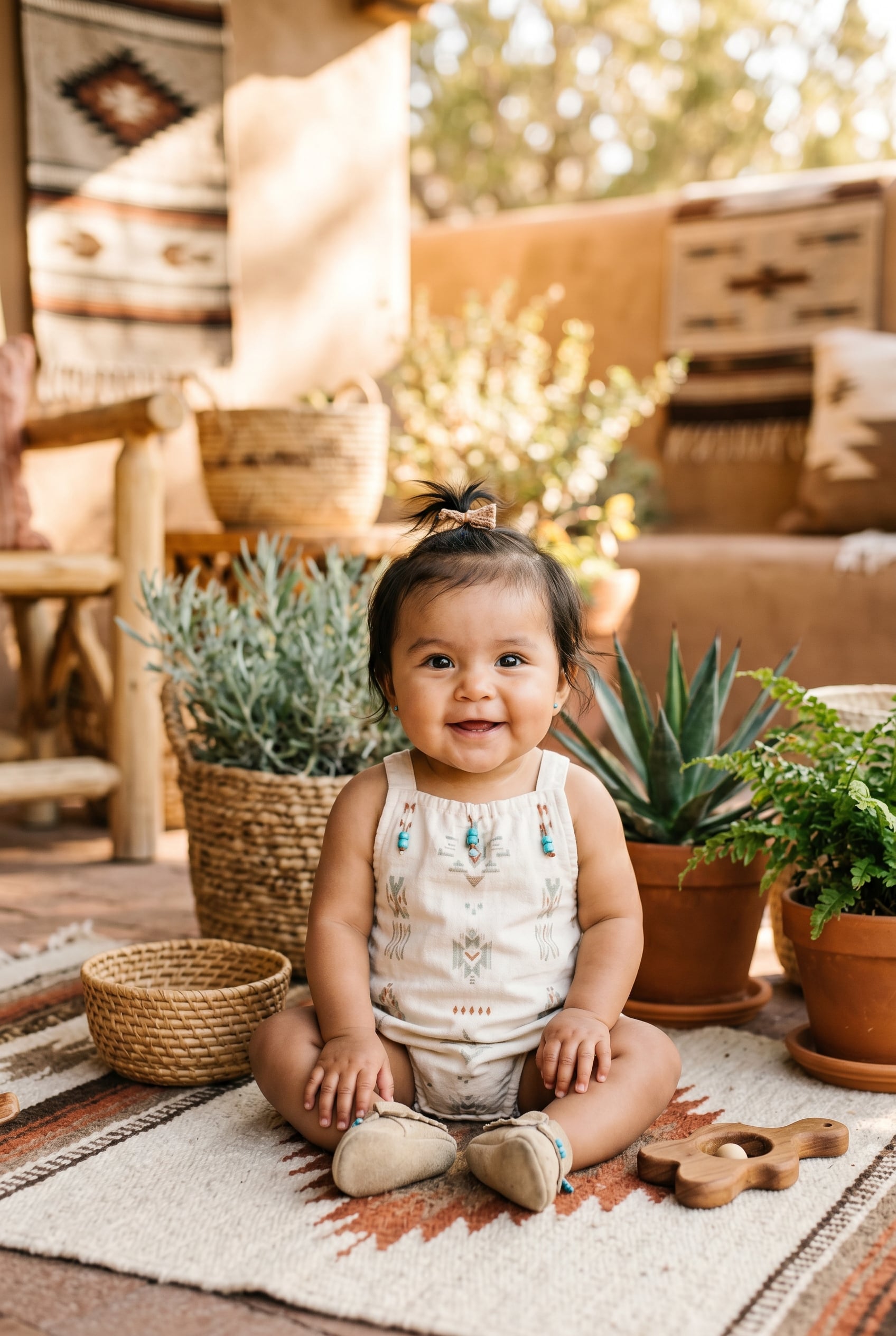
This roundup pulls together names from many different Indigenous nations — Lakota, Diné, Cherokee, Ojibwe, and others — each with its own language and its own naming traditions. In many of these cultures, a name might mark a clan, a season, an animal, or a piece of a creation story, not just a sound you liked. As you look through the options below, take a minute with the language and the people behind each one, not just the meaning in translation.
🔍 Curious how popular a name is?
Check any name's popularity trend since 1880 with our free Baby Name Popularity Checker.
Popularity below is calculated from Social Security Administration data through 2024, the most recent year on record.
Here’s what’s in store –
Lakota and Dakota Names from the Great Plains
Cherokee Names with Southeastern Woodland Roots
Navajo (Diné) Names from the Four Sacred Mountains
Ojibwe and Anishinaabe Names from the Great Lakes
Hopi, Zuni, and Pueblo Names from the Mesa Country
Algonquian Names from the Eastern Woodlands
Inuit, Yupik, and Pacific Northwest Names from the Northern Coasts
A note before you scroll: in many Indigenous nations, names aren’t picked from a list. They’re given by an elder, earned through a deed, dreamed by a relative, or tied to a specific clan. Some sacred names are not appropriate for outsiders at all. If you’re not from the culture in question, the most respectful path is to choose a common-vocabulary word (a name for “dawn,” “willow,” “small bird”) rather than a ceremonial or family-specific name, and to learn enough about the language and the people that you can answer “where did the name come from?” with more than “I saw it online.”
That said, beautiful, meaningful, and entirely usable names exist across hundreds of Indigenous languages — many of which the speakers themselves are actively reclaiming and sharing with the wider world as part of language-revitalization work. The 200+ names below are drawn from documented vocabularies of the Lakota, Dakota, Cherokee, Navajo (Diné), Ojibwe (Anishinaabe), Hopi, Zuni, Algonquian-family, Inuit, and Pacific Northwest nations. Meanings reflect commonly published translations; pronunciations and tonal nuances are best learned from a speaker.
Pour a cup of something warm. There are a lot of good names here.
Lakota and Dakota Names from the Great Plains
The Lakota and Dakota peoples of the Northern Plains have one of the most poetically documented naming traditions on the continent, with words that fold weather, animals, and sky into a single syllable.
- Origin: Sioux/Lakota (Native American)
- Pronunciation: ahn-PAY-too · ɑːnˈpeɪtuː
- Meaning: Radiant
- Popularity: Not in the U.S. Social Security rankings
For the baby born at first light.
- Origin: Lakota (claimed)
- Pronunciation: CHAY-tuhn · ˈtʃeɪtən
- Meaning: reportedly “falcon” in Lakota
- Popularity: #4,326 and falling (#4,018 → #4,326, 2024)
One of the more crossover-friendly Lakota names on modern lists.
- Origin: Lakota
- Pronunciation: chay-TAHN · tʃeɪˈtɑːn
- Meaning: hawk
- Popularity: Not in the U.S. Social Security rankings
Short, sharp, and tied to a sacred messenger bird.
- Origin: Lakota
- Pronunciation: choo-MAH-nee · tʃuːˈmɑːni
- Meaning: dew
- Popularity: Not in the U.S. Social Security rankings
A soft, water-on-grass kind of name.
- Origin: Dakota
- Pronunciation: ay-HAH-wee · eɪˈhɑːwiː
- Meaning: Laughing maiden
- Popularity: Not in the U.S. Social Security rankings
A name with built-in joy.
- Origin: Sioux (claimed) — Wiktionary shows an unrelated Hungarian/Finnish sense
- Pronunciation: EH-too · ˈɛtuː
- Meaning: Soul
- Popularity: Not in the U.S. Social Security rankings
A small word that carries everything.
- Origin: Lakota
- Pronunciation: HAHN-skah · ˈhɑːnskə
- Meaning: tall or long
- Popularity: Not in the U.S. Social Security rankings
Often given as part of a longer descriptive name.
- Origin: Lakota
- Pronunciation: HOH-tah · ˈhoʊtɑː
- Meaning: Gray, or strong
- Popularity: Not in the U.S. Social Security rankings
Subtle and grounded.
- Origin: Lakota
- Pronunciation: kee-mee-MAY-lah · kiːmiːˈmeɪlɑː
- Meaning: butterfly
- Popularity: Not in the U.S. Social Security rankings
A favorite for spring babies.
- Origin: Lakota
- Pronunciation: LOO-tah · ˈluːtɑː
- Meaning: red
- Popularity: Not in the U.S. Social Security rankings
Earthy and warm, a color name with depth.
- Origin: Lakota
- Pronunciation: MAH-kah · ˈmɑːkɑː
- Meaning: earth
- Popularity: Not in the U.S. Social Security rankings
One of the four sacred elements in Lakota cosmology.
– **Makȟá** — Earth, in its traditional spelling. Carries the same weight as Maka with the original glottal mark.
- Origin: Lakota
- Pronunciation: mah-GAH-skah · mɑːˈɡɑːskɑː
- Meaning: white goose (from maga ‘goose’ + ska ‘white’, not literally ‘swan’)
- Popularity: Not in the U.S. Social Security rankings
For a graceful, white-feathered presence.
- Origin: Lakota
- Meaning: bear
- Popularity: Not in the U.S. Social Security rankings
Pronounced *mah-TOH*, and historically a respected man’s name.
- Origin: Lakota
- Pronunciation: oh-HAHN-koh · oʊˈhɑːnkoʊ
- Meaning: Reckless, brave
- Popularity: Not in the U.S. Social Security rankings
For the kid who’s going to keep you on your toes.
- Origin: Lakota
- Pronunciation: oh-HEE-teh-kah
- Meaning: brave
- Popularity: Not in the U.S. Social Security rankings
Aspirational and direct.
- Origin: Sioux (a broad language-family label)
- Pronunciation: tah-HAH-tahn · tɑːˈhɑːtɑːn
- Meaning: claimed to mean ‘hawk’
- Popularity: Not in the U.S. Social Security rankings
A variation that rolls off the tongue easily.
- Origin: Old English/Germanic; also Old Norse
- Pronunciation: TAYT · ˈteɪt
- Meaning: cheerful, glad, radiant (Old English/Germanic root); a separate Old Norse personal-name strand is of unknown meaning
- Popularity: #210 and falling (#197 → #210, 2024)
The same spelling as the English nickname, with a much older origin.
- Origin: Lakota
- Pronunciation: tuh-SHOONG-kuh · təˈʃʊŋkə
- Meaning: relates to ‘horse’
- Popularity: Not in the U.S. Social Security rankings
Famously the first part of Tȟašúŋke Witkó (Crazy Horse).
- Origin: Sioux (Lakota/Dakota)
- Pronunciation: wah-CHEE-wee · wɑːˈtʃiːwi
- Meaning: one who dances
- Popularity: Not in the U.S. Social Security rankings
A name that sounds like its meaning.
- Origin: Lakota
- Pronunciation: wahn-BLEE · wɑ̃ˈbliː
- Meaning: eagle
- Popularity: Not in the U.S. Social Security rankings
The eagle is the highest-flying messenger between people and the Creator.
- Origin: Siouan (Omaha-Ponca, Osage, Ponca, Caddo)
- Pronunciation: wah-KAHN-dah · wəˈkɑːndə
- Meaning: the Great Spirit / supreme being (a religious and mythological term for sacred power)
- Popularity: Not in the U.S. Social Security rankings
Predates the Marvel film by centuries.
- Origin: Lakota
- Pronunciation: wah-KEEN-yahn · wɑːˈkiːnjɑ̃
- Meaning: Thunder Being (the thunderbird spirit of Lakota belief)
- Popularity: Not in the U.S. Social Security rankings
Sacred — best reserved or used with intention.
- Origin: Sioux (uncertain)
- Pronunciation: WAH-pee · ˈwɑːpi
- Meaning: lucky
- Popularity: Not in the U.S. Social Security rankings
Cheerful, short, easy.
- Origin: Lakota
- Pronunciation: wee-CHAH-pee · wiˈtʃɑːpi
- Meaning: star
- Popularity: Not in the U.S. Social Security rankings
For the baby who already feels like one.
- Origin: Dakota
- Pronunciation: wih-NOH-nah · wɪˈnoʊnə
- Meaning: firstborn daughter
- Popularity: #738 and rising (#880 → #738, 2024)
Carried by Winona Ryder and Winona LaDuke; one of the most quietly classic Native American girls’ names in mainstream use.
- Origin: Lakota
- Pronunciation: wee-YAH-kah · wiˈjɑːkɑ
- Meaning: feather
- Popularity: Not in the U.S. Social Security rankings
Delicate and ceremonial.
- Origin: claimed Sioux
- Meaning: Generous
- Popularity: Not in the U.S. Social Security rankings
A character-aspiration name.
Cherokee Names with Southeastern Woodland Roots
The Cherokee (Aniyvwiya, “the principal people”) language was given a written syllabary by Sequoyah in the 1820s, which preserved an enormous vocabulary of nature, kinship, and emotion words that translate beautifully into names.
- Origin: Cherokee
- Pronunciation: ah-DAH-hee · ɑːˈdɑːhiː
- Meaning: one who lives/dwells in the woods
- Popularity: Not in the U.S. Social Security rankings
For a quietly outdoorsy kid.
- Origin: Cherokee
- Pronunciation: ad-SEE-lah · ædˈsiː.lə
- Meaning: blossom
- Popularity: Not in the U.S. Social Security rankings
Soft and floral without being saccharine.
- Origin: Cherokee
- Pronunciation: ah-YOH-kuh · ɑːˈjoʊkə
- Meaning: she brought happiness
- Popularity: Not in the U.S. Social Security rankings
Historically the name of Sequoyah’s daughter.
- Origin: Cherokee
- Pronunciation: ah-muh-DAH-hee · ˌɑːməˈdɑːhiː
- Meaning: forest water
- Popularity: Not in the U.S. Social Security rankings
A name that paints a picture.
- Origin: Akan
- Pronunciation: AH-mah · ˈɑːmə
- Meaning: born on Saturday
- Popularity: #6,383 and falling (#5,762 → #6,383, 2024)
Compact and elemental; also exists in other world languages.
- Origin: Cherokee
- Pronunciation: ah-TOH-hee · ɑːˈtoʊhi
- Meaning: Woods, forest
- Popularity: Not in the U.S. Social Security rankings
A gender-neutral nature name with a calm rhythm.
- Origin: Cherokee
- Pronunciation: ah-wee-NEE-tuh · ɑːwɪˈniːtə
- Meaning: fawn
- Popularity: Not in the U.S. Social Security rankings
Sweet without being childish.
- Origin: Cherokee
- Pronunciation: DOO-stoo · ˈduːstuː
- Meaning: spring frog
- Popularity: Not in the U.S. Social Security rankings
A real name carried by a 19th-century Cherokee leader.
- Origin: Cherokee
- Meaning: Attractive, charming
- Popularity: Not in the U.S. Social Security rankings
Has a melodic, four-syllable bounce.
- Origin: Cherokee
- Pronunciation: ee-NOH-luh · iːˈnoʊlə
- Meaning: Black fox
- Popularity: #14,101 and falling (#12,646 → #14,101, 2024)
Sleek and a little mysterious.
- Origin: Cherokee
- Pronunciation: oh-nuh-KOH-nuh · oʊnəˈkoʊnə
- Meaning: White owl
- Popularity: Not in the U.S. Social Security rankings
For a wise old soul in a baby body.
- Origin: Cherokee
- Pronunciation: oh-NAH-wuh · oʊˈnɑːwə
- Meaning: Awake
- Popularity: Not in the U.S. Social Security rankings
A short name that feels like sunrise.
- Origin: Cherokee
- Pronunciation: sah-LAH-lee · səˈlɑːli
- Meaning: squirrel
- Popularity: Not in the U.S. Social Security rankings
Playful and unexpectedly cute.
– **Sequoyah** — Cherokee polymath who invented the syllabary; the giant redwoods are named for him.
- Origin: but linguistically doubtful)
- Meaning: Bear cub
- Popularity: Not in the U.S. Social Security rankings
A soft alternative to the bolder *Yona*.
– **Tsali** — Cherokee form of Charlie; the name of a celebrated Cherokee resister to Removal.
- Origin: Cherokee (historical name)
- Pronunciation: too-AHN-tuh · tuːˈɑːntə
- Meaning: refers to ‘Spring Frog’
- Popularity: Not in the U.S. Social Security rankings
Same meaning as Dustu, a different cadence.
- Origin: Cherokee
- Pronunciation: oo-NAY-gah · uːˈneɪɡɑː
- Meaning: white
- Popularity: Not in the U.S. Social Security rankings
Simple, clean, and easy to say.
- Origin: Cherokee
- Pronunciation: OOS-dee · ˈuːsdi
- Meaning: little, small (a term for a baby/young one)
- Popularity: Not in the U.S. Social Security rankings
A term of endearment used for a youngest child.
- Origin: Cherokee
- Pronunciation: WAY-sah · ˈweɪsə
- Meaning: cat
- Popularity: Not in the U.S. Social Security rankings
Borrowed into Cherokee from contact-era English, now part of the language.
- Origin: Cherokee
- Pronunciation: woh-HAH-lee · woʊˈhɑːli
- Meaning: eagle
- Popularity: Not in the U.S. Social Security rankings
Powerful and pan-Indigenous in spirit.
- Origin: claimed Native American (Algonquian vs. Cherokee disputed)
- Pronunciation: wy-uh-NET · waɪəˈnɛt
- Meaning: Beautiful
- Popularity: Not in the U.S. Social Security rankings
Has a vintage, almost early-1900s American feel.
- Origin: Cherokee
- Pronunciation: YOH-nah · ˈjoʊ.nə
- Meaning: bear
- Popularity: #3,675 and rising (#4,211 → #3,675, 2024)
Two syllables, all strength.
- Origin: Cherokee
- Pronunciation: aht-SEE-lah · ɑːtˈsiːlɑ
- Meaning: fire
- Popularity: Not in the U.S. Social Security rankings
Crackling and alive.
- Origin: Cherokee
- Pronunciation: ah-HOO-lee · ɑːˈhuːli
- Meaning: drum
- Popularity: Not in the U.S. Social Security rankings
For a baby with a steady heartbeat all their own.
- Origin: Cherokee
- Meaning: Bold, daring
- Popularity: Not in the U.S. Social Security rankings
Lives up to itself.
- Origin: Cherokee
- Pronunciation: ahs-GAH-yah · ɑːsˈɡɑːjɑː
- Meaning: man
- Popularity: Not in the U.S. Social Security rankings
Sometimes used as a middle name with traditional weight.
Navajo (Diné) Names from the Four Sacred Mountains
The Diné people call themselves “the children of the holy people,” and their language — Diné Bizaad — is famously hard to translate and famously beautiful when you do. Diné names below favor everyday vocabulary words appropriate for outside use.
- Origin: Navajo
- Pronunciation: ah-HEE-gah · ɑːˈhiːɡɑː
- Meaning: he fights
- Popularity: Not in the U.S. Social Security rankings
Bold and historically a warrior’s descriptor.
- Origin: Navajo (Diné)
- Pronunciation: AHT-sah · ˈɑtsɑ
- Meaning: eagle
- Popularity: Not in the U.S. Social Security rankings
Short, sharp, and revered.
- Origin: Navajo
- Pronunciation: bid-ZEEL · bɪdˈziːl
- Meaning: he is strong
- Popularity: Not in the U.S. Social Security rankings
A character-building name to grow into.
- Pronunciation: BEE-nuh · ˈbiːnə
- Meaning: Pheasant
- Popularity: #9,712 as of 2023 — not currently in the U.S. Social Security rankings
Soft on the ear; rare enough to feel personal.
- Origin: Navajo
- Pronunciation: CHOO-lee · ˈtʃuːli
- Meaning: Mountain
- Popularity: Not in the U.S. Social Security rankings
Grounded, tall, immovable.
- Origin: Navajo
- Pronunciation: DOH-lee · ˈdoʊli
- Meaning: Bluebird
- Popularity: Not in the U.S. Social Security rankings
A small, lyrical name with a cheerful image.
- Origin: Navajo
- Pronunciation: HAH-nee · ˈhɑːni
- Meaning: Begging, or one who asks
- Popularity: Not in the U.S. Social Security rankings
Carries a quiet humility.
- Origin: Navajo
- Pronunciation: hahsh-KAY · hɑʃˈkʼe
- Meaning: Warrior, fierce one
- Popularity: Not in the U.S. Social Security rankings
Strong, with crisp consonants.
- Origin: Navajo
- Pronunciation: hah-STEEN · hɑːsˈtiːn
- Meaning: Man, sir
- Popularity: Not in the U.S. Social Security rankings
A respectful title sometimes used as a name.
- Origin: Germanic/Scandinavian (also popularly linked to Hawaiian)
- Pronunciation: KY · ˈkaɪ
- Meaning: possibly from Latin Caius, or a Frisian pet form of Gerard/Cornelius/Nicholas (‘warrior’); popularly reinterpreted in the US as Hawaiian for ‘sea’
- Popularity: #76 and falling (#61 → #76, 2024)
That’s a popular US reinterpretation, not the documented root — Kai’s actual traceable origins are Scandinavian/German (e.g., a Frisian pet form of Gerard, Cornelius, or Nicholas meaning ‘warrior,’ or from Latin Caius).
- Origin: Navajo and Hopi
- Pronunciation: KEH-lay · ˈkeɪleɪ
- Meaning: Sparrow
- Popularity: #14,346 as of 2006 — not currently in the U.S. Social Security rankings
Gentle and pocket-sized.
- Origin: Navajo
- Pronunciation: nahl-NEESH · nɑːlˈnɪʃ
- Meaning: he works/is working
- Popularity: Not in the U.S. Social Security rankings
For the toddler who’s always busy.
- Origin: Navajo
- Pronunciation: nah-TAH-nee · nɑːˈtɑːni
- Meaning: Chief, leader
- Popularity: Not in the U.S. Social Security rankings
A leadership name in the original.
- Origin: Navajo
- Pronunciation: NAH-shah · ˈnɑːʃə
- Meaning: owl
- Popularity: Not in the U.S. Social Security rankings
Wise and a little nocturnal.
- Origin: Navajo
- Pronunciation: nee-YOHL · niːˈjoʊl
- Meaning: Wind
- Popularity: Not in the U.S. Social Security rankings
One of the most usable Diné names — flowing, two syllables, easy.
- Origin: Navajo (Diné)
- Meaning: beautiful
- Popularity: #5,900 and falling (#5,338 → #5,900, 2024)
Pronounced *nih-ZHOH-nee*; lives at the heart of *Hózhǫ́*, the philosophy of walking in beauty.
- Origin: disputed / multiple unrelated origins (Italian patronymic, Hausa surname from Arabic, also a language name in China)
- Pronunciation: SAH-nee · ˈsɑːni
- Meaning: The old one
- Popularity: #6,390 and rising (#10,658 → #6,390, 2024)
For an eldest or longed-for child.
- Origin: Navajo
- Pronunciation: SHY-luh · ˈʃaɪ.lə
- Meaning: Brother
- Popularity: #8,853 and rising (#8,894 → #8,853, 2024)
A kinship name with a warm feel.
- Origin: Navajo
- Pronunciation: shee-DEE-zhee
- Meaning: younger sister
- Popularity: Not in the U.S. Social Security rankings
Sweet but more often a term than a given name.
- Origin: Navajo
- Pronunciation: sih-KISS · sɪˈkʼɪs
- Meaning: friend
- Popularity: Not in the U.S. Social Security rankings
Unusual and immediately likable.
- Origin: Navajo
- Pronunciation: sih-CHAY-ee · sɪˈtʃeɪiː
- Meaning: (maternal) grandfather
- Popularity: Not in the U.S. Social Security rankings
Sometimes used to honor a passed elder.
- Origin: Navajo (Diné bizaad)
- Meaning: means water
- Popularity: Not in the U.S. Social Security rankings
A single bright syllable.
- Origin: Navajo (Diné)
- Pronunciation: yah-NAH-hah · jaˈnɑːhɑː
- Meaning: she who confronts/meets the enemy
- Popularity: Not in the U.S. Social Security rankings
Quietly fierce.
- Origin: Navajo (Diné)
- Pronunciation: YAHS · jɑ̀s
- Meaning: snow
- Popularity: Not in the U.S. Social Security rankings
Cool, sparse, single-syllable beauty.
- Origin: Navajo (Diné)
- Pronunciation: YEES-kah · ˈjiːs.kɑː
- Meaning: the night has passed / it dawns
- Popularity: Not in the U.S. Social Security rankings
- Origin: Navajo
- Pronunciation: ah-dee-KAH-ee · ɑːdiːˈkɑːiː
- Meaning: one who shuffles cards
- Popularity: Not in the U.S. Social Security rankings
Playful, with a wink.
- Origin: Navajo (Diné)
- Pronunciation: ahsh-KEE · ɑːʃˈkiː
- Meaning: boy
- Popularity: Not in the U.S. Social Security rankings
Simple, classic, often used affectionately.
- Origin: Navajo (Diné)
- Pronunciation: aht-AYD · ʔɑ̀tʼéːt
- Meaning: girl
- Popularity: Not in the U.S. Social Security rankings
The feminine counterpart to Ashkii.
Ojibwe and Anishinaabe Names from the Great Lakes
The Anishinaabe peoples — Ojibwe, Odawa, Potawatomi — share a language family that hums with water, wind, and forest words from the Great Lakes region. Ojibwemowin is in active revitalization, and using these words thoughtfully supports that work.
- Origin: Ojibwe
- Pronunciation: uh-NIM-ih-kee · əˈnɪm.ɪ.kiː
- Meaning: thunderer, thunderbird
- Popularity: Not in the U.S. Social Security rankings
A powerful spirit-being; use with respect.
- Origin: Finnish
- Pronunciation: AH-kee · ˈɑːki
- Meaning: Earth, land
- Popularity: #5,885 and rising (#7,301 → #5,885, 2024)
One syllable, all foundation.
- Origin: Ojibwe
- Pronunciation: uh-SIN · əˈsɪn
- Meaning: stone, rock
- Popularity: Not in the U.S. Social Security rankings
Steady and elemental.
- Origin: Ojibwe
- Pronunciation: bee-DAH-bun · biːˈdɑːbən
- Meaning: dawn
- Popularity: Not in the U.S. Social Security rankings
Five letters that hold a whole sunrise.
- Origin: Ojibwe
- Pronunciation: bih-NAY-sheen · bɪˈneːʃiːɲ
- Meaning: bird
- Popularity: Not in the U.S. Social Security rankings
A diminutive endearment.
- Origin: Ojibwe
- Pronunciation: dih-bik-GEE-zis · dɪbɪkˈɡiːzɪs
- Meaning: Moon, literally “night sun”
- Popularity: Not in the U.S. Social Security rankings
Lovely as a poetic middle name.
- Origin: Ojibwe
- Pronunciation: gee-WAY-din · ɡiːˈweɪdɪn
- Meaning: north wind
- Popularity: Not in the U.S. Social Security rankings
Crisp and directional.
- Origin: Ojibwe
- Pronunciation: GEE-ziss · ˈɡiːzɪs
- Meaning: sun
- Popularity: Not in the U.S. Social Security rankings
Bright, short, sweetly literal.
- Origin: Ojibwe
- Pronunciation: MAHNG · mɑːŋ
- Meaning: loon (the bird)
- Popularity: Not in the U.S. Social Security rankings
The call of summer lakes in one syllable.
- Origin: Ojibwe
- Meaning: wolf
- Popularity: Not in the U.S. Social Security rankings
Pronounced *MY-ing-gun*; sacred in many Anishinaabe stories.
- Origin: Ojibwe (given name)
- Pronunciation: MUHK-wah · ˈmʌkwɑː
- Meaning: bear
- Popularity: Not in the U.S. Social Security rankings
Brother bear, of clan importance.
- Origin: Ojibwe
- Pronunciation: mih-GIH-zee · mɪˈɡɪziː
- Meaning: eagle
- Popularity: Not in the U.S. Social Security rankings
A messenger to the Creator.
- Origin: Dakota (Sioux)
- Pronunciation: min-ee-HAH-hah · ˌmɪniːˈhɑːhɑː
- Meaning: waterfall, or rapids (literally ‘water’ + ‘falls/curls’)
- Popularity: Not in the U.S. Social Security rankings
A literary name with real linguistic roots.
- Origin: Ojibwe
- Pronunciation: NEE-bee · ˈniːbi
- Meaning: water
- Popularity: Not in the U.S. Social Security rankings
Two syllables, infinitely sacred — *nibi* is the focus of Indigenous-led water-protector movements.
- Origin: Ojibwe
- Pronunciation: noh-KOH-miss · noʊˈkoʊmɪs
- Meaning: Grandmother
- Popularity: Not in the U.S. Social Security rankings
A name that gives the holder a built-in ancestor.
- Origin: Ojibwe
- Pronunciation: NOO-din · ˈnuːdɪn
- Meaning: wind
- Popularity: Not in the U.S. Social Security rankings
Flowing and breathy.
- Origin: Ojibwe
- Pronunciation: oh-ZAH-wah · oʊˈzɑːwɑː
- Meaning: yellow/orange
- Popularity: Not in the U.S. Social Security rankings
A warm color name.
- Origin: Ojibwe (Algonquian)
- Pronunciation: WAH-bun · ˈwɑːbʌn
- Meaning: the east / the direction of dawn
- Popularity: Not in the U.S. Social Security rankings
Tied to the eastern doorway of the medicine wheel.
- Origin: Ojibwe
- Pronunciation: wah-wah-TAY · wɑːwɑːˈteɪ
- Meaning: the northern lights (aurora borealis)
- Popularity: Not in the U.S. Social Security rankings
A name like a green sky.
- Origin: Dakota (variant spelling of Winona)
- Pronunciation: weh-NOH-nuh · wəˈnoʊnə
- Meaning: firstborn daughter
- Popularity: #15,794 as of 2017 — not currently in the U.S. Social Security rankings
Hiawatha’s mother in the Longfellow telling.
- Origin: Ojibwe
- Pronunciation: zhuh-WEN-im · ʒəˈwɛnɪm
- Meaning: to love, to cherish someone
- Popularity: Not in the U.S. Social Security rankings
A verb name with deep affection.
- Origin: Ojibwe
- Pronunciation: ZEEG-wun · ˈziːɡwən
- Meaning: spring (the season)
- Popularity: Not in the U.S. Social Security rankings
A name that promises growth.
- Origin: Ojibwe
- Pronunciation: NEE-bin · ˈniːbɪn
- Meaning: summer
- Popularity: Not in the U.S. Social Security rankings
Sun-soaked.
- Origin: Ojibwe
- Pronunciation: duh-GWAH-gin · dəˈɡwaːɡɪn
- Meaning: autumn/fall
- Popularity: Not in the U.S. Social Security rankings
For October babies.
- Origin: Ojibwe
- Pronunciation: bee-BOON · biːˈbuːn
- Meaning: winter
- Popularity: Not in the U.S. Social Security rankings
Quiet, snowy, slow.
- Origin: Ojibwe
- Pronunciation: oh-gih-MAH · oʊɡɪˈmɑː
- Meaning: leader/chief
- Popularity: Not in the U.S. Social Security rankings
Honored and traditional.
- Origin: Ojibwe (related to ‘Manitou’)
- Pronunciation: mah-nih-DOO · mʌnɪˈduː
- Meaning: spirit/mystery
- Popularity: Not in the U.S. Social Security rankings
Sacred — handle thoughtfully.
- Origin: Ojibwe
- Pronunciation: mish-OH-miss · mɪˈʃoːmɪs
- Meaning: grandfather
- Popularity: Not in the U.S. Social Security rankings
The masculine counterpart to Nokomis.
Hopi, Zuni, and Pueblo Names from the Mesa Country
The Hopi of northeastern Arizona and the Zuni and other Pueblo nations of New Mexico have rich naming traditions centered on clan, corn, weather, and the seasonal ceremonial calendar. Many sacred Hopi names belong to specific clans and should not travel outside them — the names below are gentler vocabulary words and broadly used given names.
- Origin: Hopi
- Pronunciation: kuh-TOR-ee · kəˈtɔːri
- Meaning: Spirit
- Popularity: #9,031 and falling (#4,895 → #9,031, 2024)
One of the most-loved Hopi-origin girl names on modern lists.
- Origin: Hopi
- Pronunciation: chuh-VAY-oh · tʃəˈveɪoʊ
- Meaning: Spirit warrior
- Popularity: #9,113 and rising (#9,141 → #9,113, 2024)
Bold, ceremonial-feeling.
- Origin: Hopi
- Pronunciation: chohs-POH-see · tʃoʊsˈpoʊsi
- Meaning: bluebird eye
- Popularity: Not in the U.S. Social Security rankings
Visual and tender.
- Origin: Hopi
- Pronunciation: hoh-NOH-vee · hoʊˈnoʊvi
- Meaning: Strong deer
- Popularity: Not in the U.S. Social Security rankings
A graceful kind of strength.
- Origin: Hopi
- Pronunciation: ISS-tahs · ˈɪstɑːs
- Meaning: Snow
- Popularity: Not in the U.S. Social Security rankings
Quietly cold and pretty.
- Origin: Hopi
- Pronunciation: kah-CHAH-dah · kəˈtʃɑːdə
- Meaning: white man
- Popularity: Not in the U.S. Social Security rankings
Historical, sometimes given to Hopi children of mixed heritage.
- Origin: Hopi
- Pronunciation: koo-wahn-yahm-TEE-wah · kuːˌwɑːnjɑːmˈtiːwə
- Meaning: beautiful badger going over the hill
- Popularity: Not in the U.S. Social Security rankings
The kind of long, picture-painting name Hopi naming is famous for.
- Origin: Hopi
- Pronunciation: len-MAH-nah · lɛnˈmɑːnə
- Meaning: flute girl
- Popularity: Not in the U.S. Social Security rankings
Musical and pastoral.
- Origin: Hopi
- Pronunciation: MAN-see · ˈmænsi
- Meaning: Plucked flower
- Popularity: #13,295 as of 2019 — not currently in the U.S. Social Security rankings
Delicate and a little melancholy.
- Origin: Latin
- Pronunciation: NOH-vah · ˈnoʊvə
- Meaning: new
- Popularity: #39 and falling (#35 → #39, 2024)
- Origin: Hopi
- Pronunciation: pah-VAH-tee · pəˈvɑːti
- Meaning: Clear water
- Popularity: Not in the U.S. Social Security rankings
Cool and refreshing.
- Origin: Finnish
- Pronunciation: SAH-kah-ree · ˈsɑːkɑːri
- Meaning: a short form of Zacharias/Zechariah, so it shares that name’s underlying sense of ‘the Lord has remembered’
- Popularity: #3,080 and rising (#3,329 → #3,080, 2024)
Bright and pleasant.
- Origin: Hopi
- Pronunciation: SEE-hoo · ˈsiːhuː
- Meaning: flower
- Popularity: Not in the U.S. Social Security rankings
Short, soft.
- Origin: Hopi
- Pronunciation: soh-WING-wah · soʊˈwɪŋwɑː
- Meaning: relates to deer (black-tailed/mule deer)
- Popularity: Not in the U.S. Social Security rankings
Graceful and woodland.
- Origin: Hopi
- Pronunciation: TEE-vah · ˈtiːvə
- Meaning: relates to ‘dance’
- Popularity: Not in the U.S. Social Security rankings
Three letters of pure movement.
- Origin: Hopi
- Pronunciation: TOH-choh · ˈtoʊ.tʃoʊ
- Meaning: claimed to mean ‘mountain lion’
- Popularity: Not in the U.S. Social Security rankings
Stealthy and respected.
- Origin: Hopi
- Pronunciation: TOO-wah · ˈtuːwɑ
- Meaning: relates to earth/sand
- Popularity: Not in the U.S. Social Security rankings
Grounding and easy to say.
- Origin: Hopi
- Pronunciation: HOH-naw · ˈhoʊnɔː
- Meaning: Bear
- Popularity: Not in the U.S. Social Security rankings
The masculine counterpart to several bear-meaning names across nations.
- Origin: Hopi
- Pronunciation: hay-hay-WOO-tee · heɪheɪˈwuːti
- Meaning: Warrior mother spirit
- Popularity: Not in the U.S. Social Security rankings
Strong and matriarchal.
- Origin: Hopi
- Pronunciation: LAHN-suh · ˈlɑːnsə
- Meaning: lance
- Popularity: Not in the U.S. Social Security rankings
A short, sharp-sounding name.
- Origin: Hopi
- Pronunciation: loh-mah-HONG-vah · loʊməˈhɒŋvə
- Meaning: beautiful clouds rising
- Popularity: Not in the U.S. Social Security rankings
The kind of weather-poetry Hopi excels at.
- Origin: Hopi
- Pronunciation: puh-KOO-nuh · pəˈkuːnə
- Meaning: Deer jumping downhill
- Popularity: Not in the U.S. Social Security rankings
Active and visual.
- Origin: Hopi
- Pronunciation: SIK-yah · ˈsɪkjɑː
- Meaning: refers to the color yellow
- Popularity: Not in the U.S. Social Security rankings
A sunshiny color name.
- Origin: Native American (sometimes labeled Hopi, exact source unclear)
- Pronunciation: TY-muh · ˈtaɪmə
- Meaning: Thunder crash
- Popularity: #17,861 as of 2018 — not currently in the U.S. Social Security rankings
For a stormy spring birthday.
- Origin: Zuni
- Meaning: claimed to mean ‘a small piece’
- Popularity: Not in the U.S. Social Security rankings
Term of endearment for the youngest.
Algonquian Names from the Eastern Woodlands
The Algonquian language family stretched from the Wampanoag of Cape Cod to the Cree of Hudson Bay, and its vocabulary is the source of many English nature words (moose, skunk, raccoon) — and many lovely names.
- Origin: Modern coinage, marketed as Native American, with no specific source language established.
- Pronunciation: eye-YAH-nuh · aɪˈjɑːnə
- Meaning: Eternal blossom
- Popularity: #1,179 and falling (#1,068 → #1,179, 2024)
- Origin: Ojibwe-influenced (place name)
- Pronunciation: al-GOH-muh · ælˈɡoʊmə
- Meaning: Valley of flowers
- Popularity: Not in the U.S. Social Security rankings
Pretty and place-like.
- Origin: Algonquian
- Meaning: independent
- Popularity: Not in the U.S. Social Security rankings
Strong-willed from birth.
- Origin: Algonquian
- Pronunciation: uh-NAH-bah · əˈnɑːbə
- Meaning: she returns from war
- Popularity: Not in the U.S. Social Security rankings
Quietly fierce.
- Origin: Native American (exact language uncertain)
- Pronunciation: uh-POH-nee · əˈpoʊni
- Meaning: Butterfly
- Popularity: Not in the U.S. Social Security rankings
Light and seasonal.
– **Cheveyo** — Spirit warrior, used cross-Algonquian. Echoes the Hopi entry, with its own variants.
- Origin: Onondaga (Iroquois/Haudenosaunee)
- Pronunciation: hy-uh-WAH-thuh · ˌhaɪəˈwɒθə
- Meaning: He who combs
- Popularity: #12,015 as of 2004 — not currently in the U.S. Social Security rankings
The historical Hiawatha co-founded the Haudenosaunee Confederacy.
- Origin: claimed Algonquian
- Pronunciation: KAHN-tee · ˈkɑːnti
- Meaning: Sings
- Popularity: Not in the U.S. Social Security rankings
A name like a small bell.
- Origin: claimed Algonquian
- Meaning: Thunder
- Popularity: Not in the U.S. Social Security rankings
Compact and rumbling.
- Origin: claimed Algonquian
- Pronunciation: KITCH-ee · ˈkɪtʃi
- Meaning: Brave
- Popularity: Not in the U.S. Social Security rankings
Old-fashioned strong.
- Origin: Algonquian
- Pronunciation: MAN-ih-too · ˈmænɪtuː
- Meaning: a spirit or sacred/supernatural power in Algonquian tradition; the proper-noun ‘Supreme Being’ sense is a later specialization of this common noun
- Popularity: Not in the U.S. Social Security rankings
Sacred — best used with intention.
- Origin: Wampanoag
- Pronunciation: MASS-uh-soyt
- Meaning: great chief/great sachem (title)
- Popularity: Not in the U.S. Social Security rankings
Honors the leader who first negotiated with Plymouth.
- Origin: Algonquian
- Meaning: Kills many
- Popularity: Not in the U.S. Social Security rankings
Warlike and historical.
- Origin: Algonquian
- Pronunciation: mee-SAH-ay · mi.sa.e
- Meaning: White sun
- Popularity: Not in the U.S. Social Security rankings
A bright, hopeful name.
- Origin: Cheyenne
- Meaning: Elk
- Popularity: Not in the U.S. Social Security rankings
Tall and antlered.
- Origin: Algonquian
- Pronunciation: nook-PAH-nuh · nʊkˈpɑːnə
- Meaning: Evil
- Popularity: Not in the U.S. Social Security rankings
Almost never given today, but historically attested.
- Origin: place name (Swahili/Bantu, East Africa)
- Pronunciation: PEM-buh · ˈpɛmbə
- Meaning: Forecaster
- Popularity: Not in the U.S. Social Security rankings
For a baby with a sixth sense.
- Origin: Algonquian
- Meaning: Wealthy
- Popularity: Not in the U.S. Social Security rankings
A prosperity name.
- Origin: Algonquian
- Pronunciation: sah-KEE-mah · saːˈkiːma
- Meaning: chief/king
- Popularity: Not in the U.S. Social Security rankings
Regal and rare.
- Origin: Abenaki
- Pronunciation: SAM-oh-set · ˈsæməsɛt
- Meaning: he walks over much / he who walks widely
- Popularity: Not in the U.S. Social Security rankings
Historic figure who greeted the Pilgrims in English.
- Origin: Algonquian (unspecified language)
- Pronunciation: sih-SEE-kuh · sɪˈsiːkə
- Meaning: said to mean ‘bird’
- Popularity: Not in the U.S. Social Security rankings
Sweet and tiny.
- Origin: Algonquian (unspecified language)
- Meaning: said to mean ‘rain’
- Popularity: Not in the U.S. Social Security rankings
A soft weather name.
- Origin: Wampanoag/Patuxet (historical name)
- Pronunciation: SKWAHN-toh · ˈskwɑːntoʊ
- Meaning: Door
- Popularity: Not in the U.S. Social Security rankings
The Patuxet man who helped the Plymouth colonists survive.
- Origin: unclear from this data pull
- Pronunciation: TAH-mah · ˈtɑːmɑː
- Meaning: Thunderbolt
- Popularity: #10,608 as of 2018 — not currently in the U.S. Social Security rankings
Two syllables of weather.
- Origin: Algonquian
- Pronunciation: weh-MAH-tin · wɛˈmɑːtɪn
- Meaning: brother
- Popularity: Not in the U.S. Social Security rankings
A kinship name.
- Origin: Dakota/Siouan (Winona family, listed as ‘Algonquian’ by some sites)
- Pronunciation: wih-NOH-noh · wɪˈnoʊnoʊ
- Meaning: firstborn (daughter)
- Popularity: Not in the U.S. Social Security rankings
A variant of Winona.
- Origin: claimed Sioux/Algonquian (internally inconsistent grouping)
- Pronunciation: MAH-kah · ˈmɑːkɑː
- Meaning: Earth
- Popularity: Not in the U.S. Social Security rankings
Grounding.
- Origin: Omaha
- Pronunciation: mih-GEE-nuh · mɪˈɡiːnə
- Meaning: Returning moon
- Popularity: Not in the U.S. Social Security rankings
Lyrical and cyclical.
Inuit, Yupik, and Pacific Northwest Names from the Northern Coasts
The peoples of the Arctic and the Pacific Northwest coasts — Inuit, Yupik, Tlingit, Haida, Salish — name from a vocabulary built for ice, sea, salmon, and cedar. Many of these names are short and percussive, shaped by the languages’ love of consonant clusters.
- Origin: Inuit
- Pronunciation: AHK-lahk · ˈɑːklɑːk
- Meaning: bear
- Popularity: Not in the U.S. Social Security rankings
Sturdy and stout.
- Origin: Inuit
- Pronunciation: ah-MAH-rook
- Meaning: wolf
- Popularity: Not in the U.S. Social Security rankings
Howling and remote.
- Origin: Inuit
- Meaning: ice
- Popularity: Not in the U.S. Social Security rankings
A cold, clean syllable.
- Origin: Inuit (Kalaallisut)
- Pronunciation: AH-poot · ˈɑːpʊt
- Meaning: Snow
- Popularity: Not in the U.S. Social Security rankings
One of dozens of Inuit snow words.
- Origin: Inuit
- Meaning: Young ptarmigan
- Popularity: Not in the U.S. Social Security rankings
Small, hardy, tundra-bird.
- Origin: Aleut/Unangax̂ (Aleutian island name)
- Pronunciation: AT-kuh · ˈætkə
- Meaning: King
- Popularity: Not in the U.S. Social Security rankings
Sovereign and short.
- Origin: Slavic (river name)
- Pronunciation: des-NAH · dɛsˈnɑː
- Meaning: The boss / chief
- Popularity: Not in the U.S. Social Security rankings
A leadership name.
- Origin: Greenlandic Inuit / Inuktitut
- Pronunciation: EE-nook · ˈiːnʊk
- Meaning: a person, human being (the singular form of ‘Inuit, ‘ the people’s own name)
- Popularity: Not in the U.S. Social Security rankings
The root of *Inuit* itself; the name says “human.”
- Origin: Sanskrit (Indian given name)
- Pronunciation: KAH-nuh-kuh · ˈkʌnəkə
- Meaning: gold
- Popularity: Not in the U.S. Social Security rankings
A trade-era name still in use.
- Origin: claimed Inuit
- Pronunciation: kah-NOOK · kəˈnʊk
- Meaning: Goose
- Popularity: Not in the U.S. Social Security rankings
Honking and Northern.
- Origin: Japanese; also English (pet form of Michael/Michaela via Mickey)
- Pronunciation: MEE-kee · ˈmiːki
- Meaning: Small
- Popularity: #10,876 as of 2023 — not currently in the U.S. Social Security rankings
Tiny and tender.
- Origin: Inuit
- Pronunciation: nah-NOOK · nəˈnuːk
- Meaning: Polar bear
- Popularity: Not in the U.S. Social Security rankings
Spelled this way in older texts; *Nanuq* in modern.
- Origin: Inuktitut
- Pronunciation: nah-NOOK · nɑːˈnuːk
- Meaning: polar bear
- Popularity: Not in the U.S. Social Security rankings
The white bear of the high Arctic.
- Origin: Inuit
- Pronunciation: noo-KEE-lik · nuːˈkiːlɪk
- Meaning: Strong
- Popularity: Not in the U.S. Social Security rankings
For a sturdy baby.
- Origin: Inuit
- Pronunciation: POO-kahk · ˈpuːkæk
- Meaning: granular, sugary snow crystals (depth hoar) at the base of a snowpack
- Popularity: Not in the U.S. Social Security rankings
A name like a snowflake under a microscope.
- Origin: Inuit
- Pronunciation: SEH-see · ˈsɛsi
- Meaning: Snow
- Popularity: Not in the U.S. Social Security rankings
A short, soft variant.
- Origin: Inuit (Inuktitut)
- Pronunciation: SEE-koo · ˈsiːkuː
- Meaning: refers to sea ice
- Popularity: Not in the U.S. Social Security rankings
Cool and elemental.
- Origin: multiple unrelated origins depending on culture (Arabic/Turkish, Inuit, Tongan)
- Pronunciation: SEE-luh · ˈsiːlə
- Meaning: Arabic/Turkish ‘sıla’ (from root ṣila, ‘connection, bond’) carries a specific sense of longing for or returning to one’s homeland; this is a separate word from the unrelated Inuit concept ‘sila’ (sky/weather/world-spirit) and Tongan usage — these are homographs, not the same name
- Popularity: #5,567 and falling (#4,722 → #5,567, 2024)
One of the great spiritual concepts of the Arctic compressed into two syllables.
- Origin: Inuit
- Pronunciation: SOOR-uh · ˈsʊərə
- Meaning: claimed to mean ‘sun’
- Popularity: #6,873 and falling (#4,984 → #6,873, 2024)
Warm in a cold place.
- Origin: Inuit (Inuktitut)
- Pronunciation: TOOK-too · ˈtʊktuː
- Meaning: refers to caribou
- Popularity: Not in the U.S. Social Security rankings
The animal at the center of Arctic life.
- Origin: Inuit (Inuktitut)
- Pronunciation: TOO-pik · ˈtuːpɪk
- Meaning: refers to a skin tent
- Popularity: Not in the U.S. Social Security rankings
Home in one word.
- Origin: Inuit (Inuktitut)
- Pronunciation: oo-YAH-rahk · uˈjaʁɑq
- Meaning: refers to a rock/stone
- Popularity: Not in the U.S. Social Security rankings
Heavy, set, immovable.
- Origin: Yupik
- Pronunciation: YOO-rah · ˈjuː.rə
- Meaning: Beautiful
- Popularity: Not in the U.S. Social Security rankings
A bright vowel-name.
- Origin: Finnish / Kemi Sámi (place name)
- Pronunciation: KIT-kah · ˈkɪtkɑː
- Meaning: Pine bough
- Popularity: Not in the U.S. Social Security rankings
Coastal and evergreen.
- Origin: claimed Native American (Shoshone)
- Pronunciation: kee-OH-nə · kiːˈoʊnə
- Meaning: Brown hills
- Popularity: #12,783 and falling (#6,800 → #12,783, 2024)
Place-rooted.
- Origin: Haida / Pacific Northwest Coast
- Pronunciation: SKAH-nah · ˈskɑːnə
- Meaning: associated with ‘killer whale’ (orca)
- Popularity: Not in the U.S. Social Security rankings
The orca, central to Haida crest art.
- Origin: Tlingit
- Pronunciation: sah-GAH-nee · səˈɡɑːni
- Meaning: Raven
- Popularity: Not in the U.S. Social Security rankings
Raven is the creator-trickster of Pacific Northwest cosmology.
- Origin: Slavic (from Hebrew, via Jane/John)
- Pronunciation: YAH-nah · ˈja.nə
- Meaning: “God is gracious” (the same root meaning as Jane and John)
- Popularity: #1,890 and rising (#1,918 → #1,890, 2024)
Compact, with crossover appeal across many cultures.
Nature and Sky Names Across Nations
Some of the most usable Indigenous-rooted names cluster around shared themes — sun, moon, water, animals — that appear in nearly every Native language. The cross-section below gathers favorites that pair beautifully across cultural lines.
- Origin: Kiowa
- Meaning: big tree
- Popularity: Not in the U.S. Social Security rankings
Tall and rooted.
- Pronunciation: uh-WAHN · əˈwɑːn
- Meaning: Somebody
- Popularity: Not in the U.S. Social Security rankings
Mysterious and short.
- Origin: Algonquian
- Meaning: You don’t know
- Popularity: Not in the U.S. Social Security rankings
A quietly funny name.
- Origin: Native American (generic)
- Pronunciation: dee-AH-mee · diːˈɑːmi
- Meaning: Eagle
- Popularity: #11,258 and falling (#11,194 → #11,258, 2024)
Two syllables of flight.
- Origin: Hebrew (variant of Elon)
- Pronunciation: ay-LAHN · eɪˈlɑːn
- Meaning: oak tree
- Popularity: #2,636 and falling (#2,251 → #2,636, 2024)
Open and bright.
- Origin: Zuni (claimed)
- Pronunciation: EH-loo · ˈɛl.uː
- Meaning: Beautiful
- Popularity: Not in the U.S. Social Security rankings
Compact and lyrical.
- Origin: Turkish
- Pronunciation: HAH-kahn · hɑːˈkɑːn
- Meaning: ruler, khagan / emperor
- Popularity: #5,729 and rising (#7,047 → #5,729, 2024)
A name with crackle.
- Origin: Zuni
- Pronunciation: hah-LOH-nah · həˈloʊnə
- Meaning: Happy fortune
- Popularity: #9,122 and rising (#10,606 → #9,122, 2024)
Cheerful and lucky.
- Origin: Hopi
- Pronunciation: hoh-NAH-nee · hoʊˈnɑːni
- Meaning: Badger
- Popularity: Not in the U.S. Social Security rankings
For a determined digger.
- Origin: Cheyenne
- Meaning: Little wolf
- Popularity: Not in the U.S. Social Security rankings
Small but pack-loyal.
- Origin: English/Jewish (surname of uncertain, possibly dual, origin)
- Pronunciation: HY-uht · ˈhaɪət
- Meaning: tailor (if from Hebrew); or from the surname Highet (origin unclear), depending on family line
- Popularity: #11,410 and falling (#6,666 → #11,410, 2024)
Many crossover names are Indigenous-adjacent rather than original.
- Origin: German/Latin (short form of -ina names)
- Pronunciation: EE-nah · ˈiːnə
- Meaning: Mother
- Popularity: #2,636 and rising (#3,931 → #2,636, 2024)
A foundational kinship word.
- Origin: Hawaiian
- Pronunciation: ee-oh-LAH-nuh · iː.oʊˈlɑːnə
- Meaning: Hawk
- Popularity: Not in the U.S. Social Security rankings
Soaring and short.
- Origin: Mayan (linked to the goddess Ixchel)
- Pronunciation: eet-SEL · iːˈtsɛl
- Meaning: Rainbow lady
- Popularity: #376 and falling (#366 → #376, 2024)
Glittering and luminous.
- Origin: claimed Kuna
- Meaning: Falcon
- Popularity: Not in the U.S. Social Security rankings
Sleek and fast.
- Origin: Miwok
- Pronunciation: lee-LOO-yeh · liːˈluːjeɪ
- Meaning: singing chicken hawk
- Popularity: Not in the U.S. Social Security rankings
Specific in the best way.
- Origin: Miwok
- Pronunciation: lee-TOHN-yuh · liːˈtoʊnjə
- Meaning: darting hummingbird
- Popularity: Not in the U.S. Social Security rankings
Quick and tiny.
- Origin: Lakota
- Pronunciation: MAH-pee · ˈmɑːpiː
- Meaning: sky/cloud (from mahpiya)
- Popularity: Not in the U.S. Social Security rankings
Open and blue.
- Origin: Miwok
- Pronunciation: MEE-soo · ˈmiːsuː
- Meaning: Rippling water
- Popularity: Not in the U.S. Social Security rankings
Pebbles in a stream.
- Origin: Miwok
- Meaning: New moon
- Popularity: Not in the U.S. Social Security rankings
Quiet and beginning.
- Origin: Native American
- Pronunciation: nah-KOH-mah · nəˈkoʊmə
- Meaning: Great moon
- Popularity: #16,935 as of 2021 — not currently in the U.S. Social Security rankings
Round and bright.
- Origin: Zapotec
- Pronunciation: nah-YEH-lee · nɑːˈjɛli
- Meaning: commonly said to mean ‘I love you’ (uncertain)
- Popularity: #319 and rising (#332 → #319, 2024)
One of the most widely adopted Indigenous Mexican names.
- Origin: Spanish (short form of Juanita or Bonita)
- Pronunciation: NEE-tuh · ˈniːtə
- Meaning: pet form of Juanita or Bonita
- Popularity: #10,027 and falling (#7,539 → #10,027, 2024)
Round and lovable.
- Origin: Algonquian
- Pronunciation: oh-DEE-nuh · oʊˈdiːnə
- Meaning: Mountain
- Popularity: Not in the U.S. Social Security rankings
Tall and unmoved.
- Origin: Ute
- Pronunciation: YOO-ray · ˈjʊəreɪ
- Meaning: Arrow
- Popularity: Not in the U.S. Social Security rankings
Carried by the famous 19th-century Ute leader.
- Origin: Algonquian (exact source language unclear)
- Meaning: Pigeon
- Popularity: Not in the U.S. Social Security rankings
Soft and city-bird.
- Origin: Miwok
- Pronunciation: suh-KOO-nuh · səˈkuːnə
- Meaning: Bird
- Popularity: Not in the U.S. Social Security rankings
General and lovely.
– **Sequoia** — Named after Sequoyah; now used for the giant trees and as a Western nature name in its own right.
- Origin: Cree
- Pronunciation: SEE-kuh · ˈsiːkə
- Meaning: Deer
- Popularity: Not in the U.S. Social Security rankings
Elegant and quick.
- Origin: Germanic (Middle Low German), form of the name Sune
- Pronunciation: SOO-nee · ˈsuːni
- Meaning: Native
- Popularity: #7,527 and rising (#13,299 → #7,527, 2024)
A name that points home.
- Origin: Native American (claimed Omaha origin, unconfirmed)
- Pronunciation: TY-nee · ˈtaɪni
- Meaning: Returning moon
- Popularity: Not in the U.S. Social Security rankings
Calm and cyclical.
- Origin: Hopi
- Pronunciation: tuh-LAH-see · təˈlɑːsi
- Meaning: refers to a corn tassel / corn flower
- Popularity: Not in the U.S. Social Security rankings
Botanical and bright.
- Origin: Muscogee/Creek (place name)
- Pronunciation: tuh-LOO-lah · təˈluːlə
- Meaning: commonly glossed as ‘leaping/tumbling water,’ from the Tallulah River and Falls in Georgia; the precise original meaning is debated among linguists
- Popularity: #815 and falling (#814 → #815, 2024)
Has had a vintage glamour comeback.
- Origin: Algonquian (unspecified language)
- Meaning: said to mean ‘crane’
- Popularity: Not in the U.S. Social Security rankings
Long-legged and elegant.
- Origin: Hopi
- Pronunciation: TAH-suh · ˈtɑːsə
- Meaning: claimed to mean ‘cold’
- Popularity: Not in the U.S. Social Security rankings
Crisp and short.
- Origin: Tonkawa (tribal/ethnonym)
- Pronunciation: TAHN-kuh-wah · ˈtɑːŋkəwɑː
- Meaning: refers to the Tonkawa people, from a phrase meaning roughly ‘those who stay together’
- Popularity: Not in the U.S. Social Security rankings
A togetherness name.
- Origin: Dakota
- Meaning: red leaf
- Popularity: Not in the U.S. Social Security rankings
A perfect autumn name.
How to Choose a Name From This List
Start by sitting with the meaning, not the sound. Many of these names are gorgeous to American ears precisely because the original language built them out of weather, animals, and kinship in a way English doesn’t. Yiska — “the night has passed” — is going to mean something very different to you if you’ve had a hard pregnancy than if you’ve had an easy one. Read the meaning first; let the sound be the confirmation.
Second, learn the nation. A name like Wakíŋyaŋ (Lakota for thunder being) carries specific cosmological weight; Nanuq (Inuit for polar bear) doesn’t. If you don’t know the difference between the Lakota and the Anishinaabe, you’ll probably be told — and you’d rather hear it from your own kid in fifteen years than from a stranger on the internet. Read a short overview of the nation whose language you’re borrowing from. Better yet, support an Indigenous-led organization from that nation.
Third, ask: am I from this culture, married into it, or genuinely outside it? If you’re outside, lean toward common vocabulary words rather than ceremonial, clan-specific, or famous-figure names. Nibi (water), Doli (bluebird), and Adsila (blossom) are nouns; Sequoyah and Pocahontas are specific historical people, and most Indigenous communities prefer those names not be given to outside children casually.
Fourth, say it out loud. Diacritics matter — Lakota and Navajo are tonal-leaning languages where a small accent mark changes a vowel completely. If you’re going to use Nizhoní, learn to pronounce Nizhoní, accent and all. The accent isn’t decoration; it’s the name.
Finally, pair it. A Native-rooted first name with a family middle name (or vice versa) often lands better than a fully traditional pairing chosen from a list. Nova Catherine, Atsa James, Yana Rose — names that braid the meaningful with the familial tend to wear best over a lifetime.
Name Art for Your Favorite
Love a name from this list? MinimalistMama offers custom Name Art prints — personalized, minimalist nursery art with the name you choose, designed to match your aesthetic. A perfect gift for baby showers or to hang above the crib.
Frequently Asked Questions
Is it appropriate to give my baby a Native American name if I’m not Native?
It depends on the name and the nation. Common vocabulary words for things in nature (water, willow, dawn, small bird) are generally acceptable across most Indigenous communities, especially when used with knowledge of and respect for their origin. Ceremonial names, clan-specific names, names of specific historical figures, and names tied to sacred beings (Thunderbird, Kachina figures, Manitou) are not appropriate for outsiders. When in doubt, choose a less sacred word, and learn enough about the language to honor it.
Why do many “Native American” baby name lists online look unreliable?
Because many of them are. The internet is full of name lists that lump 500+ distinct Indigenous languages into one bucket called “Native American,” invent meanings, mistranslate, or borrow from one nation while attributing to another. The names in this list are drawn from documented vocabularies of specific nations and labeled accordingly. If you’re seriously considering a name, cross-reference it with a source from that specific nation — many tribes now publish dictionaries and language resources online.
How are babies traditionally named in Indigenous cultures?
Practices vary enormously by nation. In many Lakota families, a name is given by an elder, sometimes after a dream or a specific event. Among the Diné (Navajo), babies may receive a “real” name in ceremony that’s kept private, alongside a more public English-style name. Many Hopi children receive a name from their father’s clan at a naming ceremony 20 days after birth. The common thread: names are often gifts from the community rather than choices made privately.
What’s the difference between “Native American,” “Indigenous,” “American Indian,” and “First Nations”?
All four are used. “Native American” and “American Indian” are common in the U.S.; many people prefer the specific nation name (Lakota, Diné, Cherokee). “Indigenous” is the broadest term and is widely accepted globally. “First Nations” generally refers to Indigenous peoples in Canada, distinct from the Inuit and Métis. When you know the specific nation, use it — that’s almost always the most respectful choice.
Are pronunciation accents important?
Yes — significantly. Languages like Lakota and Navajo are tonal or use special diacritics that change a word’s meaning. The accent mark in *Nizhoní* isn’t optional; it shifts the stress and tone. If you choose a name with diacritics, learn to pronounce it correctly, and consider keeping the accent marks in the official spelling on the birth certificate if your state allows it.
What are some Native American baby names that are well-accepted in mainstream use?
Several have entered the wider American name pool with relatively broad acceptance: Winona (Dakota, firstborn daughter), Sequoia (after Sequoyah), Tallulah (Choctaw, leaping water), Dakota itself, Aiyana, Nova (which also has a Hopi meaning), Kai (which has both Navajo and Hawaiian roots), and Cheyenne. These have been used in non-Native families for decades without much friction.
What if I’m part Native American but disconnected from my heritage?
You’re not alone — many Americans are in this position, particularly descendants of people who were forcibly assimilated or who hid their heritage to survive. If you want to reconnect through a name, start with the nation you can document a connection to, look for that nation’s language-revitalization programs (many publish dictionaries and offer online classes), and consider reaching out to the tribal cultural office. They’ve heard the question before and are often generous with guidance.
📊 Curious how popular a name actually is? Look it up in our Baby Name Popularity Checker — pulls live SSA data to show ranking trends.
Final Thoughts
A name is the first gift you give your child, and it travels with them through every classroom roll call, every wedding announcement, every doctor’s chart. Choosing one from an Indigenous language can be a beautiful act — when it’s done with care, attribution, and a real interest in the people whose words you’re borrowing. Read about the nation. Learn the pronunciation. And if a particular name keeps calling you back across the weeks, that’s often the one. Trust the pull, do the homework, and welcome that baby into a name they can carry proudly.
Read next;
🌷 85 Cute Unisex Baby Names Going *Viral* in 2026
🌷 115+ Baby Names That Mean Gift From God
💖 100+ *Beautiful* Hawaiian Baby Names (with Meanings)
📱 The Baby Names app is here
Swipe names, match with your partner the moment you both say yes, and claim a free Name Art print of your winner. Free to download. See all our apps →

✨ Love these names? Create free printable nursery art for any name →