This post contains affiliate links.
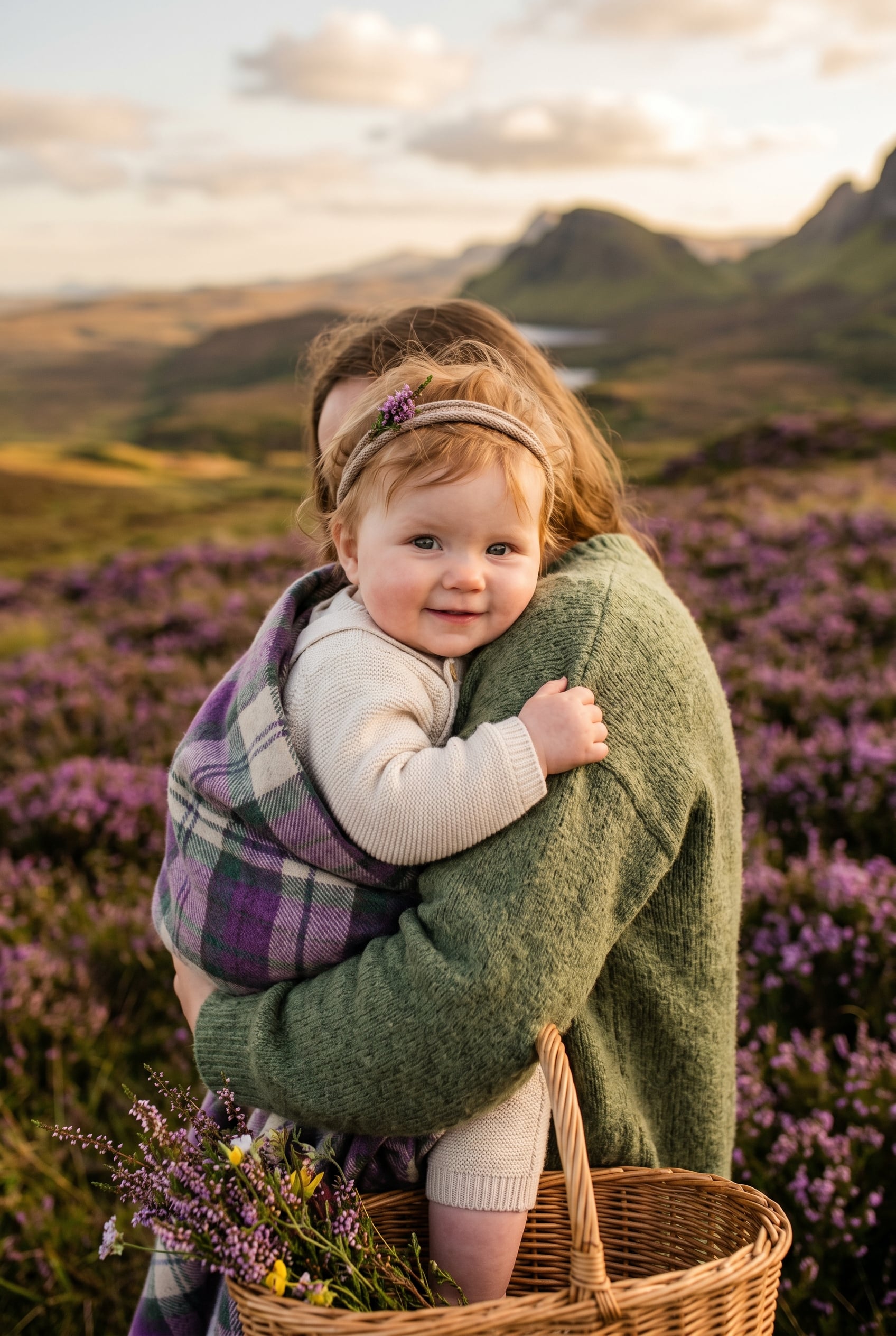
Gaelic spelling and English pronunciation don’t line up the way you’d expect, so a name like Sìneag or Raonaid can look unfamiliar on the page and then feel completely natural the moment you hear it said aloud. Many of these names go back centuries, tied to specific clans, saints, or corners of the Highlands, which means picking one connects a child to an actual place and lineage rather than a passing trend. Below are more than 150 options, ranging from the oldest Gaelic originals to the anglicized forms most people recognize today.
🔍 Curious how popular a name is?
Check any name's popularity trend since 1880 with our free Baby Name Popularity Checker.
Popularity below is calculated from Social Security Administration data through 2024, the most recent year on record.
Here’s what’s in store –
Gaelic Roots: Names from the Old Tongue
Scotland’s Landscape in a Name
The Outlander effect is real. Pinterest boards full of highland-green nurseries and plaid swaddles have sent searches for names like Catriona and Eilidh through the roof. But the appeal runs deeper than aesthetics. Gaelic names in particular feel genuinely distinctive in a naming landscape saturated with Novas and Willas — they’re not invented, not trendy-in-the-moment, not retrofitted from a baby name generator. They’ve been carried for a thousand years. That heritage is part of what you’re giving a child when you choose one.
This list pulls from three distinct Scottish naming traditions: Scottish Gaelic (the indigenous Celtic language of the Highlands and Islands), Scots (the Germanic lowland tongue related to English), and the anglicized forms that arose when Gaelic speakers needed names that could travel. You’ll find pure Gaelic that few people outside Scotland have encountered, clan names that have crossed into first-name territory, nature names rooted in Scottish geography, and a handful of genuinely royal picks from Scotland’s often dramatic, always fascinating monarchy. Each name here is real, with accurate origins — no padding, no invention.
A quick note on pronunciation: many Gaelic names are spelled in ways that look nothing like how they sound, because Gaelic spelling rules are their own system. Where pronunciation is significantly surprising, the note beneath the name will flag it. You don’t have to give your daughter a name you can pronounce at the pediatrician’s office — but you should know what you’re getting into either way.
Gaelic Roots: Names from the Old Tongue
These are names that come directly from Scottish Gaelic — the Celtic language of the Highlands and Hebridean Islands. Some are still in active use in Gaelic-speaking communities; others have faded to near-rarity. All of them are the real thing: no anglicized softening, no French polish. If you want a name with genuine ancient roots, this is where to look.
- Origin: Scottish Gaelic (form of Eleanor)
- Meaning: “Bright, radiant”
- Popularity: #9,062 and falling (#6,735 → #9,062, 2024)
Pronounced “AY-lee” — currently one of Scotland’s most popular girl names, and still practically unknown in the United States.
- Origin: Scottish Gaelic / Irish
- Meaning: bright, radiant
- Popularity: #13,286 as of 2023 — not currently in the U.S. Social Security rankings
Pronounced “SOR-uh-kha” — the Gaelic equivalent of Clara or Sarah, with far more character.
- Origin: Scottish Gaelic (form of Mary, ultimately Hebrew)
- Pronunciation: MAH-ree · ˈmɑːri
- Meaning: Scottish Gaelic form of Mary
- Popularity: Not in the U.S. Social Security rankings
The foundational Highland women’s name, used across all clan territories for centuries.
- Origin: Scottish Gaelic (form of Catherine)
- Pronunciation: kuh-TREE-nuh · kəˈtriːnə
- Meaning: Scottish Gaelic form of Catherine; original meaning debated, popularly but inaccurately glossed as ‘pure’
- Popularity: #15,695 and falling (#10,552 → #15,695, 2024)
The Ancient Greek original has a debated meaning; ‘pure’ was attached later by folk association with Greek ‘katharos’.
- Origin: Irish (Old Irish compound)
- Pronunciation: fih-NOO-luh · fɪˈnuːlə
- Meaning: white shoulder (fionn ‘white/fair’ + guala ‘shoulder’)
- Popularity: #16,027 and falling (#12,563 → #16,027, 2024)
A princess turned into a swan in Celtic mythology — this name is as poetic as it sounds.
- Origin: Hebrew (via Jane/Jean)
- Meaning: “God is gracious” (the same root meaning as Jane, Jean, and John)
- Popularity: Not in the U.S. Social Security rankings
Pronounced “SHEE-nuh” — simple, ancient, and completely distinct from its English equivalent.
- Origin: Hebrew (via Isabel)
- Meaning: God is my oath
- Popularity: Not in the U.S. Social Security rankings
Pronounced “EE-shuh-pal” — the clan spelling of Elizabeth, with centuries of Highland lineage behind it.
- Origin: Greek (via Margaret)
- Pronunciation: MAR-shuh-lee
- Meaning: pearl
- Popularity: Not in the U.S. Social Security rankings
Lilting and rare outside the Hebrides; the Gaelic music of the name is its selling point.
- Origin: Scottish Gaelic
- Meaning: life
- Popularity: Not in the U.S. Social Security rankings
Pronounced “BEH-ak” — one of the oldest Scottish women’s names in the historical record; elemental and rare.
- Origin: Old Irish/Scottish Gaelic
- Pronunciation: MOOR-yul · ˈmuːrʲəl
- Meaning: “Sea-bright”
- Popularity: Not in the U.S. Social Security rankings
The ancient form behind the anglicized Muriel; far older and richer than its descendant.
- Origin: Old Irish/Scottish Gaelic
- Meaning: Scottish Gaelic form of Euphemia
- Popularity: Not in the U.S. Social Security rankings
Pronounced “OY-rik” — most commonly anglicized as Effie or Erica, but Oighrig itself is remarkable.
- Origin: Irish (Old Irish)
- Pronunciation: GORM-luh · ˈɡɔɾˠəmˠ.lˠə
- Meaning: a compound of Old Irish ‘gorm’ (blue, also used figuratively for ‘illustrious’) and ‘flaith’ (sovereignty, lordship, princess)
- Popularity: Not in the U.S. Social Security rankings
Borne by queens and noblewomen of early medieval Scotland; dramatic and fierce.
- Origin: Scottish Gaelic
- Pronunciation: SHAW-nak · ˈʃɔːnək
- Meaning: a diminutive of Seona, the Gaelic feminine form of John; ultimately traces to Hebrew Yochanan, ‘Yahweh is gracious’
- Popularity: Not in the U.S. Social Security rankings
Quiet and old-world; common in clan records from the Outer Hebrides.
- Origin: Old Irish
- Pronunciation: JEER-vul · ˈdʒiːrvəl
- Meaning: certain, true one
- Popularity: Not in the U.S. Social Security rankings
That’s a sound-alike pairing, not a real translation — Dorothy comes from Greek words meaning ‘gift of God,’ an unrelated root.
- Origin: Latin (via Flora)
- Pronunciation: FLOR-ee · ˈflɔːri
- Meaning: flower
- Popularity: Not in the U.S. Social Security rankings
Flora MacDonald helped Bonnie Prince Charlie escape capture — this name carries that loyalty.
- Origin: Old Norse
- Meaning: Scottish Gaelic form of Rachel
- Popularity: Not in the U.S. Social Security rankings
Pronounced “RUH-nitch” — a transformation so complete it barely resembles its origin.
- Origin: Scottish Gaelic (form of Janet)
- Meaning: God is gracious
- Popularity: Not in the U.S. Social Security rankings
Pronounced “SHAW-nitch” — a clan staple with deep roots in Highland records.
- Origin: Scottish Gaelic (form of Christina)
- Meaning: follower of Christ
- Popularity: Not in the U.S. Social Security rankings
Pronounced “KEER-stig” — crisp, unexpected, and genuinely Gaelic.
- Origin: Scottish Gaelic
- Pronunciation: JAW-ree · ˈtʲɔːɾi
- Meaning: pilgrim or wanderer
- Popularity: Not in the U.S. Social Security rankings
A wandering-soul name with spiritual resonance; quietly profound.
- Origin: Scottish Gaelic (form of Agnes, ultimately Greek)
- Meaning: pure, chaste
- Popularity: Not in the U.S. Social Security rankings
Ancient and humble; carried by real Highland women for centuries with no fuss.
- Origin: Irish
- Meaning: slender and fair
- Popularity: Not in the U.S. Social Security rankings
Pronounced “KEEL-in” — a rare find with a strong traditional pedigree.
- Origin: Irish/Scottish Gaelic
- Pronunciation: LASS-er · ˈlæsər
- Meaning: flame
- Popularity: Not in the U.S. Social Security rankings
Fire imagery from the natural world — vivid and ancient.
- Origin: Scottish Gaelic
- Pronunciation: MOH-rin
- Meaning: “Star of the sea”
- Popularity: Not in the U.S. Social Security rankings
A Gaelic reflex of Marian; soft and maritime.
- Origin: Irish/Scottish Gaelic
- Meaning: “Swift”
- Popularity: Not in the U.S. Social Security rankings
Pronounced “EE-ver” — the legendary wife of Cú Chulainn; used in Scottish Gaelic tradition too.
- Origin: Irish (Old Irish)
- Meaning: sweet-natured, good
- Popularity: Not in the U.S. Social Security rankings
Pronounced “SIVE” — a mythological deer-maiden name of rare beauty.
- Origin: Irish/Scottish Gaelic
- Meaning: grain
- Popularity: Not in the U.S. Social Security rankings
Pronounced “GRAWN-ya” — a legendary chieftain’s daughter; passionate and old.
- Origin: Scottish Gaelic
- Meaning: Scottish Gaelic form of Julia
- Popularity: Not in the U.S. Social Security rankings
Pronounced “SHEE-lus” — rare outside Gaelic communities; Sìleas na Ceapaich was a celebrated Jacobite poet.
- Origin: Hebrew (via Elizabeth)
- Meaning: God is my oath
- Popularity: Not in the U.S. Social Security rankings
Pronounced “EL-uh-satch” — the deepest Gaelic form of the name; profound and rare.
- Origin: Latin (via Lucy)
- Pronunciation: LOO-see · ˈl̪ˠuːsi
- Meaning: light
- Popularity: Not in the U.S. Social Security rankings
Transforms a very common name into something entirely unexpected.
- Origin: Irish/Scottish Gaelic
- Pronunciation: BREED · bɹiːd
- Meaning: Celtic root for ‘high’ or ‘exalted,’ related to the Irish word for strength
- Popularity: #13,723 and rising (#15,663 → #13,723, 2024)
Highland Clan Names
The Scottish clan system gave women’s names a different kind of weight — names tied to family lines, to coats of arms, to land and loyalty. These names range from feminine forms of great clan surnames to the anglicized given names used in clan records, to surnames that have crossed into first-name territory for girls.
- Origin: Scottish Gaelic
- Pronunciation: MOR-ag · ˈmɔːræɡ
- Meaning: great one (diminutive of Mor, ‘great’)
- Popularity: Not in the U.S. Social Security rankings
Common across Highland clan families; often associated in local tradition with wise women and clan matriarchs.
- Origin: Scottish Gaelic (form of Isabel/Elizabeth)
- Pronunciation: ISH-bel · ˈɪʃbɛl
- Meaning: pledged to God
- Popularity: Not in the U.S. Social Security rankings
Used in Hebridean and Highland families as the authentic island form; less polish, more substance.
- Origin: Scottish Gaelic (from Hebrew via Mary)
- Meaning: vocative Gaelic form of Mary; Mary’s own root is debated (proposed senses include ‘bitter, ‘ ‘beloved, ‘ or ‘wished-for child’)
- Popularity: Not in the U.S. Social Security rankings
Pronounced “VAH-ree” — uniquely Scottish, often seen in clan birth records.
- Origin: Scottish Gaelic
- Pronunciation: SHEE-nah · ˈʃiːnə
- Meaning: God is gracious (feminine form of John/Joan)
- Popularity: #6,580 and rising (#8,893 → #6,580, 2024)
Associated with Scottish Lowlands and Border clan communities; easy and warm.
- Origin: Scottish
- Pronunciation: ROH-nah · ˈroʊnə
- Meaning: From the Scottish island of Rona
- Popularity: #14,754 as of 2020 — not currently in the U.S. Social Security rankings
Geographic name-turned-given-name; cool and quietly distinguished.
- Origin: Scottish Gaelic
- Pronunciation: feh-NEL-ah · fɪˈnɛlə
- Meaning: white shoulder (from fionn ‘white/fair’ + guala ‘shoulder, ‘ via the source name Fionnghuala)
- Popularity: Not in the U.S. Social Security rankings
Sir Walter Scott popularized this spelling; it has an almost Pre-Raphaelite romance.
- Origin: Scottish Gaelic (form of Shona/Seonaid); also used as an unrelated Korean name
- Pronunciation: SHOH-nuh · ˈʃoʊnə
- Meaning: God is gracious
- Popularity: Not in the U.S. Social Security rankings
Soft and clan-rooted; easier to carry in an anglophone world than its Gaelic original.
- Origin: Scottish Gaelic
- Pronunciation: mur-DEE-nuh · mɜːrˈdiːnə
- Meaning: Feminine of Murdo/Murdoch, “sea warrior”
- Popularity: Not in the U.S. Social Security rankings
Rare, strong, and deeply clan-identified; found in records from Lewis and Skye.
- Origin: Germanic (medieval variant of Griselda)
- Pronunciation: GRIZ-ul
- Meaning: grey battle-maiden
- Popularity: Not in the U.S. Social Security rankings
Grizel Baillie, 17th-century Scottish poet and noblewoman, carried this name with grace.
- Origin: Scottish (variant of Elizabeth, ultimately Hebrew)
- Pronunciation: EL-speth · ˈɛlspəθ
- Meaning: God is my oath (via Elizabeth, from Hebrew Elisheva)
- Popularity: #6,215 and rising (#8,614 → #6,215, 2024)
Quiet authority; used in noble Scottish families for centuries, and gaining again via Outlander aesthetic.
- Origin: Hebrew (Scottish feminine form of David)
- Pronunciation: duh-VEE-nah · dəˈviːnə
- Meaning: beloved (feminine form of David, formed with the suffix -ina)
- Popularity: #647 and rising (#648 → #647, 2024)
Scotland’s own feminine form; popular since the 18th century and still warmly recognizable.
- Origin: Scottish Gaelic (place name)
- Pronunciation: MOR-ven · ˈmɔːrvən
- Meaning: place name meaning “the sea gap” or “the big gap,” later used as a given name
- Popularity: Not in the U.S. Social Security rankings
From the northern Highlands; a name carried by women of the Argyll region.
- Origin: Scottish Gaelic (feminine form of Donald)
- Pronunciation: doh-NEL-ah · doʊˈnɛlə
- Meaning: world ruler
- Popularity: #14,279 as of 2018 — not currently in the U.S. Social Security rankings
A clan name turned into a feminine given name; rare and strong.
- Origin: Scottish (from the island name Ailsa Craig)
- Pronunciation: AYL-sah · ˈeɪlsə
- Meaning: From Ailsa Craig, the volcanic island in the Firth of Clyde
- Popularity: #15,313 and falling (#15,244 → #15,313, 2024)
Distinctly Scottish and geographically evocative.
- Origin: Scottish (surname)
- Pronunciation: NAIRN · nɛərn
- Meaning: From the Scottish River Nairn and the Nairne family
- Popularity: Not in the U.S. Social Security rankings
Lady Nairne, Caroline Oliphant, was one of Scotland’s celebrated poets.
- Origin: Germanic (via Robin/Robert)
- Pronunciation: roh-BEE-nə · roʊˈbiːnə
- Meaning: feminine form of the name Robin
- Popularity: #17,266 as of 2022 — not currently in the U.S. Social Security rankings
- Origin: Greek (via Margaret)
- Meaning: pearl
- Popularity: #6,287 and falling (#4,019 → #6,287, 2024)
Pronounced “MAR-ud” — the Gaelic queen of name forms; elegant and specific.
- Origin: Scottish
- Pronunciation: KUR-stee · ˈkɝːsti
- Meaning: follower of Christ (Scottish diminutive of Christine)
- Popularity: #18,031 as of 2013 — not currently in the U.S. Social Security rankings
Warmly familiar; Kirsty MacColl made it feel international without losing its Scottish heart.
- Origin: Scandinavian (Danish/Norwegian)
- Pronunciation: KUR-sten · ˈkɝːstən
- Meaning: follower of Christ (Scandinavian form of Christina)
- Popularity: #3,134 and rising (#4,153 → #3,134, 2024)
- Origin: Scottish (variant spelling of Ramsey)
- Pronunciation: RAM-zee · ˈræmzi
- Meaning: wild garlic island
- Popularity: #11,977 and falling (#8,765 → #11,977, 2024)
Clan Ramsay is one of Scotland’s great families; now crossing into first-name territory for girls.
- Origin: Hebrew (via Anne)
- Pronunciation: AN-ahk · ˈan̪ak
- Meaning: favor, grace
- Popularity: Not in the U.S. Social Security rankings
Small, warm, and intimately Scottish; rare outside Gaelic communities.
- Origin: Scottish Gaelic
- Pronunciation: SHAR-lit · ˈʃɑːrlɪt
- Meaning: Scottish Gaelic form of Charlotte
- Popularity: Not in the U.S. Social Security rankings
Rare and beautifully distinct; the Gaelic transformation of a very French name.
- Origin: Scottish (surname/clan name, from Gaelic ‘druim’, ridge)
- Pronunciation: DRUM-ənd · ˈdrʌmənd
- Meaning: ridge (Scottish place/clan name)
- Popularity: Not in the U.S. Social Security rankings
Annabella Drummond was Queen of Scotland — this carries real royal weight.
- Origin: Scottish (surname, from the Norman place name ‘Saint-Clair’)
- Pronunciation: SIN-klair · sɪnˈklɛər
- Meaning: “From Saint-Clair”
- Popularity: #4,857 and rising (#5,716 → #4,857, 2024)
One of Scotland’s great clans; increasingly used as a first name for girls.
- Origin: Scottish Gaelic (form of Christina/Christie)
- Meaning: follower of Christ
- Popularity: Not in the U.S. Social Security rankings
Pronounced “KOOR-stee” — intimate, unusual, and genuinely Highland.
- Origin: Scottish (Gaelic pet form)
- Pronunciation: MAY-zee · ˈmeɪzi
- Meaning: pearl (via Mairead/Margaret)
- Popularity: #255 and rising (#293 → #255, 2024)
Warm and underused outside Scotland; a cottage-to-estate name with real range.
- Origin: Scottish
- Pronunciation: MEER-in · ˈmɪrən
- Meaning: From St Mirin (Mirren), the patron saint of Paisley
- Popularity: #9,332 and falling (#8,344 → #9,332, 2024)
Popularized as a given name by Dame Helen Mirren; elegant without being stuffy.
- Origin: Irish
- Pronunciation: ay-LEEN · eɪˈliːn
- Meaning: Irish variant of Eileen, ultimately from Helen; often glossed ‘bright, shining one’, though Helen’s true root is uncertain
- Popularity: #718 and rising (#798 → #718, 2024)
Light and widely loved across clan territories.
- Origin: Old Irish
- Pronunciation: LEER-ee · ˈlɪəri
- Meaning: calf herder
- Popularity: Not in the U.S. Social Security rankings
– **Grizell** — Variant spelling of Grizel. Used in Scottish noble family records; slightly more antique-looking than Grizel.
Scotland’s Landscape in a Name
Scottish geography has always fed Scottish naming. The Highlands, the islands, the lochs, the moors — these landscapes shaped a culture, and that culture found its way into the names families gave their daughters. Some of these are ancient Gaelic terms used as names; others are English words that carry their Scottish geography visually.
- Origin: Scottish (place name)
- Pronunciation: EYE-lah · ˈaɪlə
- Meaning: from the Scottish place name Islay/River Isla; the place name’s own root is unknown
- Popularity: #35 and falling (#33 → #35, 2024)
Currently one of Scotland’s most-exported names globally; beautiful and inevitable.
- Origin: Scottish (from the Isle of Skye, a place name of disputed/unresolved origin) or English (playful respelling of ‘sky’)
- Pronunciation: SKY · ˈskaɪ
- Meaning: From the Isle of Skye
- Popularity: #480 and falling (#447 → #480, 2024)
Misty, romantic, and a name that encapsulates Highland magic in four letters.
- Origin: English (from Middle English hather)
- Pronunciation: HETH-er · ˈhɛðər
- Meaning: the heather plant (a flowering heath shrub)
- Popularity: #1,352 and falling (#1,326 → #1,352, 2024)
Scotland’s moorland plant; beloved and utterly timeless.
- Origin: Irish
- Pronunciation: ROH-en · ˈroʊən
- Meaning: little red one
- Popularity: #266 and falling (#234 → #266, 2024)
The tree of protection in Scottish folklore; works beautifully for either sex.
- Origin: Greek (botanical Latin)
- Pronunciation: kuh-LOO-nah · kəˈluːnə
- Meaning: to sweep (heather, used for brooms)
- Popularity: Not in the U.S. Social Security rankings
Rare as a given name but botanically perfect; surprisingly melodic.
- Origin: English/Old English (word/plant name)
- Pronunciation: THIS-ul · ˈθɪsəl
- Meaning: the thistle, a prickly flowering plant
- Popularity: Not in the U.S. Social Security rankings
Bold choice; unmistakably Scottish in sentiment, soft in sound.
- Origin: English (Middle English)
- Pronunciation: REN · ˈrɛn
- Meaning: the small songbird
- Popularity: #213 and falling (#195 → #213, 2024)
Light and nature-forward; appearing more and more in Scottish birth records.
- Origin: Scottish Gaelic (male, surname from ‘coire’) or Dutch (female, diminutive of Cornelia)
- Pronunciation: KOR-ee · ˈkɔːri
- Meaning: a hollow, cauldron-shaped valley (male sense); or a pet form of Cornelia, ‘horn’ (female sense)
- Popularity: #3,973 and falling (#3,536 → #3,973, 2024)
A landscape term turned name — topographic and cozy.
- Origin: Scots/Scottish Gaelic (word name)
- Pronunciation: BRAY · breɪ
- Meaning: a hillside or slope
- Popularity: #12,361 as of 2023 — not currently in the U.S. Social Security rankings
Evokes Scotland’s gentle hills with no pretension; warm and grounded.
- Origin: English (short form of Vanessa)
- Pronunciation: NESS-ah · ˈnɛsə
- Meaning: “Headland, promontory”
- Popularity: #2,867 and rising (#3,073 → #2,867, 2024)
As in Loch Ness — elemental and geographic; simple and striking.
- Origin: Scottish Gaelic place name (the island of Barra); also a Portuguese word for ‘sandbar’ and a Gambian place name
- Pronunciation: BAR-uh · ˈbærə
- Meaning: From the Isle of Barra in the Outer Hebrides
- Popularity: Not in the U.S. Social Security rankings
Rare and island-rooted; a name that sounds like the sea.
– **Caledonia** — The Latin name for Scotland itself. Romantic and patriotic; increasingly chosen as a middle name by heritage-proud families.
- Origin: Scottish (place name)
- Pronunciation: eye-OH-nah · aɪˈoʊnə
- Meaning: the name of the Scottish island; the island’s own name likely stems from a medieval scribal misreading rather than being a straightforward word
- Popularity: #2,777 and rising (#2,992 → #2,777, 2024)
Saint Columba’s island; spiritual, beautiful, and rising.
- Origin: Scottish Gaelic (place name)
- Pronunciation: RAN-okh · ˈrænəx
- Meaning: From Rannoch Moor in the Scottish Highlands
- Popularity: Not in the U.S. Social Security rankings
Wild and expansive; rarely given as a first name, but striking when it is.
- Origin: Scottish (Brythonic/Pictish place-name)
- Pronunciation: LOH-muhnd · ˈloʊmənd
- Meaning: beacon hill
- Popularity: Not in the U.S. Social Security rankings
The famous loch gives this name its misty romance; bold as a middle name.
- Origin: Scottish (place name, the Isle of Arran)
- Pronunciation: AIR-un · ˈærən
- Meaning: From the Isle of Arran
- Popularity: #10,926 as of 2023 — not currently in the U.S. Social Security rankings
Used for girls as a place-name choice; granite and heather in a name.
- Origin: Cornish/Welsh
- Pronunciation: mor-WEN-uh · mɔːrˈwɛnə
- Meaning: maiden (from Cornish/Welsh morwyn)
- Popularity: Not in the U.S. Social Security rankings
Soft and wave-like in sound; a Celtic coastal name.
- Origin: English (flower name, ultimately Greek)
- Pronunciation: TAN-zee · ˈtænzi
- Meaning: the tansy flower; the plant name traces to Greek ‘athanasia,’ meaning immortality
- Popularity: #12,007 and rising (#14,984 → #12,007, 2024)
Used in Scotland for the tansy plant of old healing traditions; golden and slightly wild.
- Origin: English (Victorian flower name, from Latin prima rosa)
- Pronunciation: PRIM-rohz · ˈprɪmroʊz
- Meaning: named for the primrose flower (‘first rose’)
- Popularity: #2,106 and rising (#2,118 → #2,106, 2024)
- Origin: English (nature name)
- Pronunciation: FURN · ˈfɜːrn
- Meaning: the fern plant
- Popularity: #1,261 and rising (#1,428 → #1,261, 2024)
A plant of the Scottish forest floor; clean and elemental.
- Origin: Irish (place name); also Sanskrit (‘star’)
- Pronunciation: TAIR-ah · ˈtɛrə
- Meaning: named after the Hill of Tara, ancient seat of Irish kings (the place name’s own root meaning is disputed); a separate Sanskrit-origin sense means ‘star’
- Popularity: #1,021 and rising (#1,163 → #1,021, 2024)
Connected to sacred hills in Celtic mythology; used across Scotland with quiet power.
– **Tansy** — Already listed. Let me replace.
- Origin: English (Middle English)
- Pronunciation: BRY-er · ˈbraɪər
- Meaning: thorny shrub or bramble
- Popularity: #522 and rising (#549 → #522, 2024)
- Origin: English
- Pronunciation: KLOH-ver · ˈkloʊvər
- Meaning: the clover plant (Old English clafre), popularly linked to luck
- Popularity: #618 and rising (#672 → #618, 2024)
- Origin: disputed — Scottish folklore figure vs. Portuguese-derived place name
- Pronunciation: BAY-ruh · ˈbeɪrə
- Meaning: The Cailleach Beira is the Scottish goddess of winter
- Popularity: Not in the U.S. Social Security rankings
Mythological and wild; a name with real weather in it.
- Origin: Scottish Gaelic
- Pronunciation: LOO-sak · ˈl̪ˠuːsak
- Meaning: little plant, herb
- Popularity: Not in the U.S. Social Security rankings
Botanical and genuinely rare outside Gaelic communities.
- Origin: Scottish Gaelic
- Pronunciation: AY-lee · ˈeɪli
- Meaning: Gaelic form of Ellie
- Popularity: Not in the U.S. Social Security rankings
Light as Highland air; the Gaelic transformation of a very popular name.
- Origin: Celtic (Brythonic place name)
- Pronunciation: AR-dun · ˈɑːrdən
- Meaning: high
- Popularity: #1,051 and falling (#1,046 → #1,051, 2024)
Rooted in Celtic geography and used across Scotland; Shakespearean but deeply Celtic at origin.
- Origin: Scottish Gaelic (place name); or English (Nicholas nickname)
- Pronunciation: KAHL · kɒl
- Meaning: hazel (place name); or a Nicholas nickname
- Popularity: Not in the U.S. Social Security rankings
Short and island-bright; a name that sounds like light on water.
- Origin: English (modern coinage, echoing Italian/Irish)
- Pronunciation: KAIR-uh · ˈkɛrə
- Meaning: beloved/dear (Italian) or friend (Irish)
- Popularity: #1,294 and falling (#1,262 → #1,294, 2024)
Used widely in Scottish coastal communities; simple and warm.
- Origin: Scottish/Irish Gaelic, via English surname
- Pronunciation: GLEN · ˈglɛn
- Meaning: valley
- Popularity: #2,315 and rising (#2,398 → #2,315, 2024)
Geographic and clear; increasingly used as a first name for girls in the unisex wave.
Royally Scottish: Names from Queens and Noblewomen
Scotland’s royal history is dramatic — regencies, invasions, murders, exiles, and a great deal of courage. Its queens and noblewomen carried names worth remembering. These aren’t just royal names; they’re names that belonged to women who actually changed history.
- Origin: Greek
- Pronunciation: MAR-grit · ˈmɑːrɡrɪt
- Meaning: pearl (via Latin/Old French margarita), popularized by the 3rd-century Saint Margaret the Virgin
- Popularity: #119 and rising (#132 → #119, 2024)
- Origin: Hebrew (via Aramaic, Greek, Latin, Old French, Middle English)
- Pronunciation: MAIR-ee · ˈmɛri
- Meaning: “Beloved” or “bitter”
- Popularity: #132 and rising (#133 → #132, 2024)
Mary Queen of Scots made this the most dramatic royal name Scotland ever produced.
- Origin: Latin
- Pronunciation: FLOR-ah · ˈflɔːrə
- Meaning: Flower; from Latin flos/floris, and the name of the Roman goddess of flowers, blooming, and springtime.
- Popularity: #648 and rising (#682 → #648, 2024)
Flora MacDonald’s loyalty to Bonnie Prince Charlie — disguising him as her maidservant — made this name legendary.
- Origin: Scottish/Latin (disputed: Anna + bella, or a variant of Amabel)
- Pronunciation: an-uh-BEL-uh · ˌæn.əˈbɛl.ə
- Meaning: disputed: possibly ‘beautiful Anna,’ or, per an alternate theory, a variant of Amabel ‘lovable’
- Popularity: #1,313 and falling (#1,206 → #1,313, 2024)
Annabella Drummond, wife of Robert III, was a Scottish queen of considerable political skill.
- Origin: Ancient Greek
- Pronunciation: yoo-FEE-mee-uh · juːˈfiːmiə
- Meaning: Greek for ‘well-spoken’ or ‘of good reputation’ (eu- ‘good’ + pheme ‘speech, reputation’)
- Popularity: #8,582 and falling (#6,744 → #8,582, 2024)
- Origin: English (ultimately Greek, via Margaret)
- Pronunciation: MAR-jur-ee · ˈmɑːrdʒəri
- Meaning: variant of Margery/Margaret: pearl
- Popularity: #822 and rising (#1,251 → #822, 2024)
Marjorie Bruce, daughter of Robert the Bruce, was Scotland’s crown princess; her line became the Stuart dynasty.
- Origin: Italian/Latin form of Isabel, ultimately Hebrew
- Pronunciation: iz-ah-BELL-ah · ˌɪzəˈbɛlə
- Meaning: pledged to God
- Popularity: #7, holding steady (2024)
- Origin: Greek
- Pronunciation: AG-nes · ˈæɡnəs
- Meaning: pure or chaste
- Popularity: #1,063 and rising (#1,079 → #1,063, 2024)
“Black Agnes” — Agnes Randolph, Countess of Dunbar — held her castle against the English for five months in 1338; a genuine Scottish hero.
- Origin: Scottish Gaelic
- Pronunciation: BEH-hok
- Meaning: life
- Popularity: Not in the U.S. Social Security rankings
Bethoc, daughter of King Malcolm II, was one of Scotland’s earliest named royal women; ancient and grounded.
– **Gruoch** — Old Scottish/Gaelic royal name. The historical Lady Macbeth’s actual name — Shakespeare simplified it, but the original is darker and more interesting.
- Origin: Hebrew (via Latin/Greek, English form of Joanna, Catalan form of John)
- Pronunciation: JONE · dʒoʊn
- Meaning: ‘God is gracious’ (from Hebrew Yehochanan)
- Popularity: #1,238 and rising (#1,365 → #1,238, 2024)
Joan Beaufort, Queen of Scotland, wife of James I; Joan of the Tower was wife of David II.
- Origin: Ancient Greek (via Latin)
- Pronunciation: sih-BIL-uh · sɪˈbɪlə
- Meaning: linked to the Sibyls, legendary prophetesses of Greek and Roman tradition
- Popularity: Not in the U.S. Social Security rankings
Sybilla of Normandy was Queen of Scotland, wife of Alexander I; a name of vision and rank.
- Origin: Latin (Scottish record-name)
- Pronunciation: doh-NAH-duh · doʊˈnɑːdə
- Meaning: given, gift
- Popularity: Not in the U.S. Social Security rankings
Donada was a daughter of King Malcolm II of Scotland; one of the earliest named Scottish royal women.
- Origin: French (medieval, disputed root)
- Pronunciation: yoh-LAHND · jɔːˈlɒ̃d
- Meaning: “Violet flower”
- Popularity: #16,119 as of 1997 — not currently in the U.S. Social Security rankings
Yolande de Dreux was Queen of Scotland, wife of Alexander III; tragic and romantic history.
- Origin: Germanic (Old High German)
- Pronunciation: muh-TIL-dah · məˈtɪldə
- Meaning: mighty in battle (might/strength + battle)
- Popularity: #410 and rising (#438 → #410, 2024)
Matilda of Huntingdon was a Scottish princess; strong, dignified, historically real.
- Origin: Latin/Greek
- Pronunciation: kris-TEEN · kɹɪstiːn
- Meaning: feminine form of Christian, ultimately from Greek Christos (‘anointed one’) — i.e., ‘follower of Christ’
- Popularity: #1,197 and falling (#1,168 → #1,197, 2024)
Christine de Bruce was Robert the Bruce’s sister; carried the name through turbulent times.
- Origin: Hebrew
- Pronunciation: joh-AN-ah · dʒoʊˈænə
- Meaning: God is gracious (feminine form of John/Yehochanan)
- Popularity: #329 and rising (#339 → #329, 2024)
Used in royal and noble families across Scotland; a softer option with the same heritage.
- Origin: Hebrew (via Aramaic/Greek Magdala)
- Pronunciation: MAG-duh-leen · ˈmæɡdəliːn
- Meaning: woman from Magdala (a town whose name means ‘tower’)
- Popularity: #1,419 and rising (#1,530 → #1,419, 2024)
Madeleine de Valois was Queen of Scotland, wife of James V, though she died very young.
Constance of Brittany had Scottish royal connections; a name of endurance.
– **Ingebjørg** — Old Norse royal name. Ingebjørg of Norway married a Scottish earl; the Norse-Scottish royal connection in one name.
Lady Nairne was one of Scotland’s greatest poets; this name carries both aristocracy and artistry.
- Origin: Scottish Gaelic
- Pronunciation: MOR · mɔːr
- Meaning: great, eminent
- Popularity: Not in the U.S. Social Security rankings
A title-name borne by great women of the clans; often given as Mòrag; raw and powerful.
- Origin: Hebrew (via Elizabeth/Isabel)
- Pronunciation: IZ-uh-bel · ˈɪzəbɛl
- Meaning: God is my oath
- Popularity: Not in the U.S. Social Security rankings
Distinct from the modern Isabella; carries the weight of handwritten court records.
Soft & Cottagecore Scottish
The cottagecore aesthetic has found its natural home in Scottish naming — moss, fire, warmth, old kitchens, handmade things. These names fit that world. They’re soft at the edges, Scottish in origin, and feel like they belong to someone who bakes bread and keeps dried herbs above the window.
- Origin: Scottish
- Pronunciation: BAH-nee · ˈbɑːni
- Meaning: pretty, beautiful
- Popularity: #441 and rising (#502 → #441, 2024)
The quintessential sweet Scots word-name; “bonnie lass” is practically an idiom, but Bonnie as a given name holds its own.
- Origin: Scottish Gaelic
- Pronunciation: fee-OH-nah · fiˈoʊnə
- Meaning: fair, white
- Popularity: #406 and falling (#400 → #406, 2024)
Fiona of the Ossianic poems; modern Scotland’s most internationally recognized name.
- Origin: English (uncertain — possibly a pet form of Jane/Jean, or feminine form of/nickname for Jesse or Jessica, in Spanish also used as a nickname for Jesus)
- Pronunciation: JES-ee · ˈdʒɛsi
- Meaning: no single fixed meaning — depending on derivation, either inherits Jane/Jean’s meaning (‘God is gracious, ‘ via John) or Jesse’s uncertain Hebrew meaning, or is simply a nickname for Jessica
- Popularity: #808 and falling (#796 → #808, 2024)
Warm and informal; common in 19th-century Scottish cottages; rising again as grandma-chic takes hold.
- Origin: English (diminutive of several names)
- Pronunciation: AN-ee · ˈæni
- Meaning: pet form of Anna and several related names
- Popularity: #191 and rising (#202 → #191, 2024)
Widely loved in rural Scotland; gentle, unassuming, and impossible to dislike.
- Origin: English (pet form)
- Pronunciation: NEL · nɛl
- Meaning: Short form of Eleanor or Helen
- Popularity: #1,460 and rising (#1,682 → #1,460, 2024)
Soft and cottage-like; used in Scottish border communities with a warmth the full name doesn’t always have.
- Origin: English (short form of Margaret)
- Pronunciation: MEG · mɛɡ
- Meaning: pearl
- Popularity: #14,712 as of 2022 — not currently in the U.S. Social Security rankings
- Origin: Scottish
- Pronunciation: TIB-ee · ˈtɪb.i
- Meaning: Scottish pet form of Isabel
- Popularity: Not in the U.S. Social Security rankings
Endearingly old-fashioned; Tibbie Shiel ran a famous Scottish inn on St. Mary’s Loch for decades.
- Origin: Greek (diminutive of Euphemia, rarely of Eftychia)
- Pronunciation: EF-ee · ˈɛfi
- Meaning: well-spoken, of good repute; in rare cases traced instead to a name meaning ‘good fortune’
- Popularity: #2,507 and falling (#2,111 → #2,507, 2024)
– **Mysie** — Old Scottish pet form of Marjorie or Margaret. Whimsical and utterly cottagecore; practically unknown outside Scotland.
- Origin: Irish
- Pronunciation: AL-vuh · ˈælvə
- Meaning: white
- Popularity: Not in the U.S. Social Security rankings
Pronounced “AL-va” — fresh and fairy-like; a name that belongs in a garden.
- Origin: Irish (Anglicized form of Medb/Meadhbh)
- Pronunciation: MAYV · ˈmeɪv
- Meaning: intoxicating / she who intoxicates
- Popularity: #75 and falling (#73 → #75, 2024)
Queen Maeve is a powerful Celtic figure; the name has become widely beloved across Celtic-heritage communities.
- Origin: English (diminutive)
- Pronunciation: ROH-zee · ˈroʊzi
- Meaning: diminutive of Rose (‘flower’), and other rose-names
- Popularity: #311 and rising (#392 → #311, 2024)
Garden-fresh and warm; beloved in Scottish cottage gardens and rising globally.
- Origin: Old English (surname)
- Pronunciation: BLYTHE · ˈblaɪð
- Meaning: cheerful, merry, carefree — from Old English blīþe, ultimately Proto-Germanic *blīþiz (‘gentle, kind’)
- Popularity: #1,862 and falling (#1,855 → #1,862, 2024)
A Scots adjective turned into a gentle given name; Blythe Danner made it international.
- Origin: English/German (diminutive suffix name)
- Pronunciation: ET-ah · ˈɛtə
- Meaning: ruler of the home (inherited sense, from Henrietta)
- Popularity: #973 and falling (#935 → #973, 2024)
Old-fashioned and sweet; rising in the cottagecore wave as parents rediscover small Victorian names.
- Origin: English (from Hebrew via Elizabeth)
- Pronunciation: BESS · bɛs
- Meaning: God is my oath (via Elizabeth)
- Popularity: #13,858 as of 2022 — not currently in the U.S. Social Security rankings
Comfortable and warm; Bessie Bell is a figure in old Scottish ballads.
- Origin: English (diminutive, chiefly of Welsh-origin Winifred)
- Pronunciation: WIN-ee · ˈwɪni
- Meaning: pet form of Winifred (occasionally of Winona)
- Popularity: #550 and rising (#609 → #550, 2024)
Soft and warm; used in rural Scotland with the easy comfort of a name that never needs explaining.
– **Eppie** — Scottish pet form of Euphemia or Hephzibah. Rare and endearing; sounds like a name from a very old story because it is.
- Origin: English (diminutive of Charlotte)
- Pronunciation: LOT-ee · ˈlɑːti
- Meaning: free woman
- Popularity: #676 and rising (#779 → #676, 2024)
Soft and old-fashioned; rising again in Scotland as the Edwardian revival continues.
– **Clover** — Already in landscape section; warm and cottagecore regardless of section.
- Origin: Latin (from a Celtic tribal name)
- Pronunciation: kal-ih-DOH-nee-uh · ˌkælɪˈdoʊniə
- Meaning: the old name for Scotland
- Popularity: Not in the U.S. Social Security rankings
Also in landscape section; fits perfectly here as a romantic, patriotic choice.
- Origin: Old Irish
- Pronunciation: EE-fuh · ˈiːfə
- Meaning: beauty, radiance
- Popularity: #2,230 and falling (#2,124 → #2,230, 2024)
Pronounced “EE-fuh” — increasingly popular across Scotland; one of the most beautiful sounds in Gaelic.
Rising on Pinterest Right Now
Pinterest’s Scottish naming board is having a moment, driven by the overlap of Outlander aesthetics, cottagecore interiors, and a wider move toward names that feel rooted rather than invented. These names are trending upward — some from near-zero, some already popular in Scotland and breaking out internationally.
- Origin: Old Norse
- Pronunciation: FRAY-ah · ˈfreɪə
- Meaning: noble lady, mistress
- Popularity: #159 and falling (#136 → #159, 2024)
Popular in Scotland for centuries because of Norse heritage in the islands; now one of the UK’s fastest-rising names.
- Origin: English (habitational surname, from Annesley or Ansley)
- Pronunciation: AYNZ-lee · ˈeɪnzli
- Meaning: roughly ‘solitary clearing’ or ‘hermitage clearing’ (Old English elements for ‘alone’/’hermitage’ + ‘woodland clearing’)
- Popularity: #706 and falling (#598 → #706, 2024)
Strong and nature-rooted; rising steadily, particularly in heritage-conscious communities.
- Origin: Scottish Gaelic
- Pronunciation: BLAIR · ˈblɛr
- Meaning: field or plain (topographic surname, from Gaelic blàr)
- Popularity: #218 and rising (#242 → #218, 2024)
Cool, modern, and unisex; one of the cleanest Scottish place-turned-given names for girls.
- Origin: Scottish (place name / surname)
- Pronunciation: LEN-uks · ˈlɛnəks
- Meaning: person from the Lennox district (the Loch Lomond/River Leven region of Scotland)
- Popularity: #688 and falling (#628 → #688, 2024)
Rising for girls via the unisex name trend; carries real clan pedigree.
- Origin: Scottish Gaelic (surname)
- Pronunciation: muh-KEN-zee · məˈkɛnzi
- Meaning: son of Coinneach (the Gaelic name behind ‘Kenneth’)
- Popularity: #200 and falling (#166 → #200, 2024)
Long-popular in the US, still strong on Pinterest; the quintessential Scottish surname-as-first-name.
- Origin: Scottish surname (from Old Norse)
- Pronunciation: LY-uhl · ˈlaɪəl
- Meaning: dear wolf
- Popularity: #9,495 and rising (#9,522 → #9,495, 2024)
Clan name rising as a first name for girls; strong sound, easy to carry.
- Origin: English (root uncertain)
- Pronunciation: AY-lith · ˈeɪlɪθ
- Meaning: “Seasoned warrior”
- Popularity: Not in the U.S. Social Security rankings
Rising in historical fantasy communities and cottagecore aesthetics alike.
- Origin: Old French (ultimately from Slavic/Old Russian ‘sobol’)
- Pronunciation: SAY-buhl · ˈseɪbəl
- Meaning: black, especially as a heraldic color; from the dark fur of the sable marten
- Popularity: #4,986 and rising (#5,228 → #4,986, 2024)
Dark and dramatic; a word-name from the language of heraldry.
- Origin: Danish (from Latin Marina)
- Pronunciation: MAIR-en · ˈmɛrən
- Meaning: form of Marina; ‘of the sea’
- Popularity: #570 and falling (#545 → #570, 2024)
Rising as a sleek Scandi-influenced Scottish pick; minimal and striking.
- Origin: Welsh
- Pronunciation: SEH-ren · ˈsɛrɛn
- Meaning: star
- Popularity: #4,631 and rising (#4,638 → #4,631, 2024)
Beautiful and rising across Celtic-heritage name communities.
– **Catriona** — Scottish Gaelic form of Katherine. Already in Section 1, but its Pinterest momentum deserves a specific callout — Outlander aesthetics have made it a board staple.
- Origin: Welsh
- Pronunciation: BRIN · ˈbrɪn
- Meaning: hill
- Popularity: #384 and rising (#414 → #384, 2024)
Clean lines, rising steadily in Outlander-influenced naming communities.
– **Aoife** — Already in cottagecore section; a Pinterest standout worth the double mention — it’s everywhere right now.
- Origin: Irish
- Pronunciation: NEEV · ˈniːv
- Meaning: bright, radiant
- Popularity: #3,148 and rising (#4,339 → #3,148, 2024)
Pronounced “NEEV” — a top name in Scotland and Ireland; rising in the US as Celtic names gain broader traction.
- Origin: uncertain (multiple candidate origins)
- Pronunciation: ROH-nuh · ˈroʊnə
- Meaning: Shorter form of Rhona, from the island of Rona
- Popularity: #13,149 and falling (#10,165 → #13,149, 2024)
Clean and rising; fewer letters, same Highland geography.
- Origin: Scottish (place name)
- Pronunciation: NAIRN · nɛərn
- Meaning: From the Scottish town and river
- Popularity: Not in the U.S. Social Security rankings
Rising as a place-name choice for parents who want geographic specificity.
- Origin: English (diminutive/hypocorism)
- Pronunciation: EE-vee · ˈiːvi
- Meaning: life, when used as a short form of Eve; also a pet form of Evelyn, Evangeline, Evita, or Geneviève
- Popularity: #284 and falling (#267 → #284, 2024)
Wildly popular in Scotland right now; Pinterest nursery boards are full of it.
Already in the landscape section; included again because it’s specifically Pinterest-trending for girls.
– **Fenella** — Anglicized Gaelic. Already in clan section; gaining traction in historical fiction circles and Outlander-adjacent naming communities.
– **Elspeth** — Scottish Elizabeth. Referenced multiple times for good reason — its Pinterest momentum is real and growing.
Simple, striking, and gaining traction on social media as parents find it via place-name explorations.
Rising as a middle name among heritage-proud Scottish families; romantic and patriotic.
Rare Scottish Gems Worth Discovering
These are the names that will make a name nerd’s heart genuinely skip. Some are nearly extinct outside Gaelic-speaking communities. Others are ancient clan names that slipped out of use. A few are mythological. All of them are real, all of them are beautiful, and none of them will have a twin in your daughter’s class.
- Origin: Scottish Gaelic
- Pronunciation: FIN-skoh · ˈfjun̪ˠs̪kɔx
- Meaning: white flower
- Popularity: Not in the U.S. Social Security rankings
Exceptionally rare — a genuine find for parents who want no doubles, ever.
- Origin: Irish (Celtic)
- Pronunciation: DEER-druh · ˈdɪərdrə
- Meaning: “Sorrowful”
- Popularity: #9,686 and falling (#6,478 → #9,686, 2024)
Deirdre of the Sorrows, the great Celtic tragic heroine — a legendary beauty whose story inspired poets for a thousand years.
– **Màili** — Scottish Gaelic diminutive of Màiri. Intimate and rare; almost never given outside Gaelic-speaking communities.
- Origin: Scottish Gaelic (feminine form of Alasdair)
- Pronunciation: al-uh-STREE-nuh · ˌæləˈstriːnə
- Meaning: protector of mankind
- Popularity: Not in the U.S. Social Security rankings
Long and elegant; connects a daughter directly to the Alexander clan lineage.
- Origin: Irish
- Pronunciation: OO-nah · ˈuːnə
- Meaning: one, unity (popular gloss); Irish Úna possibly from ‘lamb’
- Popularity: #2,474 and falling (#2,220 → #2,474, 2024)
Ancient and serene; Oona Chaplin brought it to modern awareness without domesticating it.
- Origin: Scottish Gaelic
- Meaning: “Snake”
- Popularity: Not in the U.S. Social Security rankings
- Origin: Scottish Gaelic (form of Eleanor); Eleanor’s own root is disputed
- Pronunciation: AY-lin-or · ˈeɪlɪnɔːr
- Meaning: Scottish Gaelic form of Eleanor
- Popularity: Not in the U.S. Social Security rankings
Rare; the Gaelic transformation makes a very common name unrecognizable and extraordinary.
- Origin: Scottish Gaelic
- Meaning: beautiful, fine
- Popularity: Not in the U.S. Social Security rankings
Pronounced “VRE-uh” — rare and evocative; sound alone justifies it.
- Origin: Scottish Gaelic
- Pronunciation: MOH-ruh
- Meaning: Gaelic form of the name Mary
- Popularity: Not in the U.S. Social Security rankings
A Marian title-name from the Gaelic devotional tradition; spiritual and soft.
- Origin: Old Irish
- Meaning: gentle, beautiful, precious
- Popularity: #8,519 and rising (#12,384 → #8,519, 2024)
Pronounced “KEE-va” — rising in Ireland but still rare in Scotland; a name that rewards people who learn to say it.
- Origin: Irish/Scottish Gaelic
- Pronunciation: SAH-rid · ˈsɑːrɪd
- Meaning: “Excellent”
- Popularity: Not in the U.S. Social Security rankings
A mythological name; Saraid was a daughter of the High King of Ireland, used in Scottish Gaelic tradition.
- Origin: Irish (Gaelic)
- Pronunciation: SKAH-hahk · ˈskɑːhɑːx
- Meaning: the shadowy one
- Popularity: Not in the U.S. Social Security rankings
A legendary Scottish warrior queen who trained the hero Cú Chulainn; mythological, fierce, and absolutely unforgettable.
- Origin: Irish
- Pronunciation: LASS-er-EE-nuh · ˌlæsərˈiːnə
- Meaning: flame of wine
- Popularity: Not in the U.S. Social Security rankings
Extremely rare and poetic; typically abbreviated to Lasair in daily use.
- Origin: Irish
- Meaning: daughter of a poet
- Popularity: Not in the U.S. Social Security rankings
From a medieval Irish saint’s name; used occasionally in Scotland.
– **Meadhbh** — Scottish/Irish Gaelic spelling of Maeve. The spelling that signals full Gaelic commitment — rare, authentic, and striking.
– **Gormelia** — From Gaelic gorml (blue) + elements. An ancient Western Isles name for women of rank; rare even in historical records.
Already mentioned, but worth re-noting here: Sìleas na Ceapaich was a celebrated Jacobite poet — a name with real literary legacy.
Pronounced “KOOR-stee” — intimate, unusual, and genuinely Highland.
- Origin: Old Norse/Germanic
- Meaning: yew
- Popularity: Not in the U.S. Social Security rankings
Rare and unusual; a completely different sound.
- Origin: Irish (also an English/Scottish surname, variant of Dunn)
- Pronunciation: DON · dɒn
- Meaning: brown-haired; also used historically as a byname meaning ‘chief’ or ‘noble’
- Popularity: #12,756 and falling (#12,702 → #12,756, 2024)
- Origin: Scottish Gaelic
- Pronunciation: NEE-an · ˈɲiːən
- Meaning: daughter, girl
- Popularity: Not in the U.S. Social Security rankings
- Origin: Scottish Gaelic (devotional name)
- Pronunciation: mwull-VOO-ruh · mɯːl ˈvʊrʲə
- Meaning: devotee of Mary
- Popularity: Not in the U.S. Social Security rankings
A devotional name from the Western Isles; rare and deeply ancient.
- Origin: Scottish Gaelic
- Pronunciation: TEER · tiːr
- Meaning: “Land, earth”
- Popularity: Not in the U.S. Social Security rankings
Poetic and elemental; rarely given as a name but appearing in Gaelic poetic traditions.
- Origin: Scottish Gaelic (from Old Norse)
- Pronunciation: SOR-lee · ˈsɔːrli
- Meaning: summer traveler
- Popularity: Not in the U.S. Social Security rankings
How These Names Are Trending
39 of these names rose in the U.S. Social Security rankings last year, and 35 are falling, per Social Security data through 2024.
How These Names Are Trending
39 of these names rose in the U.S. Social Security rankings last year, and 35 are falling, per Social Security data through 2024.
How These Names Are Trending
39 of these names rose in the U.S. Social Security rankings last year, and 35 are falling, per Social Security data through 2024.
How These Names Are Trending
39 of these names rose in the U.S. Social Security rankings last year, and 35 are falling, per Social Security data through 2024.
How These Names Are Trending
39 of these names rose in the U.S. Social Security rankings last year, and 35 are falling, per Social Security data through 2024.
Pronounced “KOO-in-yuh” — a name that is literally the concept of memory; rare and profound.
Already in Gaelic section, but the standalone short form Lasair is even rarer and more striking than Lasairfhíona.
How to Choose a Name From This List
Start with sound, not spelling. Scottish Gaelic names often have a significant gap between how they look and how they’re pronounced, and you’ll be saying this name thousands of times over a lifetime. If you love the way Eilidh sounds but feel anxious about explaining it at the pediatrician’s, that anxiety is real information about what you actually want.
Think about who will carry it. A name like Scáthach or Lasairfhíona is a gift of mythology and rarity, but it comes with a lifetime of pronunciation lessons. A name like Bonnie or Heather is easy to carry anywhere in the world. Neither choice is wrong — they’re different values. Know which you’re choosing.
Consider your family’s actual connection to Scotland. If you have Scottish ancestry, a Gaelic name carries family resonance. If you’re choosing it purely because you love the sound, that’s completely valid — but you might lean toward anglicized forms like Fenella or Elspeth that carry the heritage without requiring fluency in a language you don’t speak.
Middle names are where Gaelic names often work best. Eilidh Rose, Catriona Jane, Sorcha Mae — the Gaelic name gets its due weight without becoming the primary spelling challenge of someone’s life. Alternatively, the Gaelic name in the middle gives the meaning and the heritage without the daily friction.
Finally, trust what stops you. If you’ve read 200 names and something specific keeps pulling your attention back — a sound, a meaning, a story — that’s the one. These names have survived a thousand years because they’re genuinely good. Your instinct about which one matters is probably right.
Name Art for Your Favorite
Love a name from this list? MinimalistMama offers custom Name Art prints — personalized, minimalist nursery art with the name you choose, designed to match your aesthetic. A perfect gift for baby showers or to hang above the crib.
Frequently Asked Questions
What is the most popular Scottish baby girl name right now?
Eilidh and Isla are consistently among Scotland’s top girl names. Eilidh (pronounced AY-lee) has held strong in Scottish birth registers for over a decade, while Isla has exploded internationally — it’s now a top-ten name in the UK, Australia, and climbing in the US. For Gaelic authenticity, Eilidh; for easier global portability, Isla.
How do you pronounce Scottish Gaelic names?
Scottish Gaelic has its own phonetic rules, and they’re consistent once you learn them — it’s just that they’re very different from English. Key examples: Eilidh = AY-lee; Catriona = kuh-TREE-uh-nuh; Sìne = SHEE-nuh; Seonaid = SHAW-nitch; Mhairi = VAH-ree. The “bh” and “mh” combinations make a “v” sound. The “dh” makes a “y” or soft “gh” depending on position. Most Scottish schools teach Gaelic pronunciation, and many name-pronunciation resources are available online if you fall in love with a specific name.
Are Scottish and Irish names interchangeable?
They share common roots in Old Irish/Proto-Celtic, so many names appear in both traditions — Caoimhe, Aoife, Niamh, Gràinne, and Fionnuala all have both Irish and Scottish Gaelic forms. But the languages diverged over centuries, and the spellings and pronunciations can differ. A name like Sìne is specifically Scottish Gaelic; its Irish counterpart is Sinéad. When a name appears in both traditions, neither is wrong — they’re cousins, not copies.
What Scottish names are rising because of Outlander?
The Outlander effect is real and measurable. Catriona (the name of the lead actress, Caitríona Balfe, plus the name of a classic Scottish novel) has seen significant uptick. Laoghaire appears on more baby name forums than it did before the show. Brianna, while not distinctively Scottish, rose on Outlander’s coattails. Elspeth and Fenella have seen increased Pinterest saves. More broadly, the show sparked renewed interest in Gaelic names as a category.
What Scottish girl names work well in the United States?
Names that are distinctly Scottish but phonetically manageable in American English include: Isla, Skye, Heather, Fiona, Blair, Ainsley, Mackenzie, Rowan, Bonnie, Morag, Elspeth, Rhona, Kirsty, and Davina. These carry full Scottish heritage without the daily spelling-and-pronunciation challenge of deeply Gaelic names. If you want Gaelic but easy, Eilidh (AY-lee) has become familiar enough in Celtic communities that it’s increasingly navigable.
Are there Scottish girl names that are also strong without being masculine?
Yes — Scotland’s naming tradition includes powerful women’s names that don’t sacrifice femininity. Agnes (of the warrior “Black Agnes”), Gruoch (the real Lady Macbeth), Sorcha (“radiance”), Scáthach (the warrior queen), Morven, Donella, and Murdina all carry genuine strength. Even Caledonia — meaning Scotland itself — has a grandeur that transcends soft/strong binaries. The Highland tradition has always had strong women; the names reflect that.
What does Caledonia mean, and is it usable as a baby name?
Caledonia is the Latin name the Romans used for Scotland, possibly derived from a Brittonic root meaning “hard men” or “people of the woods” — though its precise etymology is debated. It is absolutely usable as a baby name, and increasingly chosen as a middle name by families with Scottish heritage or a love of the country. It’s long, romantic, and unmistakable. Shortened to Callie or Cal in daily life, it wears extremely well.
📊 Curious how popular a name actually is? Look it up in our Baby Name Popularity Checker — pulls live SSA data to show ranking trends.
Final Thoughts
Scottish baby girl names carry something that’s genuinely hard to manufacture — a real sense of place, of continuity, of a culture that fought hard to keep its language and its naming traditions alive. Whether you choose an ancient Gaelic name that few people outside the Highlands have ever heard, or a warm Scots diminutive that sounds like firelight in a cottage kitchen, you’re giving your daughter a name with weight behind it. There are 200 names here, and every one of them is real. Trust the one that keeps pulling you back.
Read next;
👦 100 Spring Baby Names for Girls and Boys
🎀 185+ Unique Baby Girl Names for 2026 (Rare & *Beautiful*)
🎀 165+ Meaningful Baby Girl Names You Can’t Miss
📱 The Baby Names app is here
Swipe names, match with your partner the moment you both say yes, and claim a free Name Art print of your winner. Free to download. See all our apps →

✨ Love these names? Create free printable nursery art for any name →