This post contains affiliate links.
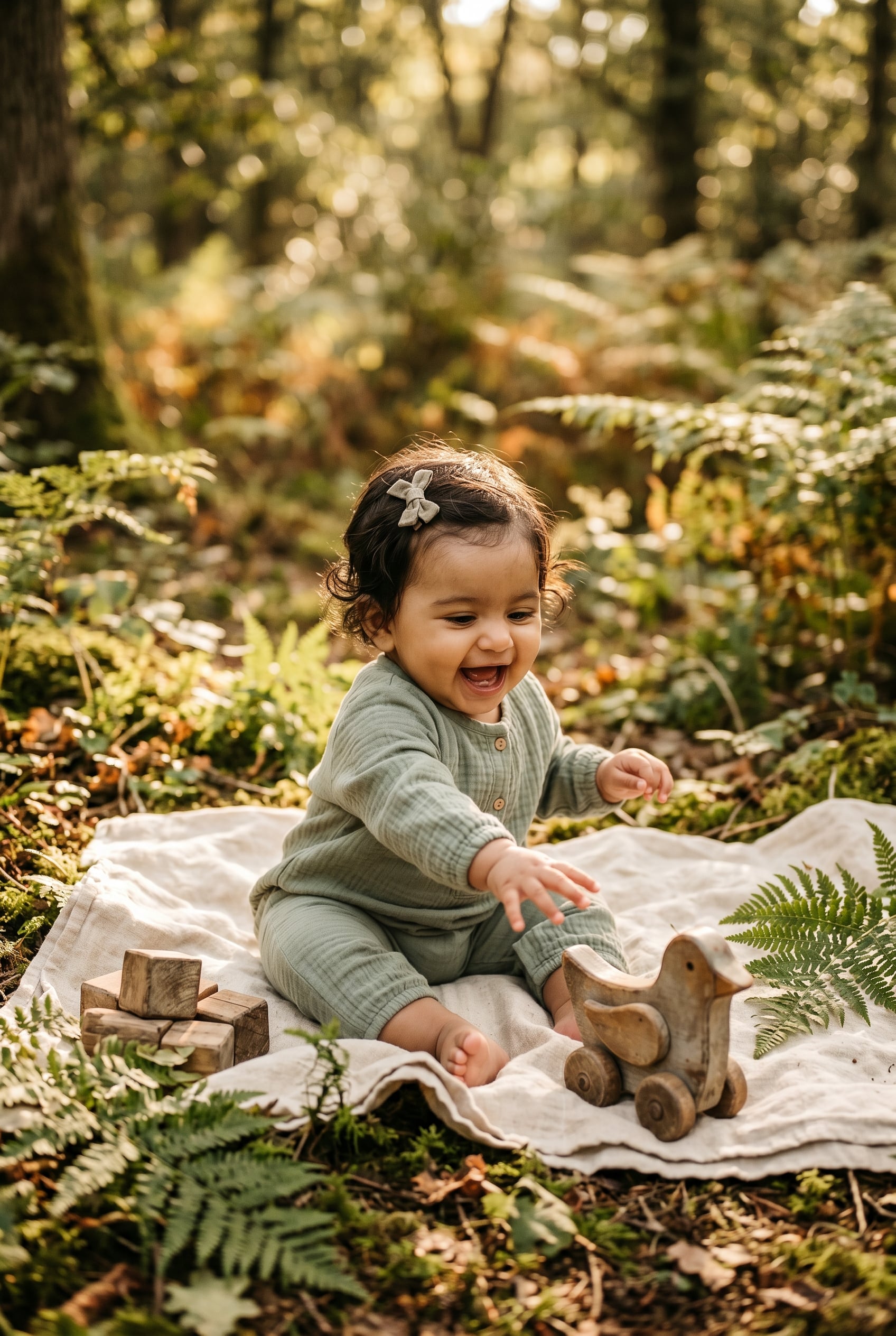
There is a particular kind of quiet that only exists inside a forest. Not silence exactly — more like the world muffled to its most essential sounds: a branch settling, water over stone, something moving just out of view. If you’ve spent any time in that kind of quiet, you already know why so many parents are drawn to names that live there.
🔍 Curious how popular a name is?
Check any name's popularity trend since 1880 with our free Baby Name Popularity Checker.
When referencing popularity, I am referring to baby name data from Social Security Administration database in the United States for 2025, which is the most current year of data available.
Here’s what’s in store –

Woodland Creatures & Forest Birds
Forest Floor: Plants, Herbs & Ferns
Forester Surnames Now Used as First Names
Light, Water & Wild Weather in the Forest
Forest baby names are having a moment, but this list goes deeper than the obvious picks. Yes, you’ll find Willow and Juniper and Rowan — those are here because they’re genuinely beautiful. But you’ll also find the Germanic surnames of medieval forest wardens, the Finnish forest gods almost no one outside Helsinki has heard of, the Anglo-Saxon compound names that meant something real about the woods they were born from, and the Māori tree names that carry entire ecosystems in two syllables. The forest is not one thing. It is the canopy and the floor, the dawn light and the moonless dark, the creature that keeps still and the one that calls.
A few notes on how this list is organized: it’s not alphabetical, because alphabetical is how you find a name in a baby name dictionary. It’s organized by feeling — by the part of the forest each name comes from. If you love the solid, slow energy of old trees, start with section one. If you want something wilder and more mythological, jump to section seven. And if you are the kind of person who just keeps scrolling until something stops you cold, that’s a completely valid approach too.
One last thing before the names: almost everything on this list has a real etymology, a real origin, and a real history. Woodland names are not just aesthetic — many of them carry hundreds or thousands of years of human relationship with the natural world. Knowing where your child’s name comes from is part of what makes it a gift.
Ancient Tree Names
Trees are where forest names start, and for good reason — trees have been named, revered, and woven into human culture since before written language. This section covers the full canopy, from the obvious to the almost-forgotten.
- Origin: Old English (word name/surname)
- Meaning: ash tree (one who lived near ash trees)
- Popularity: #1147
Clean and one-syllable with equal cool for boys and girls; the ash tree was Yggdrasil in Norse cosmology.
- Origin: Irish
- Meaning: little red one
- Popularity: #71
A warding tree in Celtic tradition, used to protect homes from harm; works beautifully across genders.
- Origin: English (nature name/surname)
- Meaning: the birch tree
- Popularity: #9873
The silver-barked tree of northern forests; carries an airy, Scandinavian sensibility.
- Origin: English (vocabulary/nature name)
- Meaning: the elm tree (nature name)
- Popularity: Rare
- Origin: Old English
- Meaning: oak tree
- Popularity: #2429
The steadiest name on this list — oaks live for a thousand years and so does this name’s energy.
- Origin: English (modern coinage, nature name)
- Meaning: named for the aspen (quaking) tree
- Popularity: #265
The trembling leaves create that distinctive flutter; popular in the U.S. as a girl’s name with a Colorado-altitude feel.
- Origin: English (surname)
- Meaning: originally a surname for someone who lived near alder trees
- Popularity: #1421
The alder grows where water meets the forest floor; associated with the Celtic god Bran, a strong surname-style pick.
- Origin: English
- Meaning: the cedar tree
- Popularity: #1197
Warm, fragrant, and increasingly chosen for boys; the cedar was sacred in Phoenician tradition.
- Origin: Old English
- Meaning: the hazel tree, and by extension its light-brown color
- Popularity: #19
Hazel wands were used for water-witching and divination; a lovely girl’s name with genuine vintage credentials.
- Origin: English
- Meaning: named for the willow tree
- Popularity: #41
Willow is an English nature name taken directly from the willow tree.
- Origin: English
- Meaning: the linden (lime) tree
- Popularity: #1548
A sacred tree in Germanic folklore, planted at village centers for protection; soft and melodious with European elegance.
- Origin: English (surname from the noun “maple”)
- Meaning: named after the maple tree
- Popularity: #1188
Maple began as an English surname derived directly from the word for the maple tree before becoming a first name.
- Origin: English (Middle English)
- Meaning: thorny shrub or bramble
- Popularity: #522
More edge than Rose alone; the briar rose slept for a hundred years, which gives this name real fairy-tale weight.
- Origin: English (from Latin ‘laurus,’ via the plant name)
- Meaning: laurel tree; symbolically, honor or victory
- Popularity: #728
Worn as a crown in ancient Rome; quietly classical and completely wearable now.
- Origin: Old English
- Meaning: the beech tree; from Old English bōc, a root shared with the word “book” (early writing tablets were made of beech wood)
- Popularity: Rare
The word shares its root with the word book — ancient Germanic runes were carved on beech tablets; rare and grounded.
- Origin: Greek
- Meaning: a thorny flowering tree
- Popularity: #2711
The acacia symbolizes immortality and appears across Egyptian, Freemasonic, and biblical traditions; widely usable across cultures.
- Origin: Latin (via French Sylvain/Swedish Sylvan)
- Meaning: of the forest
- Popularity: #1911
- Origin: English (surname/place name)
- Meaning: small wood, grove of trees
- Popularity: Rare
Rarely used as a first name, which makes it striking; perfect for a family that loves the understated.
- Origin: English
- Meaning: the juniper tree/shrub; occasionally a folk-etymology variant of Jennifer (from Welsh Guinevere)
- Popularity: #111
- Origin: English (from a common word)
- Meaning: from the ordinary English word ‘bay’ — either a coastal inlet or the bay (laurel) tree
- Popularity: #6954
One syllable, botanical, and with just enough coastal-kitchen duality to feel warm and breezy.
- Origin: English (flower name)
- Meaning: name of the magnolia flower, adopted as an English given name in the 19th century
- Popularity: #138
Blooms dramatically and unexpectedly every spring — big name, enormous personality.
- Origin: English
- Meaning: the holly tree/plant
- Popularity: #419
The holly was sacred to Druids, used in midwinter ritual; a traditional name that never actually feels old.
- Origin: English (nature name; unverified)
- Popularity: #1416
Dark, aromatic, and Italian in feel; the cypress is associated with both death and enduring life.
- Origin: Latin (via German ‘Lärche’)
- Meaning: the larch tree (a coniferous tree)
- Popularity: Rare
Larch comes from Latin by way of the German word ‘Lärche,’ referring to the coniferous larch tree.
- Origin: Greek (via Old French)
- Meaning: a name applied to several trees (sycamore fig, sycamore maple, American sycamore), from Greek sykomoros, literally “fig-mulberry”
- Popularity: Rare
Long and stately; the sycamore fig sheltered Zacchaeus and the sycamore maple lines English lanes.
- Origin: Scottish (place name / surname)
- Meaning: person from the Lennox district (the Loch Lomond/River Leven region of Scotland)
- Popularity: #263
The elm-grove toponym turned aristocratic surname; cool, Scottish, and increasingly popular in the U.S.
- Origin: Cornish
- Meaning: elm tree
- Popularity: #898
A Cornish name meaning elm; rare outside Cornwall and completely beautiful for a girl.
- Popularity: Rare
The Scandinavian botanical form of Birch; less stark, more song-like.
- Origin: Latin
- Meaning: maple tree
- Popularity: Rare
The genus name for maples; rare as a given name but crisp and strong, like the tree in October.
Woodland Creatures & Forest Birds
The animals of the forest carry their own mythology — the wren who was king of birds, the hart who outran hunters for decades, the raven who remembered everything. These names bring that wildness in.
- Origin: English
- Meaning: The fox, the animal; a transferred use of the English surname/word, occasionally chosen in tribute to Quaker founder George Fox.
- Popularity: #1111
Sly, quick, and handsome; the fox is the trickster of northern forest folklore and makes for an unforgettable name.
- Origin: English (Middle English)
- Meaning: the small songbird
- Popularity: #213
Wren is the Middle English word for the small songbird, used as-is as a name.
- Origin: Old French (diminutive of Robert)
- Meaning: pet form of Robert, whose Germanic roots mean roughly ‘bright fame’; the female/modern use is also commonly linked directly to the robin bird
- Popularity: #799
Gender-fluid and perennially fresh; the red-breasted bird signals renewal after winter.
- Origin: English (word name; masculine use parallels Old Norse Hrafn)
- Meaning: the black-feathered bird
- Popularity: #388
Bold and deeply Norse; Odin’s ravens Huginn and Muninn flew the world each day to report back to him.
- Origin: English (surname)
- Meaning: named for the finch bird
- Popularity: #5101
Literary (Atticus Finch) and nature-forward; a neat, dignified choice for boys.
- Origin: English (nickname from Old French “jai,” the jay bird); also a South Asian variant of Sanskrit Jai/Jaya
- Popularity: #396
Jay comes from the Old French word ‘jai’ for the jay bird, and is also used as a South Asian variant of the Sanskrit name Jai/Jaya.
- Origin: Old English/Old French (surname); unrelated Irish surname homographs also exist
- Meaning: The long-legged wading bird; as a surname, ‘Heron’ also has separate, unconnected origins, though its modern use as a nature name draws on the bird sense.
- Popularity: #4341
Tall, still, and patient; the grey heron standing motionless in a forest pond is one of the great images of the wild.
- Origin: English
- Meaning: the songbird
- Popularity: #3534
Lark is simply the English word for the songbird, used directly as a name.
- Origin: Welsh (via Medieval Latin Merlinus, Old French Merlin)
- Meaning: a fortress by the sea, from Celtic roots for ‘sea’ and ‘stronghold’
- Popularity: #2083
Famous as Arthurian wizard, but also a small, fierce forest falcon; the mythological weight is extraordinary.
- Origin: English (word/nature name)
- Meaning: the bird of prey (hawk)
- Popularity: #3343
Strong, one-syllable, untamed; the hawk rules the upper canopy.
- Origin: Middle English
- Meaning: the sparrow bird
- Popularity: #3554
Warm and unpretentious; the sparrow is everywhere in the forest, which makes it weirdly underused as a name.
- Origin: English (surname from the bird name)
- Meaning: crane (the bird)
- Popularity: Rare
Tall, graceful, and mythologically rich across Japanese, Celtic, and Greek traditions.
- Origin: English
- Meaning: dragon
- Popularity: #661
Rare as a waterfowl name but the Norse dragon connection gives it real darkness.
- Origin: English (surname)
- Meaning: as a given name, from the bird of prey; as a surname, Wiktionary documents three unrelated origins — the bird, an Americanized form of the surname Keith, or Old English cyte (‘hut, cottage’) via place names
- Popularity: Rare
The red kite was nearly extinct in Britain and is now triumphantly common over beech woodlands; a comeback name.
- Origin: English
- Meaning: bear (the animal)
- Popularity: #826
Scandinavian-style nature name — the English cousin of Björn; Bear Grylls made it usable and it stuck.
- Origin: English
- Meaning: young deer (also echoes the verb ‘to fawn,’ meaning to show affection or flatter)
- Popularity: #5656
Soft and delicate for a girl; the newborn deer in the forest is the purest image of innocence.
- Origin: English (also Irish, German, Jewish surname variants)
- Meaning: male deer/stag in its English sense; the Irish surname form instead means ‘descendant of Art (bear)’
- Popularity: #2957
A stag in its fifth year or older; medieval, noble, and almost completely unused today.
- Origin: English (nickname/surname, multiple disputed origins)
- Meaning: originally a nickname or surname with several competing roots: a reference to a male deer, an Old English/German word for beech tree or belly, or a short form of Burkhard
- Popularity: #2472
Classic American outdoors energy; short, solid, and unpretentious.
- Popularity: #1812
The Germanic given name Wolf has centuries of use; Wolfe is the softer surname form.
- Origin: Latin (from Greek lynx)
- Meaning: the lynx, a sharp-eyed wildcat
- Popularity: #2268
Lynx comes from Latin, itself from the Greek word for the sharp-eyed wildcat of the same name.
- Origin: English (animal word name)
- Meaning: the otter, a semiaquatic mammal
- Popularity: Rare
Playful and warm; rare enough to feel completely fresh.
- Origin: English (surname)
- Meaning: badger (one of two competing surname etymologies)
- Popularity: #705
The badger’s Old English name; rugged and rarely heard, which makes it all the more distinctive.
- Origin: Latin
- Meaning: belonging to Mars, the Roman god of war (possibly ‘little Mars’)
- Popularity: #308
Martin derives from Latin, meaning ‘belonging to Mars,’ the Roman god of war, and possibly translates to ‘little Mars.’
- Origin: Old English
- Meaning: Quick-moving, fast; originally a nickname for an agile person (the swift bird takes its name from this same adjective).
- Popularity: Rare
The swift is the fastest bird in level flight; as a name it’s sleek, rare, and kinetic.
- Origin: Old English (word for the animal); the retrieved Wiktionary proper-noun data instead covers unrelated senses (a Dutch surname ‘van Elk’, the Elks fraternal order, Edmonton’s CFL team)
- Meaning: the elk (a large deer species, called wapiti in North America)
- Popularity: Rare
Ultra-rare as a first name but carries that one-syllable boldness that makes Ash and Oak work.
- Popularity: Rare
The Scottish word for a crow or raven; atmospheric, rare, and completely beautiful for a girl.
- Origin: English (occupational surname)
- Meaning: one who plays the pipes — an occupational surname transferred to given-name use
- Popularity: #160
Forest pipers appear in Celtic myth — the one who plays in the deep wood and calls you toward something you can’t name.
Forest Floor: Plants, Herbs & Ferns
Below the canopy, on the damp and dappled forest floor, a whole other world blooms. These are the names that live down there — in the ferns and the mosses, the medicinal herbs and the wildflowers that only open when the light breaks through.
- Origin: English (nature name)
- Meaning: the fern plant
- Popularity: #1261
Fern is an English nature name taken directly from the word for the fern plant.
- Origin: English (nature word)
- Meaning: the moss plant
- Popularity: #6065
Feels green and velvety; rarely used as a given name, which makes it feel like a discovery.
- Origin: English
- Meaning: the climbing ivy plant, a traditional symbol of fidelity
- Popularity: #36
Climbing and tenacious; Ivy is currently one of the fastest-rising nature names for girls.
- Origin: English
- Meaning: the clover plant (Old English clafre), popularly linked to luck
- Popularity: #618
Lucky and sweet; rising as a girl’s name with a meadow-and-forest-edge quality.
- Origin: English (from Old French/Latin)
- Meaning: a wise person; also linked to the sage herb plant
- Popularity: #146
Sage comes from Old French and Latin roots meaning ‘a wise person,’ and is also tied to the sage herb plant.
- Origin: English (surname, multiple disputed origins)
- Meaning: a surname of debated origin: ‘red-haired’ (variant of Reid), a clearer of land, or a place name — not the reed plant
- Popularity: #421
Slender and tall; a clean, minimal choice for a boy that doesn’t try too hard.
- Origin: English (from Old English hǣþ)
- Meaning: heathland; open, shrubby moorland
- Popularity: #848
The moors and the forest edge — Heath is quietly strong without being loud about it.
- Origin: English (from Middle English hather)
- Meaning: the heather plant (a flowering heath shrub)
- Popularity: #1352
The purple-flowering shrub of Scottish moorland; a 1970s–80s peak classic that feels completely fresh in a forest context.
- Origin: Old English (secg)
- Meaning: a grass-like wetland plant with sharp, sword-like leaves
- Popularity: Rare
Moody, minimal, and excellent for a boy with forest-stream energy.
- Origin: Celtic (river name) / English (plant name)
- Meaning: rough (Celtic river name); also the yarrow herb
- Popularity: #8922
A medicinal wildflower; Yarrow as a name has quiet strength and a herbalist’s edge.
- Origin: Surname (multiple unrelated origins)
- Meaning: fern (one of several surname origins)
- Popularity: #12497
The fern that carpets British forest floors; rugged-sounding and British in the best way.
- Origin: English (flower name, ultimately Greek)
- Meaning: the tansy flower; the plant name traces to Greek ‘athanasia,’ meaning immortality
- Popularity: #12007
A wildflower with golden button blooms; Tansy sounds vintage and unusual, perfect for a girl.
- Origin: Latin (via Old French)
- Meaning: The vervain herb, from Latin ‘verbena,’ a term for the sacred foliage used in ancient religious rites.
- Popularity: Rare
Used in Druidic ritual and medieval magic; rare and incantation-like for a girl.
- Popularity: #1241
Tiny and evocative; the plant symbolized both regret and purification — layers of meaning in three letters.
- Origin: Latin (ultimate origin uncertain, possibly Iberian)
- Meaning: Name of the wood betony herb (Betonica/Stachys officinalis), historically used in medicine; no independent lexical meaning beyond the plant
- Popularity: Rare
A wildflower used in medieval medicine; Betony is almost completely unused as a given name and is lovely for a girl.
- Origin: Old French
- Meaning: sweetbriar, a wild thorny rose
- Popularity: Rare
The wild rose of forest thickets; romantic and Chaucerian, with a long English literary history.
- Origin: English (Victorian flower name, from Latin prima rosa)
- Meaning: named for the primrose flower (‘first rose’)
- Popularity: #2106
Shakespeare’s flower; a romantic Victorian botanical name that is ready for revival.
- Origin: English (Old English compound)
- Meaning: flower name meaning “day’s eye”; also historically used as a nickname for Margaret
- Popularity: #76
Daisy is an Old English compound literally meaning ‘day’s eye,’ and was also historically used as a nickname for Margaret.
- Origin: Old English
- Meaning: flower or blossoming — from Old English blōstm (‘flower’), a Victorian-era botanical name
- Popularity: #1952
Blossom comes from the Old English word ‘blōstm,’ meaning ‘flower,’ and rose to use as a botanical name in the Victorian era.
- Origin: Old English
- Meaning: the hawthorn tree, literally ‘hedge-thorn’
- Popularity: #5732
The sacred thorn tree of British mythology, associated with May Day and fairy mounds; Thorn as a nickname.
- Origin: Old English
- Meaning: the gorse/furze shrub
- Popularity: Rare
The yellow-flowering shrub of heathland and forest edge; very rare as a name but vivid and specific.
- Origin: Arabic
- Meaning: Name of the medicinal senna plant
- Popularity: #2002
- Origin: English (word name, plant)
- Meaning: the stinging nettle plant
- Popularity: Rare
Brave and a little thorny — for parents with a sense of humor and appreciation for plants that fight back.
- Origin: Old French
- Meaning: either the burnet herb (Sanguisorba) or a dark reddish-brown color; from Old French burnete, “dark brown (cloth)”
- Popularity: Rare
Burnet derives from the Old French word ‘burnete,’ meaning dark brown cloth, and refers to either the burnet herb (Sanguisorba) or a dark reddish-brown color.
- Origin: Greek (via Latin/Old French)
- Meaning: The aromatic herb; traces to a Greek root associated with burning as a sacred offering (the herb was burned as incense), related to but distinct from ‘thymos’ (spirit/courage).
- Popularity: Rare
Grows wild in forest clearings; the silent h makes it unusual and slightly secretive as a name.
- Origin: Old French (via the plant name)
- Meaning: the sorrel plant (a tart, sour-leaved herb); also a reddish-brown color
- Popularity: #14992
A forest herb and a warm auburn color; the horse color association gives it earthy range.
- Origin: New Latin
- Meaning: name of the flowering vine, itself coined to honor 19th-century American anatomist Caspar Wistar
- Popularity: Rare
Lavender-blooming and wildly romantic; almost never used as a name, which makes it feel like a gift.
- Origin: English (word/nature name; ultimately from Greek leichēn, related to leíchein ‘to lick’)
- Meaning: a lichen — the symbiotic organism of fungus and alga that grows on rock, bark, or soil
- Popularity: Rare
Lichen traces back to the Greek word ‘leichēn,’ related to ‘leíchein’ meaning ‘to lick,’ and names the symbiotic fungus-and-alga organism that grows on rock, bark, or soil.
Germanic & Norse Forest Names
Before forests were something you walked through on a hike, they were where you lived. The Germanic and Norse peoples built entire cosmologies around the forest. Their names carry that weight.
- Origin: Old Norse
- Meaning: noble lady, mistress
- Popularity: #159
The Norse goddess of magic, beauty, and the wild; she rode a chariot pulled by cats through the deep forest.
- Origin: Old Norse
- Meaning: Old Norse compound of ‘victory’ and ‘fair/beautiful’ – ‘beautiful victory’
- Popularity: #3866
A Scandinavian classic with deep Viking heritage; the Sig- prefix connects to Norse warrior-cosmos.
- Origin: Old Norse
- Meaning: compound of the Norse god-element ‘Ing’ and a word for ‘beautiful, beloved’
- Popularity: #1092
The Norse fertility deity Ingr was tied to forest and field; this name carries agricultural and woodland roots both.
- Origin: Germanic
- Meaning: battle
- Popularity: #3053
Germanic strength name borne by shield-maidens and abbesses; Hilda is having a well-deserved comeback.
- Origin: Germanic (West Germanic *Hildigardu)
- Meaning: battle enclosure
- Popularity: #6727
The great medieval abbess Hildegard of Bingen wrote extensively about forest plants and their healing; rare and extraordinary.
- Origin: Old Norse
- Meaning: battle warrior
- Popularity: #600
Popular across Scandinavia; associated with the deep forests of Norse legend and saga.
- Origin: Old Norse
- Meaning: one warrior / sole warrior
- Popularity: #3226
Borne by Norse skalds who performed in forest clearings; strong and rarely heard in the U.S.
- Origin: Old Norse
- Meaning: combines Old Norse words for ‘wide’ and ‘army/host’
- Popularity: Rare
In Norse mythology, Vidar was the god of the silent forest — specifically, the dense wood that not even sound could penetrate.
- Origin: Old Norse
- Meaning: Old Norse compound of ‘victory’ and ‘guard’ – ‘guardian of victory’
- Popularity: #8208
The Norse dragon-slayer, who grew up in the forest under the tutelage of the smith Regin; a hero name.
- Origin: Old Norse (mythological)
- Meaning: possibly ‘harm/damage’ (cognate with ‘scathe’); etymology debated
- Popularity: #4635
The Norse goddess of winter, mountains, and forests; she hunted alone through the deep woods on skis.
- Origin: Old Norse/Scandinavian (variant of Tyra)
- Popularity: #8358
A Danish queen’s name with fierce mythological resonance; rare in the U.S.
- Origin: Old Norse (via Norwegian)
- Meaning: sun’s strength (traditional gloss; second element of debated meaning)
- Popularity: #5569
Immortalized in Ibsen’s Peer Gynt; Solveig sounds like forest light breaking through cloud.
- Origin: Old Norse / Icelandic
- Meaning: armor, coat of mail
- Popularity: #9732
An Icelandic feminine name; the forest-warrior energy is strong, and it sounds beautiful in English mouths.
- Popularity: #10738
The Roman forest deity who protected boundaries; Sylvanus as a given name is rare, stately, and carries actual forest mythology.
- Origin: Old English
- Meaning: wolf ruler / wolf-king
- Popularity: Rare
An Anglo-Saxon compound name; genuinely historic, rugged, and very rarely used.
- Origin: Germanic (ald ‘old’ + ric ‘ruler, power’)
- Meaning: old ruler
- Popularity: #3781
A dignified Germanic compound name; the Ald- root means old and wise, which gives it forest-elder energy.
- Origin: Old High German / Germanic
- Meaning: ruler of the homeland/heritage (from uodil ‘heritage, homestead’ + rihhi ‘ruler’)
- Popularity: #14056
- Origin: Old English
- Meaning: old (short form of Old English compound names beginning with eald, ‘old’)
- Popularity: #9905
Literary (Aldous Huxley); the forest-elder feeling is wholly intentional.
- Origin: Old English
- Meaning: god + rule/power (“god’s rule”)
- Popularity: #2121
An Anglo-Saxon king’s name; Oz as a nickname gives it unexpected modernity.
- Origin: Germanic or Celtic/Brythonic (disputed)
- Meaning: uncertain — literally ‘ice’ + ‘battle’ in the Germanic reading, or ‘she who is gazed upon’ in the Celtic/Brythonic reading
- Popularity: #7721
The forest-wandering Arthurian lover; deeply mythological and achingly romantic.
- Origin: Old English
- Meaning: beloved ruler (leof ‘dear, beloved’ + ric ‘ruler’)
- Popularity: Rare
Lady Godiva’s husband was Leofric; an Anglo-Saxon name with genuine forest-era gravitas.
- Origin: Old English
- Meaning: wealthy ruler
- Popularity: #2097
An Anglo-Saxon forest king’s name; Ed or Ric as nicknames make it approachable.
- Origin: Germanic
- Meaning: bright raven
- Popularity: #7806
A Germanic compound name with the raven — a forest bird — built right in.
- Origin: Scottish (variant of Elizabeth, ultimately Hebrew)
- Meaning: God is my oath (via Elizabeth, from Hebrew Elisheva)
- Popularity: #6215
Scottish forest-era feel; Elspeth has a wild Highland quality that goes perfectly with the forest.
- Origin: Welsh
- Meaning: white/fair (also ‘blessed, holy’)
- Popularity: #698
Associated with Arthurian Guinevere; forest-spirit quality, short and complete.
- Popularity: #11689
A confident Germanic forest-era compound; the version used in German Reynard the Fox tales, which were set entirely in the forest.
- Popularity: Rare
The wald- root means forest specifically; Waldric is exceptionally rare and fully etymologically authentic.
Forester Surnames Now Used as First Names
The medieval forest created an entire ecosystem of occupations — fletchers, woodwards, rangers, thatchers, coopers. When these tradespeople took surnames, they often took the name of their craft or their forest location. Those surnames are now some of the strongest first names going.
- Origin: English
- Meaning: One who lived or worked near a forest, originally a wooded area reserved for hunting; from the English surname.
- Popularity: #407
- Origin: English (occupational surname)
- Meaning: arrow maker
- Popularity: #564
The fletcher made arrows for the forest hunt; strong, surname-forward, and enduringly cool.
- Origin: English (occupational surname)
- Meaning: bowman
- Popularity: #115
Archer is an English occupational surname that literally means ‘bowman.’
- Origin: English (occupational surname)
- Meaning: one who hunts
- Popularity: #128
Hunter is an English occupational surname that literally means ‘one who hunts.’
- Origin: English (occupational surname)
- Meaning: one who saws wood; a woodcutter
- Popularity: #132
The craftsman who cut lumber from forest trees; Tom Sawyer gave it literary credentials.
- Origin: Old English (surname)
- Meaning: for one who lived by a row of houses near a wood
- Popularity: #1694
Presidential (Woodrow Wilson); Woody as a nickname makes it warm.
- Origin: English (topographic surname)
- Meaning: one who lived near holly trees
- Popularity: #1053
Surname from the holly forest; gender-fluid and quietly stylish.
- Origin: Old English (surname/place name)
- Meaning: settlement among thorn bushes
- Popularity: #12159
The thorny-settlement surname; Thornton sounds distinguished and Southern Gothic at once.
- Origin: English/Germanic (topographic surname)
- Meaning: a small wood or copse
- Popularity: #1920
A forest-topography surname now used as a first name; short and strong.
- Origin: Celtic (Brythonic place name)
- Meaning: high
- Popularity: #943
Shakespeare set As You Like It in the Forest of Arden; romantic and literary with real forest roots.
- Origin: English (surname/place name, Old English)
- Meaning: heather clearing/meadow
- Popularity: #114
The heathland-clearing name; popular for girls and completely grounded in forest geography.
- Origin: Old English (surname/place name)
- Meaning: reed clearing, or cleared-land clearing (a topographic place name with no meaning beyond the landscape description)
- Popularity: #1930
The forest-clearing toponym; Ridley Scott gave it cool-director energy.
- Origin: English (occupational surname)
- Meaning: wild one; also historically ‘a hunter of wild game’
- Popularity: #392
A forest-spirit surname name; increasingly popular for boys and girls and it earns every bit of that popularity.
- Origin: English (occupational word)
- Meaning: one who patrols and protects an area (forest guardian)
- Popularity: #1533
Rare as a first name but unmistakably forest-connected; the ranger walked the deep wood to guard it.
- Popularity: Rare
- Origin: English (surname)
- Meaning: dweller by the ash tree
- Popularity: #240
A topographic surname from the ash forest; short and sleek.
- Origin: Old English (surname/place-name)
- Meaning: small wood or thicket
- Popularity: #4289
A topographic surname from a small grove of trees; very short and completely usable.
- Origin: Latin (variant of Sylvester)
- Meaning: of the woods/forest
- Popularity: #12032
Saints and Popes bore this name; Sylvester is the pop-culture spelling, but Silvester is the older and purer form.
- Origin: Scottish Gaelic (surname/place name)
- Meaning: holly (from Gaelic ‘cuilinn,’ holly; also a town in Moray, Scotland)
- Popularity: #1129
The holly surname from Ireland; it became vampire-famous but the forest root is real and lovely.
- Origin: English (occupational surname)
- Meaning: a person who thatches roofs
- Popularity: #1037
Forest-craft surname; now a distinctive given name for boys.
- Origin: Scottish (surname)
- Meaning: reduced Scottish form of Gregor/Gregory; inherits Gregory’s Greek root meaning ‘watchful, alert’
- Popularity: #1980
Greer is a reduced Scottish form of Gregor/Gregory, inheriting Gregory’s Greek root meaning ‘watchful, alert.’
- Origin: English (place name/surname)
- Meaning: oak clearing (a clearing or meadow in an oak forest)
- Popularity: #157
Annie Oakley gave it sharpshooter energy; the oak-clearing etymology gives it forest authenticity.
- Origin: English (occupational surname)
- Meaning: forest keeper
- Popularity: Rare
More unusual than Forrest; the actual job title, now a first name.
- Popularity: #11391
- Popularity: Rare
- Origin: English (Old English place name)
- Meaning: a long meadow or woodland clearing
- Popularity: #7772
A lovely forest-clearing surname; less used than Hadley or Bradley, which makes it feel fresher.
- Popularity: Rare
The broom plant — a wildly yellow shrub — grew in forest clearings; less common than Bramley but more interesting.
- Origin: English (occupational surname)
- Meaning: barrel maker
- Popularity: #50
Cooper is an English occupational surname that literally means ‘barrel maker.’
Light, Water & Wild Weather in the Forest
Half of what makes a forest feel like a forest is how light and water move through it. Dawn mist, creek noise, the way rain sounds different under a canopy — these are names that come from those sensations.
- Origin: English (topographic surname)
- Meaning: a small stream
- Popularity: #5634
The brook-through-the-forest name; Brooks is popular for boys, Brook is quieter and more classic.
- Origin: Scottish/Irish Gaelic, via English surname
- Meaning: valley
- Popularity: #2315
The classic Scottish valley; quiet, strong, and completely uncomplicated.
- Origin: English (surname)
- Meaning: topographic surname for someone who lived in a valley (dale)
- Popularity: #1306
A valley often sits deep in forest; short, solid, and slightly retro-cool.
- Origin: Old English/Old Norse (also German/Jewish surname)
- Meaning: stream or brook
- Popularity: #1005
A northern English word for a forest stream; short and Scandinavian in feel.
- Origin: English
- Meaning: a naturally flowing body of water
- Popularity: #112
Rivers cut through the heart of forests; River Phoenix made this fashionable and it has stayed.
- Popularity: Rare
- Popularity: Rare
- Origin: English (word for a strong windstorm)
- Meaning: a strong windstorm
- Popularity: #6562
Gale is simply the English word for a strong windstorm, used directly as a name.
- Origin: English
- Meaning: taken directly from the English word ‘storm’ (tempest, violent weather)
- Popularity: #1621
Bold and elemental; the forest in a storm is one of the most overwhelming things in nature.
- Origin: English (surname/word name; cognate surnames also German, Swedish, Danish)
- Meaning: frost (icy weather phenomenon)
- Popularity: Rare
Robert Frost’s forest poems give this extraordinary resonance; clean and wintry.
- Origin: English (modern vocabulary-word name)
- Meaning: a glowing coal or fragment from a dying fire
- Popularity: #137
The campfire in the forest; warm and glowing, rising steadily in popularity.
- Origin: English (the word ‘blaze,’ meaning flame/fire; Wiktionary also derives the given-name spelling from ‘Blaise,’ i.e. Latin Blasius)
- Meaning: flame, bright fire (the modern sense); historically the given name arose partly as a respelling of Blaise
- Popularity: #761
A blaze is literally a mark cut into a forest tree to mark a trail — this name carries that navigational meaning.
- Origin: English
- Meaning: A hard stone historically used for tool-making and striking sparks to start fires; used as a transferred word/surname name.
- Popularity: #1970
The forest-floor stone used for fire-starting; strong and mineral.
- Origin: English (surname; occupational — ‘one who works with slate/a slate-roofer’)
- Popularity: #3376
Slate is an English occupational surname for someone who worked with slate, such as a slate-roofer.
- Origin: Old English (mōr, “open uncultivated land”)
- Meaning: open, uncultivated upland or heath
- Popularity: Rare
Moor comes from the Old English word ‘mōr,’ meaning open, uncultivated upland or heath.
- Origin: Old English
- Meaning: the dim, fading light at day’s end
- Popularity: Rare
Dusk is an Old English word for the dim, fading light at day’s end.
- Origin: English
- Meaning: first light of day, from the common noun “dawn”
- Popularity: #1850
The forest at dawn — fog over the ferns, birds starting up; an older nature name that never actually got old.
- Origin: Spanish/Latin (‘sun’), or a short form of Solomon (Hebrew)
- Meaning: sun; also used as a short form of Solomon
- Popularity: #819
The filtered forest light; short and warm, used across multiple cultures.
- Origin: English (surname, from a Raymond-type given name)
- Popularity: #1447
Forest rain has its own sound and smell; the -e spelling softens it just enough.
- Origin: English (diminutive of Clifford/Clifton)
- Meaning: short form of Clifford or Clifton, from Old English clif ‘cliff, steep bank’
- Popularity: #2995
Cliff is a short form of Clifford or Clifton, ultimately from the Old English word ‘clif,’ meaning ‘cliff, steep bank.’
- Origin: Scottish (Cumbric river name)
- Meaning: rough or hard-flowing water
- Popularity: #1991
The name of forest rivers in Scotland; edgy and strong.
- Origin: Old Norse / Old English
- Meaning: mist/fog; also a Valkyrie name meaning ‘cloud’ in Norse myth
- Popularity: Rare
The forest in morning mist; rarely used as a name and all the more special for it.
- Origin: Latin (via Old French Clarus/Clara)
- Meaning: bright, clear
- Popularity: #949
The clear light in a forest opening; a timeless classic with a luminous meaning.
- Popularity: Rare
The Scottish word for dusk; the forest at gloaming is its own particular magic.
From Myth, Legend & Fairy Tale
Forests are where stories happen. The enchanted forest, the deep wood, the place where you go in one person and come out another — mythology knows this, and these names are proof.
- Origin: Ancient Greek (deeper root uncertain per Wiktionary)
- Popularity: #1022
The Greek goddess of the hunt and the moon; she ran through the deep forest with her hounds and allowed no man to see her.
- Origin: Latin
- Meaning: divine, heavenly
- Popularity: #243
The Roman Artemis; her sacred forest grove at Nemi was tended by a priest who had to fight to keep his life every year.
- Origin: Ancient Greek (etymology uncertain)
- Meaning: uncertain; possibly ‘heaven’s light’ (a speculative Akkadian derivation, not firmly established)
- Popularity: #325
The great hunter of Greek mythology, who pursued game through the mythic forest before Artemis placed him among the stars.
- Origin: Old French (from Middle High German)
- Meaning: elf king / fairy king
- Popularity: #3744
King of the fairies in A Midsummer Night’s Dream, which takes place entirely in an enchanted forest.
- Origin: Latin (feminine coinage from Greek ‘Titan’)
- Meaning: feminine form of ‘Titan’ (literally ‘Titaness’); an epithet Ovid used for the goddess Diana, later Shakespeare’s fairy queen
- Popularity: #8361
Shakespeare’s fairy queen of the forest; dramatic, rare, and entirely unforgettable.
- Origin: Old English (via Middle English pouke)
- Meaning: a mischievous goblin or nature spirit
- Popularity: Rare
The forest sprite of A Midsummer Night’s Dream; very short, very quirky, and genuinely mythological.
- Popularity: Rare
The Finnish goddess of the forest and the hunt; associated with healing forest herbs and the protection of animals — Mielikki is beautiful and almost completely unique outside Finland.
- Popularity: Rare
The Finnish god of forests and animals; solemn and protective, Tapio is rarely heard outside Finland and carries that rarity beautifully.
- Popularity: Rare
Daughter of Tapio; the spirit of the young forest, almost unknown outside Finland.
- Popularity: Rare
The spectral forest hunter of English legend, who haunts Windsor Forest; Herne as a name is rare and atmospheric.
- Origin: French
- Meaning: alive, living
- Popularity: #4538
The Lady of the Lake in Arthurian legend; a forest enchantress who lived in the lake at the heart of the deep wood.
- Origin: Arthurian legend (disputed, possibly Celtic)
- Popularity: #16954
Merlin’s enchantress; she learned his magic in the forest and then imprisoned him there.
- Origin: Welsh (Old Welsh)
- Meaning: chief (a compound of uncertain ‘sea’ or ‘great’ plus a root meaning ‘circle,’ together read as ‘chief’)
- Popularity: #276
Morgan le Fay, the Arthurian forest sorceress; gender-neutral, popular, and carrying real mythological weight.
- Origin: Welsh (mythological)
- Popularity: Rare
The Welsh sorceress associated with the cauldron of knowledge, brewed deep in the forest.
- Origin: Welsh
- Meaning: traditionally reconstructed as ‘great queen’ or ‘divine queen’, name of a major figure in Welsh mythology
- Popularity: #1310
The Mabinogion horse-goddess associated with the Otherworld and the forests between worlds.
- Origin: Welsh
- Meaning: blessed or white raven
- Popularity: Rare
A figure from the Mabinogion; rare, mythic, and with the raven built into it.
- Origin: Welsh/Breton (form of Helen)
- Meaning: torch, light
- Popularity: #9069
An ancient Welsh goddess of forest pathways; Elen of the Ways is one of the oldest British divine figures.
- Origin: Irish (Celtic, from Proto-Celtic *Lugus)
- Meaning: disputed — popularly ‘light/shining’, though the root meaning of Proto-Celtic *Lugus isn’t settled
- Popularity: Rare
The Irish sun god who hunted in sacred forests; short, powerful, and gaining ground outside Ireland.
- Origin: Irish or Old Norse
- Meaning: fair (Irish) or Sami/Finn (Norse)
- Popularity: #198
Fionn Mac Cumhaill, the great Irish forest hero who led the warrior band of the Fianna; hugely popular worldwide and earning it.
- Origin: Irish
- Meaning: little deer, fawn
- Popularity: Rare
The deer-child of Irish mythology, son of Fionn; Oisín is gaining momentum internationally and carries a beautiful origin story.
- Popularity: Rare
The Irish goddess of the forest and deer; rarely used as a name but beautiful for parents who love the obscure mythological pick.
- Origin: Welsh/Brythonic (via Old French/Middle English)
- Meaning: white hawk
- Popularity: Rare
Sir Gawain encountered the Green Knight — a forest deity — in a green chapel deep in the wood; elegant and medieval.
- Origin: Celtic (Pictish/Brythonic, via Arthurian legend)
- Meaning: tumult, riot
- Popularity: #267
The forest-wandering Arthurian lover; deeply romantic and European in feel.
- Origin: Old French / medieval legend (root uncertain)
- Popularity: Rare
A fairy spirit of forest springs in European legend; long but magical for a girl.
- Popularity: Rare
The god of wild places, forests, and sudden panic; short and mythic with a goat-footed presence.
- Popularity: Rare
A Celtic goddess associated with ravens, hares, and forest victory; used by Boudicca before battle.
- Origin: Old Norse (mythology)
- Meaning: possibly ‘ever’ + ‘wave’ per the attested elements; the compound’s exact sense is debated
- Popularity: Rare
Norse goddess who tended the golden apples of immortality in a forest orchard; Idunn is rare and genuinely lovely.
Rare Gems: Less-Known Forest Names Worth Knowing
These are the names that didn’t fit neatly into the other sections but deserve a place here — surprising picks from Cornish mythology, Japanese nature language, Māori forest tradition, and the wilder corners of the English surname record.
- Origin: Latin
- Meaning: of the forest; forest spirit
- Popularity: #361
The direct Latin word for forest as a given name; literary (Sylvia Plath, Sylvia Townsend Warner) and completely classic.
- Origin: French (from Latin)
- Meaning: of the forest
- Popularity: #360
The French form; lighter and more Parisian in feel than Sylvia, with the same impeccable forest etymology.
- Origin: Italian
- Meaning: masculine name built on Latin silva, ‘forest’
- Popularity: #3083
The masculine Italian form; rare in English-speaking countries, which makes it distinctive.
- Origin: Māori/Polynesian (mythological name)
- Meaning: in Māori and wider Polynesian mythology, the god of forests and trees (also generically ‘man, male’ in Māori)
- Popularity: #13977
The Māori god of forests who separated earth and sky so the trees could grow; Tane is used as a given name in New Zealand.
- Popularity: Rare
A fragrant-leaved coastal tree; Dame Ngaio Marsh, the crime writer, put this name into literary circulation.
- Origin: Māori
- Meaning: kauri tree (a native New Zealand conifer)
- Popularity: #13206
The great ancient kauri of New Zealand forests can live for thousands of years; as a name it is magnificent.
- Origin: Māori; also European (short form of Cyril/Kyrillos)
- Meaning: in Māori, ‘skin’ or ‘bark of a tree’; separately, a European short form of Cyril/Kyrillos (‘lordly’)
- Popularity: #7405
The Māori meaning is tree bark; Dame Kiri Te Kanawa is its most famous bearer — rare and beautiful.
- Origin: Japanese
- Meaning: forest
- Popularity: #8100
Directly means forest in Japanese; simple, cross-cultural, and quietly perfect.
- Popularity: #8242
The color of the living forest; a lovely feminine name with strong Japanese heritage.
- Popularity: #13399
The forest character 林 (lín) is one of the most common elements in Chinese given names; minimal and cross-cultural.
- Popularity: #1973
Light and Cornish; joy in the Cornish language, from the forests and moors of southwest Britain.
- Origin: English (medieval contraction of Thomasina, feminine form of Thomas)
- Meaning: twin (via Thomas, ultimately from Aramaic)
- Popularity: #13291
The Cornish form of Thomasina; the wild moors and forests of Cornwall give it a particular character.
- Origin: Cornish (place name)
- Meaning: fort of Melsa (Cornish din, ‘fort’ + Melsa, a place/personal name) — a Cornish hamlet name transferred to given-name use
- Popularity: Rare
Made famous by the Winston Graham novels; wild, Cornish, and completely unlike anything else.
- Popularity: Rare
A Cornish saint’s name; atmospheric and very rare, with the raven embedded in it.
- Origin: Latin (variant of Gaius)
- Meaning: traditionally glossed ‘to rejoice,’ though the Roman name’s real root is unknown
- Popularity: #1061
- Origin: Welsh
- Meaning: possibly ‘gentle’ (from Welsh gwaredd)
- Popularity: #2637
An Arthurian knight who wandered the forest of adventure to prove himself; unpretentious and Welsh.
- Origin: Old French (Arthurian; probably from Welsh/Celtic)
- Meaning: probably from the Welsh Arthurian name Peredur, reshaped in Old French to resemble ‘pierce’ + ‘valley’
- Popularity: #1768
The Arthurian knight who wandered through forest and valley seeking the Grail; long but noble, Percy as a nickname.
- Origin: Welsh (literary coinage)
- Meaning: literary invented name, possibly meaning ‘beloved’ or ‘great bounty’ in Welsh
- Popularity: #944
Walter Scott invented the spelling for Ivanhoe, adapting the name of a forest-era Anglo-Saxon king; literary and rare.
- Popularity: Rare
The surname of Jane Austen’s Sense and Sensibility family; ash-forest in its etymology, literary in its associations.
- Popularity: #5208
Soft and nature-forward; the Shailene connection makes it recognizable without being overused.
- Origin: Old English (place name/surname)
- Meaning: ash-tree ford (river crossing near ash trees)
- Popularity: #7271
A topographic surname with dual forest meaning — ash trees and a water crossing.
- Origin: Irish (Gaelic)
- Meaning: freckled, speckled
- Popularity: #9031
An early Irish saint’s name; the dappled forest floor is exactly what this word evokes.
- Popularity: Rare
Robin Hood’s Greenwood; occasionally used as a first name and carrying unmistakable forest mythology.
How to Choose a Name From This List
Two hundred names is a lot of names. Here are a few frameworks that actually help.
Start with the section, not the name. Ask yourself: do you want a name that means something specific (a tree, a creature, a deity) or a name that feels like the forest (earthy, minimal, rooted)? Section one and three are for the literal-minded. Section four and seven are for the mythology lovers. Section five is for parents who love a strong surname feel. Finding your section first usually narrows two hundred names down to thirty.
Say it with your last name. Forest names tend toward the short end — Ash, Fox, Wren, Fen — and one-syllable first names often need a longer last name to breathe. If your surname is two syllables or more, almost anything on this list works. If your last name is one syllable, you might want to try a two- or three-syllable pick: Rowan, Juniper, Magnolia, Yarrow, Sylvester.
Think about what you want the name to carry. A name like Vidar (silent forest) or Mielikki (forest goddess) carries mythology. A name like Fletcher or Sawyer carries craft and work. A name like Fern or Moss carries the feeling of being low to the ground, close to the earth. All of those are forest names, but they feel completely different in the mouth and in the world.
Middle names are where you can be brave. If you love Bracken or Tellervo or Breccan but worry about usability, try them in the middle spot. A sturdy first name + an unusual forest middle name is one of the most satisfying combinations in baby naming.
Don’t overthink it. The right name tends to have a physical reaction — you read it and something settles. Trust that.
Name Art for Your Favorite
Love a name from this list? MinimalistMama offers custom Name Art prints — personalized, minimalist nursery art with the name you choose, designed to match your aesthetic. A perfect gift for baby showers or to hang above the crib.
Frequently Asked Questions
What are the most popular forest baby names right now?
Willow, Juniper, Rowan, and Hazel are consistently among the top nature names in the U.S. and U.K. right now. For boys, Hunter, Sawyer, and Ash are seeing the most growth. Ivy has had a remarkable rise, partly driven by Beyoncé’s daughter, and is now in the top 50 for girls in multiple countries.
Are forest names gender-neutral?
Many are. Rowan, Sage, Ash, Robin, Wren, Lark, Bay, Briar, River, and Glen are all used for both boys and girls. Some lean feminine (Willow, Fern, Ivy, Hazel) and some lean masculine (Oak, Buck, Wolf, Holt, Flint), but the beauty of nature names is that they carry their own authority regardless of gender expectations.
What is the most ancient forest name on this list?
Many of the Old English and Old Norse names — Ash, Elm, Wren, Holt, Shaw — date back over a thousand years as common vocabulary, and were in use as given names in the Anglo-Saxon period. But the Finnish names Tapio and Mielikki, and the Welsh name Elen, draw on pre-Christian traditions that may be even older. The Māori names Tane and Kauri connect to forest traditions with their own deep antiquity.
Do forest names work as middle names?
Exceptionally well. Forest names tend to be short, grounded, and specific — exactly what makes a great middle name. Combinations like James Ash, Eleanor Fern, Oliver Holt, or Maeve Rowan let you carry the nature connection without having to explain the name every time. If you love an unusual pick like Bracken, Vervain, or Vidar but aren’t sure about first-name use, the middle spot is where it gets to live.
Are there forest names that work across cultures?
Yes — and that’s one of the strengths of this theme. Mori (Japanese, forest), Lin (Chinese, forest), Tane (Māori, forest god), and Sol (Latin/Spanish, sun) all carry forest meaning while being widely usable. Names like Finn, Morgan, and Robin are already standard across English, Irish, and Welsh traditions. If multicultural usability matters to your family, look for names in section eight especially.
What forest name pairs well with a simple, common last name?
With a common last name like Smith, Jones, or Williams, you have the freedom to go more unusual with the first name — the simplicity of the surname creates contrast that lets something like Yarrow, Herne, or Sycamore land beautifully. If the last name is already distinctive or longer, a shorter nature name like Ash, Wren, Bay, or Holt creates the kind of balanced pairing that sounds effortless.
What are some short forest names for parents who prefer minimal names?
One-syllable forest names are plentiful here: Ash, Oak, Elm, Bay, Birch, Moss, Reed, Fern, Fen, Glen, Holt, Shaw, Gale, Frost, Beck, Wren, Jay, Fox, Bear, Hawk, Lark, Sage, Rue, Fen, Mist, Sol, Blaze. If you want two syllables: Rowan, Hazel, Birch-en, Ivy, Robin, Heron, Linden, Clover, Sylvan, Amber. None of these require explanation; they are simply themselves.
Final Thoughts
The forest has been here longer than we have. Its names carry that. Whether you choose something straightforward like Ash or something rare like Mielikki, you’re giving your child a name that reaches back into a time when people understood the forest not as a backdrop but as a living system they were part of. That is not a bad thing to carry into the world.
Read next; 🎀 200+ Tough, Badass Girl Names for a Fierce Little Force 🎀 200+ Fairycore Girl Names Straight Out of an Enchanted Forest 🌷 200+ Dark Academia Baby Names for the Bookish, Brooding Parent
📱 The Baby Names app is here
Swipe names, match with your partner the moment you both say yes, and claim a free Name Art print of your winner. Free to download. See all our apps →

✨ Love these names? Create free printable nursery art for any name →