This post contains affiliate links.
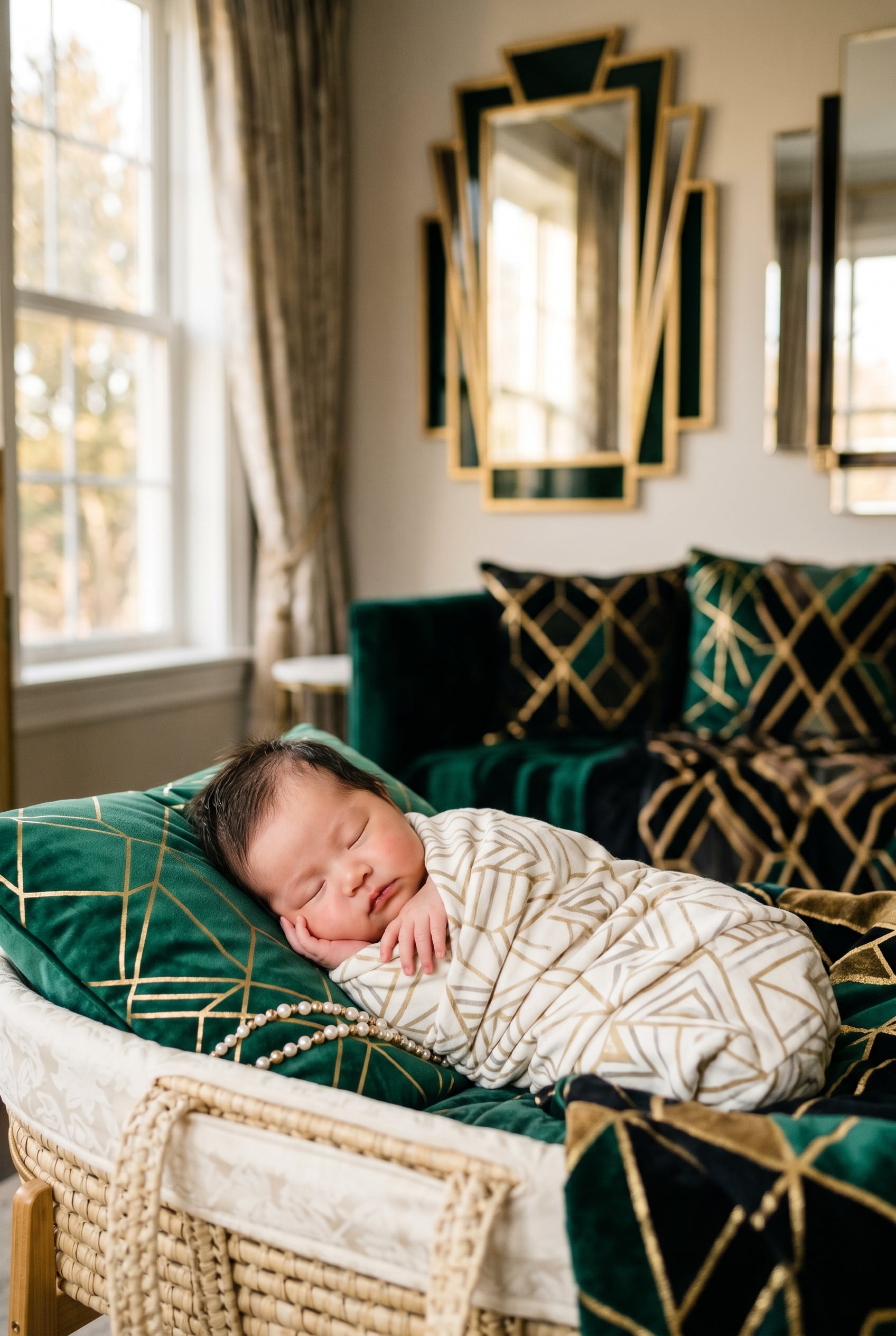
There’s a specific kind of beauty that belongs only to the Art Deco era — the chrome curve of a Chrysler Building spire, the way a coupe glass catches candlelight, the geometry of a beaded gown moving across a parquet floor. The names from this period carry that same quality. They’re polished without being precious, vintage without feeling dusty, and they sound just as right whispered over a bassinet in 2026 as they did being announced at a Manhattan supper club in 1928.
🔍 Curious how popular a name is?
Check any name's popularity trend since 1880 with our free Baby Name Popularity Checker.
When referencing popularity, I am referring to baby name data from Social Security Administration database in the United States for 2025, which is the most current year of data available.
Here’s what’s in store –
I’ve spent a strange amount of time poring over passenger manifests from ocean liners, society columns from old newspapers, and the credit reels of pre-Code films pulling this list together. What surprised me most is how modern so many of these names sound now — Vivienne, Hugo, Cleo, Rex. The 1920s and 30s were the first decade where parents started reaching beyond family Bibles for inspiration, pulling from European cinema, Egyptology (thanks to King Tut’s tomb in 1922), and a new wave of literary modernism. The result was a naming palette that feels remarkably fresh a century later.
This list leans into elegance rather than exuberance. If you want flapper energy and Jazz Age sparkle, there are plenty of Roaring Twenties roundups for that. This one is for the parents drawn to the quieter glamour of the era — the names that belong on a monogrammed steamer trunk, etched into a silver cigarette case, or curled in script across a black-and-gold matchbook from a hotel that no longer exists.
A few notes before you scroll: every name here is real and historically accurate, with origins and meanings I’ve cross-checked against etymology dictionaries and 1920s-1930s census data. Some were genuinely popular during the era; others were carried by Art Deco-era icons (Garbo, Astaire, Chanel) and feel inseparable from that world even when they’re older. Mix and match. Read them aloud. See which one makes you pause.
Streamline Moderne Girl Names
These are the names with sleek lines and polished syllables — the ones that feel like brushed nickel and ivory silk. They were the names of socialites, screen sirens, and the daughters of architects.
- Origin: Latin (via Old French, variant of Vivian)
- Pronunciation: VIV-ee-en · ˈvɪviɛn
- Meaning: living, full of life
- Popularity: #184
Vivien Leigh embodied the era’s smoky, elegant beauty; the double-N spelling adds Art Deco symmetry.
- Origin: French
- Pronunciation: JEN-eh-veev · ˈdʒɛnəviːv
- Meaning: woman of the tribe/kin
- Popularity: #165
Long, lyrical, and dignified — pure Parisian salon energy.
- Origin: uncertain (Shakespeare’s spelling of a historical British name, Cordeilla, possibly linked to the obscure saint’s name Cordula)
- Pronunciation: kor-DEEL-yah · kɔːrˈdiːljə
- Popularity: #1065
Carried by countless interwar literary heroines.
- Origin: Latin (variant of Beatrice)
- Pronunciation: BEE-uh-triks · ˈbiːətrɪks
- Meaning: variant of Beatrice — brings happiness / blessed
- Popularity: #1379
Beatrix Potter was at peak fame in this era; the X gives it modernist edge.
- Origin: French (from Old German Helewidis, via medieval Latin/French forms, doublet of Héloïse)
- Pronunciation: EL-oh-eez · ˈɛloʊiːz
- Meaning: healthy and wide/broad (from Germanic Helewidis)
- Popularity: #64
Hotel-lobby glamour decades before the Plaza book made her famous.
- Origin: German
- Pronunciation: mar-LEEN · mɑrˈliːn
- Meaning: blend of Maria and Magdalene
- Popularity: #1551
Marlene Dietrich essentially invented an entire aesthetic by 1930.
- Origin: Latin (English medieval form of Cecilia)
- Pronunciation: SES-il-ee · ˈsɛsɪli
- Meaning: possibly ‘blind’ (inherited from Cecilia)
- Popularity: #1595
Soft, slightly Bloomsbury, very 1928 garden party.
- Origin: Germanic (Old High German, via French)
- Pronunciation: AD-el-ayd · ˈædəleɪd
- Meaning: of noble character
- Popularity: #271
Conjures monogrammed luggage and a cabin on the Queen Mary.
- Origin: Latin (via French, from the Roman gens name Hortensius)
- Pronunciation: hor-TENSS · hɔːrˈtɛns
- Meaning: relating to gardens (traditionally tied to a Roman gardener)
- Popularity: #8509
A revival waiting to happen — formal, lush, slightly French.
- Origin: Latin
- Pronunciation: LIL-ee-uhn · ˈlɪliən
- Meaning: lily flower
- Popularity: #54
One of the top girl names of 1925; Lillian Gish was the silent screen’s queen.
- Origin: German/Swedish (contraction of Margareta)
- Pronunciation: GRET-ah · ˈɡrɛtə
- Meaning: pearl (via Margaret)
- Popularity: #855
Garbo. Need we say more.
- Origin: English (coinage, underlying word traces to Old French)
- Pronunciation: MAY-vis · ˈmeɪvɪs
- Meaning: song thrush, a poetic word for the bird
- Popularity: #566
Mavis is literally an old poetic word for the song thrush, so the name doubles as a bird’s name.
- Origin: Occitan (ultimately from Latin stella)
- Pronunciation: es-TEL · ɛˈstɛl
- Meaning: star
- Popularity: #636
Gleams like a tiara across a hotel ballroom.
- Origin: Latin
- Pronunciation: KAHN-stanss · ˈkɑːnstəns
- Meaning: steadfast, constant
- Popularity: #1645
Worn by silent film star Constance Bennett, all cheekbones and cool poise.
- Origin: Celtic (Scottish Gaelic), via a Shakespearean misprint
- Pronunciation: IM-uh-jen · ˈɪmədʒən
- Meaning: maiden, girl (from Scottish Gaelic ‘inghean’)
- Popularity: #1126
- Origin: Germanic
- Pronunciation: RAH-zuh-lind · ˈrɑːzəlɪnd
- Meaning: from elements meaning roughly ‘horse’ and ‘soft/tender’ — something like ‘gentle horse’
- Popularity: #1475
Rosalind Russell brought it screwball-comedy sparkle.
- Origin: French
- Pronunciation: mar-GOH · mɑːrˈɡoʊ
- Meaning: French variant of Margaret; ‘pearl’
- Popularity: #1211
The French spelling makes it feel like a Riviera summer.
- Origin: Latin
- Pronunciation: SIL-vee-ah · ˈsɪlviə
- Meaning: of the forest; forest spirit
- Popularity: #361
- Origin: English (Latinate form of French Henriette, from Henry)
- Pronunciation: hen-ree-ET-ah · hɛnriˈɛtə
- Meaning: home ruler
- Popularity: #2135
Henrietta is the Latinate form of Henriette, derived from Henry, whose Germanic roots mean ‘home ruler.’
- Origin: Greek
- Pronunciation: KLEE-oh · ˈkliːoʊ
- Meaning: glory, fame
- Popularity: #603
Cleopatra fever from the 1917 silent film never quite faded; Cleo is its softer descendant.
- Origin: Old French / Provençal (variant of Eleanor)
- Pronunciation: leh-NOR-ah · ləˈnɔːrə
- Meaning: uncertain; likely ‘the other Aenor’ via Eleanor, not literally ‘light’
- Popularity: #714
A more Deco-shaped version of Eleanor — longer at the bottom, narrower at the top.
- Origin: English
- Pronunciation: PURL · ˈpɜːrl
- Meaning: from the gemstone pearl; also an English form of the Yiddish name Perle
- Popularity: #802
Pearl is named directly after the gemstone, though it also serves as an English form of the Yiddish name Perle.
- Origin: Provençal (Occitan)
- Pronunciation: mih-RAY · mɪˈreɪ
- Meaning: admired one; coined by poet Frédéric Mistral for his 1859 poem
- Popularity: #8245
Old-world without being old-fashioned.
- Origin: Welsh (surname)
- Pronunciation: WIN · ˈwɪn
- Meaning: fair, white, blessed, a spelling variant of Wynn
- Popularity: #4866
Short, gleaming, very 1932 newspaper-byline.
- Origin: Latin
- Pronunciation: FLOR-ens · ˈflɔːrəns
- Meaning: flourishing, blooming (from florens, related to flos ‘flower’)
- Popularity: #435
- Origin: French (from Latin)
- Pronunciation: aw-ray-LEE · ˌɔːreɪˈliː
- Meaning: golden one
- Popularity: #4473
Sun catching gilded mirrors in a Parisian foyer.
- Origin: Greek
- Pronunciation: thee-oh-DOR-ah · ˌθiːəˈdɔːrə
- Meaning: God’s gift
- Popularity: #812
Theodora comes straight from the Greek for ‘God’s gift.’
- Origin: Greek
- Pronunciation: oh-FEEL-yuh · oʊˈfiːljə
- Meaning: help, benefit
- Popularity: #261
Theatrical, Edwardian-leaning, but Deco-era literary set loved it.
- Origin: Greek
- Pronunciation: SIB-il · ˈsɪbɪl
- Meaning: prophetess, oracle
- Popularity: #1564
Downton-pre-Downton; a 1920s drawing-room staple.
- Origin: Latin
- Pronunciation: aw-GUS-tuh · ɔːˈɡʌstə
- Meaning: venerable, majestic (feminine form of Augustus)
- Popularity: #3076
Architectural — feels like a building, in a good way.
Geometric Boy Names
Boy names with crisp angles and confident consonants — the ones that look good etched in chrome above an office door or stamped on a leather wallet.
- Origin: Latin
- Pronunciation: REKS · ˈrɛks
- Meaning: king
- Popularity: #794
- Origin: Germanic (Latinized form of Hugh)
- Pronunciation: HYOO-goh · ˈhjuːɡoʊ
- Meaning: mind, thought
- Popularity: #403
Vogue cover energy without trying.
- Pronunciation: SIR-il
- Popularity: #2997
Slightly bookish, deeply elegant.
- Origin: Germanic
- Pronunciation: AH-toh · ˈɑːtoʊ
- Meaning: wealth, fortune (short form of Old Germanic compound names built on the ‘wealth’ element)
- Popularity: #274
- Origin: Latin
- Pronunciation: AW-gust · ˈɔːɡəst
- Meaning: venerable, majestic
- Popularity: #88
Architects love this one for a reason.
- Origin: Latin
- Pronunciation: FEE-liks · ˈfiːlɪks
- Meaning: happy, fortunate, lucky
- Popularity: #177
Felix the Cat debuted in 1919; the name surged in the 20s.
- Origin: English (surname/river-name transfer)
- Pronunciation: KAIR-ee · ˈkɛəri
- Popularity: #3607
Cary Grant chose this for himself in 1931 — speaks for itself.
- Origin: English (surname, from Old English clerc / Latin clericus)
- Pronunciation: KLARK · ˈklɑːrk
- Meaning: clerk, scholar
- Popularity: #437
Clark Gable, full stop.
- Pronunciation: AIR-ul · ˈɛrəl
- Popularity: #5971
Errol Flynn made it sound like a duel on a yacht deck.
- Pronunciation: FEN-ik
- Popularity: Rare
Country-house cocktail energy.
- Origin: French/Latin
- Pronunciation: LY-uh-nel · ˈlaɪənəl
- Meaning: little lion
- Popularity: #561
Lionel Barrymore acting royalty.
- Origin: Germanic (via Latin)
- Pronunciation: REJ-i-nuhld · ˈrɛdʒɪnəld
- Meaning: counsel combined with rule or power, from Germanic elements
- Popularity: #1178
Whole-room-stops-when-he-enters energy; nickname Reggie softens it.
- Origin: Latin (Roman gens name)
- Pronunciation: kor-NEEL-yus · kɔːrˈniːljəs
- Meaning: horn
- Popularity: #2150
Vanderbilt-era money and Deco-era confidence.
- Origin: Greek (via Latin Basilius)
- Pronunciation: BAY-zul · ˈbeɪzəl
- Meaning: royal, kingly
- Popularity: #2009
Basil Rathbone was Sherlock; the name has all his suavity.
- Origin: Old French (Arthurian, probably from Welsh/Celtic)
- Pronunciation: PUR-si-vul · ˈpɜːrsɪvəl
- Meaning: probably from the Welsh Arthurian name Peredur, reshaped in Old French to resemble ‘pierce’ + ‘valley’
- Popularity: #1768
Arthurian, but the 1920s adopted it as upper-class shorthand.
- Origin: English (surname/place name, variant of Elsworth)
- Pronunciation: ELZ-wurth · ˈɛlzwərθ
- Popularity: #7155
Painter Ellsworth Kelly was named in 1923; pure Deco geometry.
- Origin: Old English/Germanic
- Pronunciation: WIL-frid · ˈwɪlfrɪd
- Meaning: will + peace — roughly ‘one who desires peace’
- Popularity: #5038
Wilfred joins the Old English/Germanic elements for ‘will’ and ‘peace,’ literally ‘one who desires peace.’
- Origin: Welsh (literary coinage)
- Pronunciation: SED-rik · ˈsɛdrɪk
- Meaning: literary invented name, possibly meaning ‘beloved’ or ‘great bounty’ in Welsh
- Popularity: #944
Smooth, with Edwardian roots that aged beautifully into the 30s.
- Origin: Scottish (place name)
- Pronunciation: MAKS-wel · ˈmækswɛl
- Meaning: Mack’s well or spring
- Popularity: #182
Maxwell House was the coffee of the era; the name has that warm pedigree.
- Origin: Welsh (surname)
- Pronunciation: LOYD · lɔɪd
- Meaning: grey, or grey-haired
- Popularity: #1766
Frank Lloyd Wright was at his architectural peak; the name carries that weight.
- Origin: Latin
- Pronunciation: VIN-sent · ˈvɪnsənt
- Meaning: conquering
- Popularity: #111
Vincent Price entered the world in 1911 and would soon define a certain Deco-gothic style.
- Origin: Germanic (Frankish, via Old French)
- Pronunciation: ROH-lund · ˈroʊlənd
- Meaning: famous land
- Popularity: #663
Roland derives from Germanic elements meaning ‘famous land.’
- Origin: Old English
- Pronunciation: ED-mund · ˈɛdmənd
- Meaning: wealthy protector
- Popularity: #1182
- Origin: German
- Pronunciation: KAHN-rad · ˈkɑːnræd
- Meaning: bold counsel
- Popularity: #469
- Origin: Breton (via Old French/English surname)
- Pronunciation: HAR-vee · ˈhɑːrvi
- Meaning: roughly ‘iron’ and ‘blazing’ or ‘vigorous’, from the name of a Breton saint
- Popularity: #244
- Origin: Anglo-Norman/Old French (surname)
- Pronunciation: RUSS-el · ˈrʌsəl
- Meaning: little red-haired one
- Popularity: #367
Bertrand Russell, Rosalind Russell — the name had a moment.
- Origin: Ancient Greek
- Pronunciation: THEE-oh-dor · ˈθiːədɔːr
- Meaning: gift of God
- Popularity: #4
Teddy Roosevelt nostalgia kept it warm; the formal version is pure Deco.
- Origin: Old English
- Pronunciation: AHZ-wald · ˈɑːzwəld
- Meaning: god + rule/power (“god’s rule”)
- Popularity: #2121
- Origin: English (surname)
- Pronunciation: STUR-ling · ˈstɜːrlɪŋ
- Meaning: originally a surname referring to the starling bird, or a variant of the Scottish surname/place name Stirling
- Popularity: #372
Sterling began as an English surname, tied either to the starling bird or to the Scottish place name Stirling.
- Origin: English (surname)
- Pronunciation: VANS · ˈvæns
- Meaning: from the marshland
- Popularity: #996
Hollywood Golden Age Names
The names that walked red carpets at the Cocoanut Grove and got engraved on cigarette cases by RKO publicity departments — sourced from the screen stars who built the era’s mystique.
- Origin: Literary coinage (1831, Bellini’s opera); further derivation disputed
- Pronunciation: NOR-muh · ˈnɔːrmə
- Popularity: #2620
Norma Shearer was the queen of MGM; Norma Talmadge co-defined the silent era.
- Origin: Hebrew (via Latin/Greek, English form of Joanna, Catalan form of John)
- Pronunciation: JONE · dʒoʊn
- Meaning: ‘God is gracious’ (from Hebrew Yehochanan)
- Popularity: #1013
Joan Crawford. Joan Blondell. Joan Bennett. The 30s ran on Joans.
- Origin: Italian/Latin (diminutive of Laura)
- Pronunciation: lor-ET-ah · ləˈrɛtə
- Meaning: laurel (via Laura)
- Popularity: #677
Loretta Young’s elegance is baked into the name.
- Origin: Irish (Anglicized)
- Pronunciation: MUR-nuh · ˈmɜːrnə
- Meaning: beloved
- Popularity: #11795
Myrna Loy was the Deco-era ideal woman.
- Pronunciation: KAIR-uhl · ˈkærəl
- Popularity: #10463
Carole Lombard — screwball royalty.
- Origin: French (Hebrew root)
- Pronunciation: JEEN · ˈdʒiːn
- Meaning: God is gracious
- Popularity: #1139
Jean Harlow turned this plain name platinum.
- Origin: English
- Pronunciation: JIN-jer · ˈdʒɪndʒər
- Meaning: pet form of Virginia (‘pure’), or a nickname for ginger-coloured hair
- Popularity: #3589
Ginger Rogers; danced backwards in heels and made it her own.
- Pronunciation: HED-ee · ˈhɛdi
- Popularity: #11442
Hedy Lamarr — beauty, brilliance, and the inventor of frequency hopping.
- Origin: Muscogee/Creek (place name)
- Pronunciation: tuh-LOO-lah · təˈluːlə
- Meaning: commonly glossed as ‘leaping/tumbling water,’ from the Tallulah River and Falls in Georgia; the precise original meaning is debated among linguists
- Popularity: #815
Tallulah Bankhead was unbottled Deco scandal.
- Origin: English (variant of May)
- Pronunciation: MAY · ˈmeɪ
- Meaning: a vintage spelling of May, linked to the Roman goddess Maia (spring/growth); also used as a pet form of Mary, Margaret, or Mabel
- Popularity: #530
Mae West needs no introduction.
- Origin: English/French (short form of Elizabeth or Bettina)
- Pronunciation: BET · bɛt
- Meaning: pet form of Elizabeth or Bettina; carries the meaning ‘God is my oath’
- Popularity: #9009
Bette Davis. Those eyes.
- Origin: Latin
- Pronunciation: oh-LIV-ee-ah · oʊˈlɪviə
- Meaning: olive tree/branch
- Popularity: #1
Olivia de Havilland began her career in 1935.
- Origin: Latin
- Pronunciation: GLOR-ee-ah · ˈɡlɔːriə
- Meaning: glory
- Popularity: #654
Gloria Swanson essentially invented the diva archetype.
- Origin: English (from Latin amabilis via Amabel)
- Pronunciation: MAY-bel · ˈmeɪbəl
- Meaning: lovable
- Popularity: #222
Mabel Normand was silent comedy’s queen.
- Pronunciation: POH-luh · ˈpoʊ.lə
- Popularity: #11935
Pola Negri — original femme fatale.
- Origin: Middle English / Old French
- Pronunciation: FAY · feɪ
- Meaning: fairy (also used as a pet form of Faith or Frances)
- Popularity: #3403
Fay Wray held King Kong’s heart in 1933.
- Origin: Spanish (diminutive of Ana)
- Pronunciation: uh-NEE-tuh · əˈniːtə
- Meaning: little Ana, grace
- Popularity: #1463
Anita Page co-starred with Joan Crawford in Our Dancing Daughters.
- Origin: French (diminutive of Claude, ultimately Latin Claudius)
- Pronunciation: klaw-DET · klɔːˈdɛt
- Meaning: traditionally ‘lame’; probably actually of Sabine origin (via Claude)
- Popularity: #10424
Claudette Colbert was 1930s sophistication in cocktail form.
- Origin: Greek (via Latin)
- Pronunciation: vur-ON-ik-ah · vəˈrɑːnɪkə
- Meaning: bringer of victory (from Berenice/Pherenike)
- Popularity: #392
Veronica Lake’s peek-a-boo hair was a national look.
- Origin: Scottish
- Pronunciation: DUG-lus · ˈdʌgləs
- Meaning: dark stream
- Popularity: #853
Douglas Fairbanks was the swashbuckler-in-chief.
- Origin: Middle English (occupational surname)
- Pronunciation: SPEN-sir · ˈspɛnsər
- Meaning: steward, one who manages provisions/supplies
- Popularity: #388
Spencer Tracy carried Deco-era weight better than anyone.
- Pronunciation: ty-ROHN · taɪˈroʊn
- Popularity: #1333
Tyrone Power — name as cinematic as the man.
- Origin: Germanic
- Pronunciation: HUM-free · ˈhʌmfri
- Meaning: peace-giver
- Popularity: #9298
Humphrey Bogart. The trench coat itself.
- Origin: Old English
- Pronunciation: ED-wurd · ˈɛdwərd
- Meaning: wealthy guardian
- Popularity: #228
Edward G. Robinson and Edward VIII in the same decade.
- Origin: Scottish (from Old Norse via Gaelic)
- Pronunciation: RAH-nuld · ˈrɑːnəld
- Meaning: ruler’s counsel
- Popularity: #575
Ronald Colman defined the leading-man voice.
- Origin: Scottish (place name/surname, Aberdeenshire)
- Pronunciation: LEZ-lee · ˈlɛzli
- Meaning: holly garden
- Popularity: #605
Leslie Howard — refined, tragic, very Deco.
- Origin: Hebrew (via Michael)
- Pronunciation: MIK-ee · ˈmɪki
- Meaning: who is like God?
- Popularity: #1644
Mickey Rooney lit up the late 30s screen.
- Origin: Old Norse / Scandinavian
- Pronunciation: AS-trid · ˈæstrɪd
- Meaning: divinely beautiful (popularly also glossed ‘divine strength’)
- Popularity: #383
Astrid was crowned Queen of Belgium in 1934; the name became immediately glamorous.
French and European Imports
The interwar years saw American parents fall hard for Continental sophistication — names that whispered of transatlantic crossings, Parisian fashion houses, and Italian villas.
- Origin: French (diminutive of Nicole)
- Pronunciation: koh-LET · koʊˈlɛt
- Meaning: victory of the people
- Popularity: #400
The French novelist was at her peak in the 20s.
- Origin: French (feminine form of Simon, ultimately Hebrew)
- Pronunciation: sih-MOHN · sɪˈmoʊn
- Meaning: she has heard
- Popularity: #1040
Simone de Beauvoir came of age in this decade.
- Origin: French, from Latin Camilla
- Pronunciation: kuh-MEEL · kəˈmiːl
- Popularity: #239
Garbo played Camille in 1936; the name carries that romantic tragedy.
- Origin: French
- Pronunciation: ih-VAHN · ɪˈvɑːn
- Meaning: feminine form of Yvon/Yves, from a Germanic root for ‘yew’; traditionally linked to ‘archer’ since yew wood was used for bows
- Popularity: #2318
Yvonne Printemps was the toast of Parisian theater.
- Origin: French (feminine of Lucien)
- Pronunciation: loo-see-EN · luːsiˈɛn
- Meaning: light
- Popularity: #4330
Lucienne is the feminine form of Lucien, rooted in the word for ‘light.’
- Origin: French (short form of Marguerite/Margaret)
- Pronunciation: MAR-goh · ˈmɑːrɡoʊ
- Meaning: pearl, carried over from Marguerite/Margaret
- Popularity: #126
Margot Asquith ruled British society; the name has that bite.
- Origin: French (pet form of Barbara)
- Pronunciation: ba-BET · bæˈbɛt
- Meaning: foreign woman, stranger
- Popularity: #15538
Slightly mischievous, very 1929 Riviera.
- Origin: French (from Latin)
- Pronunciation: ruh-NAY · rəˈneɪ
- Meaning: reborn
- Popularity: Rare
Streamlined and timeless.
- Origin: French (diminutive of Elisabeth)
- Pronunciation: lih-ZET · lɪˈzɛt
- Meaning: God is my oath (diminutive of Elisabeth)
- Popularity: #4717
Lighter than Elizabeth, sweeter than Lisa.
- Origin: French (from Hebrew via Magdala)
- Pronunciation: MAD-uh-lin · ˈmædəlɪn
- Meaning: woman from Magdala (a town whose name means ‘tower’)
- Popularity: #437
- Origin: French (from Latin sollemnis, ‘solemn’); name of a 9th-century French saint
- Pronunciation: soh-LAHNZH · soʊˈlɑːnʒ
- Meaning: solemn
- Popularity: #7192
One of the most Art Deco-sounding French names — all curve and shadow.
- Pronunciation: BEE-bee · ˈbiːbi
- Popularity: #7277
Bibi was a chic 1930s Parisian shorthand.
- Pronunciation: soo-ZET · suːˈzɛt
- Popularity: #4748
- Origin: French
- Pronunciation: pee-AIR · piˈɛr
- Meaning: form of Peter; rock, stone
- Popularity: #1253
The Pierre Hotel opened in 1930; the name has hotel-lobby polish.
- Origin: French (form of Henry)
- Pronunciation: ahn-REE · ɑːnˈriː
- Meaning: home ruler
- Popularity: #1592
Henri Matisse was redefining color through the 20s and 30s.
- Origin: French (surname, uncertain etymology)
- Pronunciation: gas-TAWN · ɡæˈstɒn
- Popularity: #4101
Bonus points for the Beauty and the Beast reclamation.
- Pronunciation: ZHAHK · ʒɑːk
- Popularity: #2375
- Pronunciation: ay-tee-EN · ˌeɪtiˈɛn
- Popularity: Rare
The French Stephen, but infinitely more elegant.
- Pronunciation: LEE-ahn · ˈliːɑːn
- Popularity: Rare
Leon Bakst’s ballet costumes shaped the Deco visual language.
- Origin: French (modern popularization, disputed diminutive of Anne)
- Pronunciation: ah-NOOK · æˈnuːk
- Popularity: #13588
Has the right slim silhouette.
- Origin: Latin
- Pronunciation: BEE-uh-tris · ˈbiːətrɪs
- Meaning: one who brings happiness (also glossed “blessed one”)
- Popularity: #579
Beatrice Lillie ruled the London stage.
- Origin: Italian (feminine form of Charlotte/Carlo)
- Pronunciation: kar-LOT-uh · kɑːrˈlɒt.ə
- Meaning: free woman, via Charlotte, ultimately from Germanic “karl” (free man)
- Popularity: #3223
Operatic and architectural.
- Origin: French, from Germanic
- Pronunciation: jih-ZEL · dʒɪˈzɛl
- Meaning: pledge, hostage
- Popularity: #356
Pure ballet costuming.
- Origin: French (Germanic, form of Matilda)
- Pronunciation: mah-TEELD · mɑˈtiːld
- Meaning: mighty in battle
- Popularity: #7806
Worn by 1920s society heiresses on both sides of the Atlantic.
- Origin: French (feminine form of Adrien/Adrian)
- Pronunciation: AY-dree-en · ˈeɪdriɛn
- Meaning: French feminine form of Adrien/Adrian, from the place-name Hadria; ‘dark one’ is a disputed folk gloss
- Popularity: #1455
Slim, dark, drawn with a fine pen.
- Origin: Latin (via French)
- Pronunciation: suh-LEST · səˈlɛst
- Meaning: heavenly
- Popularity: #198
Celeste comes from the Latin word for ‘heavenly,’ by way of French.
- Origin: French (from Spanish Inés)
- Pronunciation: ee-NESS · iˈnɛs
- Meaning: pure, holy — via Spanish Inés, ultimately from the Greek word for ‘pure’ through Agnes
- Popularity: Rare
Slim and aristocratic.
- Origin: Latin (via French/German)
- Pronunciation: AW-gəs-tin · ˈɔːɡəstɪn
- Meaning: great, venerable
- Popularity: #1814
The French Augustus — softer at the edges.
Egyptian and Exotic Revival Names
The discovery of King Tut’s tomb in November 1922 triggered a decade of Egyptomania that became inseparable from Deco design — and the era’s parents reached for ancient names accordingly.
- Pronunciation: nef-er-TAH-ree · ˌnɛfərˈtɑːri
- Popularity: #4727
For the parents who want to commit fully.
- Origin: Ancient Greek
- Pronunciation: klee-oh-PAT-rə · kliːoʊpætɹə
- Meaning: glory of her father
- Popularity: #3450
Theda Bara played her in 1917; the name never quite cooled down.
- Origin: Italian (popularized by Verdi’s 1871 opera Aida)
- Pronunciation: eye-EE-duh · aɪˈiːdə
- Popularity: #1242
The opera was a recurring 1920s society fixture.
- Origin: Ancient Egyptian (via Greek Isis, from Egyptian Aset)
- Pronunciation: EYE-sis · ˈaɪsɪs
- Meaning: traditionally glossed as ‘throne’ (from the throne symbol in her name), though the exact root is debated among Egyptologists
- Popularity: #1082
A name with complicated modern associations, but historically Deco to its core.
- Origin: uncertain — competing Germanic, Scottish Gaelic, and Turkish/Arabic derivations
- Pronunciation: SEL-mah · ˈsɛlmə
- Popularity: #2788
Carried a faintly exotic, transcontinental aura in the 20s.
- Origin: English/Hebrew (variant of Sarah) or Arabic
- Pronunciation: ZAR-ah · ˈzɑːrə
- Meaning: uncertain — either from Sarah (‘princess’) or Arabic zahra (‘flower’)
- Popularity: #234
Slim, modern, very Deco-era cosmopolitan.
- Origin: Arabic
- Pronunciation: LAY-lah · ˈleɪlə
- Meaning: night (from Arabic ‘layl’)
- Popularity: #37
- Origin: Persian
- Pronunciation: JAZ-min · ˈdʒæzmɪn
- Meaning: named after the jasmine flower
- Popularity: #199
Perfume of choice for Deco-era boudoirs.
- Origin: Ancient Greek
- Pronunciation: an-ah-STAY-zhah · ænəˈsteɪʒə
- Meaning: resurrection
- Popularity: #166
The Romanov mystery of the late 20s kept this name very alive.
- Origin: Latin (Roman family name Tatius + -anus); popularized via Russian usage
- Pronunciation: tah-tee-AH-nah · ˌtɑːtiˈɑːnə
- Popularity: #1079
Another Romanov echo with full Deco glamour.
- Origin: Slavic/Arabic
- Pronunciation: NAH-dee-ah · ˈnɑːdiə
- Meaning: hope (Slavic, from Nadezhda); also ‘tender’ in Arabic usage
- Popularity: #513
Slim, dark-haired, like a Ballets Russes principal.
- Origin: Russian/Ukrainian (diminutive of Alexander and Alexandra)
- Pronunciation: SAH-shah · ˈsɑːʃə
- Meaning: protector/defender of people (via Alexander/Alexandra)
- Popularity: #642
- Pronunciation: MEE-shuh · ˈmiːʃə
- Popularity: #5890
- Origin: Arabic
- Pronunciation: rah-SHEED · rɑːˈʃiːd
- Meaning: one who is rightly guided
- Popularity: #3568
- Origin: Arabic
- Pronunciation: OH-mar · ˈoʊmɑːr
- Meaning: long-lived, flourishing
- Popularity: #260
Omar Khayyám translations were 1920s bestsellers.
- Origin: Arabic
- Pronunciation: AHN-wahr · ˈɑːnwɑːr
- Meaning: brighter, more radiant (comparative of Arabic nur, ‘light’)
- Popularity: #2870
Anwar is Arabic for ‘brighter, more radiant,’ the comparative form of nur, meaning ‘light.’
- Origin: Persian (from Arabic)
- Pronunciation: soh-RY-ah · soʊˈraɪə
- Meaning: the Pleiades star cluster; also glossed as ‘brilliant gem’
- Popularity: #913
The Pleiades star cluster; perfect Deco celestial imagery.
- Origin: French (Esmé)
- Pronunciation: EZ-may · ˈɛzmeɪ
- Meaning: beloved, esteemed
- Popularity: #344
- Origin: Basque
- Pronunciation: ZAY-vee-er · ˈzeɪviər
- Meaning: new house (Basque place name)
- Popularity: #102
- Pronunciation: KEM-et · ˈkɛmət
- Popularity: #8645
For maximalist Egyptophiles.
- Origin: Russian/Ukrainian
- Pronunciation: AHN-yuh · ˈɑːnjə
- Meaning: grace (pet form of Anna/Hannah)
- Popularity: #394
Slim and ballerina-elegant.
- Origin: Slavic/Russian; separately Hebrew
- Pronunciation: LEV · ˈlɛv
- Meaning: lion (Slavic, cognate with Latin leo); separately, ‘heart’ in Hebrew and Yiddish
- Popularity: #1040
Short, sharp, very Deco-line.
- Origin: Russian/Slavic
- Pronunciation: VEER-ah · ˈvɪrə
- Meaning: faith
- Popularity: #226
Vera Caspary wrote Laura — peak Deco-noir.
- Origin: Russian (from Greek via George/Georgiy)
- Pronunciation: YUR-ee · ˈjʊri
- Meaning: Russian form of George, ultimately Greek for ‘earth-worker, farmer’
- Popularity: #1491
Russian masculine elegance.
- Pronunciation: ee-VAHN-kuh · iːˈvɑːŋkə
- Popularity: #2512
Pre-political-baggage, it’s a Deco-era beauty.
Literary and Modernist Names
The interwar period produced Fitzgerald, Hemingway, Woolf, Faulkner, and Wharton — and parents named babies after the characters who haunted them.
- Origin: English (Old English compound)
- Pronunciation: DAY-zee · ˈdeɪzi
- Meaning: flower name meaning “day’s eye”; also historically used as a nickname for Margaret
- Popularity: #76
Daisy Buchanan, of course — the name is the era.
- Origin: German (via Griselda) / Yiddish (feminine of Zelig)
- Pronunciation: ZEL-dah · ˈzɛldə
- Meaning: grey battle-maiden (via Griselda); also ‘blessed’ as a form of Zelig
- Popularity: #748
Zelda Fitzgerald — the patron saint of Deco-era women writers.
- Origin: English (ethnonym/surname for a person from Scotland)
- Pronunciation: SKAHT · ˈskɑːt
- Meaning: a Scotsman; someone from Scotland
- Popularity: #565
F. Scott himself.
- Origin: Hebrew
- Pronunciation: JOR-dan · ˈdʒɔːrdən
- Meaning: one who descends, or flows down (from the Jordan River’s name)
- Popularity: #104
Jordan Baker in Gatsby — golf, sharp angles, and ambiguity.
- Pronunciation: NIK · nɪk
- Popularity: #1418
The narrator of Gatsby.
- Origin: English (surname, ethnonym for a Breton)
- Pronunciation: BRET · bɹɛt
- Meaning: a Breton, i.e. someone from Brittany
- Popularity: #1060
Lady Brett Ashley in The Sun Also Rises.
- Origin: English (from Jack, also short form of Jacob)
- Pronunciation: JAYK · ˈdʒeɪk
- Meaning: supplanter, held by the heel (via Jacob)
- Popularity: #422
Jake Barnes; whole Hemingway hero archetype.
- Origin: Latin/Italian
- Pronunciation: klə-RIS-ə · kləɹɪsə
- Meaning: bright, clear
- Popularity: #1159
Mrs. Dalloway gave Clarissa interwar literary fame.
- Origin: Latin
- Pronunciation: VEE-tə · ˈviːtə
- Meaning: life
- Popularity: #3560
Vita Sackville-West — Bloomsbury elegance personified.
- Origin: English (from French Henriette, feminine of Henri/Henry)
- Pronunciation: HAIR-ee-ut · ˈhæriət
- Meaning: home ruler, ruler of the household
- Popularity: #1157
Harriet Vane in the Dorothy Sayers mysteries.
- Origin: English and Scottish (surname, ultimately Old French)
- Pronunciation: WAH-liss · ˈwɑːlɪs
- Meaning: of Welsh or Breton descent; ‘foreigner’
- Popularity: #9488
Wallis Simpson reshaped the British monarchy in 1936.
- Origin: Latin
- Pronunciation: KWEN-tin · ˈkwɛntɪn
- Meaning: fifth
- Popularity: #788
Quentin Compson in The Sound and the Fury.
- Pronunciation: KAD-ee · ˈkæd.i
- Popularity: Rare
Another Faulkner; rich, complicated, very 20s.
- Origin: Latin (place name Lavinium, Latium)
- Pronunciation: luh-VIN-ee-ah · ləˈvɪniə
- Popularity: #2139
Wharton-era society novel name.
- Origin: Greek
- Pronunciation: EYE-ris · ˈaɪrɪs
- Meaning: rainbow; also the name of the Greek goddess/messenger of the rainbow, and the flower named after her
- Popularity: #71
Iris Murdoch was born in 1919; the flower is also peak Deco motif.
- Origin: Old English
- Pronunciation: EE-dith · ˈiːdɪθ
- Meaning: rich/blessed in war
- Popularity: #528
Edith Wharton dominated literary New York.
- Origin: Latin
- Pronunciation: vur-JIN-yah · vərˈdʒɪnjə
- Meaning: popularly glossed ‘maiden/virgin’ (via Latin virgo), though the name itself derives from the Roman family name Verginius/Virginius, whose own root is uncertain
- Popularity: #510
Virginia Woolf, full stop.
- Origin: Old Persian (via Greek Anaïtis, ultimately the goddess name Anahita)
- Pronunciation: ah-nah-EES · ɑːnɑːˈiːs
- Meaning: linked to Anahita, an ancient Persian goddess of water and fertility
- Popularity: Rare
- Pronunciation: JOO-nuh · ˈdʒuːnə
- Popularity: #13879
Djuna Barnes wrote Nightwood — Deco-era expatriate cool.
- Origin: English (surname/place name, Old English)
- Pronunciation: HAD-lee · ˈhædli
- Meaning: heather clearing/meadow
- Popularity: #114
Hadley Richardson, Hemingway’s first wife — Parisian-era warmth.
- Origin: French
- Pronunciation: paw-LEEN · pɔːˈliːn
- Meaning: French form of Paulina: small, the younger
- Popularity: #3475
Pauline Réage and Pauline Kael; smart, sharp 20th-century energy.
- Origin: Old English
- Pronunciation: TROO-muhn · ˈtruːmən
- Meaning: Faithful or trustworthy man, from a compound of ‘true’ and ‘man.’
- Popularity: #1811
Truman Capote was born in 1924 — name aged into the era.
- Pronunciation: ten-uh-SEE · ˌtɛnəˈsiː
- Popularity: #6116
- Origin: Greek
- Pronunciation: yoo-DOR-ah · juːˈdɔːrə
- Meaning: good gift
- Popularity: #8073
Eudora Welty published her first stories in the late 30s.
- Origin: Latin
- Pronunciation: mar-ee-AH-nuh · mɑːriˈɑːnə
- Meaning: feminine of Marianus (from Roman Marius), or a Maria+Anna blend
- Popularity: #242
Wharton character energy.
- Origin: Greek (via Latin)
- Pronunciation: sih-BAS-chun · səˈbæstʃən
- Meaning: venerable or revered one, from the place name Sebaste
- Popularity: #14
Sebastian Flyte from Brideshead Revisited, set in the 20s.
- Origin: Old English
- Pronunciation: AWL-dus · ˈɔːldəs
- Meaning: old (short form of Old English compound names beginning with eald, ‘old’)
- Popularity: #9905
Aldous Huxley published Brave New World in 1932.
- Origin: Anglo-Norman/Old French (from Aveline, of Germanic origin)
- Pronunciation: EV-eh-lin · ˈɛvəlɪn
- Meaning: uncertain; possibly ‘desired/wished for’ or possibly ‘strength’
- Popularity: #8
Evelyn Waugh; satin-cool.
- Pronunciation: LIT-uhn · ˈlɪtən
- Popularity: Rare
Lytton Strachey, Bloomsbury heart.
Jewel-Tone and Nature Names With Deco Polish
Some of the most enduring Deco-era names came from gemstones, flowers, and natural elements — but the era’s parents chose them with a specific kind of restraint. These aren’t the saccharine flower names of the Victorians; they’re the polished, slightly cool ones.
- Origin: English (19th-century coinage from the gemstone name, ultimately Sanskrit)
- Pronunciation: OH-pal · ˈoʊpəl
- Meaning: named after the opal gemstone; the gem-word itself traces to a Sanskrit term for ‘jewel’
- Popularity: #450
- Origin: Latin (via the gemstone name)
- Pronunciation: ROO-bee · ˈruːbi
- Meaning: red gemstone
- Popularity: #63
- Origin: English (gemstone name); also a surname/Yiddish-name variant
- Pronunciation: BAIR-ul · ˈbɛrəl
- Meaning: the beryl gemstone
- Popularity: #11234
One of the most distinctly Deco-era names; aviator Beryl Markham flew solo across the Atlantic in 1936.
- Origin: English (word name, ult. Greek/Latin)
- Pronunciation: KOR-ul · ˈkɔːrəl
- Meaning: named for the marine coral
- Popularity: #1893
Coral Browne was a 1930s stage star.
- Origin: French
- Pronunciation: GAR-nit · ˈɡɑːrnɪt
- Meaning: the garnet gemstone (a deep red precious stone)
- Popularity: #16044
Deep red, fully overdue for revival.
- Origin: English (from Spanish)
- Pronunciation: JAYD · ˈdʒeɪd
- Meaning: the gemstone jade, from Spanish for ‘stone of the flank,’ after a folk belief the stone cured colic when held to the side
- Popularity: #84
Cool, slim, very Deco green-and-gold.
- Origin: English (19th-century flower name, ultimately from Latin viola via French violette)
- Pronunciation: VY-oh-let · ˈvaɪəlɪt
- Meaning: the violet flower (purple-blue)
- Popularity: #15
Violet Trefusis was a 1920s society scandal.
- Origin: English (flower name)
- Pronunciation: MAIR-ih-gold · ˈmɛrɪɡoʊld
- Meaning: the marigold flower; the flower’s name is traditionally explained as ‘Mary’s gold’ (honoring the Virgin Mary), not literally ‘golden flower’
- Popularity: #693
- Origin: Greek (via a saint’s name, from the mythological figure Hyacinthus)
- Pronunciation: HY-uh-sinth · ˈhaɪəsɪnθ
- Meaning: the hyacinth flower (also linked to the color purple)
- Popularity: #4801
Underused now; popular in the 1920s.
- Origin: English (flower name)
- Pronunciation: mag-NOHL-yah · mæɡˈnoʊljə
- Meaning: name of the magnolia flower, adopted as an English given name in the 19th century
- Popularity: #138
Show Boat (1927) had a Magnolia at its heart.
- Origin: English (medieval saint’s name Oliva, from Latin oliva)
- Pronunciation: AH-liv · ˈɑːlɪv
- Meaning: olive tree; popularly linked to peace via the olive-branch symbol
- Popularity: #171
- Origin: English
- Pronunciation: WIL-oh · ˈwɪloʊ
- Meaning: named for the willow tree
- Popularity: #41
Slim and modern-sounding even then.
- Origin: Swedish (Latinized)
- Pronunciation: lin-AY-ah · lɪˈneɪə
- Meaning: the twinflower (Linnaea borealis), a plant named in honor of botanist Carl Linnaeus
- Popularity: #1608
Carl Linnaeus’s namesake flower — quietly chic.
- Origin: Greek (via Latin)
- Pronunciation: AS-ter · ˈæstər
- Meaning: star (namesake of the star-shaped flower)
- Popularity: #2745
The flower’s star shape made it a perfect Deco motif.
- Origin: English (Middle English)
- Pronunciation: REN · ˈrɛn
- Meaning: the small songbird
- Popularity: #213
Architect Christopher Wren cast a long shadow.
- Origin: English
- Pronunciation: LARK · ˈlɑːrk
- Meaning: the songbird
- Popularity: #3534
Brisk, optimistic — the bird of the bright new century.
- Origin: Old English
- Pronunciation: HAY-zel · ˈheɪzəl
- Meaning: the hazel tree, and by extension its light-brown color
- Popularity: #19
- Origin: English (surname from the noun “maple”)
- Pronunciation: MAY-pəl · ˈmeɪpəl
- Meaning: named after the maple tree
- Popularity: #1188
Slightly more unusual then, but used.
- Origin: English
- Pronunciation: JOO-nih-per · ˈdʒuːnɪpər
- Meaning: the juniper tree/shrub; occasionally a folk-etymology variant of Jennifer (from Welsh Guinevere)
- Popularity: #111
- Origin: English (from the plant name, ultimately Greek via Latin)
- Pronunciation: BRY-uh-nee · ˈbraɪəni
- Meaning: named after the bryony plant, a flowering climbing vine
- Popularity: #9816
British society favorite.
- Origin: Latin (from Greek ‘kasia’)
- Pronunciation: KAS-ee-uh · ˈkæsiə
- Meaning: cinnamon (the spice/tree)
- Popularity: #2234
Spiced, warm, and Deco-spare.
- Origin: English (flower/spice name)
- Pronunciation: SAF-run · ˈsæfrən
- Meaning: named for the saffron crocus flower and its golden spice
- Popularity: #5564
Hits the gold-and-saffron Deco palette perfectly.
- Origin: Greek (via the color/dye name)
- Pronunciation: IN-dih-goh · ˈɪndɪˌɡoʊ
- Meaning: named after the deep-blue indigo dye/color
- Popularity: #923
Color of choice for the era’s printed silks.
- Origin: English (modern vocabulary-word name)
- Pronunciation: EM-bur · ˈɛmbər
- Meaning: a glowing coal or fragment from a dying fire
- Popularity: #137
Glows like the last log in a 1929 fireplace.
- Origin: Greek (via Latin), modern color-word coinage
- Pronunciation: SY-an · ˈsaɪ.æn
- Meaning: blue-green (the color)
- Popularity: #2996
Slim, modern, color-as-name in the most Deco way.
- Pronunciation: SIHL-ver · ˈsɪlvər
- Popularity: #3368
- Pronunciation: PURL · pɜːrl
- Popularity: #15201
Slightly more ornamented version.
- Origin: English (ultimately Greek krystallos, “ice”)
- Pronunciation: KRIS-tul · ˈkrɪstəl
- Meaning: clear as ice; a clear, transparent mineral
- Popularity: #1176
Crystal traces back to the Greek krystallos, ‘ice,’ describing something as clear and transparent as ice.
Architecturally Grand Names
Names that feel like they were carved into a limestone facade above a Park Avenue lobby — long, formal, the kind that work just as well shortened.
- Origin: Dutch (surname, transferred to given-name use)
- Pronunciation: ROH-zuh-velt · ˈroʊzəvɛlt
- Meaning: rose field (or possibly ‘rush field’)
- Popularity: #4150
Used as a given name during FDR’s election years.
- Pronunciation: EL-drij · ˈɛldrɪdʒ
- Popularity: #7883
Old-money real estate.
- Pronunciation: LEN-uhks · ˈlɛnəks
- Popularity: #1554
- Origin: New Latin (eponym)
- Pronunciation: for-SITH-ee-uh · fɔːrˈsɪθiə
- Popularity: Rare
Very 1928 society debutante.
- Origin: French
- Pronunciation: mar-guh-REET · mɑːrɡəˈriːt
- Meaning: pearl (Greek margarites); also French for the daisy flower
- Popularity: #2415
The grand version of Margaret; carried by countless Deco-era heroines.
- Origin: Latin
- Pronunciation: AW-guh-steen · ˈɔːɡəstiːn
- Meaning: venerable, majestic (from Augustus)
- Popularity: #551
Slightly Catholic, fully majestic.
- Origin: Latin (feminine of the Roman family name Lucretius)
- Pronunciation: loo-KREE-shuh · luːˈkriːʃə
- Popularity: #13272
Statuesque, dramatic, a little dangerous.
- Origin: Ancient Greek
- Pronunciation: per-SEF-uh-nee · pərˈsɛfəni
- Popularity: #737
The Deco crowd loved Greek myth.
- Origin: Ancient Greek/Latin
- Pronunciation: ap-uh-LOH-nee-uh · ˌæpəˈloʊniə
- Meaning: belonging to Apollo
- Popularity: #6171
The kind of name a 1929 heiress would have been embarrassed by and her granddaughter would treasure.
- Origin: Latin
- Pronunciation: ahk-TAY-vee-uh · ɑːkˈteɪviə
- Meaning: eighth (feminine form of the Roman family name Octāvius)
- Popularity: #295
Drawn straight from a Greek revival column.
- Origin: Germanic (Old German)
- Pronunciation: WEN-duhl · ˈwɛndəl
- Meaning: a Wend (member of a Slavic people)
- Popularity: #2068
Justice Oliver Wendell Holmes was at his height.
- Pronunciation: TROOZ-dayl · ˈtruːzdeɪl
- Popularity: Rare
- Origin: Anglo-Norman/Old French (place name)
- Pronunciation: MOR-tih-mer · ˈmɔːrtɪmər
- Meaning: dead pond / still water
- Popularity: #13519
1920s and 30s vintage in full.
- Origin: Aramaic (via Greek Bartholomaios, Latin Bartholomaeus)
- Pronunciation: bar-THOL-uh-myoo · bɑːrˈθɑːləmjuː
- Meaning: son of Talmai (Talmai being a personal name, possibly the biblical king of Geshur or a rendering of ‘Ptolemy’)
- Popularity: #3323
Long-form, with the nickname Bart for accessibility.
- Origin: Old French (nickname/surname)
- Pronunciation: AL-jer-nun · ˈældʒərnən
- Meaning: having a mustache
- Popularity: #12275
British country-house perfect.
- Origin: Latin (Roman family name)
- Pronunciation: KASH-us · ˈkæʃəs
- Popularity: #567
- Origin: Latin (elaboration of Lucia)
- Pronunciation: loo-SIN-da · luˈsɪndə
- Meaning: light
- Popularity: #1717
Tall, slim, marble.
- Origin: Germanic (Dutch/German feminine form of Wilhelm)
- Pronunciation: wil-hel-MEE-nah · ˌwɪlhɛlˈmiːnə
- Meaning: will/desire joined with helmet, i.e. resolute protector
- Popularity: #1817
Queen Wilhelmina of the Netherlands reigned through the era.
- Origin: Greek (literary coinage)
- Pronunciation: ee-VAN-jeh-leen · ɪˈvændʒəliːn
- Meaning: good news
- Popularity: #174
- Origin: Greek (via Latin and Middle English)
- Pronunciation: thee-OF-ih-luhs · θiˈɒfɪləs
- Meaning: Greek for ‘friend of God’ or ‘one who loves God’ (theos ‘god’ + philos ‘loving, dear’)
- Popularity: #2225
Maximalist; Theo nickname keeps it usable.
- Pronunciation: JAIR-əl-deen · ˈdʒɛrəldiːn
- Popularity: #2013
Geraldine Fitzgerald arrived on screen in 1939.
How to Choose a Name From This List
The Deco era’s secret was restraint with one bold gesture — a stripped-down black gown with one enormous brooch. Apply the same logic. If your last name is long, French, or musical, lean into the shorter Deco names: Rex, Cleo, Mae, Hugo. If your last name is short or punchy, the long architectural names sing — Beatrix Cole has rhythm; so does Cornelius Tang.
Say your shortlist out loud, three times, in a quiet room. Deco names were built for ballroom acoustics. The ones that don’t quite work will reveal themselves immediately — usually because of an awkward consonant cluster at the seam between first and middle names.
Try the nickname stress-test. Will your Reginald be a Reggie? Your Beatrix a Bea? Your Cornelius a Neil? Most Deco-era names age beautifully because they shorten so well. If the diminutive feels off, the formal name will sit slightly wrong even when you don’t realize why.
Don’t underestimate the middle name slot. A daring Deco first name (Hortense, Cornelius, Tallulah) needs a steadying middle. A simple first name (Mae, Rex, June) can carry a more ornate middle like Genevieve, Sterling, or Augustus. The 1920s and 30s parents understood balance better than almost any generation since.
Finally — give yourself permission to choose a name your grandmother had. Most of these names were young names in 1928. They’re not antiques; they’re heirlooms that just spent a few decades resting.
Name Art for Your Favorite
Love a name from this list? MinimalistMama offers custom Name Art prints — personalized, minimalist nursery art with the name you choose, designed to match your aesthetic. A perfect gift for baby showers or to hang above the crib.
Frequently Asked Questions
What makes a name “Art Deco” versus just generally vintage?
Art Deco names share a particular geometry — they tend to have clean lines (Rex, Cleo, Jade), polished length (Vivienne, Cornelius, Marguerite), or come from the cultural reference points the Deco era pulled from heavily: Egypt, Russia, France, and modern literature. They’re distinct from Victorian names (more florid, more religious) and from Edwardian names (softer, more pastoral). Think chrome, ivory, and lacquer rather than lace.
Are these names still in use today?
Many of them, yes — and increasingly so. Names like Vivienne, Hugo, Theodore, Olivia, and Sebastian have all climbed back into the US top 200 in the last decade. Others, like Hortense, Cornelius, and Beryl, are sitting in that fertile zone just before a comeback. The Deco palette is being rediscovered the same way the design aesthetic has been: slowly, then all at once.
Were any of these names actually popular in the 1920s and 1930s?
Yes — Florence, Lillian, Hazel, Opal, Pearl, Edward, Theodore, Harvey, and Russell were all top-100 baby names in the US during this era. Others on this list (like Tallulah, Beryl, or Hortense) were more aspirational — carried by socialites, actresses, and characters rather than being mass-popular. Both kinds belong on this list; they were the names of the world the era’s parents lived in.
What’s the difference between this list and a “Roaring Twenties” name list?
A Roaring Twenties list usually leans into the era’s flash — flappers, jazz, speakeasies, and the brassier names like Bessie, Lulu, Fritz, and Buster. This list leans into the era’s elegance — the salon, the supper club, the ocean liner first-class cabin, and the architectural ambition. Some overlap exists, but the vibe is closer to a Chrysler Building than to a Charleston.
Do these names work for siblings?
Beautifully. Deco names sibling-set naturally because they share a sound family. Try Rex and Vivienne; Hugo and Beatrix; Cleo and August; Theodore and Marguerite. Avoid mixing very ornate Deco names with very minimalist modern ones — Cornelius and Sky will feel like they come from different households.
Are any of these names too unusual to use today?
Honestly, fewer than you’d think. The benchmark for “too unusual” has shifted dramatically — a kindergarten class today might contain a Hazel, an Atlas, and an Indigo. Names like Hortense or Algernon will still raise eyebrows, but if you love them, the cultural runway has never been more forgiving of unexpected choices.
How do I pair an Art Deco first name with a more traditional middle name?
The classic Deco-era move is one ornate name and one steadying name. So Beatrix Anne, Cornelius James, Tallulah Rose, or Hugo Edward all work because the ornate name gets the spotlight and the simpler name acts as a structural beam. Avoid double-ornate (Hortense Persephone) unless you’re committed to drama for life.
📊 Curious how popular a name actually is? Look it up in our Baby Name Popularity Checker — pulls live SSA data to show ranking trends.
Final Thoughts
The 1920s and 30s parents weren’t choosing names for nostalgia — they were choosing them because they sounded modern. A century later, that same modernity is what makes Deco names feel fresh again. Whatever you choose, choose it because it makes you pause when you say it out loud. That little catch is the whole point.
Read next; 🌷 200+ Dark Academia Baby Names for the Bookish, Brooding Parent 🌷 200+ Light Academia Baby Names for the Cozy Scholar Aesthetic 🌷 craftsman-baby-names
📱 The Baby Names app is here
Swipe names, match with your partner the moment you both say yes, and claim a free Name Art print of your winner. Free to download. See all our apps →

✨ Love these names? Create free printable nursery art for any name →