This post contains affiliate links.
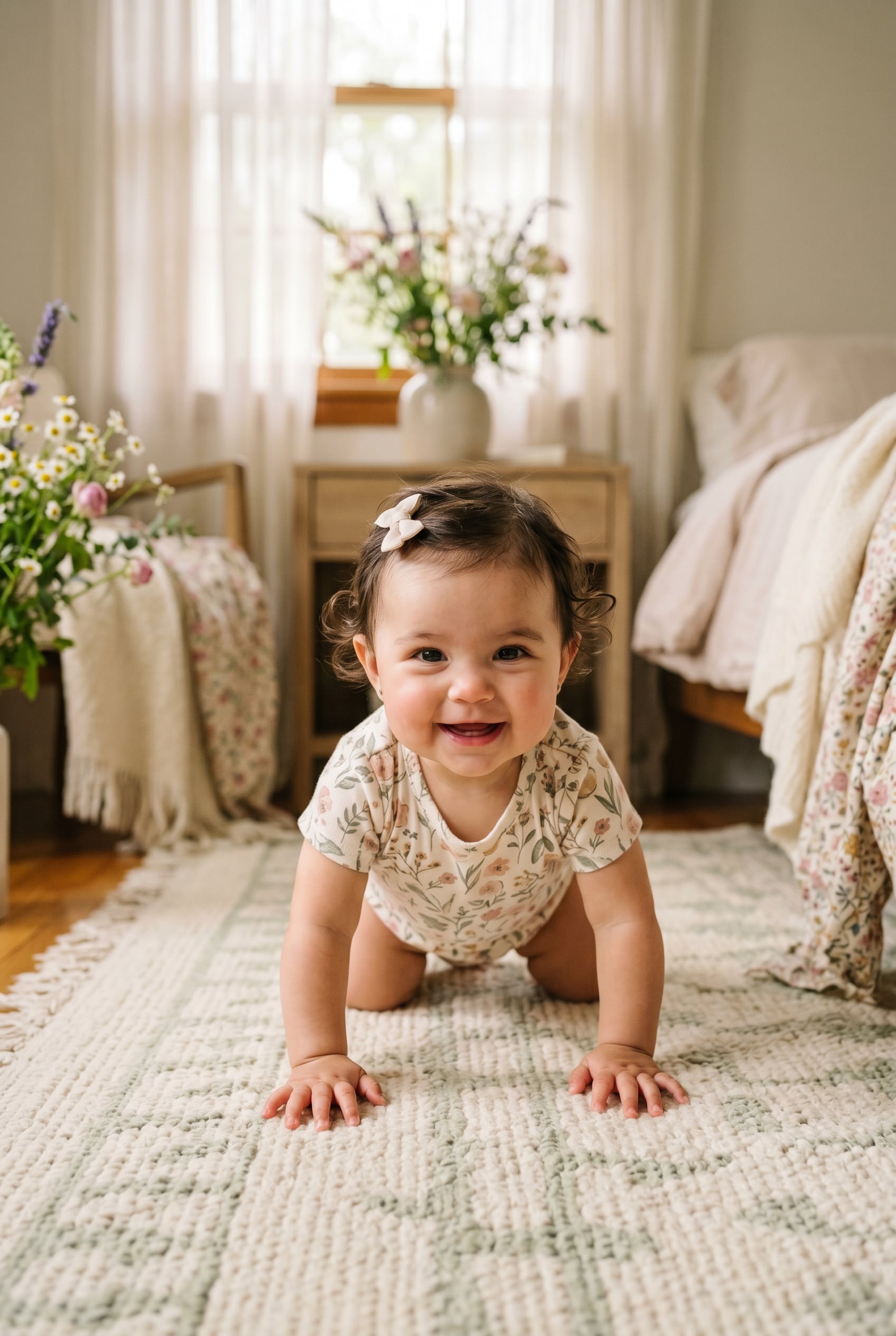
The soft girl aesthetic arrived quietly — pastel palettes, linen dresses, wildflower arrangements on windowsills — and turned out to have real staying power. It maps onto something genuine: a longing for gentleness, for spaces and moments that feel unhurried and tender. When it comes to naming a baby in that spirit, the options are richer than the obvious floral picks.
🔍 Curious how popular a name is?
Check any name's popularity trend since 1880 with our free Baby Name Popularity Checker.
When referencing popularity, I am referring to baby name data from Social Security Administration database in the United States for 2025, which is the most current year of data available.
Here’s what’s in store –

Names That Flow: Liquid, Melodic, Vowel-Rich
Vintage Feminine Names With a Soft Revival
French & Italian Lyrical Names
Names Meaning Light, Beauty, or Grace
Soft girl names share certain qualities: liquid consonants (l, m, n, r), open vowels, endings that trail off rather than stop short. They often come from Romance languages, from Old English poetry, from botanical Latin, from mythology. What they almost never are is harsh or abrupt. They carry weight without volume.
This list reaches well past the first page of any baby name app. You’ll find classic florals and lesser-known botanicals, French names Americans have been sleeping on, vintage names that wore out in the 1950s and are quietly ready again, and a handful of atmospheric picks that sound like what they describe — morning light, still water, the long exhale of a late afternoon with nowhere to be.
One note before you start: softness in a name doesn’t mean softness of character. Beatrice was Shakespeare’s sharpest wit. Maeve was a warrior queen. Cordelia held a kingdom together with grace. The gentlest-sounding names on this list have some of the sturdiest histories. Your daughter can have both.
Floral & Botanical Names
Plants have been naming babies for centuries, but the range goes far beyond Rose and Lily. The botanical world offers everything from the lush and full-petaled to the spare and mossy — and the names follow suit.
- Origin: English (19th-century flower name, ultimately from Latin viola via French violette)
- Meaning: the violet flower (purple-blue)
- Popularity: #15
Violet comes from the Latin viola via French violette, referring to the purple-blue violet flower, and only became popular as an English given name in the 19th century.
- Origin: Latin (via French)
- Meaning: connected to the rose flower, via the Latin saint’s name Rosalia
- Popularity: #177
More lyrical than Rose alone; the French diminutive adds an instant warmth.
- Origin: English
- Meaning: the clover plant (Old English clafre), popularly linked to luck
- Popularity: #618
Clover is named directly after the clover plant (Old English clafre), a name popularly associated with luck through the four-leaf clover.
- Origin: Swedish (via surname Dahl)
- Meaning: named for botanist Anders Dahl
- Popularity: #240
Dahlia is named after 18th-century Swedish botanist Anders Dahl, for whom the flower itself was named.
- Origin: Latin
- Meaning: Flower; from Latin flos/floris, and the name of the Roman goddess of flowers, blooming, and springtime.
- Popularity: #648
The Roman goddess of flowers; the root of floral and flourish.
- Origin: Greek
- Meaning: rainbow; also the name of the Greek goddess/messenger of the rainbow, and the flower named after her
- Popularity: #71
Both a goddess and a bloom — the indigo connection gives it a quietly cool edge.
- Origin: English
- Meaning: the lily flower
- Popularity: #24
Lily is simply the English name of the lily flower, used directly as a given name.
- Origin: Old English
- Meaning: flower or blossoming — from Old English blōstm (‘flower’), a Victorian-era botanical name
- Popularity: #1952
More whimsical than Lily or Rose, with a golden-hour gentleness to it.
- Origin: Latin (botanical name)
- Popularity: #1539
Chanel and Japan both claimed it; it wears sophistication naturally.
- Origin: Cornish
- Meaning: elm tree
- Popularity: #898
Rare Cornish gem that sounds like it was invented by a Victorian novelist.
- Origin: English (nature name)
- Meaning: the fern plant
- Popularity: #1261
Fern is simply the English word for the fern plant, used directly as a nature name.
- Origin: English (flower name)
- Meaning: the marigold flower; the flower’s name is traditionally explained as ‘Mary’s gold’ (honoring the Virgin Mary), not literally ‘golden flower’
- Popularity: #693
Warm as the color itself; Goldie or Mari arrive naturally as nicknames.
- Origin: English (flower name, ultimately from Latin papaver via Old English popig)
- Meaning: named for the poppy flower
- Popularity: #338
Bright and a little cheeky — not quite as demure as the others here, but still very much soft girl.
- Origin: Greek
- Meaning: Named after Paeon, the physician-god of Greek mythology who reputedly used the plant medicinally; the flower’s name became a given name.
- Popularity: #17033
Lush and full-petaled; the aesthetic’s poster flower.
- Origin: English (Middle English)
- Meaning: thorny shrub or bramble
- Popularity: #522
Sleeping Beauty’s real name in some tellings — delicate with a hidden edge.
- Origin: Old French / Latin
- Meaning: the lavender plant
- Popularity: #998
Lavender is named directly after the lavender plant, entering English via Old French from Latin.
- Origin: Persian
- Meaning: named after the jasmine flower
- Popularity: #199
Fragrant and warm; cross-cultural in the most beautiful way.
- Popularity: #358
Named for the dry conditions it thrives in, which makes it unexpectedly tough.
- Origin: English (Old English compound)
- Meaning: flower name meaning “day’s eye”; also historically used as a nickname for Margaret
- Popularity: #76
As fresh as a field of them on a May morning.
- Origin: English (flower name)
- Meaning: name of the magnolia flower, adopted as an English given name in the 19th century
- Popularity: #138
- Origin: English (Victorian flower name, from Latin prima rosa)
- Meaning: named for the primrose flower (‘first rose’)
- Popularity: #2106
Evokes early spring and English country gardens with equal conviction.
- Origin: English (blend of Rose and Mary)
- Meaning: a blend of the names Rose and Mary; later also linked to the herb rosemary (from Latin ‘dew of the sea’)
- Popularity: #301
Crosses the line between herbal and romantic in the best possible way.
- Origin: English (from the flower name)
- Meaning: named for the zinnia flower
- Popularity: #1349
Boldly colored in real life, but the name itself is delicate and unusually beautiful.
- Origin: Old French
- Meaning: sweetbriar, a wild thorny rose
- Popularity: Rare
Eglantine is the Old French word for sweetbriar, a wild thorny rose.
- Origin: Swedish (Latinized)
- Meaning: the twinflower (Linnaea borealis), a plant named in honor of botanist Carl Linnaeus
- Popularity: #1608
Scandinavian botanical elegance that feels both modern and deeply rooted.
- Origin: Greek
- Meaning: beautiful flower
- Popularity: Rare
Ultra-rare Greek name; a quiet showstopper for parents who want something entirely their own.
- Origin: modern coinage (apparently from Latin luna, ‘moon’)
- Popularity: Rare
Lunaria appears to be a modern coinage built on the Latin luna, meaning ‘moon.’
- Origin: Latin (plant name)
- Meaning: sacred plant (vervain)
- Popularity: Rare
Roman priests used it in rituals; now it’s a quietly beautiful botanical choice.
Names That Flow: Liquid, Melodic, Vowel-Rich
Some names are soft purely because of how they feel in the mouth — liquid consonants, open vowel sounds, syllables that connect without friction. These names are built for soft girl energy at the acoustic level.
- Origin: Greek (mythological name)
- Popularity: #1156
Lyrical and astronomically cool; a name that floats.
- Origin: Ancient Greek (via Latin)
- Meaning: a lyre, the stringed musical instrument
- Popularity: #482
Philip Pullman’s heroine gave this name a surge of dreamy literary association.
- Origin: Slavic
- Meaning: gracious, dear one
- Popularity: #33
- Origin: Latin
- Meaning: moon
- Popularity: #13
Consistently beautiful; the moon meaning earns its place in every soft girl aesthetic roundup.
- Origin: Arabic, Sanskrit
- Meaning: night (Arabic, via Layla) or play/charm (Sanskrit līlā), depending on origin
- Popularity: #207
Two meanings, both dreamy.
- Origin: Italian (modern English coinage from the musical term)
- Meaning: song, melody
- Popularity: #26
Operatic origins give it weight behind the lightness.
- Origin: Scottish (place name)
- Meaning: from the Scottish place name Islay/River Isla; the place name’s own root is unknown
- Popularity: #35
Worth the double-consonant pronunciation puzzle — ‘eye-lah’ is always worth explaining.
- Origin: diminutive (short form of Eleanor, of disputed origin; rarely of Honora, Latin)
- Popularity: #22
Small and complete; no nickname needed.
- Origin: Scandinavian/German/Russian (pet form of Helena, Magdalena, or Yelena)
- Meaning: short/pet form of Helena, Magdalena, or Yelena
- Popularity: #263
The quiet older sister of Elena and Helena.
- Origin: Arabic
- Meaning: night
- Popularity: #268
One of the great romantic names of classical Persian poetry.
- Origin: French (from Germanic)
- Meaning: vigorous, active (same Germanic root as Amelia)
- Popularity: #711
Amelie shares its Germanic root with Amelia, meaning ‘vigorous, active.’
- Origin: French (from Old German Helewidis, via medieval Latin/French forms; doublet of Héloïse)
- Meaning: healthy and wide/broad (from Germanic Helewidis)
- Popularity: #64
The Plaza Hotel’s most glamorous resident.
- Origin: German
- Meaning: murmuring/lurking rock
- Popularity: #456
Mythic and slightly dangerous, which only adds allure.
- Origin: French
- Meaning: Christmas
- Popularity: #215
Works beautifully for a December baby — or, honestly, any baby at all.
- Origin: Latin
- Meaning: rival, one who strives to equal or surpass
- Popularity: #43
Shakespeare’s choice in Othello; currently having a well-deserved moment.
- Origin: Provençal (Occitan)
- Meaning: admired one; coined by poet Frédéric Mistral for his 1859 poem
- Popularity: #8245
Almost unknown outside France but incredibly beautiful; Mireille Hartuch wore it with grace.
- Origin: French (from Latin)
- Meaning: golden one
- Popularity: #4473
The more literary cousin of Aurelia; rarer and lovelier.
- Popularity: #8722
A top name in France; nearly unheard-of in the United States.
- Origin: Finnish
- Meaning: form of Helen (root meaning disputed; popularly ‘bright, shining light’)
- Popularity: #785
The spare Scandinavian spelling gives it a modern crispness Elena lacks.
- Origin: Italian (from Latin hilarius)
- Meaning: cheerful
- Popularity: #3986
Italian exuberance wrapped entirely in soft sounds.
- Origin: Basque
- Meaning: joyful, cheerful
- Popularity: #112
- Origin: French (etymology unverified in this pass)
- Popularity: #370
French and faintly melancholic in the best way.
- Popularity: #69
- Origin: French (variant of Remy/Rémi)
- Meaning: traditionally ‘oarsman’ (via Remy/Remigius), though not directly confirmed by our source
- Popularity: #145
- Origin: Hebrew
- Meaning: my light
- Popularity: #1638
Liora is Hebrew for ‘my light.’
- Origin: Germanic (via French Aline)
- Meaning: noble (as a diminutive tracing to Adela/Adele)
- Popularity: #135
Common in Eastern Europe; feels genuinely fresh in English-speaking contexts.
- Origin: Finnish
- Meaning: snow
- Popularity: #2178
Clean and cold and gorgeous; Finnish design sensibility in a name.
- Origin: Hebrew (with a secondary Greek tradition)
- Meaning: my God is the LORD (variant of Elijah/Elias)
- Popularity: #839
Elia is a variant of Elijah/Elias, Hebrew for ‘my God is the LORD.’
Vintage Feminine Names With a Soft Revival
These names peaked between roughly 1880 and 1950, went quiet, and are now coming back with all their original charm intact — plus the bonus of being rare enough that your daughter won’t share her name with four classmates.
- Origin: Germanic (via Old French Melisende)
- Meaning: strong worker
- Popularity: #1639
Victorian-era name fully ripe for revival; Millie makes it immediately wearable.
- Origin: Latin (English medieval form of Cecilia)
- Meaning: possibly ‘blind’ (inherited from Cecilia)
- Popularity: #1595
Softer than Cecilia; the -ly ending makes it flutter.
- Origin: Latin
- Meaning: one who brings happiness (also glossed “blessed one”)
- Popularity: #579
Dante’s great love and Shakespeare’s wittiest heroine in one name.
- Origin: French
- Meaning: woman of the tribe/kin
- Popularity: #165
Long and layered; the Parisian patron saint makes it endlessly timeless.
- Origin: French (feminine diminutive of Joseph, ultimately Hebrew)
- Meaning: may he (God) add — inherited from Joseph
- Popularity: #56
Jo or Josie for everyday; Josephine when you mean business.
- Origin: Germanic (Old High German, via French)
- Meaning: of noble character
- Popularity: #271
Princess-coded but fully accessible; Addie is an easy, charming nickname.
- Origin: Latin (disputed; possibly a variant of Annabel)
- Meaning: yielding to prayer (one of two competing theories)
- Popularity: #206
One of the most purely beautiful-sounding names in the English tradition.
- Origin: uncertain (Shakespeare’s spelling of a historical British name, Cordeilla; possibly linked to the obscure saint’s name Cordula)
- Popularity: #1065
Shakespeare’s most tender heroine; the name holds all of it.
- Origin: Greek
- Meaning: gift of God
- Popularity: #2066
George Eliot’s Dorothea Brooke gave this name intellectual weight it’s never lost.
- Origin: Greek (literary coinage)
- Meaning: good news
- Popularity: #174
Long and lyrical; Longfellow’s poem gives it a romantic pedigree that holds.
- Origin: Latin
- Meaning: happiness, good fortune (from Latin felicitas)
- Popularity: #486
Optimism built directly into the syllables.
- Origin: Welsh (English spelling variant)
- Meaning: white/fair ring
- Popularity: #393
Gwen for short; the full name for when you mean it.
- Origin: Greek (Latinized form of Helen)
- Popularity: #414
The face that launched a thousand ships — and still commanding.
- Origin: Greek (variant of Isidora)
- Meaning: gift of the goddess Isis
- Popularity: #1223
Isadora Duncan made it bohemian; it’s never gone back.
- Origin: French
- Meaning: diminutive of Julie (‘little Julia’), itself from Latin Julia/Julius
- Popularity: #129
More romantic than Juliet; the French spelling changes the entire feeling.
- Origin: Latin (place name Lavinium, Latium)
- Popularity: #2139
Aeneas’s wife in the Aeneid; the name Shakespeare reached for when the scene required it.
- Origin: Germanic (variant spelling of Matilda)
- Meaning: mighty/strong in battle
- Popularity: #4609
Roald Dahl’s Matilda revived it; the -h adds vintage distinction.
- Origin: Late Latin (name of early Christian martyrs), from biblical Hebrew seraphim
- Meaning: of the seraphim, a class of biblical angels
- Popularity: #778
Jennifer Garner put this one back on the radar.
- Origin: Greek
- Meaning: God’s gift
- Popularity: #812
Byzantine royalty; Teddy for short, which surprises people in the best way.
- Origin: Old English / Welsh (conflated names)
- Meaning: joy and peace (Old English), merged with the separate Welsh name Gwenfrewi
- Popularity: #1031
Winnie for everyday; Winifred for the full antique charm.
- Origin: Middle English (Crist ‘Christ’ + -bel ‘beauty’, from Belle)
- Meaning: beautiful Christian
- Popularity: #8531
Coleridge’s supernatural poem made it eerie and lovely simultaneously.
- Origin: Greek (via medieval literary tradition)
- Meaning: golden
- Popularity: #12408
A Shakespeare name; rarely used, which is exactly the appeal.
- Origin: French (from Latin Delphina, from Greek Delphi)
- Meaning: woman from Delphi (site of the ancient Greek oracle)
- Popularity: #3651
French, a little mysterious, indelibly chic.
- Popularity: #8975
So rare it sounds invented, but has a documented 17th-century history.
- Origin: Germanic
- Meaning: from elements meaning roughly ‘horse’ and ‘soft/tender’ — something like ‘gentle horse’
- Popularity: #1475
Shakespeare’s wittiest heroine — sharp and soft at once.
- Origin: Celtic (Scottish Gaelic), via a Shakespearean misprint
- Meaning: maiden, girl (from Scottish Gaelic ‘inghean’)
- Popularity: #1126
A Shakespeare creation or revival; still feels like a very good secret.
- Origin: Latin
- Meaning: eighth (feminine form of the Roman family name Octāvius)
- Popularity: #295
Roman and stately; Tavi as a nickname is unexpectedly cool.
- Origin: Latin
- Meaning: heavenly, of the sky
- Popularity: #3968
Celestine derives from Latin words meaning ‘heavenly’ or ‘of the sky.’
Celestial & Atmospheric Names
The soft girl aesthetic lives in golden hour, in morning mist, in the moment before a storm breaks. These names carry that same atmospheric quality — they describe light and sky and sea and weather.
- Origin: Latin
- Meaning: dawn (name of the Roman goddess of the dawn)
- Popularity: #16
The Northern Lights and Sleeping Beauty in one name.
- Origin: Latin (via French)
- Meaning: heavenly
- Popularity: #198
Floats in the mouth the way clouds float.
- Origin: Latin
- Meaning: new
- Popularity: #39
Nova is simply Latin for ‘new.’
- Origin: Latin
- Meaning: star
- Popularity: #49
Brando called it out a window; it survived and thrived.
- Origin: English (modern coinage from the vocabulary word ‘serenity’)
- Meaning: peacefulness, calm
- Popularity: #117
The Firefly spacecraft made it cool; the meaning earns its place.
- Origin: Latin
- Meaning: of the sea
- Popularity: #640
Marina comes from Latin, meaning ‘of the sea.’
- Origin: English
- Meaning: from the gemstone pearl; also an English form of the Yiddish name Perle
- Popularity: #802
Oyster-made treasure; The Scarlet Letter adjacent without any of the baggage.
- Origin: English (19th-century coinage from the gemstone name, ultimately Sanskrit)
- Meaning: named after the opal gemstone; the gem-word itself traces to a Sanskrit term for ‘jewel’
- Popularity: #450
October’s birthstone name; milky, luminous, and underused.
- Origin: English (modern vocabulary-word name)
- Meaning: a glowing coal or fragment from a dying fire
- Popularity: #137
Warm-toned and atmospheric; sounds like what it means.
- Origin: Scottish (from the Isle of Skye, a place name of disputed/unresolved origin) or English (playful respelling of ‘sky’)
- Popularity: #480
Simple and expansive; the Isle of Skye gives it geographical grounding.
- Origin: French (from Latin)
- Meaning: of the forest
- Popularity: #360
Wild and dappled like light through leaves.
- Origin: Latin/French
- Meaning: little wave / water spirit
- Popularity: #14789
A German opera and a French legend — faintly haunted, entirely beautiful.
- Origin: Arabic (via the star name)
- Meaning: falling eagle (referring to the star Vega’s Arabic name)
- Popularity: #3944
Named for one of the night sky’s most brilliant stars.
- Origin: Latin
- Meaning: evening; the evening star (the planet Venus at dusk)
- Popularity: #2789
Vesper is Latin for ‘evening’ and also names the evening star, the planet Venus visible at dusk.
- Origin: English
- Meaning: first light of day, from the common noun “dawn”
- Popularity: #1850
The original Aurora; still quietly lovely.
- Origin: French
- Meaning: sun
- Popularity: #824
French and radiant; all of Solar’s warmth without the science-fiction tones.
- Origin: Danish (from Latin Marina)
- Meaning: form of Marina; ‘of the sea’
- Popularity: #570
Scandinavian cousin of Marina; barely used in English-speaking countries.
- Origin: French (loanword into English)
- Meaning: a daydream; being pleasantly lost in thought
- Popularity: #2291
Reverie is a French loanword meaning a daydream, or being pleasantly lost in thought.
- Origin: Latin
- Meaning: light
- Popularity: #1223
Minimal, luminous, slightly cool in the best way.
- Origin: French (from Latin sollemnis, ‘solemn’); name of a 9th-century French saint
- Meaning: solemn
- Popularity: #7192
Solange derives from the Latin sollemnis (‘solemn’) and was borne by a 9th-century French saint.
- Origin: Greek (via Latin/French)
- Meaning: west wind (French-style feminine elaboration of Zephyrus)
- Popularity: Rare
The ultra-rare French form of Zephyr; gloriously unusual.
- Origin: Greek (place name)
- Popularity: Rare
Neil Gaiman’s Sandman character gave it a literary, atmospheric edge.
- Origin: Old French (ultimately from Slavic/Old Russian ‘sobol’)
- Meaning: black, especially as a heraldic color; from the dark fur of the sable marten
- Popularity: #4986
Sable takes its name from the dark fur of the sable marten, traced through Old French back to the Old Russian ‘sobol,’ and denotes the color black in heraldry.
- Origin: Irish
- Meaning: little red one
- Popularity: #71
Its red-berry fire bridges nature and celestial.
- Origin: English (from Old French/Latin)
- Meaning: a wise person; also linked to the sage herb plant
- Popularity: #146
Does double duty: botanical and atmospheric at once.
- Origin: English (word name, ultimately Greek lyrikos, ‘of the lyre’)
- Meaning: words of a song
- Popularity: #594
Lyric traces to the Greek lyrikos, ‘of the lyre,’ and literally refers to the words of a song.
- Origin: Greek (via Latin)
- Meaning: most beautiful
- Popularity: #1457
Classic Greek structure with a modern minimalist feel.
- Origin: English (modern given name from the word ‘ivory’; the surname is habitational, from Ivry in Normandy, or a patronymic diminutive of Ivor)
- Meaning: ivory, white/pure (as the tusk material)
- Popularity: #404
Warm white name; pairs beautifully with nature aesthetics.
French & Italian Lyrical Names
Romance languages have been winning the soft name game for centuries. French and Italian names arrive with built-in musicality — the nasal vowels, the silent consonants, the emphasis falling somewhere unexpected. These are names that live in their whole mouth.
- Origin: French (short form of Marguerite/Margaret)
- Meaning: pearl, carried over from Marguerite/Margaret
- Popularity: #126
Effortlessly chic; the hard ‘t’ stays silent.
- Origin: French (diminutive of Nicole)
- Meaning: victory of the people
- Popularity: #400
Sidonie-Gabrielle Colette owned this name and left it sophisticated.
- Origin: Latin (via Old French, variant of Vivian)
- Meaning: living, full of life
- Popularity: #184
Vivienne Westwood demonstrated the full spectrum from punk to soft.
- Origin: French (literary coinage; popularized by Victor Hugo’s Les Misérables, 1862)
- Popularity: #1909
Les Misérables gave it tenderness; now it’s pure soft girl.
- Origin: French (variant of Isabelle)
- Meaning: pledged to God
- Popularity: #11464
Medieval French form of Isabel; almost mythically lovely.
- Origin: French (diminutive of Elisabeth)
- Meaning: God is my oath (diminutive of Elisabeth)
- Popularity: #4717
French pet form of Elizabeth; featherlight and rarely used.
- Origin: French (from Hebrew via Magdala)
- Meaning: woman from Magdala (a town whose name means ‘tower’)
- Popularity: #437
Proust and the storybook Madeline both sealed the deal.
- Origin: French (diminutive of the Old German name Oda)
- Meaning: a diminutive form of Oda, a Germanic name traditionally associated with ‘wealth’
- Popularity: #1220
Swan Lake’s tragic heroine; heartbreakingly beautiful.
- Origin: French (from Latin)
- Meaning: reborn
- Popularity: Rare
Renée comes from Latin, meaning ‘reborn.’
- Popularity: #11019
Rarely heard outside France; quietly luminous.
- Origin: Old French (variant of Iseult/Isolde, whose own root is disputed)
- Meaning: A spelling variant of Iseult/Isolde, the medieval legendary heroine’s name; Isolde’s own root is uncertain — often guessed as Germanic for something like ‘ice ruler,’ though some scholars think it may instead be pre-Germanic or Celtic
- Popularity: Rare
The original Tristan-and-Isolde spelling, and the most romantic.
- Origin: Italian, from Welsh via Norman French (Guinevere)
- Meaning: white phantom, or ‘fair one’ (from Welsh Gwenhwyfar)
- Popularity: #5183
Italian form of Guinevere; Leonardo painted a portrait of one.
- Origin: Italian (from Latin clarus)
- Meaning: clear, bright (the Italian form of Clara)
- Popularity: #1113
Saint Francis’s companion; spare and luminous.
- Origin: Italian, from Latin (Julia)
- Meaning: youthful
- Popularity: #1262
The Italian Julia; warmer somehow, with that open vowel landing.
- Origin: Italian (short form of Eleonora, cognate with Eleanor)
- Meaning: variant/short form of Eleonora; Eleanor’s own root meaning is disputed
- Popularity: #2087
- Origin: Latin
- Meaning: clear, tranquil, serene
- Popularity: #332
Tennis royalty and Roman goddess energy occupying the same name.
- Origin: English (from the pigment/color name ‘sienna’, associated with Siena, Italy)
- Meaning: a reddish-brown color
- Popularity: #139
The warm terracotta pigment named for a golden city.
- Origin: Italian
- Meaning: victory
- Popularity: #2875
Operatic and triumphant in sound and meaning both.
- Origin: French (diminutive of Anne)
- Meaning: grace, favor (via Anne/Hannah)
- Popularity: Rare
French pet form of Anne; beloved in 17th-century Parisian salons.
- Origin: French form of Bridget
- Meaning: exalted one
- Popularity: #2364
Brigitte Bardot turned a saint’s name into an icon.
- Origin: Germanic (via French)
- Meaning: famous battle
- Popularity: #17026
Very French, very old, very ready for a soft-girl revival.
- Popularity: #15165
The French saint who wiped Christ’s face; an exquisite name.
- Popularity: #16687
Italian botanical variant; less traveled than Flora, more Italian than Florie.
- Origin: Spanish/Portuguese
- Meaning: pure, holy (via the Agnes/Hagne lineage)
- Popularity: #1282
Ines descends from the same root as Agnes, meaning ‘pure’ or ‘holy.’
- Origin: Italian (from Latin ‘flamma’)
- Meaning: flame
- Popularity: Rare
Warm and vivid; absolutely, unmistakably Italian.
Names Meaning Light, Beauty, or Grace
Some soft girl names carry the meaning right on the surface. Light, beauty, grace — these are the names where the semantics do the soft work, regardless of how the syllables fall.
- Origin: Latin
- Meaning: feminine form of the Roman name Lucius, traditionally tied to ‘lux’ (light); also the name of a Sicilian martyr
- Popularity: #98
The patron saint of sight; her name carries its own glow.
- Origin: Latin
- Meaning: bright, clear, famous
- Popularity: #78
Clara Schumann, Clara Bow — the name has impeccable company.
- Origin: French (from Latin Lucilla)
- Meaning: light
- Popularity: #274
Lucille Ball made it funny; time has made it romantic again.
- Origin: Ancient Greek
- Meaning: bright, shining
- Popularity: #183
A Titan goddess and a Friends character — the gap is wider than you’d think.
- Origin: English/Hebrew (variant of Sarah) or Arabic
- Meaning: uncertain — either from Sarah (‘princess’) or Arabic zahra (‘flower’)
- Popularity: #234
Royal and luminous in equal measure.
- Origin: modern coinage (popularized by fantasy fiction)
- Popularity: #121
- Origin: Latin (most likely, from carissima)
- Meaning: dearest, most beloved
- Popularity: #3448
Carissa most likely derives from the Latin carissima, meaning ‘dearest’ or ‘most beloved.’
- Origin: English (modern coinage, evoking Latin adorare)
- Meaning: popularly ‘adored one’; not an attested classical Latin word
- Popularity: #2426
Does exactly what it says on the label.
- Origin: Ancient Greek (via Latin)
- Meaning: beloved, the loved one
- Popularity: #1833
Saint Philomena’s official cult may have been questioned, but the name lives on beautifully.
- Origin: Latin
- Meaning: virtue name from Latin ‘grace/favor’, evoking both divine favor and physical elegance
- Popularity: #40
Grace is a virtue name from the Latin for ‘favor,’ evoking both divine grace and physical elegance.
- Origin: Hebrew
- Meaning: favor or grace, from a root meaning ‘to be gracious’
- Popularity: #52
Palindrome perfection; one of the most grounded soft names in the canon.
- Origin: Various (Japanese, Hebrew, Arabic, Kurdish, Persian, Hawaiian, Māori, Albanian)
- Meaning: varies by origin: ‘flower’ (Japanese), ‘grace/favor’ (Hebrew, via Hannah), ‘bliss’ (Arabic), ‘hope’ (Kurdish), among others
- Popularity: #708
Hana’s meaning shifts with its origin: ‘flower’ in Japanese, ‘grace/favor’ in Hebrew (via Hannah), and ‘bliss’ in Arabic, among others.
- Origin: English (diminutive of Grace)
- Meaning: pet form of Grace (favor)
- Popularity: #248
The informal form that has become entirely its own standalone name.
- Origin: Italian
- Meaning: short form of Isabella or Arabella
- Popularity: #109
Originally a nickname; now completely standalone and still gorgeous.
- Origin: French
- Meaning: beautiful; also short form of Isabelle/Annabelle
- Popularity: #1005
Belle is French for ‘beautiful’ and also serves as a short form of Isabelle or Annabelle.
- Origin: Scottish
- Meaning: pretty, beautiful
- Popularity: #441
From bon; feels both warm and Scottish-highland wild.
- Popularity: #3254
Combines two soft girl archetypes into one name.
- Origin: Old Irish
- Meaning: gentle, beautiful, precious
- Popularity: #8519
Pronounced ‘Kwee-va’; a gift of a name for those willing to explain it once and watch faces light up.
- Origin: multiple (Sanskrit, Persian, or Germanic short form)
- Meaning: varies by origin: ‘fish’ (Sanskrit/Hindi मीना), ‘blue enamel/glass’ or a flower name (Persian مینا), or a short form of Wilhelmina (‘resolute protector’, Germanic)
- Popularity: #608
Diminutive energy that stands entirely alone.
- Origin: Greek
- Meaning: bright, shining light
- Popularity: #45
The Spanish and Slavic warmup to Helen; more open and warm.
- Origin: Slavic/Arabic
- Meaning: hope (Slavic, from Nadezhda); also ‘tender’ in Arabic usage
- Popularity: #513
Eastern European hope name; grounded and soft simultaneously.
- Origin: Germanic
- Meaning: vigorous, active (traditionally also glossed as ‘work’)
- Popularity: #3
Wildly popular but never tiresome; the aviation heroine helps.
- Origin: Russian (pet form of Larissa)
- Meaning: pet form of Larissa, ultimately from a Greek place name meaning ‘citadel/fortress’
- Popularity: #740
Zhivago’s great love; a name of pure feeling.
- Origin: Latin
- Meaning: divine, heavenly
- Popularity: #243
Diana comes from Latin, meaning ‘divine’ or ‘heavenly.’
- Origin: Irish
- Meaning: freedom
- Popularity: #1036
Pronounced ‘SEER-sha’; Saoirse Ronan made it globally recognizable.
- Origin: Spanish (from Latin/Late Latin Seraphina)
- Meaning: of the seraphim, a high order of angels
- Popularity: #1231
Italian variant of Seraphina; slightly more swooping in the mouth.
Cottagecore & Whimsical Nature Names
The cottagecore corner of the soft girl world lives in overgrown gardens, pressed flowers in old books, and names that sound like they belong in a fairy tale that hasn’t been written yet. These names have wildness in them, even when they sound gentle.
- Origin: English (vocabulary word)
- Meaning: a field of grass (grassland)
- Popularity: #327
Meadow is simply the English word for a grassy field, used directly as a name.
- Origin: English (Middle English)
- Meaning: the small songbird
- Popularity: #213
Bird-name minimalism; a single syllable that holds more than it appears to.
- Origin: English
- Meaning: little bird (also historically used as a pet form of Bertha)
- Popularity: #754
Vintage pet name becoming a standalone; cheerful and warmly old-fashioned.
- Origin: English (surname from the noun “maple”)
- Meaning: named after the maple tree
- Popularity: #1188
Maple is an English surname taken directly from the maple tree.
- Origin: English
- Meaning: the juniper tree/shrub; occasionally a folk-etymology variant of Jennifer (from Welsh Guinevere)
- Popularity: #111
Juni for short; botanical and slightly wild.
- Origin: Old English
- Meaning: the hazel tree, and by extension its light-brown color
- Popularity: #19
John Green’s Hazel Grace put it back in circulation with real feeling.
- Origin: Irish (Anglicized form of Medb/Meadhbh)
- Meaning: intoxicating / she who intoxicates
- Popularity: #75
Short and mythic; Queen Maeve of Connacht was a force.
- Origin: Old English (surname)
- Meaning: cheerful, merry, carefree — from Old English blīþe, ultimately Proto-Germanic *blīþiz (‘gentle, kind’)
- Popularity: #1862
Blythe traces to Old English blīþe, meaning ‘cheerful’ or ‘merry,’ ultimately from a Proto-Germanic root meaning ‘gentle, kind.’
- Origin: Greek (diminutive of Philippa)
- Meaning: pet form of Philippa; lover of horses
- Popularity: #2475
Greek via British royalty; fun and energetic in soft packaging.
- Origin: English (diminutive, chiefly of Welsh-origin Winifred)
- Meaning: pet form of Winifred (occasionally of Winona)
- Popularity: #550
Pooh’s association makes it sweet; the full Winifred makes it interesting.
- Origin: English (pet form)
- Popularity: #1460
Old English monosyllable with a long history of literary heroines.
- Origin: English
- Meaning: cheerful, full of sunshine
- Popularity: #372
Sunny is literally the word ‘sunny,’ meaning full of sunshine, used directly as a name.
- Origin: French (from Latin Clemens)
- Meaning: merciful, mild
- Popularity: #477
Clementine derives from the Latin Clemens, meaning ‘merciful’ or ‘mild.’
- Origin: English (diminutive)
- Meaning: diminutive of Rose (‘flower’), and other rose-names
- Popularity: #311
Fresher than Rose, softer than Rosalie; the diminutive-as-name that works.
- Origin: Greek (diminutive of Euphemia, rarely of Eftychia)
- Meaning: well-spoken, of good repute; in rare cases traced instead to a name meaning ‘good fortune’
- Popularity: #2507
Short for Euphemia; The Hunger Games gave it a new profile.
- Origin: English (diminutive of Edith)
- Meaning: riches and war, often glossed ‘prosperous/blessed in war’
- Popularity: #1762
Warhol’s muse; pure vintage cool that sidesteps the obvious.
- Origin: English (diminutive, root unverified)
- Popularity: #15962
Victorian pet form of Florence; outlandishly sweet and completely under-considered.
- Popularity: #1241
Small and quietly meaningful; another Hunger Games name that deserves reclamation.
- Origin: uncertain (associated with Japanese; also used as an English pet name)
- Meaning: often linked to the Japanese word ‘suki’ (liked, favorite); exact derivation as a name is unconfirmed
- Popularity: #3869
Cross-cultural and soft; the open ‘u’ sound opens the whole name.
- Origin: English (pet form of Matilda)
- Meaning: pet form of Matilda, meaning ‘mighty in battle’
- Popularity: #953
Diminutive of Matilda; independently charming and fully its own.
- Origin: English (diminutive of Elizabeth)
- Meaning: pet form of Elizabeth; carries Elizabeth’s meaning ‘God is my oath’
- Popularity: #2404
Colonial-era pet form that went full circle to cottagecore without trying.
- Origin: Hebrew
- Meaning: dove
- Popularity: #3024
One of Job’s daughters; the dove meaning places it right in soft pastoral territory.
- Origin: American (19th-century coinage from Will/William, ultimately Germanic)
- Meaning: carries the ‘will, desire’ sense, from Will/William
- Popularity: #423
Willa Cather’s quiet greatness lends it a literary, unhurried quality.
- Popularity: Rare
One of the fairies in A Midsummer Night’s Dream; whimsical, tiny, luminous at night.
- Origin: English
- Meaning: a naturally flowing body of water
- Popularity: #112
River is simply the English word for a flowing body of water, used directly as a name.
- Origin: Welsh
- Meaning: hill or mound
- Popularity: #2098
Bryn is Welsh for ‘hill’ or ‘mound.’
Soft Endings: Names in -ia, -ine, -elle, -ette, -ina
Some names are soft girl by architecture. The right suffix does most of the work — trailing off into a vowel, lingering after the last consonant, landing somewhere gentle. This section is organized by endings that do exactly that.
- Origin: Old French (diminutive of Adela/Adele, ultimately Old High German adal, “noble”)
- Meaning: noble
- Popularity: #58
- Origin: Germanic
- Meaning: work
- Popularity: #939
Suffragette Emmeline Pankhurst turned it fierce; now it swings entirely soft.
- Origin: French
- Meaning: ‘rose’ (the flower) plus the common French feminine name-suffix ‘-line’ (as in Caroline, Adeline)
- Popularity: #4851
Medieval French form; rarer than Rosalie or Rosalind, lovelier for it.
- Popularity: #13801
Colette’s beloved series character; very French and entirely chic.
- Origin: Latin (adjective ‘of Florence’)
- Meaning: flourishing (shares Florence’s root, via the adjective ‘of Florence’)
- Popularity: Rare
The Medici and the Renaissance in one name.
- Origin: French (from Hebrew via Greek/Latin)
- Meaning: French form of Elizabeth: ‘my God is an oath’
- Popularity: #170
The French spelling softens every sound.
- Origin: Latin (variant of Annabel, via Amabel)
- Meaning: lovable (true root); popularly read as ‘beautiful Anna’
- Popularity: #349
Americana soft — think lace curtains and afternoon light.
- Origin: Latin (via French)
- Meaning: wonderful, admirable one
- Popularity: #2371
Mirabelle comes from Latin via French, meaning ‘wonderful’ or ‘admirable one.’
- Popularity: Rare
A rare Victorian fusion name that sounds entirely invented and completely isn’t.
- Origin: French (diminutive of Nicole)
- Meaning: victory of the people (feminine diminutive of Nicole)
- Popularity: #2020
The medieval French romance heroine Aucassin et Nicolette owned it first.
- Origin: French (diminutive of Antoine, from Latin Antonius)
- Popularity: #2882
Marie Antoinette reclaimed it eventually; it’s yours to take further.
- Origin: French
- Meaning: diminutive of Rose
- Popularity: #10090
Smaller and more playful than Rose; the diminutive form as a full name.
- Origin: French (diminutive of Anne/Nan)
- Meaning: grace (via Anne/Hannah)
- Popularity: #10905
Old-fashioned French diminutive of Anne; quietly charming.
- Origin: Latin
- Meaning: strong, healthy
- Popularity: #47
Space-exploring, tennis-playing, globally beloved.
- Origin: Latin/Spanish (diminutive of Rosa)
- Meaning: little rose
- Popularity: #764
A fuller, warmer version of Rosaline; the operatic form.
- Origin: Spanish (form of Catherine/Katherine)
- Popularity: #128
California-coded but genuinely timeless; the Spanish Katherine.
- Origin: disputed (Latin/French/Greek, via Cecilia, Marceline, or Selene)
- Meaning: uncertain — possibly ‘blind’ (from Cecilia), a form of Marceline (from Mars), or a variant of Selene (‘moon’)
- Popularity: #969
Streamlined form of Celestina; spare and luminous.
- Origin: Italian (variant of Adeline, ultimately Germanic)
- Meaning: noble
- Popularity: #341
Italian and Spanish form of Adeline; flows entirely differently.
- Popularity: #4985
Operatic — Rossini’s The Barber of Seville heroine.
- Origin: Greek
- Meaning: honey
- Popularity: #633
Melina Mercouri carried this one with real grace.
- Origin: Latin
- Meaning: heavenly, of the sky
- Popularity: #3891
Beyond Celeste; genuinely other-worldly in feeling.
- Origin: Italian
- Meaning: Italian pet form of Maria
- Popularity: #992
Italian diminutive of Maria; Mediterranean warmth in four syllables.
- Origin: Latin
- Meaning: rose (linked to the ancient Roman rose festival)
- Popularity: #597
Saint Rosalia of Palermo; Sicilian, sacred, and beautiful.
- Origin: Greek (via Latin Sophronius)
- Meaning: self-controlled, level-headed
- Popularity: #17289
Victorian-era character name; unusual and quietly strong.
- Origin: French (via Latin, ultimately Hebrew)
- Meaning: burning one (from Hebrew seraphim, ‘the fiery ones’)
- Popularity: #3736
The French form of Seraphina; Séraphine de Senlis was a self-taught painter of extraordinary vision.
- Origin: English (variant of Jasmine, ultimately Persian via Arabic/Old French)
- Meaning: jasmine flower
- Popularity: #7369
More romantic than Jasmine; the French inflection lifts it somewhere genuinely lovely.
How to Choose a Name From This List
Say every finalist out loud with your last name — the full name, three times fast. Some names that look beautiful on a list have awkward transitions into certain surnames; others click immediately. Your ear knows things your eyes don’t.
Think about the name at different ages. A name that works on a three-year-old and a thirty-three-year-old is doing twice the work of one that only fits childhood. Elodie and Wren wear well at every stage. Blossom and Flossie are a little more committed to a specific softness.
Consider nickname potential, or the lack of it. Some parents want built-in options: Mathilda gives you Mattie, Tillie, and Tilda. Lena gives you nothing but Lena, which is its own form of perfection. Neither approach is wrong; just know which one you’re choosing.
Don’t feel bound by the meaning. A name whose meaning is “strength in battle” can still be the softest name in the room. Names carry their histories with them — the literary characters, the saints, the queens — not just their etymologies. Meaning is interesting context, not destiny.
The soft girl aesthetic is a current moment; a name outlasts every aesthetic. Whatever name you choose, it will eventually just be your daughter’s name — not a statement, not a trend, just the sound she answers to for the rest of her life. That’s the thing worth getting right.
Name Art for Your Favorite
Love a name from this list? MinimalistMama offers custom Name Art prints — personalized, minimalist nursery art with the name you choose, designed to match your aesthetic. A perfect gift for baby showers or to hang above the crib.
Frequently Asked Questions
What exactly makes a name a “soft girl” name?
Soft girl names tend to share a few qualities: liquid consonants (l, m, n, r), open vowel sounds, and endings that trail off rather than stop short. They often come from Romance languages, botanical Latin, mythology, or Old English poetry. The aesthetic connection runs deeper than sound, though — names that evoke flowers, light, water, or the natural world carry the same energy even if they’re short or simple. Wren is one syllable and is as soft girl as Evangeline.
Are soft girl names too trendy — will they date quickly?
Most of the names on this list are far older than the trend. Beatrice is medieval. Lavinia is Roman. Aurora has been in use since antiquity. The soft girl aesthetic borrowed from these names; it didn’t invent them. Your daughter named Cecily or Cordelia won’t be immediately placed in 2026 the way a name invented by a trend might be. The handful of genuinely modern names on this list — Nova, Lyric, Reverie — are worth thinking harder about, since they are more obviously of-this-moment.
Which soft girl names are currently the most popular?
In the United States, the most popular names from this aesthetic category currently include Luna, Violet, Isla, Nora, Emilia, Aurora, Stella, and Hazel — all comfortably in the top 50. If you love the sound but want something less shared, look at the French section (Mireille, Maelle, Isabeau) or the vintage section (Isadora, Araminta, Cressida) — most of those are almost entirely undiscovered outside name-enthusiast communities.
What are some soft girl names that are beautiful but almost never used?
Some of the most stunning and genuinely rare picks from this list: Mireille (French; barely registered in US baby name data), Calantha (Greek; almost unheard of), Eglantine (Old French; medieval and gorgeous), Elowen (Cornish; rare even in Cornwall), Yseult (French/Irish; the original Isolde), Zephyrine (French/Greek; a saint’s name that has never caught on in English), and Araminta (English; documented since the 1600s but consistently unused). Any of these would be entirely your daughter’s own.
Do soft girl names work well as middle names?
Beautifully. Because many soft girl names are longer and more lyrical, they work exceptionally well in the middle position where length is an asset rather than a daily inconvenience. If you love Evangeline but worry about the six syllables, put it in the middle: Jane Evangeline, Nora Evangeline, Lena Celestine. Shorter soft girl names — Fern, Pearl, Wren, Blythe, Rue — work as perfect soft middle names for a bolder first name.
Are there soft girl names that work across cultures and languages?
Several names on this list wear well across multiple cultures. Amara is used in West African (Igbo), Sanskrit, and Greek contexts. Hana means grace in Hebrew and flower in Japanese. Alina is Slavic, Arabic, and Germanic. Mila is Slavic but feels universally warm. Lucia and Elena have versions in virtually every Romance and Slavic language. If cross-cultural wearability matters to your family — for grandparents, travel, or heritage reasons — these are worth prioritizing.
What nicknames come naturally from soft girl names?
Some of the best nickname chains from this list: Genevieve → Evie or Gen; Josephine → Jo, Josie, or Fifi; Theodora → Teddy or Thea; Gwendolyn → Gwen or Wendy; Millicent → Millie; Mathilda → Mattie or Tilly; Arabella → Bella or Ari; Evangeline → Evie or Angie; Adelaide → Addie or Della; Seraphina → Sera or Fina. For parents who want a formal name with a soft, casual nickname, the vintage feminine section is the best place to look.
Final Thoughts
Two hundred names, and none of them are wrong. The right one is the one that makes you pause — the one you write down and come back to, the one you say at 2am and it still sounds true. It doesn’t need to be the most unusual name on the list or the most expected. It doesn’t need to perfectly capture an aesthetic or a meaning or a family history. It needs to fit the person who’ll wear it for the rest of her life, and you’re the only one who can feel when something fits. Trust that.
Read next; 🎀 175+ Witchy Girl Names With Dark, Magical Energy 🎀 200+ Korean Girl Names With Real Meaning and Beauty 🎀 200+ Cool Girl Names That Are Effortlessly Confident
📱 The Baby Names app is here
Swipe names, match with your partner the moment you both say yes, and claim a free Name Art print of your winner. Free to download. See all our apps →

✨ Love these names? Create free printable nursery art for any name →